


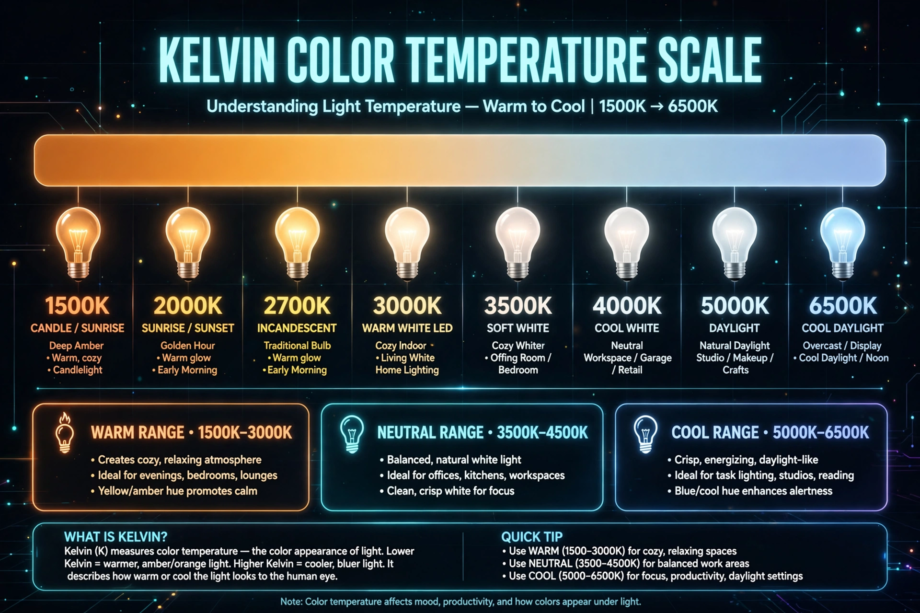
Finding the best color temperature for sleep at night starts with a simple rule: set your smart lights to 2200K or lower at night, dimmed to 10% brightness or less. This warm amber range has minimal impact on melatonin. Avoid anything above 3000K in the two hours before bed. And remember: dimming matters as much as color. A dim cool light can beat a bright warm one.
- The Best Color Temperature for Sleep at Night: Numbers That Matter
- Why Color Temperature Affects Sleep
- The Brightness Factor Everyone Misses
- When to Start the Transition
- Room-by-Room Night Settings
- What About Red Light?
- Smart Bulb Settings That Work
- What Color Temperature at Night for Better Sleep: Smart Lights Setup Guide
- Common Mistakes
- Setting Warm Color But Keeping It Bright
- Forgetting About the TV and Phone
- Only Changing the Bedroom
- Ignoring Seasonal Changes
- FAQs
- Is 2700K warm enough for good sleep?
- How dim should lights be before bed?
- Does candlelight really help sleep?
- What if my partner needs brighter light than me?
- Can nightlights disrupt sleep?
- How long before I notice better sleep?
- Should I wear blue light glasses instead?
- The Bottom Line
In fact, you’ve probably heard “warm light is better for sleep.” That’s true, but it’s incomplete. The full answer involves specific numbers, timing, and a factor most articles ignore entirely: brightness.
So let’s get precise about the best color temperature for sleep at night, when to make the switch, and the mistakes that undo all your good intentions.
The Best Color Temperature for Sleep at Night: Numbers That Matter
First, here’s the cheat sheet. For example, tape it to your fridge if you need to.
Table: Color temperature guide for sleep
| Time | Color Temp | Brightness | Why |
|---|---|---|---|
| Morning (wake + 2h) | 5000K-6500K | 80-100% | Suppress melatonin, boost alertness |
| Afternoon | 4000K-5000K | 70-100% | Maintain energy and focus |
| Evening (2h before bed) | 2700K or lower | 30-50% | Start melatonin production |
| Bedtime (last hour) | 2200K or lower | 5-10% | Maximum wind-down |
| Night (bathroom trips) | 2000K or lower | 1-3% | Navigate without waking up |
Moreover, the magic number for bedtime is 2200K or lower. That’s the threshold where blue light content drops to levels that barely affect melatonin. Moreover, go lower if your bulbs allow it. Some go to 2000K, 1800K, or even 1500K.
Why Color Temperature Affects Sleep
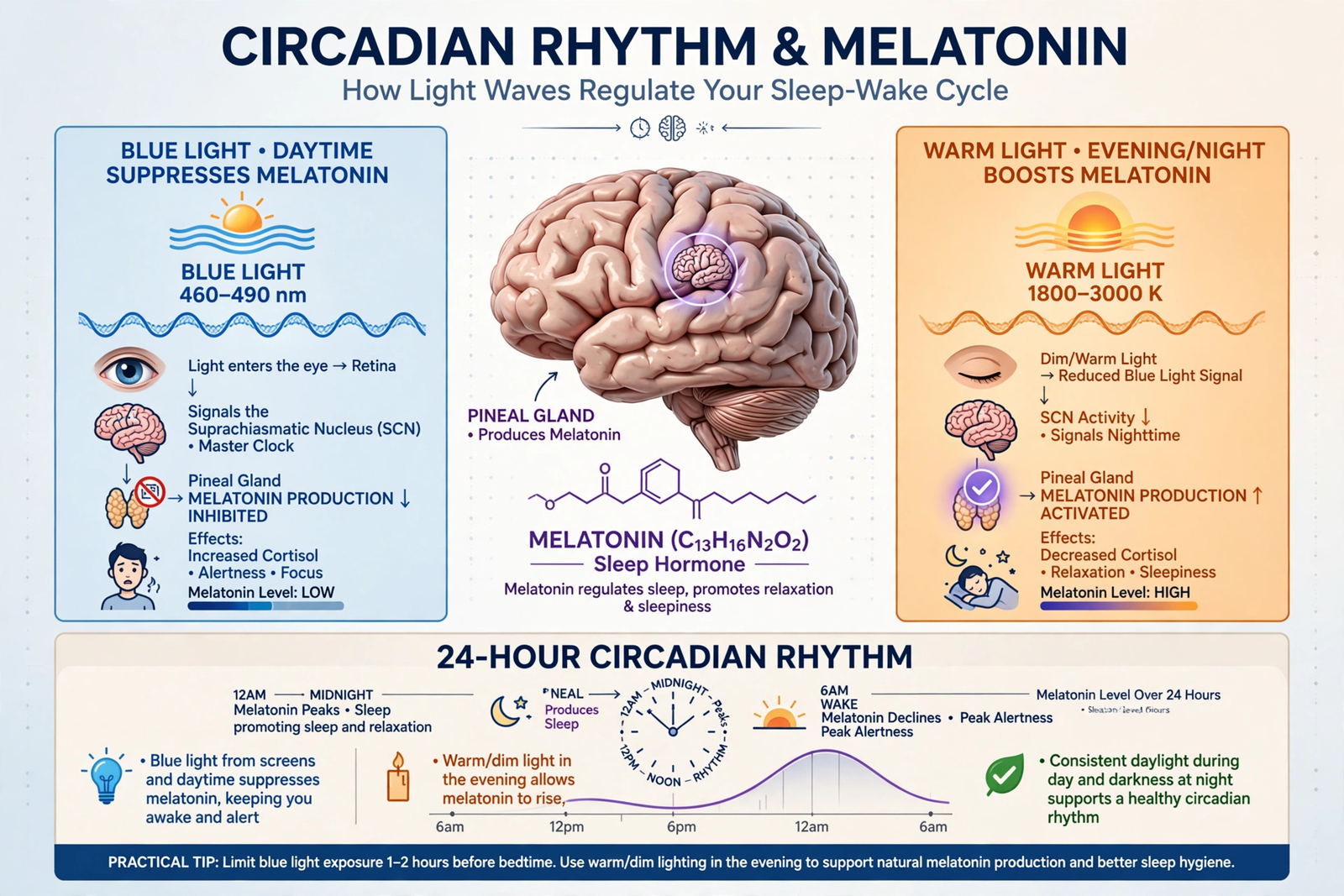
For example, your eyes contain specialized cells that don’t help you see. Their job is detecting blue light and reporting to your brain’s master clock. When they sense blue-rich light, your brain thinks it’s daytime and holds back melatonin. When blue light fades, melatonin flows and sleepiness follows.
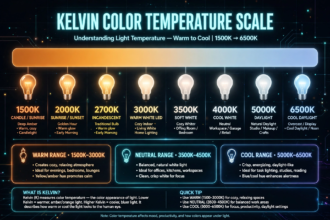
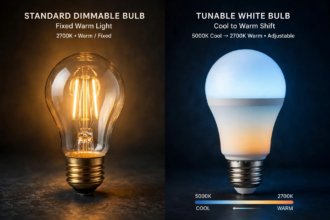
In other words, color temperature (measured in Kelvin) tells you how much blue light a bulb emits. In other words, higher Kelvin means more blue. Conversely, lower Kelvin means less.
- 6500K (daylight): packed with blue, great for mornings, terrible at night
- 4000K (neutral white): moderate blue, fine for daytime, not ideal evenings
- 3000K (warm white): reduced blue, okay for early evening
- 2700K (warm): low blue, the standard “cozy” bulb color
- 2200K (amber): very low blue, genuinely sleep-friendly
- 2000K and below: minimal blue, closest to candlelight
Specifically, a 2026 analysis of 52 household lamps found that cool white LEDs suppressed melatonin about three times more than warm white LEDs. Thus, same brightness, different color, triple the sleep disruption. The CDC confirms that blue light has the strongest circadian impact while amber and red light have little to none.
The Brightness Factor Everyone Misses
However, here’s what most sleep lighting guides get wrong. They obsess over color temperature and ignore brightness. However, that’s a mistake.
For instance, research published in PNAS found that light as dim as 25 lux could suppress melatonin by half in sensitive individuals. That’s roughly the brightness of a dim hallway. A 2021 modeling study concluded that light intensity deserves more weight than color temperature for nighttime lighting design.
In short, translation: a bright warm bulb can disrupt your sleep more than a dim cool bulb. Still, color matters, but brightness matters at least as much.
Therefore, this changes the practical advice. Don’t just set your bulbs to 2200K and call it done. Set them to 2200K AND dim them to 10% or less. Therefore, both levers pulled, maximum benefit.
For example, I learned this personally. I had my bedroom bulbs at a beautiful warm 2200K but was running them at 60% brightness because I liked how the room looked. My sleep didn’t improve much. When I dropped to 10%, everything changed. As a result, same color, one-tenth the light, dramatically better wind-down.
When to Start the Transition
Meanwhile, timing matters as much as the settings. Your body needs time to ramp up melatonin production. Yet flipping to warm dim light five minutes before bed doesn’t give your system enough runway.
Two Hours Before Bed: Begin Warming
First, start shifting below 3000K about two hours before your target bedtime. Dim to roughly half brightness. In other words, this is your body’s signal that evening has arrived. For instance, if you go to bed at 11, start the transition at 9.
One Hour Before Bed: Go Deep
Next, drop to 2200K or lower. Cut brightness to 10-20%. Consequently, the room should feel noticeably dimmer than daytime. This is wind-down mode. Reading, conversation, getting ready for bed. Meanwhile, all under warm amber light.
Bedtime: Minimum Viable Light
Finally, at bedtime, you want just enough light to function. Bedside lamp at 2200K and 5%. In short, that’s it. The room feels more like candlelight than electric light. As a result, your brain gets the message loud and clear: it’s nighttime.
Room-by-Room Night Settings
Bedroom
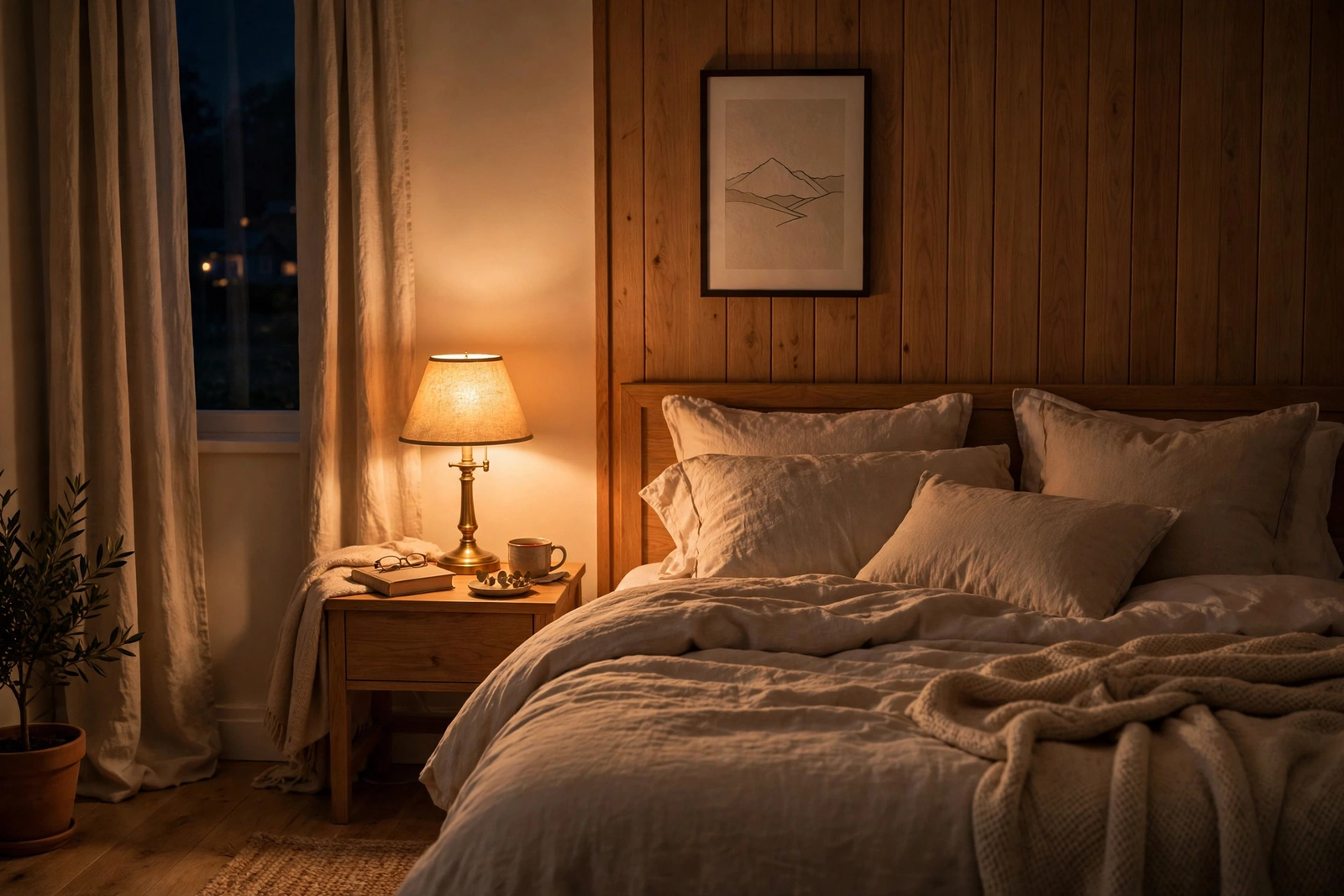
Naturally, this is the priority room. Specifically, bedside lamps at 2200K, 5-10% brightness in the last hour before sleep. Meanwhile, ceiling light off entirely after the evening transition starts. If you need to get up at night, a 1% amber glow is enough to navigate by.
Living Room
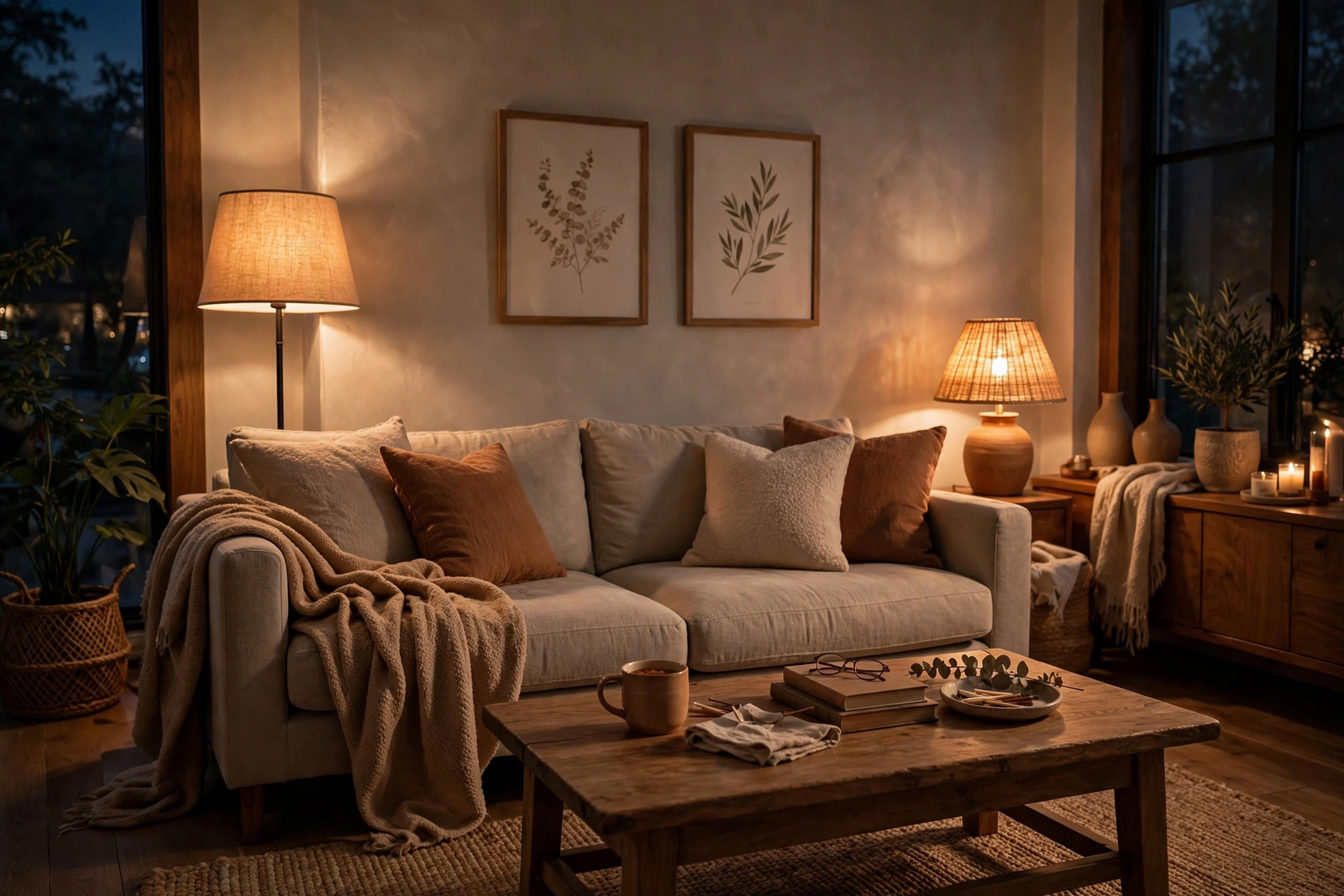
Similarly, where you spend the pre-bed hours matters too. Set living room lights to 2700K and 30-40% starting two hours before bed. Still, you don’t need cave darkness while watching TV or reading. Instead, just take the edge off the brightness and warmth.
Bathroom
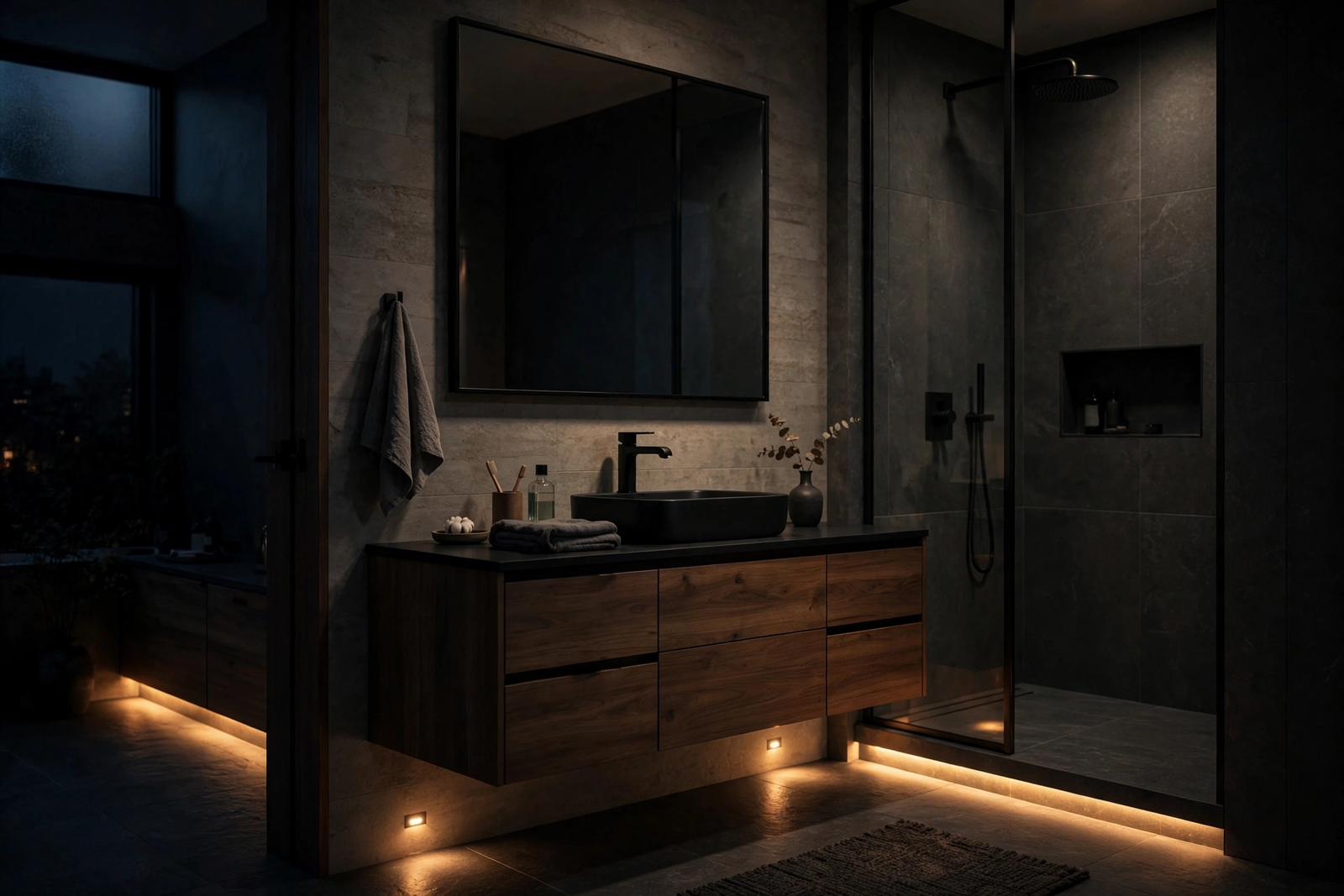
However, bathrooms are sleep killers. That bright vanity light at 5000K blasting your face during a 3 AM bathroom trip? It can suppress melatonin for the rest of the night. Put your bathroom on a nighttime scene: 2200K at 10%. Enough to see, not enough to wake your brain.
Hallway
Meanwhile, a dim amber hallway light (2200K, 1-3%) creates a safe path for nighttime trips without flooding your eyes. Motion-activated is ideal here. Light comes on when you need it, off when you don’t.
If you’re setting up smart home automations, most platforms let you create a “night mode” scene that sets all these at once.
What About Red Light?
For instance, you might have heard that red light is the ultimate sleep-friendly option. The science backs this up partially. Red light (around 620-750nm wavelength) has essentially zero impact on melatonin. The CDC notes that red light has no effect on the circadian clock.
So why isn’t everyone using red bulbs, then? at night? Because living under red light feels weird. It’s fine for a nightlight or a brief bathroom trip, but nobody wants their entire evening bathed in red. Amber (2200K) gives you 90% of the circadian benefit while still feeling like normal, pleasant light.
Therefore, practical approach: use amber tunable white for your main evening lighting. Add a small red nightlight for the bathroom or hallway if you want the absolute minimum circadian impact during nighttime trips.
Smart Bulb Settings That Work
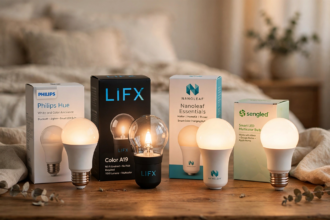
Philips Hue
For example, use the “Relax” scene (2237K) or create a custom scene at your preferred warmth. The Hue app’s sleep routines handle the gradual dimming automatically. Set the “Go to sleep” routine to fade over 30-60 minutes.
LIFX
Meanwhile, LIFX bulbs go down to 1500K, which is warmer than almost anything else. Use the Day and Dusk feature and set your evening target to the warmest setting. The app handles the daily transition.
WiZ and Govee
Similarly, both offer circadian rhythm modes in their apps. Set your bedtime and the app calculates the wind-down curve. WiZ bottoms out at 2700K, which isn’t ideal but works if you dim aggressively. Govee’s range goes lower.
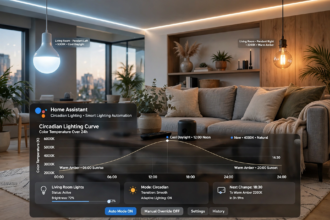
Home Assistant
Finally, the Adaptive Lighting integration handles all of this automatically. Set your sleep color temperature to 2000K and sleep brightness to 1%. It follows the sun during the day and drops to your sleep settings at night. Our smart bulb guide covers which bulbs pair best with Home Assistant.
What Color Temperature at Night for Better Sleep: Smart Lights Setup Guide
Now, let’s put the numbers into practice with your actual smart lights. The exact steps depend on your platform, but the principles are the same everywhere.
First, start by creating an evening scene in your smart home app. Name it something like “Wind Down” or “Bedtime.” Set all bedroom and living room lights to 2700K at 50% brightness. If you’re choosing bulbs for this setup, our smart bulb guide covers what to look for. Schedule this scene to activate two hours before your usual bedtime. Most apps let you tie this to a specific time or to sunset.
Then, next, create a second scene for the final hour. Call it “Sleep” or “Night.” Set bedroom lights to 2200K (or your bulb’s warmest setting) at 10% brightness. Turn off living room lights entirely, or drop them to 5% if someone is still up. Schedule this for one hour before bed.
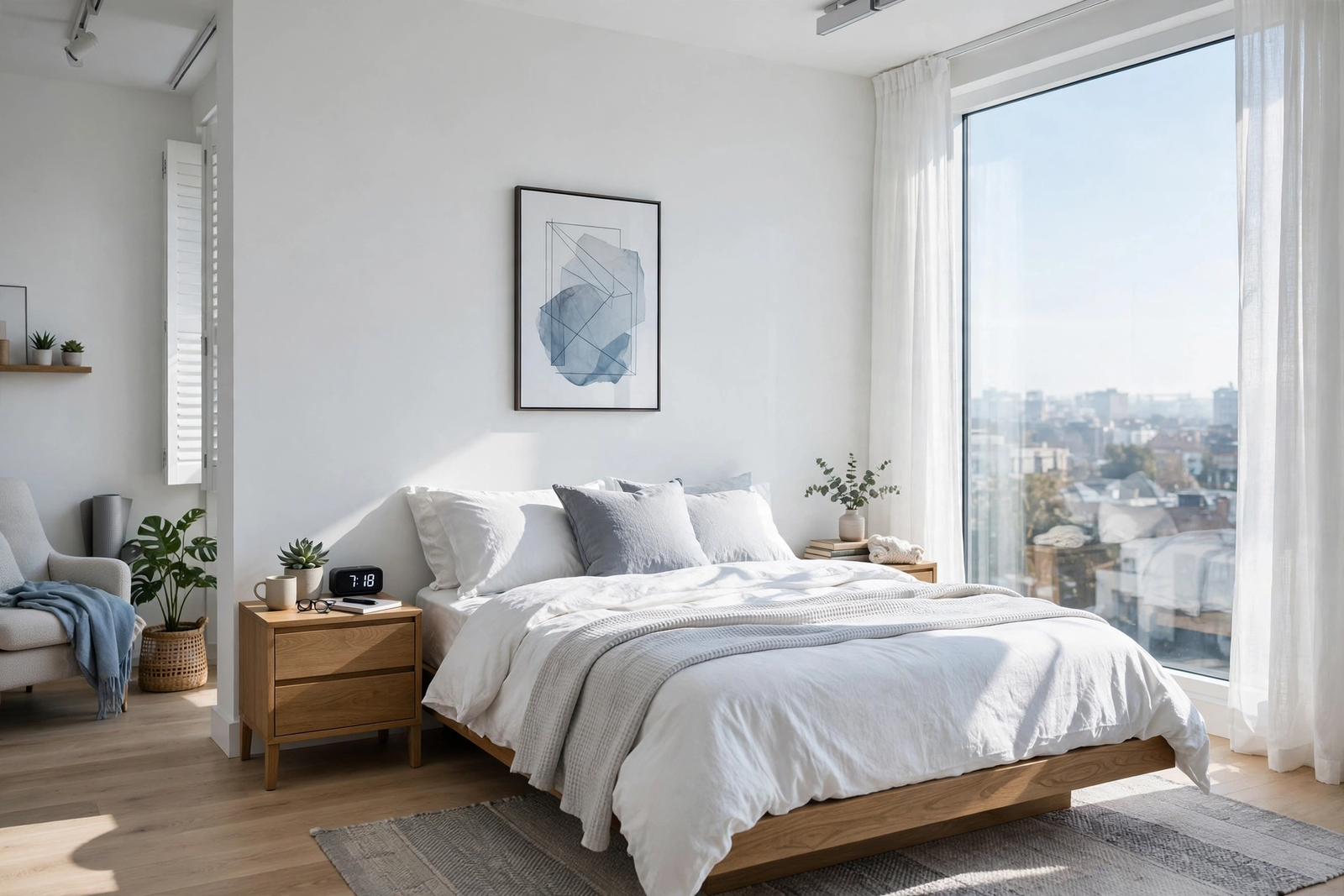
Lastly, finally, set up a nighttime navigation light. This can be a motion-activated hallway light or a dim bedside lamp at 1% and 2000K. The goal is safe movement without meaningful light exposure. Test it by walking your nighttime route. For hands-free control, Apple Home automations can trigger these scenes based on time or motion. You should be able to see obstacles without squinting or feeling dazzled.
Subsequently, run this three-scene system for two weeks before tweaking. Your body needs time to adjust to the new light signals. After two weeks, fine-tune the timing and brightness based on how sleepy you feel at bedtime.
Common Mistakes
Setting Warm Color But Keeping It Bright
First, this is the number one mistake. People set 2200K and leave brightness at 70%. The color is right but the intensity undoes most of the benefit. Warm AND dim. Both. Always both.
Forgetting About the TV and Phone
Second, perfect bedroom lighting means nothing if you’re staring at a bright phone screen in bed. Screens emit blue-rich light inches from your face. Use night mode on all devices, reduce screen brightness, and ideally put the phone away 30 minutes before sleep.
Only Changing the Bedroom
Third, if your bedroom is a warm dim cave but your living room blazes at 5000K until the moment you walk to bed, you’re undermining the transition. The two-hour wind-down needs to happen wherever you spend those two hours. Usually that’s the living room, not the bedroom.
Ignoring Seasonal Changes
For example, in summer, sunset might be at 8:30 PM. In winter, 5 PM. If your schedule is fixed to clock time rather than actual sunset, you’ll be out of sync half the year. Use location-based sunrise/sunset in your smart home app. Let the system follow the real sun.
FAQs
Is 2700K warm enough for good sleep?
It’s a start, but 2200K or lower is meaningfully better. 2700K still contains enough blue light to affect sensitive sleepers. If your bulbs max out at 2700K warmth, compensate by dimming further and starting the transition earlier. Every bit helps.
How dim should lights be before bed?
Aim for 10% brightness or less in the final hour. For context, 10% on most smart bulbs is roughly 80 lumens, similar to a single candle cluster. It feels surprisingly dim at first. Give yourself a week to adjust. Your eyes adapt faster than you expect.
Does candlelight really help sleep?
Candles burn at around 1800K-1900K, which is excellent for circadian health because the warm flickering light has minimal blue content. But they’re a fire hazard and impractical as primary lighting for obvious safety reasons. Smart bulbs at 2000K give you similar color temperature without the open flame. Safer, more practical, and programmable.
What if my partner needs brighter light than me?
Use individual bedside lamps on separate controls. Each person sets their own brightness and color. The shared ceiling light stays off after wind-down begins. This is the most common solution and it works well once both sides are set up.
Can nightlights disrupt sleep?
Standard white nightlights can, especially bright ones. But a dim amber or red nightlight at 1-3% brightness has negligible circadian impact. The key is keeping it dim, warm, and ideally at floor level rather than eye level. Motion-activated is best.
How long before I notice better sleep?
Most people report feeling sleepier earlier within one to two weeks of consistent use. Your body’s melatonin rhythm needs time to adjust to the new light signals you’re giving it each evening. Be consistent with your timing every night. Sporadic or irregular use won’t retrain your circadian clock effectively enough to notice real improvement.
Should I wear blue light glasses instead?
Blue light glasses help, but fixing your lighting is better. Glasses only protect your eyes. Proper evening lighting improves the whole environment. Do both if you want maximum benefit, but start with the bulbs since they help everyone in the room.
The Bottom Line
Set your smart lights to 2200K or lower, dimmed to 10% or less, starting two hours before bed. That’s the formula. Warm color plus low brightness plus good timing. Miss any one of those three and you leave sleep quality on the table.
Next step: tonight, set your bedroom bulbs to their warmest setting and dim them to 10%. Notice how the room feels. Then build the full schedule from there. Your body already knows what to do with this light. You’re just giving it the chance.