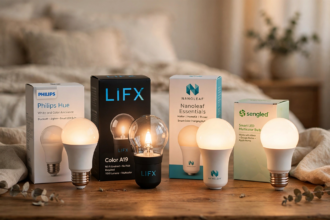



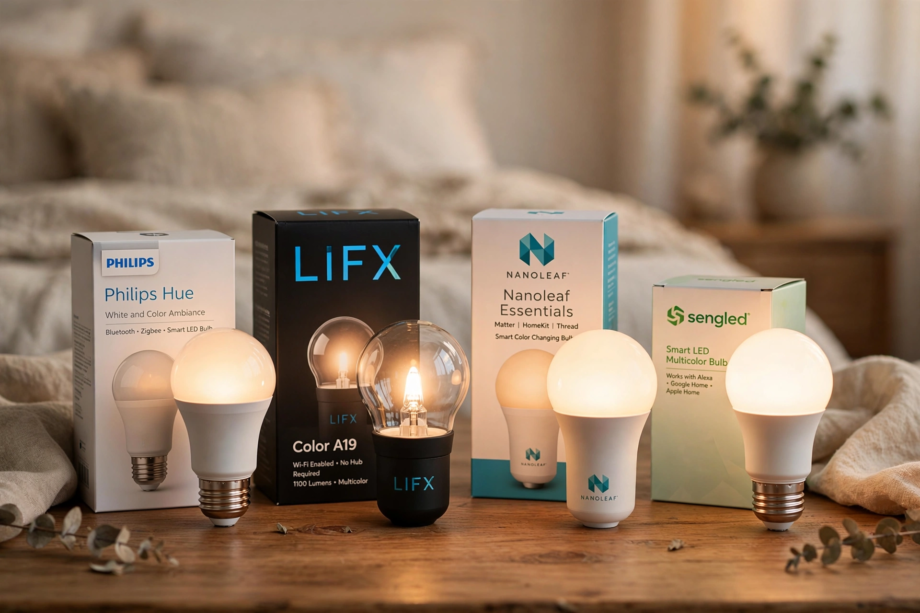
The best circadian rhythm smart bulbs for bedroom use are the Philips Hue White Ambiance, LIFX Color A19, and WiZ Tunable White. They shift from cool daylight to warm amber automatically and support dimming down to 1%. For most bedrooms, tunable white bulbs beat full RGB because they’re cheaper and color range matters more.
- What Makes a Good Circadian Bulb for the Bedroom
- Best Circadian Rhythm Smart Bulbs for Bedroom: Top Picks
- Philips Hue White Ambiance: The Safe Pick
- LIFX Color A19: Widest Range Available
- WiZ Tunable White: Best Budget Option
- Govee Smart Bulbs: Feature-Packed Value
- IKEA DIRIGERA Bulbs: Cheapest Way to Start
- Tunable White vs Full Color: What Bedrooms Need
- How Many Bulbs Does a Bedroom Need?
- Setting Up Your Sleep Schedule
- The Science: Why This Actually Works
- Common Mistakes to Avoid
- Keeping the Ceiling Light as Your Main Evening Light
- Setting Schedules But Never Adjusting Them
- Forgetting About Screens
- FAQs
- Do circadian bulbs really improve sleep?
- Can I use regular dimmable LED bulbs instead?
- How much should I spend on bedroom circadian bulbs?
- Do these bulbs work without internet?
- Will my partner’s different schedule mess this up?
- Are circadian bulbs safe for kids’ bedrooms?
- Can I mix brands in the same bedroom?
- The Bottom Line
In fact, your bedroom lighting shapes your sleep more than you think. That bright white ceiling light you flip on at 11 PM? For example, it’s telling your brain it’s midday. No wonder you toss and turn, for instance.
Specifically, circadian rhythm bulbs fix this by changing with the time of day. Cool and bright in the morning to wake you up, for example. Warm and dim at night to wind you down. Some do it automatically. Meanwhile, others need a schedule or a smart home system. Either way, the right bulb makes your bedroom work with your body instead of against it.
What Makes a Good Circadian Bulb for the Bedroom
However, not every smart bulb is good at this job. Here’s what actually matters, specifically.
Wide Color Temperature Range
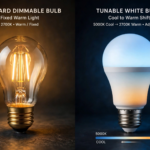
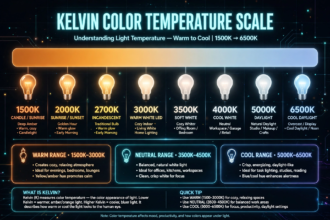
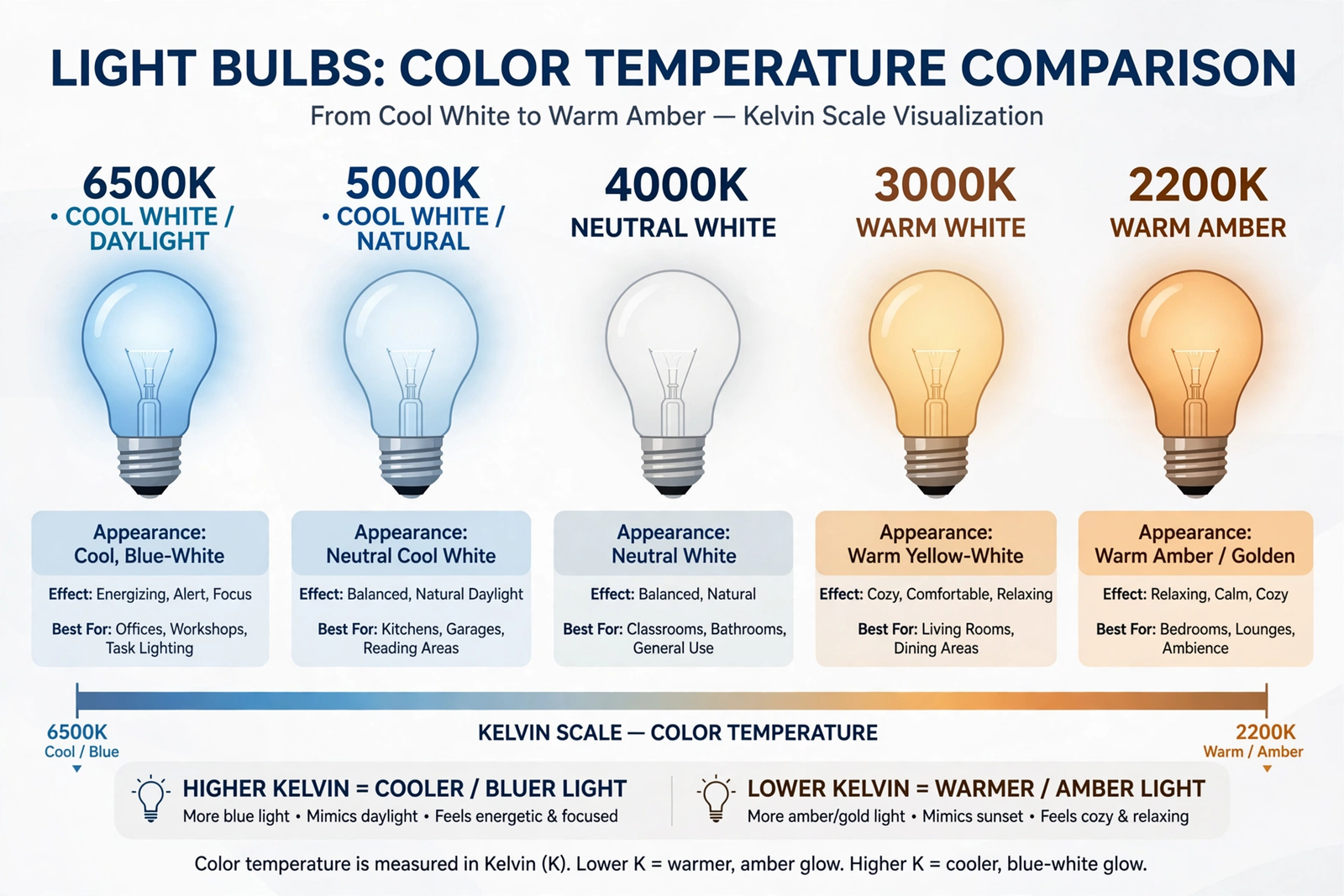
For example, the wider the range, the more natural the daily cycle feels. Look for bulbs that go from at least 2700K (warm) to 5000K+ (cool daylight), for instance. The best ones dip down to 2000K or 2200K for that deep amber evening glow.
So why does the low end matter so much? Because 2700K still contains meaningful blue light. Drop to 2200K and blue content falls dramatically. As a result, that difference shows up in how fast you feel sleepy.
Deep Dimming Without Flicker
In contrast, a bulb that only dims to 10% isn’t dim enough for bedtime. Instead, you want 1% or close to it. At that level, the room has a gentle glow rather than real illumination. Consequently, your eyes stay relaxed. Your melatonin flows.
Meanwhile, flicker is the hidden enemy here. Some bulbs flicker at very low brightness, which causes eye strain and headaches. In contrast, quality brands handle low-end dimming smoothly. Cheap bulbs often don’t.

Reliable Scheduling or Automation
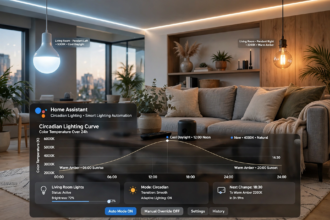
Yet a circadian bulb that you have to adjust manually every night isn’t really a circadian bulb. Therefore, look for built-in sunrise/sunset routines, or make sure it plays well with your smart home platform. Philips Hue, Apple Home, Google Home, and Home Assistant all offer solid automation options.
Best Circadian Rhythm Smart Bulbs for Bedroom: Top Picks
Philips Hue White Ambiance: The Safe Pick
First, if you want something that just works, start here. The Hue White Ambiance line covers 2200K to 6500K, dims smoothly to very low levels, and the Hue app has built-in routines for wake-up and wind-down.
Moreover, the standout feature is the Natural Light scene. You can see the full specs on the official Philips Hue website. It adjusts color temperature based on your local sunrise and sunset times automatically. In other words, no scripting, no third-party apps. It just follows the sun.
On the other hand, downsides? You need the Hue Bridge for the full experience. That adds about $60 to your startup cost. However, the Bridge also means your automations run locally. Internet goes down, your sleep schedule doesn’t care.
Therefore, for bedroom use, two bulbs is usually plenty. If you’re new to smart lighting platforms, Apple Home offers straightforward bulb control that works well for beginners. One in each bedside lamp, or one bedside and one in the main fixture. For instance, start small and see how it feels.
LIFX Color A19: Widest Range Available
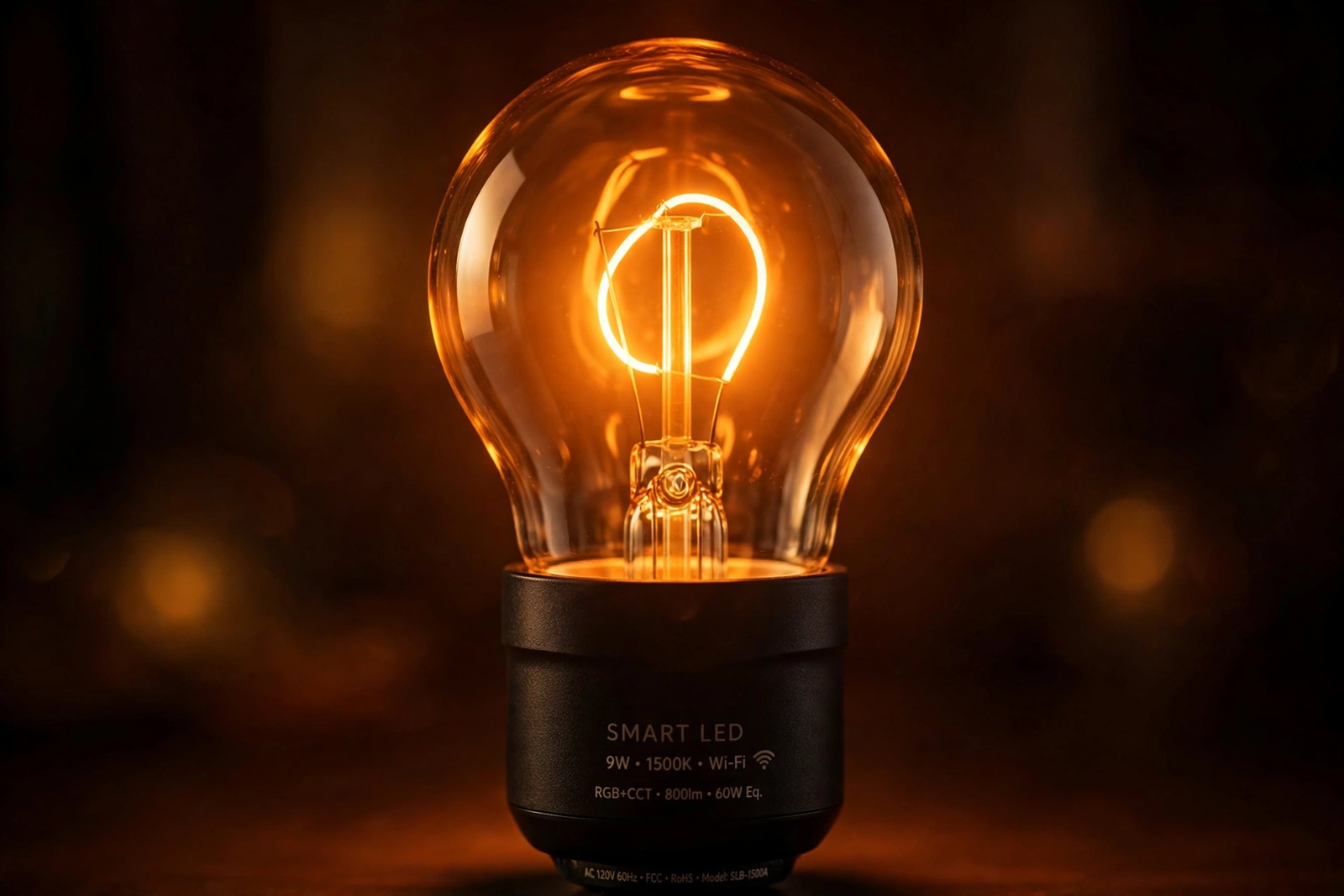
Next, LIFX claims the widest color temperature range of any consumer bulb: 1500K to 9000K. That 1500K bottom end is remarkable. It produces a deep orange glow that filters out roughly 95% of blue light. Nothing else in this price range goes that warm.
Subsequently, the Day and Dusk mode handles the daily cycle automatically. No hub needed since LIFX connects over WiFi directly. Setup is genuinely quick.
However, the catch is price and WiFi load. At around $35 per bulb, outfitting a whole bedroom gets expensive fast. And because each bulb is a separate WiFi device, a house full of LIFX bulbs can strain your router. For a bedroom with two or three bulbs, though, it’s a non-issue.
Our broader smart bulb buying guide covers what to check before committing to any ecosystem.
WiZ Tunable White: Best Budget Option
Then consider WiZ bulbs (made by Signify, the same company behind Philips Hue) offer tunable white from 2700K to 6500K at a fraction of the Hue price. They connect over WiFi with no hub required.
In addition, the Circadian Rhythm mode in the WiZ app adjusts color temperature through the day automatically. It’s not as sophisticated as Hue’s system, but it covers the basics well.
Still, what you give up: the low end stops at 2700K, which isn’t as warm as the Hue or LIFX options. For the price, though, it’s hard to complain. If you want to try circadian lighting without spending much, WiZ is the entry point.
Govee Smart Bulbs: Feature-Packed Value
Meanwhile, Govee has been pushing hard into circadian lighting. Their newer bulbs support a wide color temperature range and the Govee app includes scene modes designed around daily rhythms. At CES 2026, they showed off DaySync technology that adjusts based on time of day and even weather conditions.
As a result, Govee bulbs are affordable, widely available, and integrate with Alexa, Google Home, and increasingly with Home Assistant. If you’re already in the Govee ecosystem, their bulbs are the natural choice for bedroom circadian lighting.
Nevertheless, the trade-off is polish. Govee’s app isn’t as refined as Hue’s, and long-term reliability data is thinner. But for the price, the feature set is impressive.
IKEA DIRIGERA Bulbs: Cheapest Way to Start
Finally, IKEA’s smart bulbs are almost absurdly cheap, and the tunable white versions work fine for basic circadian setups. Pair them with the DIRIGERA hub and you get scheduling and remote control.
Still, don’t expect the smoothest dimming or the warmest low end. But if you want to test whether circadian lighting actually helps your sleep before investing in premium bulbs, IKEA lets you experiment for very little money.
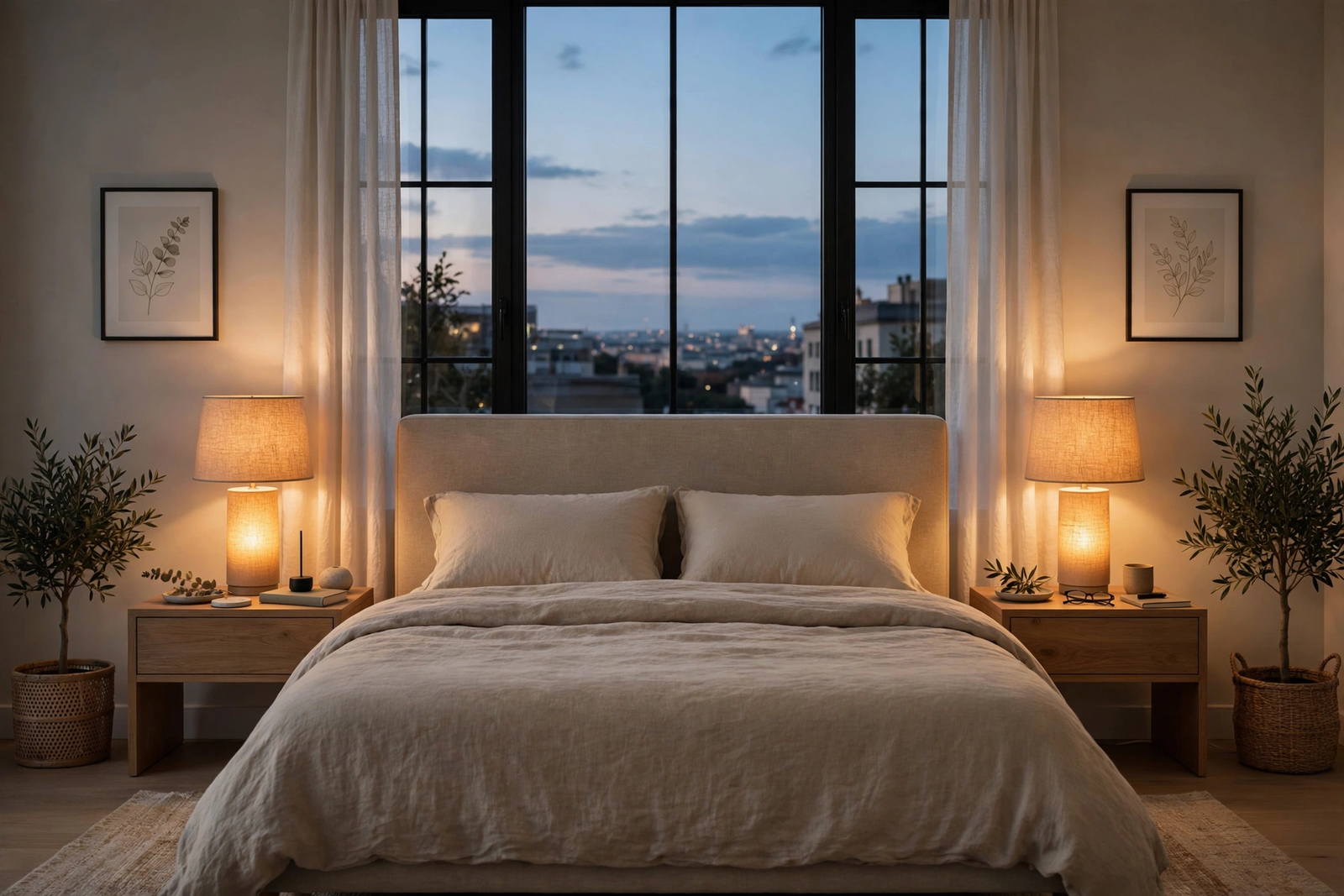
Table: Circadian bedroom bulbs compared
| Bulb | Color Range | Hub Needed | Best For |
|---|---|---|---|
| Philips Hue White Ambiance | 2200K-6500K | Yes (Bridge) | Reliability and automation |
| LIFX Color A19 | 1500K-9000K | No (WiFi) | Warmest evening light |
| WiZ Tunable White | 2700K-6500K | No (WiFi) | Budget circadian setup |
| Govee Smart Bulb | 2200K-6500K | No (WiFi) | Features per dollar |
| IKEA Tunable White | 2200K-4000K | Yes (DIRIGERA) | Cheapest experiment |
Tunable White vs Full Color: What Bedrooms Need
So here’s a question I get a lot. Do you need RGB color bulbs, or is tunable white enough?
In short, for circadian rhythm purposes, tunable white wins. The whole point is shifting between warm and cool white light. You don’t need purple or green for that. Tunable white bulbs are cheaper, simpler, and the color temperature range is what matters.
On the other hand, full color bulbs make sense if you also want mood lighting, movie scenes, or party effects in the bedroom. The LIFX is the exception because its extreme 1500K low end comes from the RGB LEDs mixing deep amber. But for most people, a good tunable white bulb does the circadian job perfectly.
Save the RGB bulbs for the living room. Keep the bedroom simple and focused on sleep. Once you’ve picked your bulbs, adding sensors can automate your bedtime routine even further.
How Many Bulbs Does a Bedroom Need?
Frankly, less than you think. The goal isn’t to light the bedroom like a stadium. It’s to create a gentle cycle of light that supports your rhythm.
Specifically, two bulbs is the sweet spot for most bedrooms. One in each bedside lamp gives you symmetric, controllable light right where you read and wind down. If you have a ceiling fixture, add a third there but keep it dimmer than the bedside lamps in the evening.
In fact, here’s what surprised me when I set mine up: the bedside lamps matter ten times more than the ceiling light. You’re never looking directly at the ceiling. But your bedside lamp is in your peripheral vision for the entire wind-down period. That’s the light your brain actually registers.
Setting Up Your Sleep Schedule
However, buying the bulbs is step one. Programming them is where the benefit comes from.
Morning: Bright and Cool
Set your bulbs to ramp up to cool white (5000K+) at full or near-full brightness 15 to 30 minutes before your alarm. This mimics sunrise and tells your body to stop producing melatonin. It’s gentler than a blaring alarm and you wake up feeling more alert.
Evening: Warm and Dimming
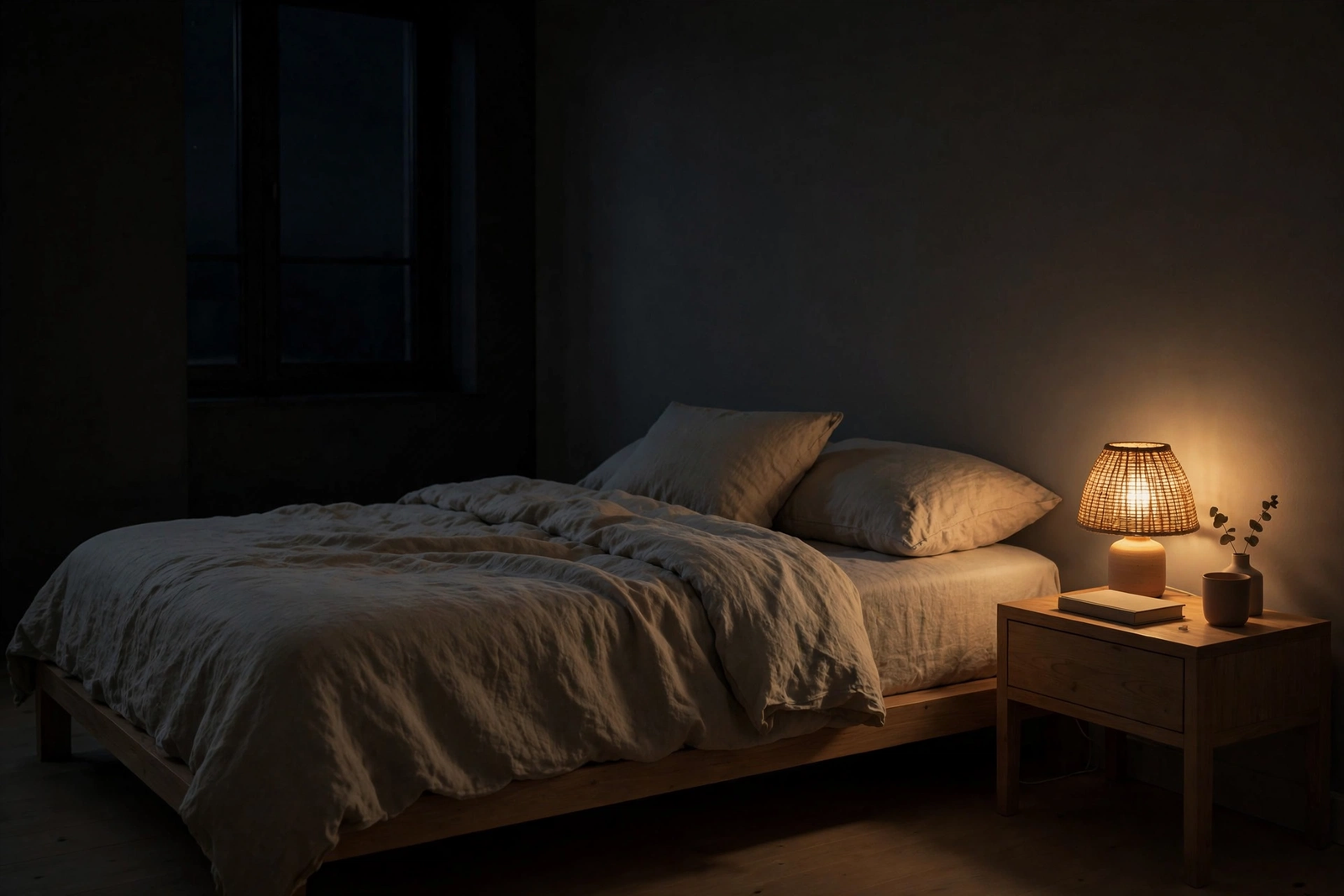
Starting about two hours before bed, shift to warm tones (2700K and below) and begin dimming. By bedtime, you want 2200K or lower at 10% brightness or less. The room should feel cozy and dim, not lit.
Night: Barely There
If you need a light for bathroom trips, set one bulb to 1% at the warmest setting. That’s enough to navigate by without waking your brain up. Some people use a separate dim night light for this instead of their main bulbs.
The Science: Why This Actually Works
This isn’t wellness marketing fluff. The biology is well established.
Specialized cells in your eyes detect blue light and signal your brain’s master clock. When they sense blue-rich light, melatonin production drops. When blue light fades, melatonin rises and you get sleepy. It’s a system refined over millions of years of sunrises and sunsets.
Modern LEDs broke this system by blasting blue-rich light all evening. A 2026 analysis of 52 household lamps found cool white LEDs suppressed melatonin roughly three times more than warm white LEDs at the same brightness. The CDC confirms that blue light has the strongest circadian impact while warm amber light has minimal effect.
Brightness matters too, maybe even more than color. Research found that light as dim as 25 lux could suppress melatonin by half in sensitive individuals. So the ideal bedroom bulb goes both warm AND dim at night. Color alone isn’t enough if the bulb is still blazing.
Common Mistakes to Avoid
Keeping the Ceiling Light as Your Main Evening Light
Overhead lights are the worst for wind-down. They shine directly into your eyes and light the whole room uniformly. Switch to bedside lamps in the evening. The lower angle and localized light is naturally less stimulating.
Setting Schedules But Never Adjusting Them
Your ideal schedule shifts with the seasons. In winter, sunset comes early and your wind-down should start sooner. Most apps handle this automatically if you enable location-based sunrise/sunset. If yours doesn’t, adjust manually every couple of months.
Forgetting About Screens
The perfect bedroom lighting can’t overcome two hours of phone scrolling in bed. Your phone screen is inches from your face and loaded with blue light. The bulbs help, but they’re one piece of the puzzle. Put the phone down. Your sleep will thank you.
FAQs
Do circadian bulbs really improve sleep?
The evidence is solid for the underlying mechanism: warm dim light in the evening supports melatonin production, while cool bright light in the morning suppresses it. Whether a specific bulb brand delivers measurable sleep improvement varies by person, but the light biology is well established by decades of research.
Can I use regular dimmable LED bulbs instead?
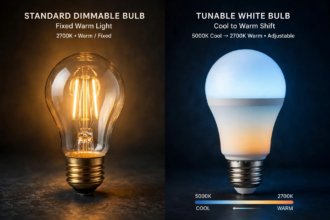
Regular dimmable bulbs help with the brightness half of the equation but can’t shift color temperature. Dimming a cool white bulb still exposes you to blue-rich light. For the full circadian benefit, you need tunable white or color bulbs that go warm in the evening.
How much should I spend on bedroom circadian bulbs?
Budget around $30 to $70 for a two-bulb bedroom setup. WiZ or IKEA bulbs land at the low end, Philips Hue in the middle, LIFX at the high end. Don’t overspend on features you won’t use. For sleep, color range and smooth dimming matter more than RGB effects.
Do these bulbs work without internet?
Philips Hue with the Bridge works fully offline since processing is local. WiFi bulbs like LIFX and WiZ need your local network but not necessarily internet for basic schedules. Check your specific brand, but most handle pre-programmed schedules without cloud access.
Will my partner’s different schedule mess this up?
It can. If one of you sleeps at 10 and the other at midnight, shared bedroom lighting is a compromise. The practical fix is individual bedside lamps on separate schedules. Each person controls their side. The ceiling light stays off after the earlier bedtime.
Are circadian bulbs safe for kids’ bedrooms?
Yes. There’s nothing harmful about the light itself. Warm dim light in the evening is arguably better for kids than standard bright bulbs. Just make sure schedules match their bedtime, which is usually earlier than adults. The automation handles the rest.
Can I mix brands in the same bedroom?
You can, but it’s harder to keep them synchronized. Different apps mean different schedules to maintain. If you use Home Assistant or Apple Home as a central controller, mixing works fine because one system drives everything. Without a hub, stick to one brand per room.
The Bottom Line
For most bedrooms, the Philips Hue White Ambiance hits the sweet spot of range, reliability, and automation. Budget shoppers should look at WiZ. Anyone who wants the absolute warmest evening light should consider LIFX. Whatever you pick, get tunable white, set up the daily schedule, and give it two weeks. Your sleep is worth the experiment.
Next step: pick your bulb, install two in your bedside lamps, and program a wind-down schedule starting two hours before bed. That’s it. The bulbs do the rest.