


Does humidity rise or fall? Both, depending on what you mean. Relative humidity falls when temperature rises, because warm air can hold more moisture. At the same time, warm humid air physically rises inside your home, which means upstairs rooms usually run 1-5% more humid than downstairs ones.
- Does Humidity Rise or Fall? The Two Answers
- Answer 1: Relative Humidity Falls as Temperature Rises
- Answer 2: Humid Air Physically Rises Through Your House
- Where Humidity Sits in Your Home
- The Basement Exception
- What This Means for Comfort and Equipment
- How to Balance Humidity on Every Floor
- FAQs
- Does humidity go up or down when it gets hot?
- Is it more humid upstairs or downstairs?
- Why does humidity rise at night?
- Does warm air hold more humidity than cold air?
- Should I put a dehumidifier upstairs or downstairs?
- Why is my upstairs more humid in summer?
- Two Kinds of Rise, One Clear Picture
Those are two different phenomena sharing one confusing question. The first is about the thermometer: heat the same air and its humidity percentage drops. The second is about physics: moist air is lighter than dry air, which lets it float upward through your house. Once you separate the two, everything from sticky upstairs bedrooms to foggy basement walls finally makes sense.
Does Humidity Rise or Fall? The Two Answers
Most people asking this question want one of two things. For instance, they noticed their humidity reading drop when the heat kicked on, or they feel muggier upstairs than downstairs. Both observations are real, and both have the same root cause: warm air behaves differently than cold air.
Answer one is about relative humidity versus temperature. For example, warm the air up and the percentage falls; cool it down and the percentage climbs. In contrast to what the percentage suggests, the actual amount of water in the air never changed.
Answer two is about buoyancy. Warm, moist air is less dense than cool, dry air. It rises, which is why the upstairs hallway feels stickier than the living room, and why attic moisture problems are common. In other words, your house is a slow-motion hot air balloon, with damp air drifting upward all day.
Answer 1: Relative Humidity Falls as Temperature Rises
Here’s the core rule: for a fixed amount of moisture, relative humidity moves opposite to temperature. Temperature up, humidity percentage down. Temperature down, humidity percentage up.

As NASA explains, a volume of air at 20°C (68°F) can hold twice as much water vapor as the same volume at 10°C (50°F). Take air holding a fixed amount of moisture at 50% humidity and 68°F. Warm it to 77°F without adding any water, and the humidity drops toward 35%. The air didn’t dry out. It just got roomier.
This explains the winter dryness mystery. Cold outdoor air at 30°F might read 70% humidity outside, which sounds damp. But that cold air holds very little actual water. Bring it inside and heat it to 70°F, and the relative humidity crashes to around 20%. Your skin cracks, your throat scratches, and you wonder where all the moisture went. It never existed; the percentage was lying to you.
The reverse happens on summer nights. As evening air cools, its capacity shrinks and the humidity percentage climbs even though no moisture was added. However, that’s why a pleasant 50% afternoon can turn into a clammy 85% night. Dew forms when cooling pushes the percentage all the way to 100%.
In short, temperature controls the container size. Moisture is the water inside. Relative humidity just reports how full the container is. Change the container without touching the water, and the percentage has to move.
Answer 2: Humid Air Physically Rises Through Your House
Now the second meaning. Moist air is genuinely lighter than dry air, molecule for molecule. Water vapor (H2O) weighs less than the nitrogen and oxygen it displaces. A parcel of warm, humid air therefore floats up through cooler, drier air around it.
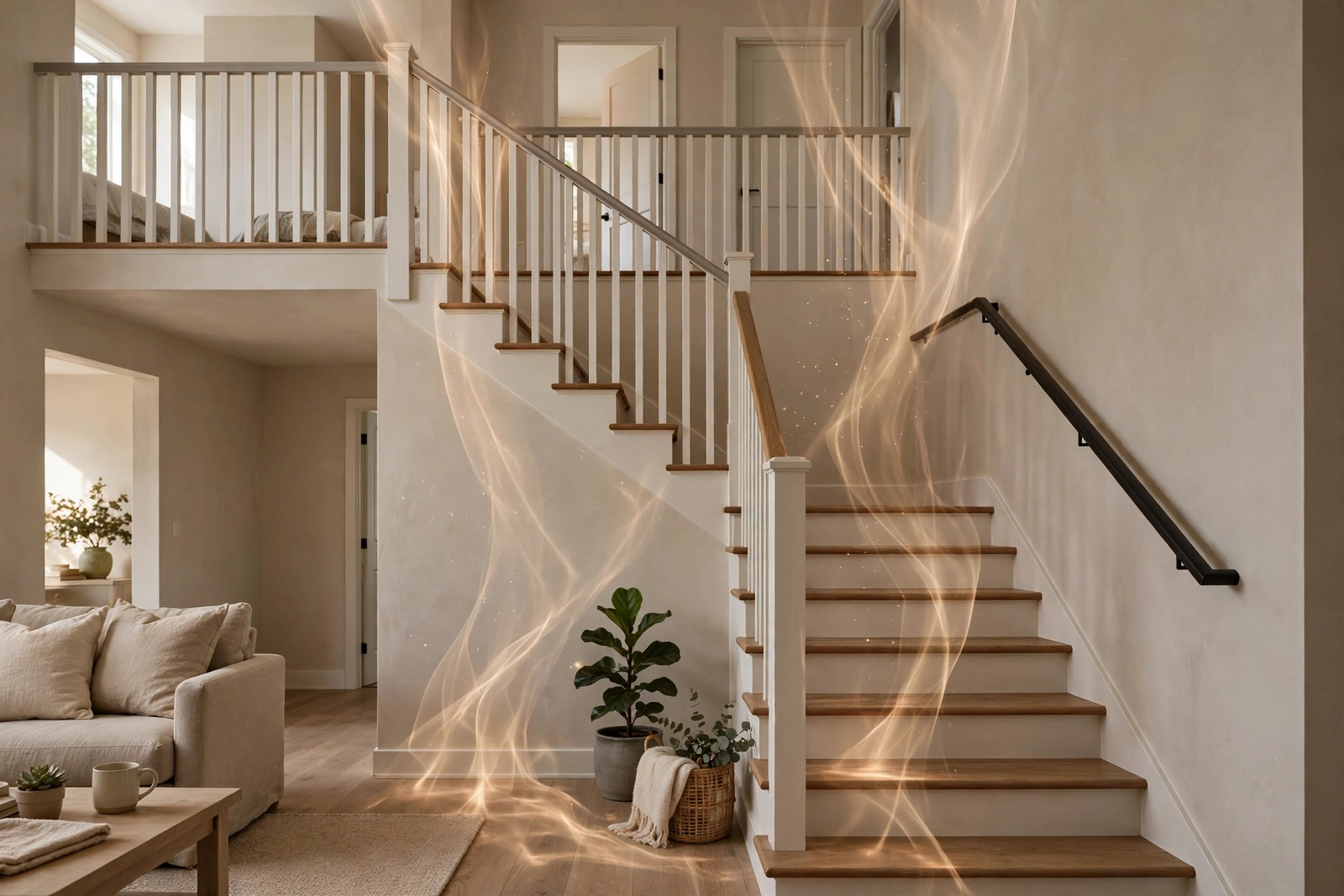
In a typical two-story home, this means upstairs humidity runs about 1-5% higher than downstairs under normal conditions. HVAC pros treat that gap as expected. When the gap exceeds 5%, something is wrong: poor upstairs ventilation, leaky attic ductwork, or a moisture source like an upstairs bathroom with a weak exhaust fan.
The stack effect amplifies it. Warm air rising creates a gentle upward draft through stairwells and open floor plans, carrying bathroom steam and cooking moisture to the upper floor. Meanwhile, the thermostat usually lives downstairs in the hallway, which means the system cools based on downstairs conditions and stays blind to the upstairs mugginess. If your thermostat readings never seem to match how the bedrooms feel, learning how to reset a Honeywell thermostat can at least rule out a calibration problem before you blame the equipment.
Ceilings collect the most moisture of all. Specifically, measure at the ceiling and you’ll often find humidity noticeably higher than at floor level in the same room. That’s why mold often starts in upper corners and why bathroom ceilings are ground zero for mildew.
Where Humidity Sits in Your Home
Every level of a house tells a different moisture story. The table below summarizes the typical pattern.
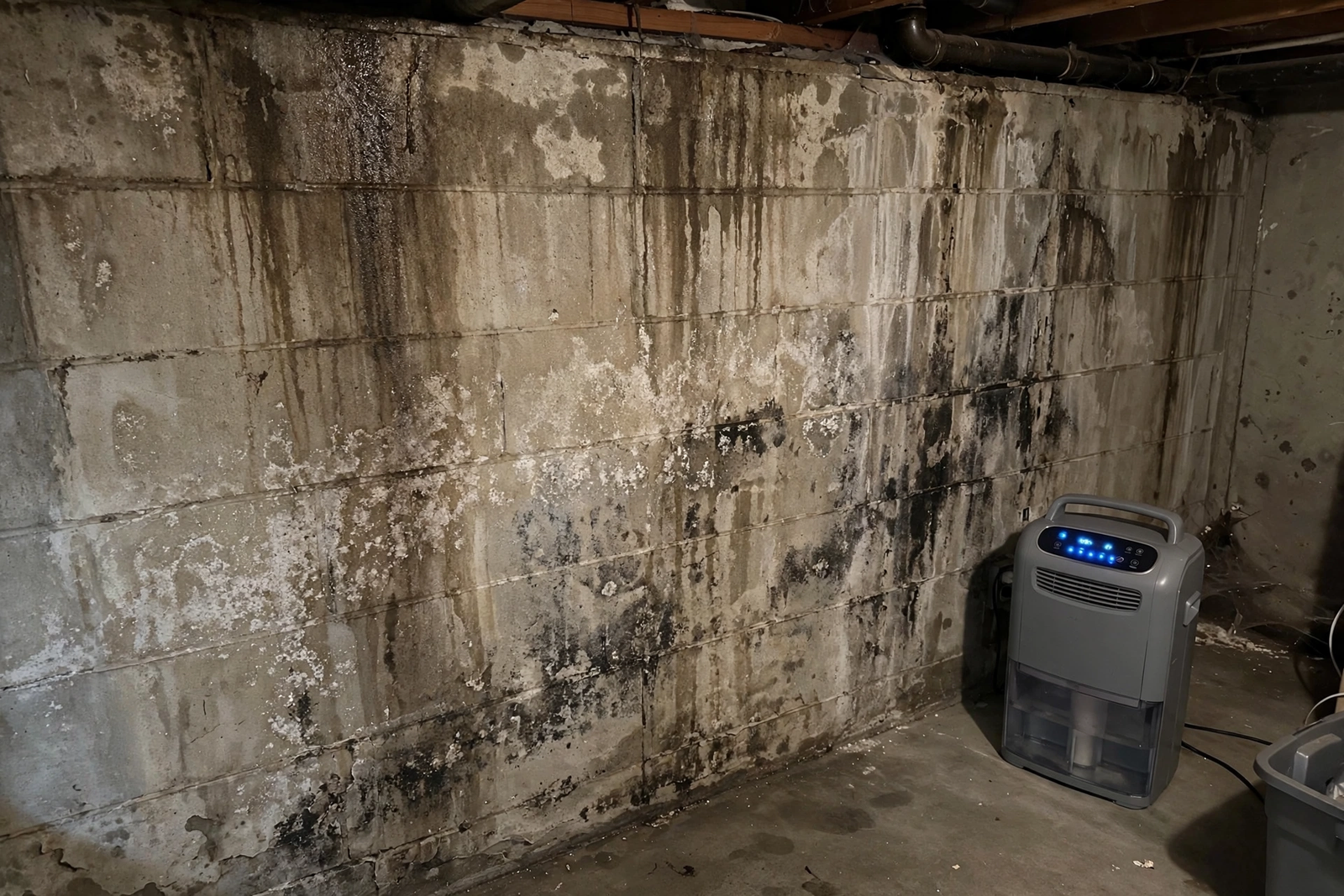
Table: Typical humidity by floor level
| Floor | Typical pattern | Why |
|---|---|---|
| Attic | Highest swings | Hot in summer, cold in winter; roof leaks add moisture |
| Upstairs | 1-5% above downstairs | Warm moist air rises and collects here |
| Main floor | Baseline | Where the thermostat lives; most balanced |
| Basement | Often the dampest | Ground moisture seeps through walls and floor |
Yet notice: the basement breaks the “rises” rule. Basements are frequently the dampest spot in the house despite being at the bottom, because moisture wicks in from the surrounding soil. Groundwater doesn’t care about air buoyancy. The full picture: humidity rises through living spaces, but the basement plays by its own rules.
The Basement Exception
If humid air rises, why is the basement damp? Basements don’t get their moisture from the air; they get it from the earth. Concrete is porous, and water migrates through foundation walls and floors through capillary action. A basement can sit at 65% humidity while the upstairs reads 45%.

This matters for dehumidifier placement. A portable dehumidifier in the basement only dries the basement; it isn’t powerful enough to pull moisture down from upstairs. Conversely, an upstairs dehumidifier won’t fix a wet basement. Instead, match the machine to the moisture source, not to the floor you happen to be standing on.
Watch for the warning signs down there: musty smell, efflorescence (white mineral crust on walls), and condensation on cold water pipes. Those all point to ground moisture. Therefore, no amount of upstairs ventilation will solve them. If the musty air is triggering allergies, an air purifier can help with the allergens while you tackle the moisture. Specifically, seal foundation cracks, extend downspouts away from the house, and run a dedicated basement dehumidifier.
What This Means for Comfort and Equipment
Understanding both answers changes how you manage your home. First, stop chasing a single humidity number. Upstairs will read a few points higher than downstairs, and that’s normal physics, not a malfunction.
Second, place hygrometers on both floors for a week before making changes. Two $15 hygrometers from Home Depot, one upstairs and one downstairs, will show you the real gap. If it’s 1-5%, relax. Nevertheless, if it’s 8-10% or more, investigate ventilation and ductwork before buying equipment.
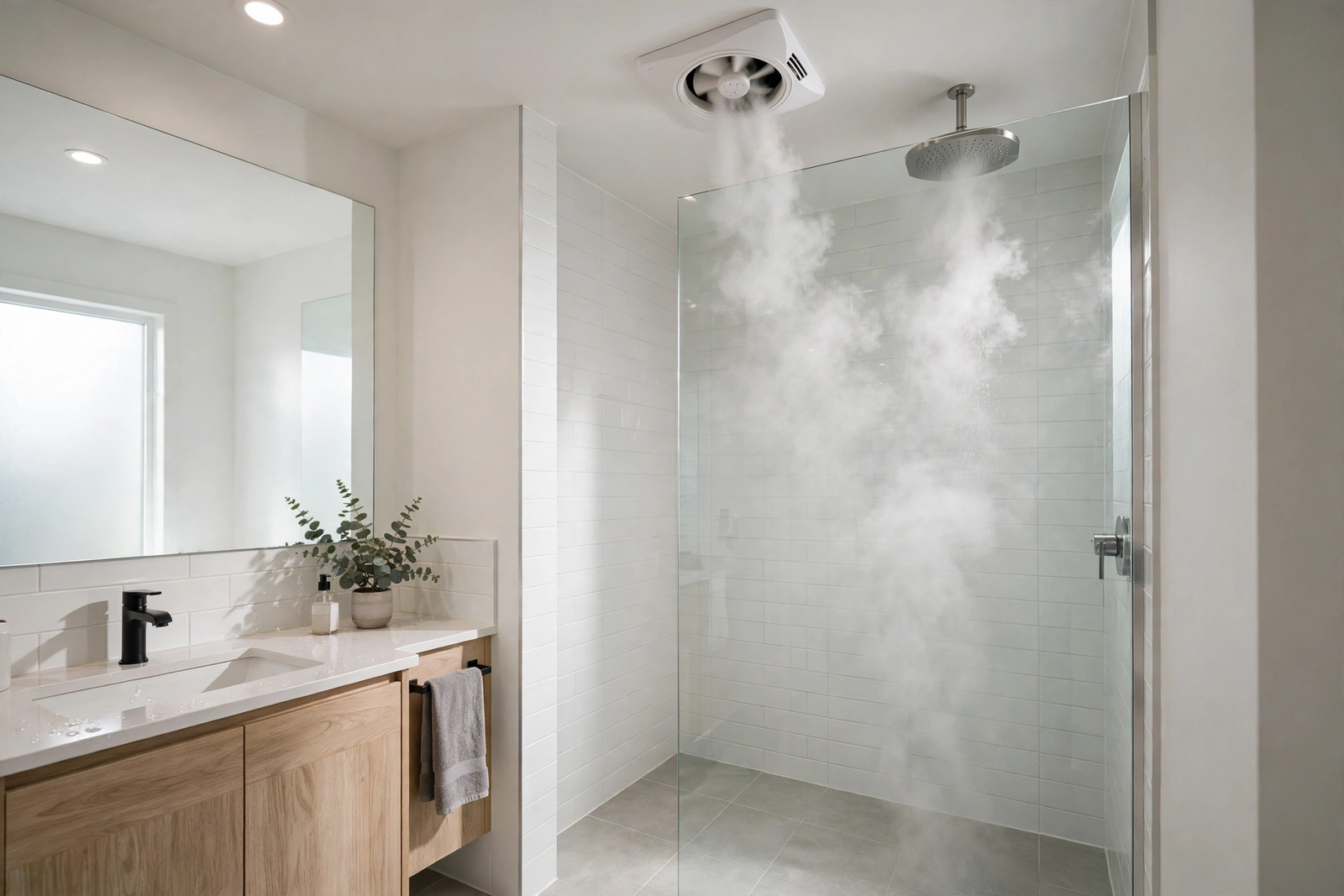
Third, think about where moisture is born. Bathrooms and kitchens generate most indoor humidity, and the stack effect delivers it upstairs. Run exhaust fans during showers and for 20 minutes after. Use the range hood when boiling water. Moreover, cutting moisture at the source beats fighting it at the ceiling.
Fourth, remember the temperature relationship when seasons change. Still, when you start heating in fall, expect indoor humidity to fall even though nothing else changed. Indeed, that’s the container getting bigger. A humidifier setting that was perfect in October may be inadequate by January, therefore recheck monthly through winter.
How to Balance Humidity on Every Floor
First, start with measurement, not equipment. Place one hygrometer upstairs and one downstairs, then compare readings for a full week. A steady 1-5% gap is normal physics. However, a gap above 5% means something is actively wrong, such as blocked vents or leaky ducts.
Next, attack moisture at its source. Bathrooms and kitchens produce most indoor humidity. Run exhaust fans during showers and for 20 minutes after, in particular the bathroom fan. Also use the range hood every time you boil water. In fact, cooking without ventilation pumps surprising moisture into the air; a single pasta pot releases roughly a cup of water as steam.
Then help ventilation work with the stack effect instead of against it. Crack a downstairs window slightly while running an upstairs exhaust fan, and fresh air will sweep upward through the house, carrying moisture out. As a result, both floors dry faster than with random window-opening.
For winter dryness, add moisture low where it’s needed. A portable humidifier in the downstairs living area lets rising air distribute moisture naturally. Meanwhile, keep bedroom doors open so the humidified air reaches sleeping areas too.
Finally, don’t fight physics with a single thermostat. If upstairs comfort matters, consider a zoned system or a smart thermostat with remote sensors. Otherwise, you’ll keep cooling the downstairs hallway while the bedrooms swelter.
FAQs
Does humidity go up or down when it gets hot?
Relative humidity goes down when air gets hotter, assuming no moisture is added. Warm air can hold much more vapor, so the same amount of water becomes a smaller percentage of capacity. That’s why heated winter air feels dry. The actual moisture content, measured by dew point, stays the same unless water is added or removed.
Is it more humid upstairs or downstairs?
Upstairs is usually more humid, typically by 1-5% relative humidity. Warm, moist air is less dense than dry air, and it rises through stairwells and open spaces. The exception is the basement, which is often the dampest level because ground moisture seeps through the foundation. Still, if the upstairs-downstairs gap exceeds 5%, check ventilation and ductwork.
Why does humidity rise at night?
Nighttime cooling shrinks the air’s moisture capacity and relative humidity climbs even with no new moisture. The actual water content stays the same; only the percentage changes. This is also why dew forms overnight: cooling pushes humidity to 100%, and the excess condenses. A bedroom that felt fine at 6 PM can feel clammy by 2 AM.
Does warm air hold more humidity than cold air?
Yes, dramatically more. Air at 68°F holds roughly twice the water vapor of air at 50°F, and the capacity roughly doubles again every 20°F after that. This exponential relationship is why small temperature changes swing humidity readings dramatically. It’s the single most important fact for understanding indoor moisture, and it explains both winter dryness and summer mugginess.
Should I put a dehumidifier upstairs or downstairs?
Put it near the moisture source. For instance, a damp basement needs the dehumidifier in the basement, while muggy upstairs bedrooms need one near the stairwell. A portable unit only dries its immediate area, therefore don’t expect a basement machine to fix upstairs humidity. For whole-house problems, a whole-home dehumidifier tied to the HVAC system is the real answer.
Why is my upstairs more humid in summer?
Three forces team up: rising warm moist air, a hot attic, and a downstairs thermostat blind to the problem. Ductwork in a scorching attic loses cooling before air arrives. Seal attic ducts, improve upstairs ventilation, and let the AC run long enough to dehumidify. Damp upstairs air also favors dust mites; see whether an air purifier helps with dust.
Two Kinds of Rise, One Clear Picture
Does humidity rise or fall? Relative humidity falls when temperature rises, and moist air physically rises through your home. Both statements are true at once because they describe different things: one is a percentage reacting to heat, the other is light air floating upward.
Hold onto the two rules and you’ll read your home like a pro. When winter heating crashes the humidity reading, you’ll know the moisture didn’t vanish. When the upstairs feels muggier than the living room, you’ll know it’s physics, not a broken AC. Measure both floors, ventilate the moisture sources, and let the science do the rest.