


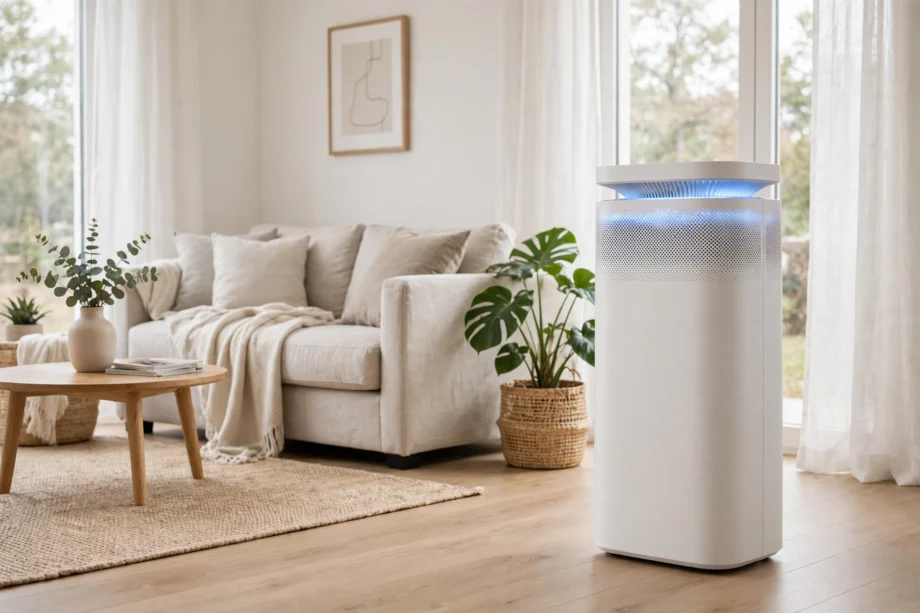
Will an air purifier help with dust? Yes, but only with the dust floating in your air. A good purifier with a True HEPA filter captures airborne dust before it settles; as a result, surfaces stay cleaner longer. However, it will not remove dust already sitting on your shelves, and it cannot stop new dust from entering your home.
Will an Air Purifier Help With Dust?
Yes, an air purifier helps with dust in one specific way: it cleans the air. Room air constantly carries fine particles: skin flakes, fabric fibers, pet dander, and outdoor dust that drifts in through doors and windows. A purifier pulls that air through its filters and traps the particles inside. As a result, less dust lands on your furniture, and you breathe cleaner air.
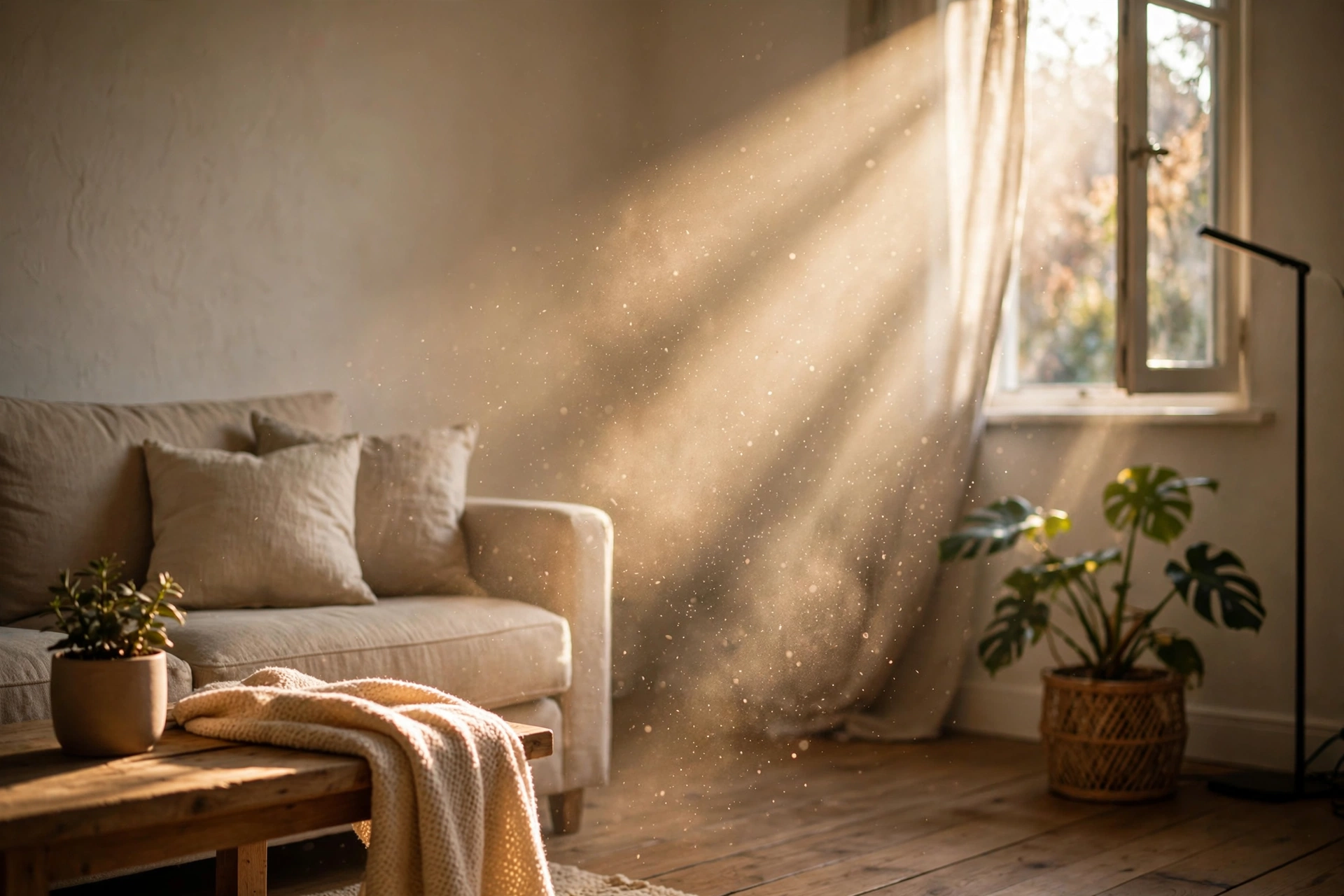
The key word is airborne. In fact, dust obeys gravity. Large particles settle onto surfaces within minutes, and no purifier can vacuum your shelves for you. In other words, think of a purifier as a way to slow dust buildup, not eliminate dusting forever. In addition, it works best as part of a routine that still includes vacuuming and wiping surfaces.
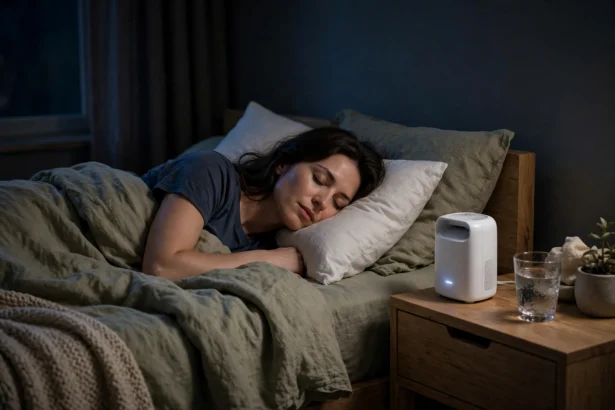
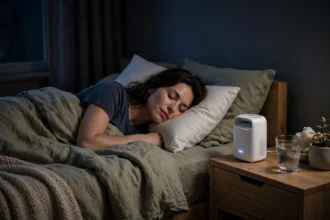
For allergy sufferers, the benefit goes beyond cleaner shelves. A 2024 meta-analysis in the World Allergy Organization Journal found that air purifiers significantly reduced dust mite allergy symptoms, particularly when run overnight near the sleeper. Indeed, the payoff is both visible and physical.
How Air Purifiers Trap Dust
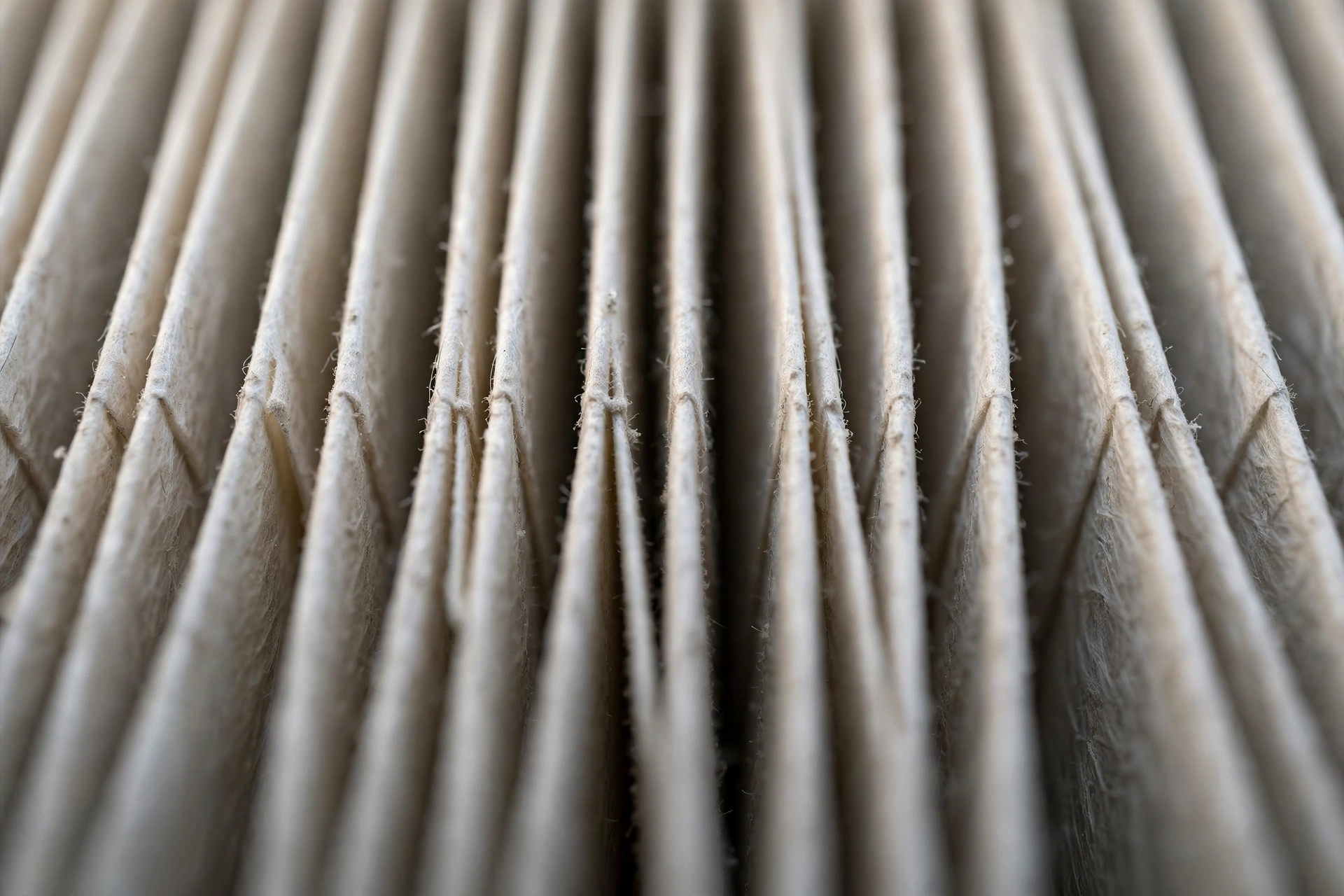
Most purifiers built for dust use a True HEPA filter, which is the gold standard for particle capture. By definition, a HEPA filter traps at least 99.97% of particles at 0.3 microns in size. That size is called the most penetrating particle size, because it is the hardest to catch. Larger and smaller particles are captured even more efficiently.
Household dust particles are typically 10 micrometers or smaller, according to the EPA. That puts the bulk of household dust well within a HEPA filter’s comfort zone. First, large particles slam directly into filter fibers and stick; this is called impaction. Next, medium particles following the airstream brush close enough to fibers to get caught, which is interception. Finally, the tiniest particles bounce around randomly until they hit a fiber, which is diffusion. Since all three mechanisms work at once, very little gets through.
A comprehensive university guide to air purifiers and dust backs up the HEPA numbers cited above, with references to EPA research and peer-reviewed studies.
A typical purifier stacks several stages. First, a pre-filter catches hair and large dust before it reaches the main filter. Then the HEPA filter does the fine work. In addition, many models add an activated carbon filter, which absorbs odors and gases that HEPA cannot touch. However, carbon does nothing for dust itself. Don’t pay extra for it if dust is your only concern.
What an Air Purifier Can’t Do About Dust
Honest expectations matter more than marketing claims. Here are the limits.
It cannot remove settled dust. Dust on your shelves, floors, and furniture stays there until you wipe or vacuum it. A purifier only processes air that passes through it. Thus, your cleaning routine does not disappear; it just gets easier.
It cannot stop dust at the source. Dust is constantly created and carried in: dead skin cells, fabric fibers, pet dander, shoes, open windows. An air purifier captures what is airborne, but new dust keeps arriving. For example, every time a dog shakes or someone walks in from outside, fresh particles enter the mix.
It cannot reach dust mites in bedding. Dust mites live in mattresses, pillows, and upholstery, not floating in room air. A purifier reduces the allergens they shed into the air, but it does not evict the mites themselves. Washing bedding in hot water remains the fix for that.
It is not 100% effective. Even 99.97% leaves a small fraction behind, and real-world performance depends on room size, placement, and filter condition. In addition, ionizer-style “filterless” purifiers deserve caution: they clump particles with electric charges so the dust drops onto your floors and furniture instead of into a filter. That means more wiping, not less. Some ionizers also produce ozone, a lung irritant. For dust, a True HEPA model is the safer and more effective choice.
How to Choose an Air Purifier for Dust
Not every purifier is built for dust. Here is what actually matters.
True HEPA, not “HEPA-type.” The word “True” is doing real work. True HEPA meets the 99.97% standard. “HEPA-type” or “HEPA-like” are marketing terms with no standard behind them, and they capture far less. Therefore, check the specification before you buy.
Match CADR to your room. CADR, or Clean Air Delivery Rate, measures how much clean air the unit delivers per minute. Look for the CADR rating for dust specifically, and choose a unit rated for a room at least as large as yours. An undersized purifier in a big room will run constantly and still fall behind. As a rule of thumb, bigger is better, because you can always run a large unit on a quieter low setting.
Consider noise. The best purifier is the one you actually leave running. Check the decibel rating on low and sleep modes. In particular, if it will sit in a bedroom, prioritize quiet operation over maximum CADR.
Table: Air purifier types for dust compared
| Type | How it handles dust | Watch out for |
|---|---|---|
| True HEPA portable | Traps 99.97% of fine particles in a filter | Needs filter replacements |
| HEPA + carbon combo | Same dust capture, plus odor removal | Costs more; carbon adds nothing for dust |
| Ionizer / filterless | Clumps dust so it settles out of the air | Dust lands on surfaces; possible ozone |
| Whole-house HVAC unit | Cleans air throughout the home via ducts | Higher cost; needs professional install |
If you are buying at a big-box store, check the payment options before you go to avoid a wasted trip.
Compare a few models side by side before choosing. In-store displays let you check noise levels and filter access, which spec sheets never fully convey.
And while you are there, many shoppers pick up other smart home upgrades too, like a smart door lock with camera for the front door.
Getting Real Results: Placement, Runtime, and Maintenance
Buying the right purifier is only half the job. How you use it decides what you get.
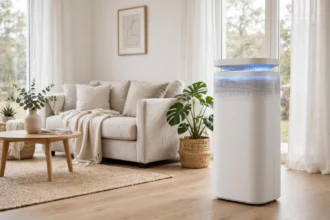
Place it well. Put the unit where you spend the most time, such as the bedroom or living room. Keep it at least 3 feet from walls and furniture to let air flow freely around it. Meanwhile, keep it away from humid spots like bathrooms, which can damage the electronics. Central placement in the room beats tucking it in a corner.
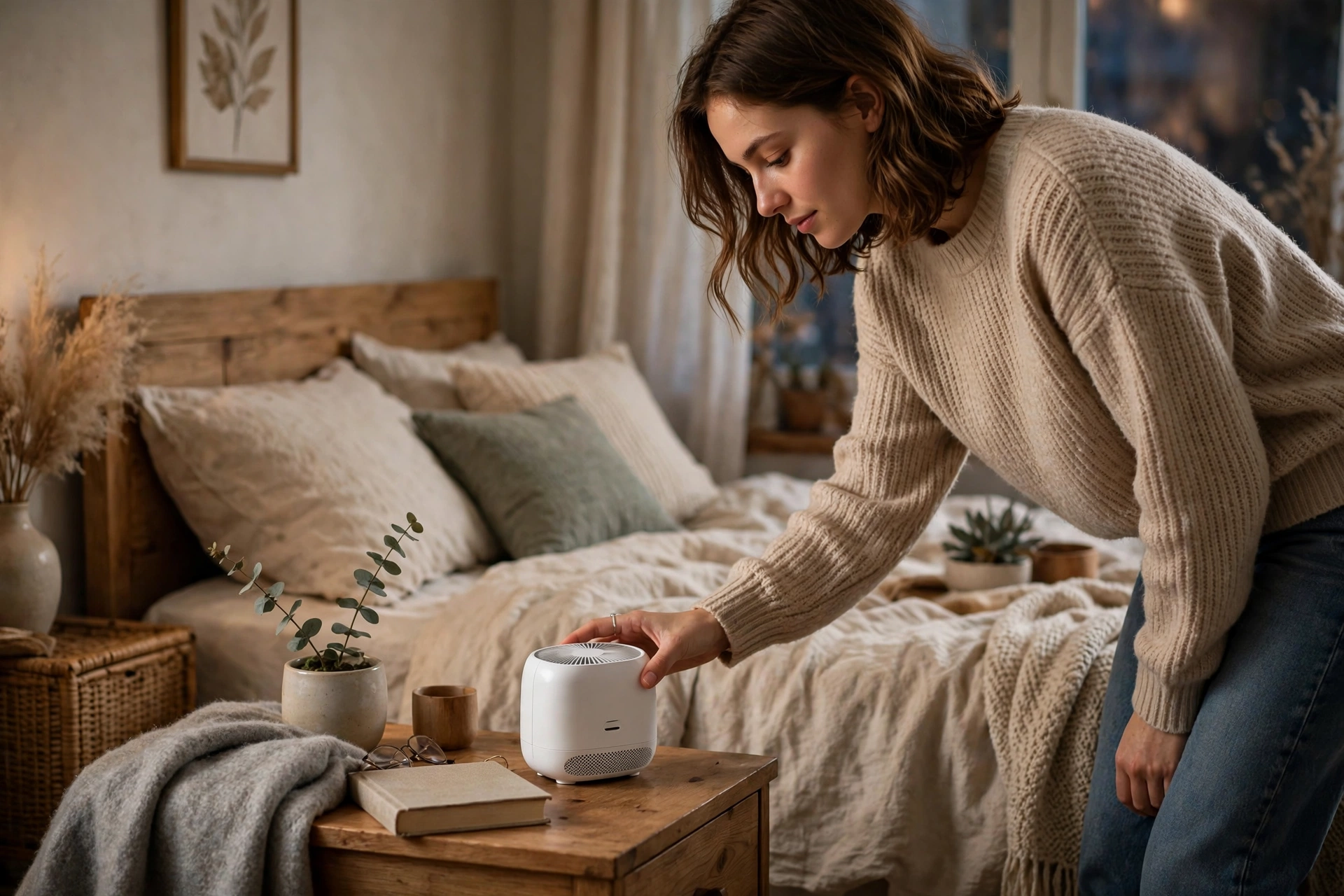
Run it continuously. Dust never takes a break, so neither should your purifier. Running it 24/7 on a low or medium setting maintains clean air far better than blasting it for an hour a day. Modern units use roughly 30 to 100 watts depending on speed; thus, continuous low-speed operation costs little.
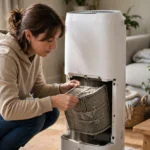
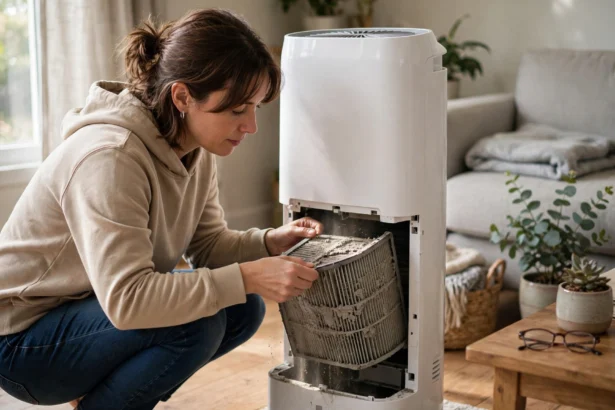
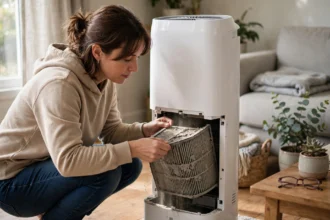
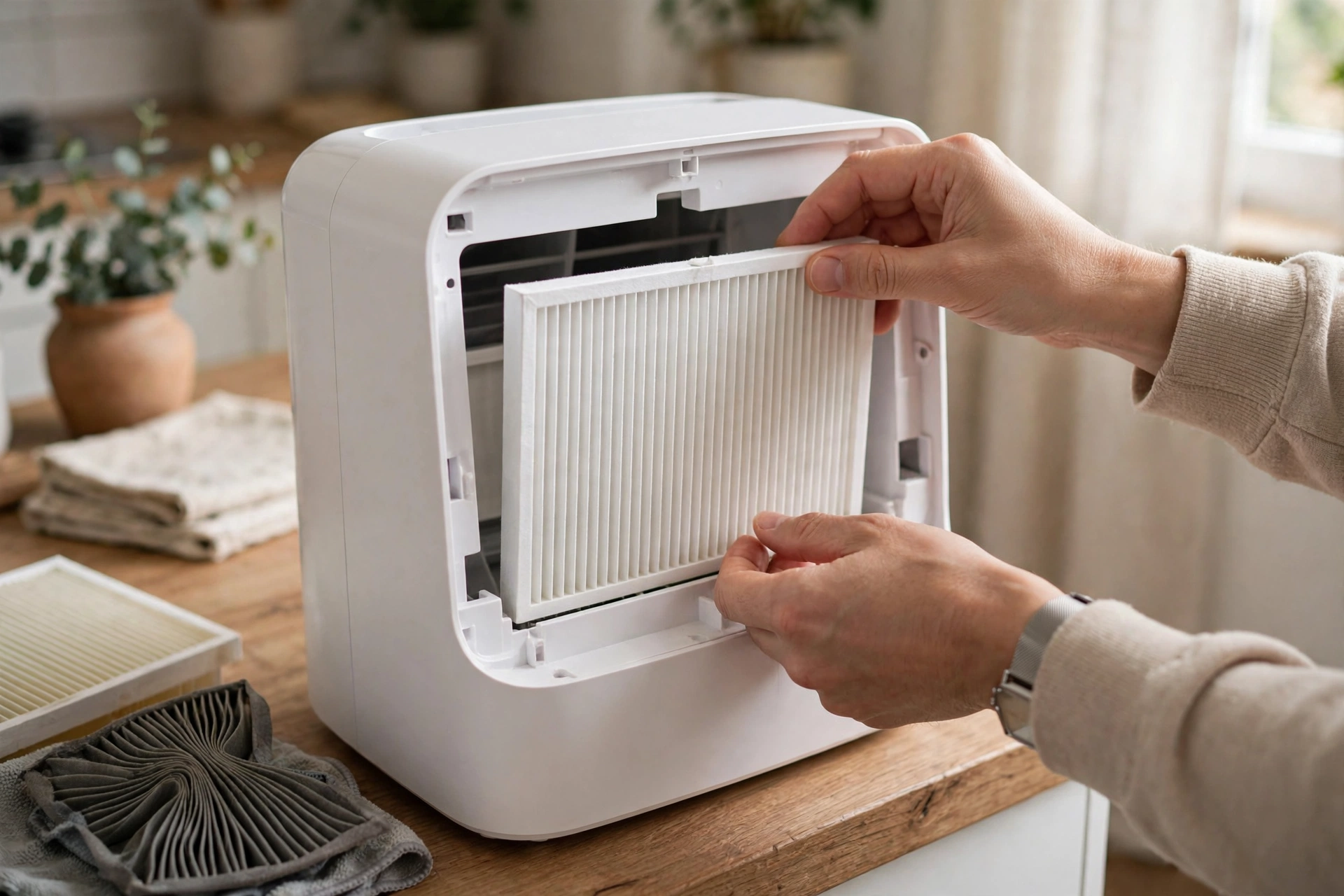
Maintain the filters. A clogged filter chokes airflow, and the CADR drops with it. Check the pre-filter every 1 to 3 months and clean or replace it as directed. Replace the HEPA filter on the manufacturer’s schedule, and never wash a True HEPA filter unless it is explicitly labeled washable. When changing filters, do it in a ventilated area, and consider wearing a mask if you have allergies.
Pair it with source control. The less dust enters, the less the purifier has to capture. Use doormats, keep windows closed on windy days, and groom pets regularly. Windows and glass doors are among the biggest dust entry points in most homes. For example, good window coverings for sliding glass doors reduce both dust entry and the sunlight that makes dust visible.
Air Purifier vs the Rest of Your Dust Arsenal
A purifier is one tool, not the whole toolkit. Here is how it fits alongside the rest.
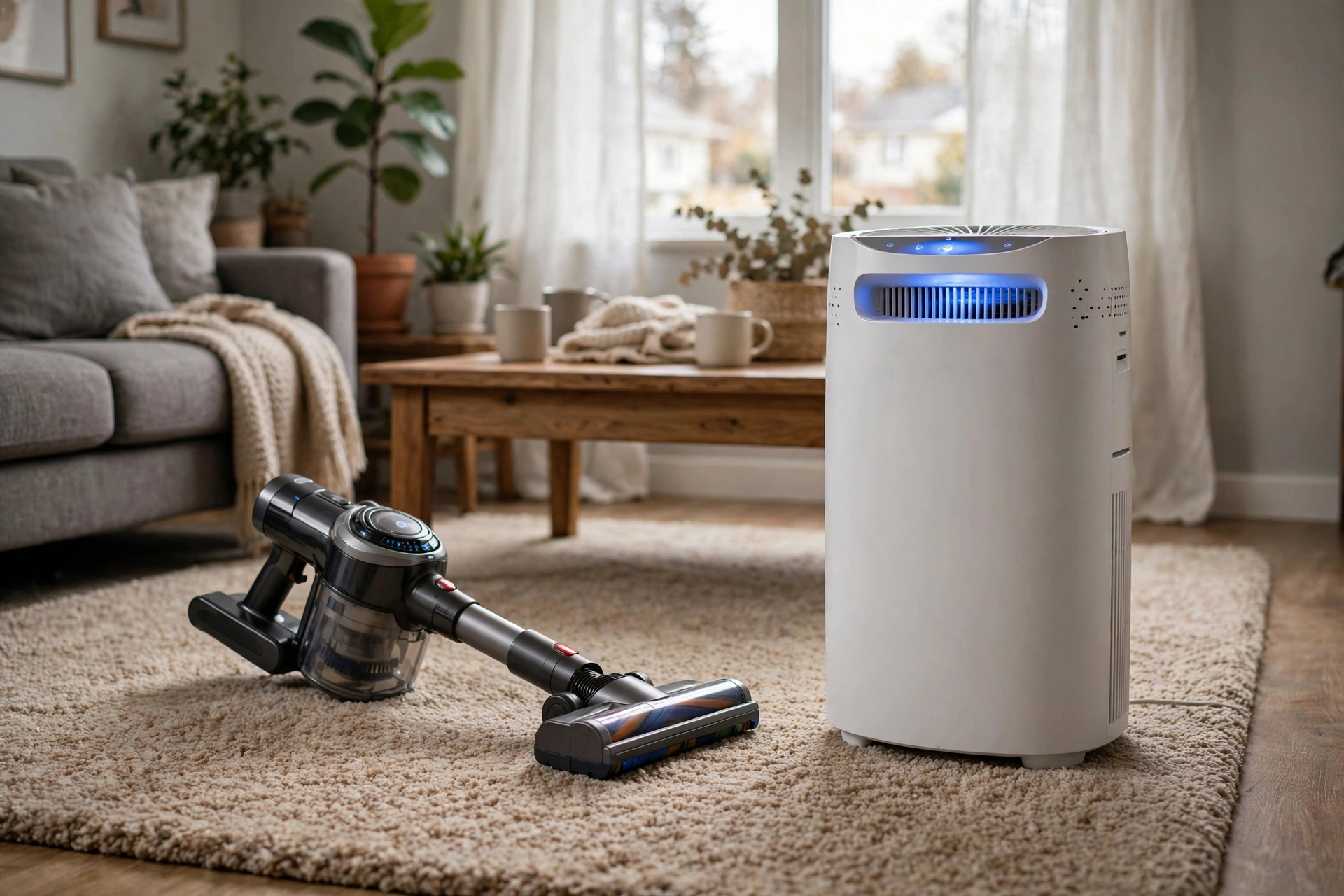
Vacuuming. A vacuum with a HEPA filter removes settled dust from floors and carpets, which is exactly what a purifier cannot do. The two complement each other: the vacuum handles surfaces, the purifier handles air. If you must choose one, choose the vacuum.
Your HVAC system. If you have central heating or cooling, your furnace already moves air through a filter. Upgrading to a higher-MERV filter (MERV 13 is a common sweet spot) turns the whole system into a dust fighter. A whole-house purifier unit installed in the ducts goes further, cleaning every room at once. Since the thermostat controls the fan that drives all of this, it is worth knowing your controls; if yours ever acts up, our guide on how to reset a Honeywell thermostat can help.
Damp dusting. Dry dusting just launches settled dust back into the air. A damp cloth actually removes it. Therefore, when you do wipe surfaces, wipe damp.
Do You Actually Need One, or Just Better Habits?
Before spending money, it helps to know which camp you fall into. An air purifier earns its keep when someone in the home has dust allergies, asthma, or a pet that sheds heavily. In addition, it makes sense in dusty climates or on busy streets where windows stay shut and indoor air goes stale. In those cases, the 24/7 filtration genuinely changes how the home feels.
However, if your main complaint is simply dusty shelves and nobody has symptoms, start with the free fixes first. Vacuum with a HEPA-filter machine weekly, damp-dust surfaces instead of dry-dusting, wash bedding in hot water, and put doormats at every entrance. Then reassess after a month. Because these habits attack dust at its source, they sometimes solve the problem well enough that a purifier becomes optional rather than essential.
There is also a middle path. A single purifier in the bedroom, run overnight, covers the eight hours your lungs are most vulnerable. That one-room strategy costs far less than whole-house equipment and still delivers the allergy benefit that studies actually measured. Therefore, you do not need to purify every cubic foot of your home to feel a difference.
FAQs
Will an air purifier help with dust in a large open room?
Yes, if it is sized for the space. Check the CADR dust rating and choose a unit rated for your room’s square footage or larger. An undersized purifier will struggle no matter how long it runs. For very large open areas, two smaller units can beat one big one.
How long does it take an air purifier to reduce dust?
You will usually notice less airborne dust within a few days of continuous use. Surface dust buildup slows over one to two weeks as the purifier keeps catching particles before they settle. However, full results depend on room size, dust sources, and whether filters are fresh.
Do air purifiers help with dust mites?
They help with the allergens dust mites shed into the air, and studies show reduced allergy symptoms, especially overnight. Purifiers cannot remove mites living in mattresses and pillows, though. For the mites themselves, wash bedding weekly in hot water and use allergen-proof covers.
Should I run my air purifier all day?
Yes. Dust is generated continuously, so continuous operation gives the best results. Run it 24/7 on low or medium speed. Modern purifiers are energy efficient, typically using 30 to 100 watts; as a result, the electricity cost of all-day use stays modest.
Why is there still dust after running an air purifier?
Because purifiers only capture airborne dust. Settled dust on surfaces stays put until you clean it, and new dust keeps entering through doors, windows, shoes, pets, and fabrics. If dust seems unchanged, check that the unit is sized right, the filters are fresh, and it runs continuously.
Are expensive air purifiers better at removing dust?
Not necessarily. What matters is True HEPA filtration and a CADR matched to your room. A mid-priced unit with the right specs beats a pricey one with weak airflow or a “HEPA-type” filter. Therefore, compare the specifications, not the price tag.
Conclusion
An air purifier will help with dust, as long as you expect the right thing from it. It captures airborne particles before they settle, which means cleaner air, slower dust buildup, and fewer allergy symptoms. It will not dust your shelves or seal your windows. Buy a True HEPA unit sized for your room, run it continuously, keep the filters fresh, and keep vacuuming. Finally, start with the room where you sleep; cleaner night air is the upgrade you will feel first.