


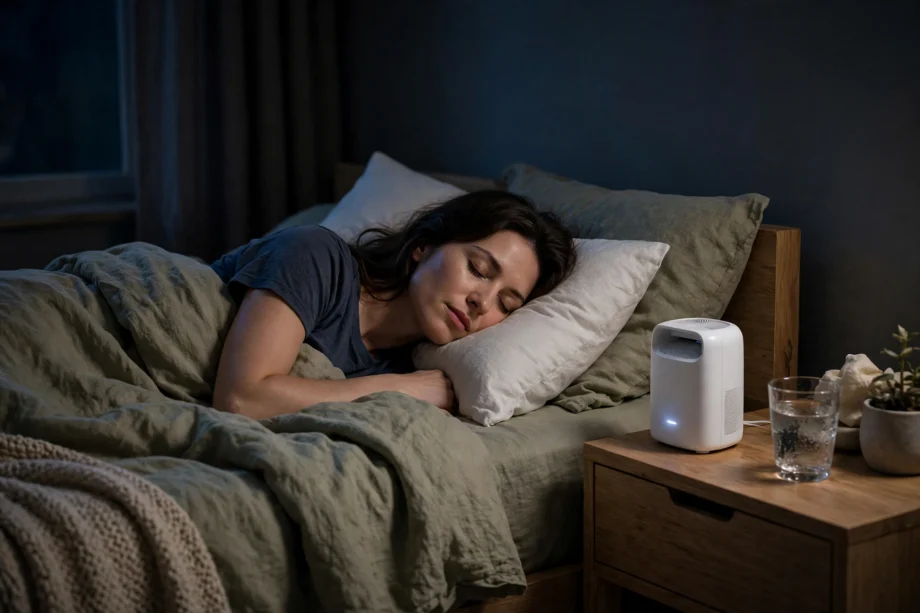
Does an air purifier help with allergies? Yes, but modestly. Studies show True HEPA purifiers reduce airborne allergens like pollen, pet dander, and dust mite debris, with trials reporting 30 to 50 percent symptom improvement. Still, a purifier will not cure allergies, replace medication, or remove allergens hiding in your bedding.
Does an Air Purifier Help With Allergies?
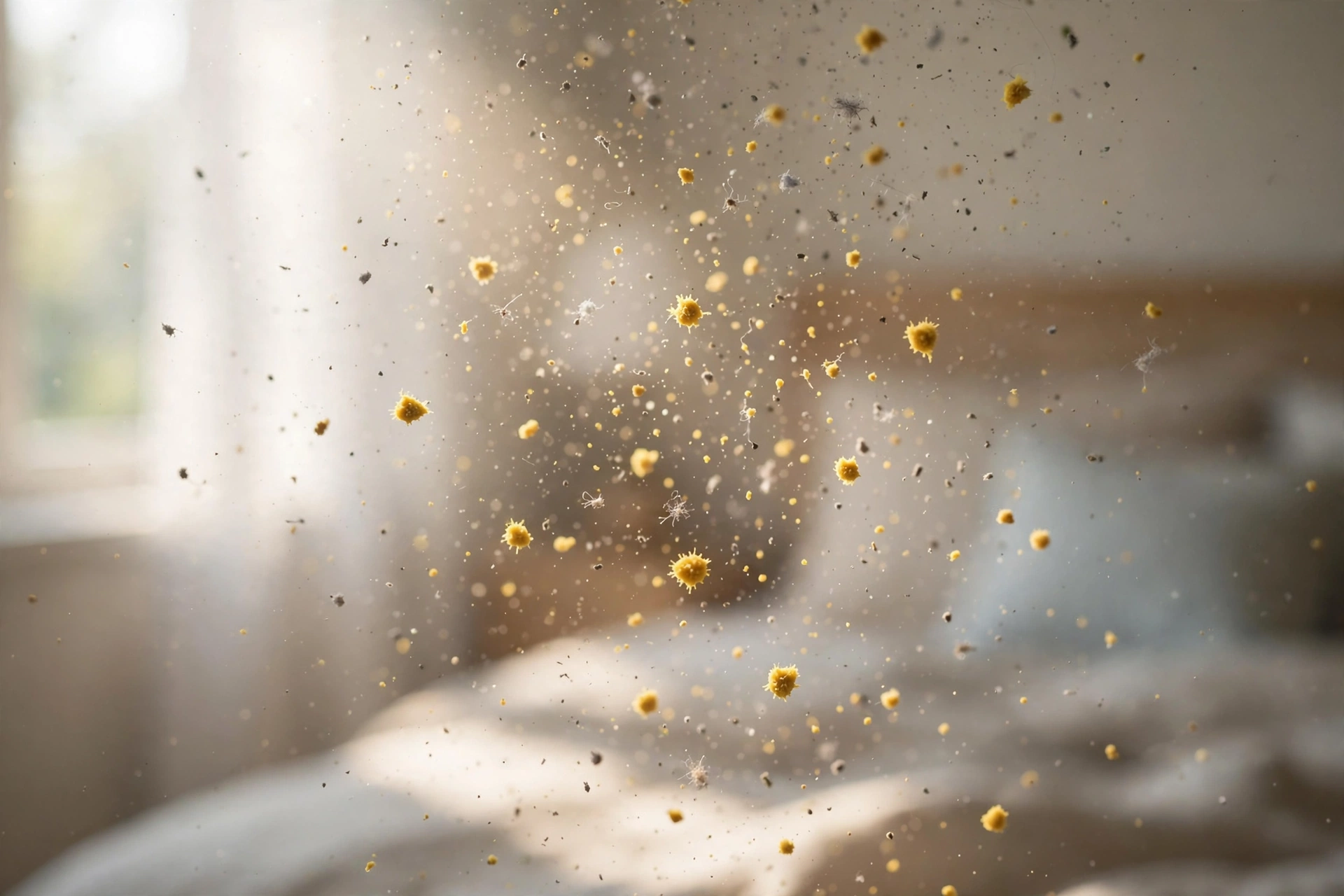
Yes, an air purifier helps with allergies by lowering the amount of allergens floating in your indoor air. Pollen, pet dander, mold spores, and dust mite debris are all particles, and a True HEPA filter captures at least 99.97 percent of them at 0.3 microns. As a result, less allergen in the air means fewer triggers reaching your nose and eyes.
The honest version of the answer has two parts. The benefit is real but partial: studies consistently show improvement, yet no trial shows allergies disappearing. Next, the benefit depends on setup: the right filter, the right room size, and continuous use. For instance, a small purifier running occasionally in a big living room will not move the needle.
Which allergy you have matters too. Airborne triggers like pollen and pet dander respond best. Dust mite allergy responds too, though the mites themselves live in bedding where no purifier can reach. If you are unsure which trigger dominates your symptoms, an allergist’s test is worth more than any appliance.
What the Studies Actually Found
In contrast, marketing claims are loud, so here is what peer-reviewed research says. The trials are small and the results are mixed, but a pattern emerges: measurable improvement, strongest at night, and no miracle cures.
A 2020 meta-analysis pooled 10 trials with 482 adults and children with allergic asthma. It found better quality of life scores and lower airway inflammation (exhaled nitric oxide down 6.67 ppb). Yet daily symptoms, lung function, and medication use did not change significantly. In short, people felt better overall without a dramatic shift in day-to-day numbers.
A 2024 meta-analysis of 35 trials in dust mite asthma found that nocturnal air purification reduced nighttime asthma symptom scores. Bedroom-focused use kept showing up as the strongest signal across studies. Because you spend eight hours breathing the same bedroom air, that room gives filtration the most time to work.
Next, two randomized trials sharpen the picture. A 2020 trial of 90 people with mugwort pollen rhinitis found lower allergy symptom scores with an active HEPA purifier running at night versus an inactive unit. A Korean trial of 44 adults with dust mite rhinitis found improved medication scores and bedroom PM2.5 down by up to 51.8 percent, though symptom and quality-of-life scores did not differ significantly.
Table: What the research found
| Study | Who was studied | Main finding |
|---|---|---|
| Meta-analysis, 2020 | 482 people with allergic asthma | Better quality of life; less airway inflammation |
| Meta-analysis, 2024 | Dust mite asthma, 35 trials | Lower nighttime symptom scores |
| Randomized trial, 2020 | 90 people with pollen rhinitis | Lower symptom scores at night with HEPA |
| Randomized trial, 2020 | 44 adults with dust mite rhinitis | Less medication use; PM2.5 down 51.8% |
A Healthline review of the air purifier research summarizes the EPA’s own research reviews, which reported statistically significant improvements in respiratory health and allergy symptoms across multiple studies. Still, the evidence is real, even if it is not overwhelming.
Which Allergens It Can and Can’t Touch
An air purifier only helps with allergens that spend time airborne. Here is the breakdown.
Pollen: yes. Pollen grains are relatively large particles that HEPA filters capture easily. However, the catch is that pollen constantly drifts in through open windows and doors, so the purifier fights a continuous battle. Keeping windows closed during peak pollen times multiplies the benefit. Good window coverings for sliding glass doors help here too, cutting both pollen entry and the drafts that carry it.
Pet dander: yes. Dander consists of tiny skin flakes that stay airborne for hours, especially when pets move around. A purifier running continuously captures a large share. Dander also settles into carpets and upholstery, where only vacuuming reaches it.
Dust mite debris: partially. Purifiers capture the airborne allergen particles that mites shed, and studies show symptom improvement. But the mites themselves live in mattresses, pillows, and carpets. For the source, wash bedding weekly in hot water and use allergen-proof covers. If dust is your main trigger, tackling airborne dust directly goes deeper on that specific battle.
Mold spores: partially. HEPA captures airborne spores, which reduces spread. In contrast, it does nothing about mold growing on a damp wall or under a sink. Fix the moisture source before anything else; filtration is the supporting act, not the star.
How to Get Real Allergy Relief From a Purifier
Buying a purifier and getting relief are two different things. Specifically, these are the factors that separate the two.
True HEPA is non-negotiable. First, only True HEPA meets the 99.97 percent standard. “HEPA-type” and “HEPA-like” are unregulated marketing terms that let far more allergens through. For allergy sufferers, that difference is the whole game.
Size it for the room, then run it constantly. Check the CADR rating and match it to your room’s square footage. For allergy-grade results, aim for 4 to 5 air changes per hour, which means the unit processes the room’s air that many times each hour. Then leave it running. Because allergens regenerate continuously, part-time operation gives part-time relief.
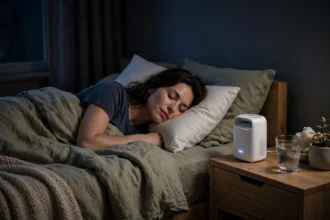
Put it in the bedroom. The research keeps pointing to the same conclusion: nighttime bedroom use delivers the most consistent benefit. You spend a third of your life there, the door can stay closed, and the air volume is small enough for one unit to handle well. If you can only afford one purifier, the bedroom is where it belongs.
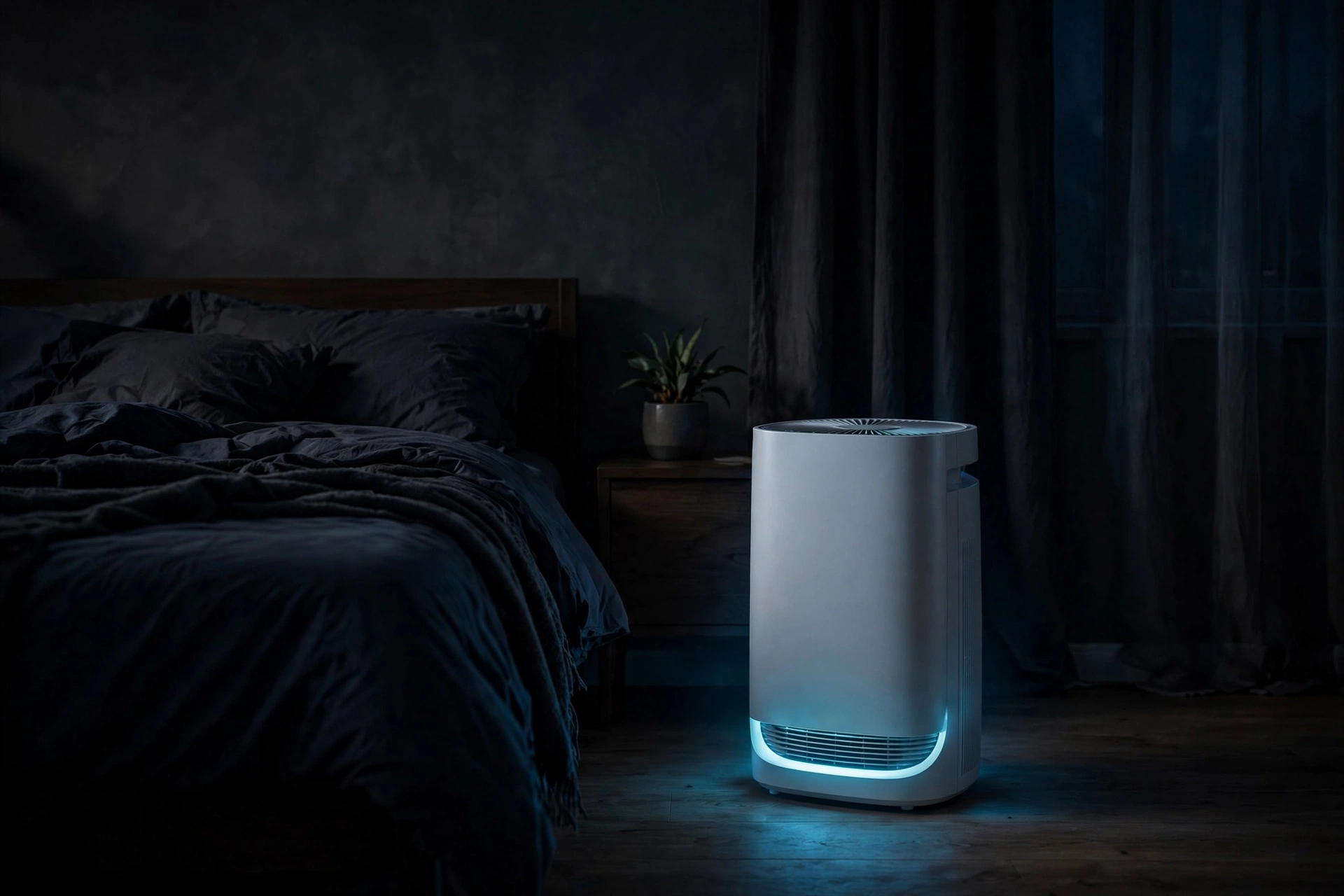
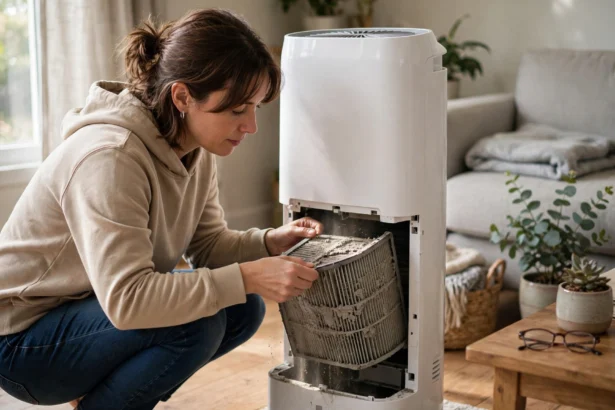
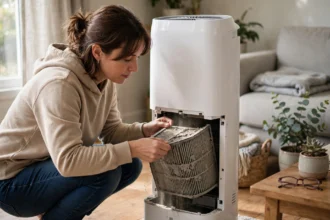
Keep the filter fresh. A loaded filter chokes airflow, and reduced airflow means reduced allergen capture. Clean the pre-filter every few weeks and replace the HEPA on schedule. Wash what is washable, vacuum the rest, and replace on time.
What an Air Purifier Can’t Do for Allergies
Clear limits prevent disappointment. First, a purifier cannot cure allergies or asthma. It reduces exposure; it does not retrain your immune system. Next, it cannot replace medication or your doctor’s treatment plan, though the trials show symptom improvement alongside treatment, not instead of it.
Moreover, a purifier cannot clean what is not airborne. Allergens embedded in bedding, carpets, curtains, and upholstery stay put until you wash or vacuum them. If your symptoms spike when you make the bed or fluff pillows, that is settled allergen, and no purifier reaches it.
Be skeptical of bonus features marketed for allergies. Ionizers and UV lights lack solid scientific support for allergy relief, according to EPA assessments. Worse, some ionizers produce ozone, which irritates airways and can make allergic inflammation worse. Therefore, skip the ionizer entirely.
Finally, a purifier cannot overcome a flood of allergens. Open windows during pollen season, a shedding dog sleeping on the bed, or a moldy bathroom will overwhelm any unit. In short, source control always comes first; the purifier handles what is left.
The Rest of Your Allergy Plan
A purifier works best as one layer in a system. Here are the layers that multiply its effect.
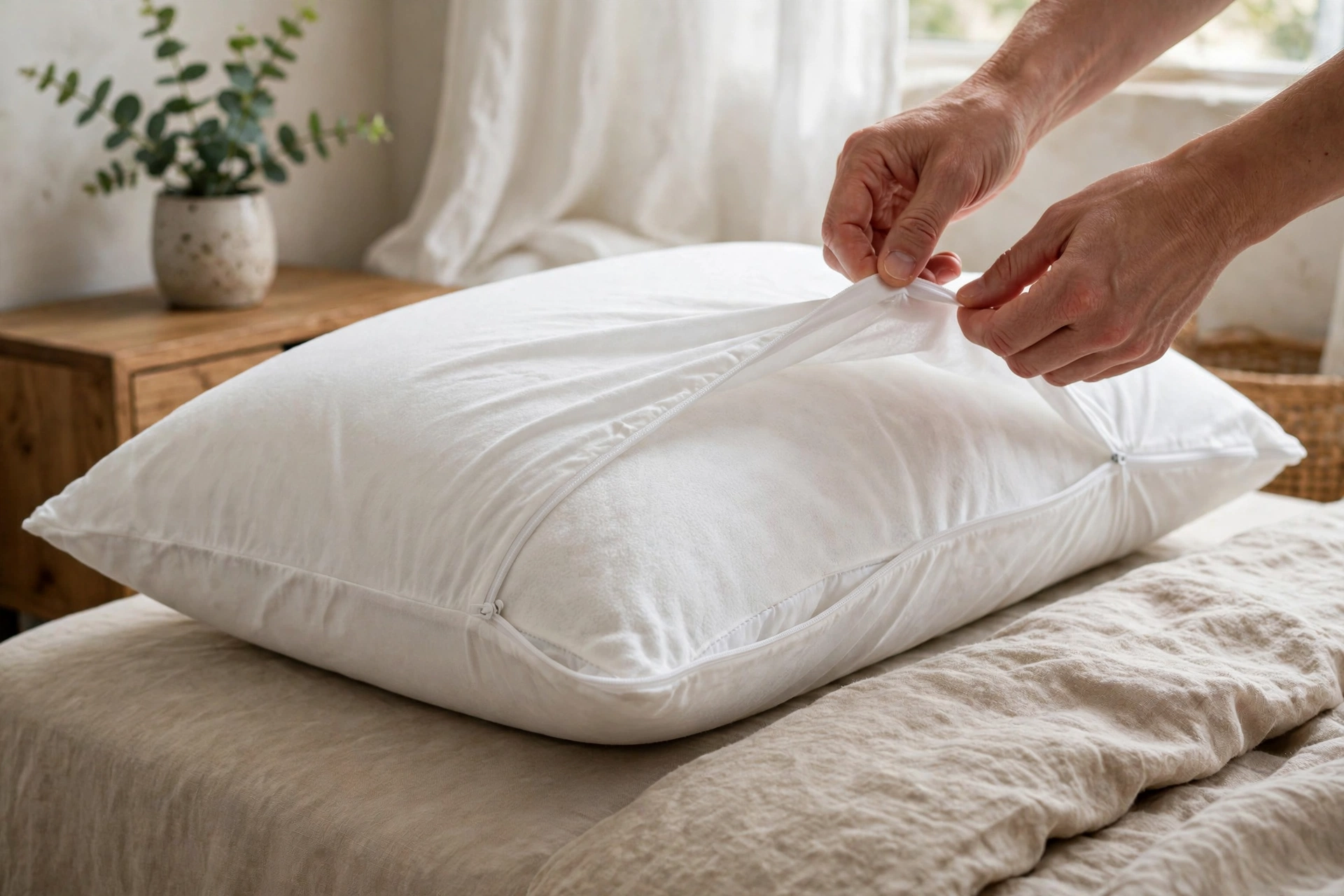
Bedding discipline. Wash sheets and pillowcases weekly in hot water, which kills dust mites. Allergen-proof covers on mattress and pillows block the mites’ debris from reaching the air in the first place. Since the bedroom is also where your purifier runs, these two steps reinforce each other directly.
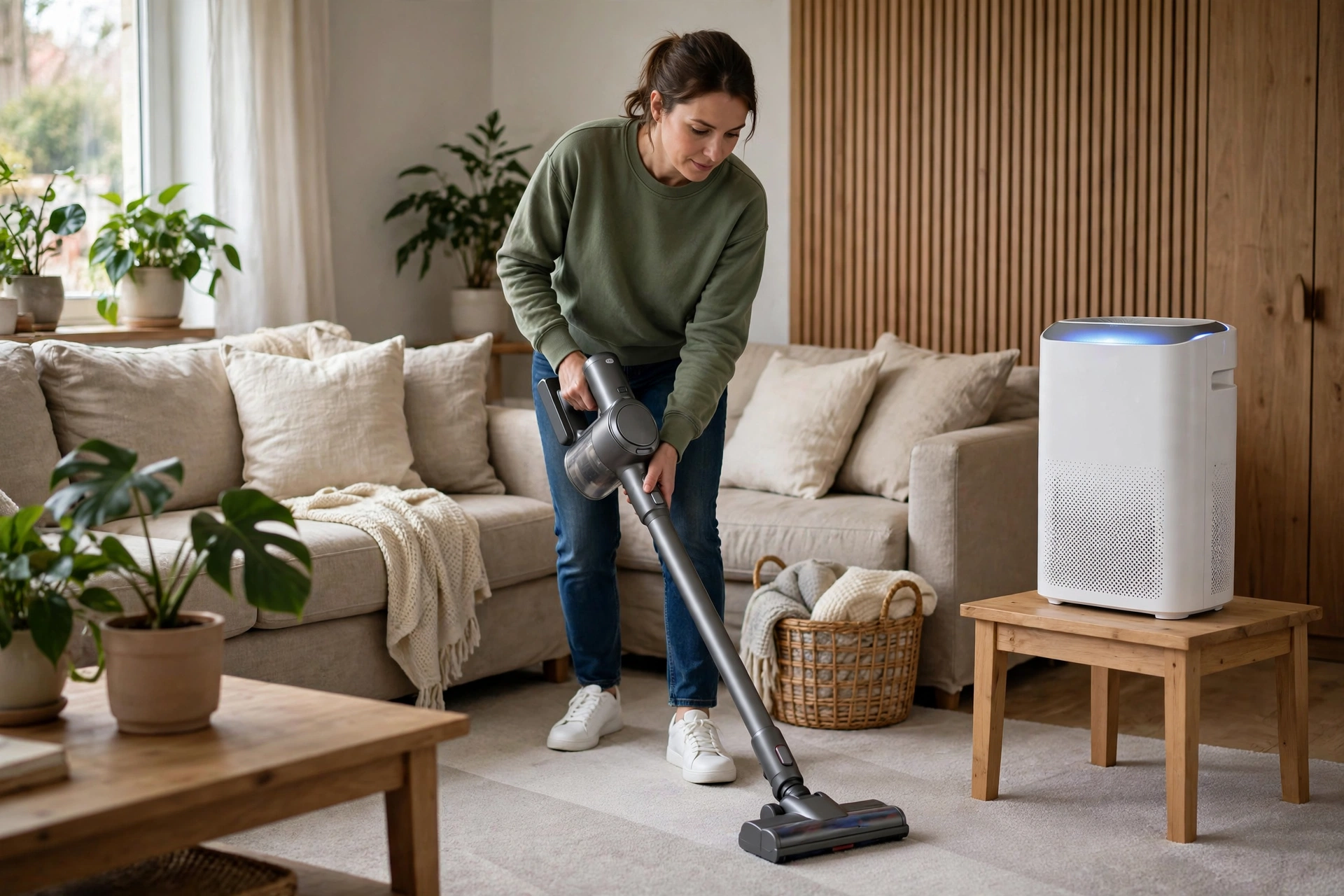
HEPA vacuuming. Vacuum carpets, rugs, and upholstery weekly with a HEPA-filter vacuum. This removes the settled allergens your purifier cannot touch. For example, vacuuming temporarily stirs allergens into the air, which is exactly when a running purifier earns its keep by capturing them.
Humidity control. Keep indoor humidity between 30 and 50 percent. Dust mites and mold both thrive in damp air, so a dry home starves them. If your bedroom runs humid, a dehumidifier may help allergies more than a second purifier would.
Window strategy. Pollen enters through open windows, and windows are also major dust entry points. Therefore, during high-pollen days, keep windows closed and let the purifier handle indoor air.
Whole-house support. If you have central HVAC, a high-MERV furnace filter (MERV 13 is a common sweet spot) turns the whole system into an allergen fighter. The thermostat controls the fan that circulates air through that filter. If yours ever acts up, our guide on how to reset a Honeywell thermostat walks through the fix.
Who Benefits Most (and Who Might Not)
Not every allergy sufferer gets the same payoff from a purifier. The biggest winners are people whose symptoms are clearly tied to indoor air. For example, if you wake up congested every morning but feel fine outdoors, your bedroom air is likely the problem, and a purifier targets exactly that. Similarly, pet owners who react to dander but refuse to rehome their animals get real relief from continuous filtration.
Seasonal pollen sufferers benefit too, with one condition: windows must stay closed. A purifier cannot compete with an open window during peak pollen season. However, pair closed windows with a bedroom unit, and the combination works well. In contrast, people whose triggers are mostly outdoor or food-related will notice little change, because the purifier only processes indoor air.
There is also the severity question. Mild to moderate allergy sufferers often report the clearest improvement, since reducing airborne load drops them below their symptom threshold. Those with severe asthma or strong sensitivities still benefit, but the purifier becomes one tool among many rather than the main fix. Therefore, match your expectations to your situation before spending.
FAQs
Does an air purifier help with allergies at night?
Yes, nighttime is when purifiers help most. Studies show the strongest benefit from bedroom use during sleep, with lower symptom and medication scores. Run a properly sized True HEPA unit in the bedroom with the door closed for the best overnight results.
How long until an air purifier helps allergies?
Many people notice easier mornings within one to two weeks of continuous bedroom use. Full benefit builds over several weeks as airborne allergen levels steadily drop. If nothing changes after a month, check sizing, filter condition, and whether windows stay closed.
Can an air purifier replace allergy medication?
No. Trials show purifiers improve symptoms and sometimes reduce medication use, but they do not replace prescribed treatment. Think of the purifier as reducing your allergen load while medication handles your immune response. The two approaches work on different halves of the problem. Always follow your doctor’s plan.
Do air purifiers help with pet allergies if the pet stays?
They help, but the pet remains the source. A True HEPA purifier running continuously captures airborne dander effectively. For best results, keep pets off the bed, groom them regularly, and vacuum with a HEPA vacuum. The purifier handles the air; you handle the surfaces.
Are expensive air purifiers better for allergies?
Not necessarily. What matters is True HEPA filtration, adequate CADR for the room, and continuous operation. A mid-priced unit with the right specs outperforms a pricey one with weak airflow or “HEPA-type” filtration. Extra features like apps and air quality displays are nice, but they do not filter better. Therefore, compare specifications, not price tags.
Should I get an air purifier or a dehumidifier for allergies?
It depends on your trigger. Choose the purifier for airborne pollen, dander, and dust. Choose the dehumidifier if humidity runs above 50 percent, since damp air feeds dust mites and mold. Many allergy households eventually use both, because they solve different halves of the problem.
Conclusion
An air purifier does help with allergies, within its limits. It lowers airborne pollen, dander, and dust mite debris, and studies show real symptom improvement, especially with overnight bedroom use. It will not cure allergies, replace medication, or clean your bedding. Finally, buy a True HEPA unit sized for your bedroom, run it continuously, keep filters fresh, and pair it with hot-water bedding washes and HEPA vacuuming. Give it a month of consistent use before judging; cleaner air is a slow win, not an instant one.