



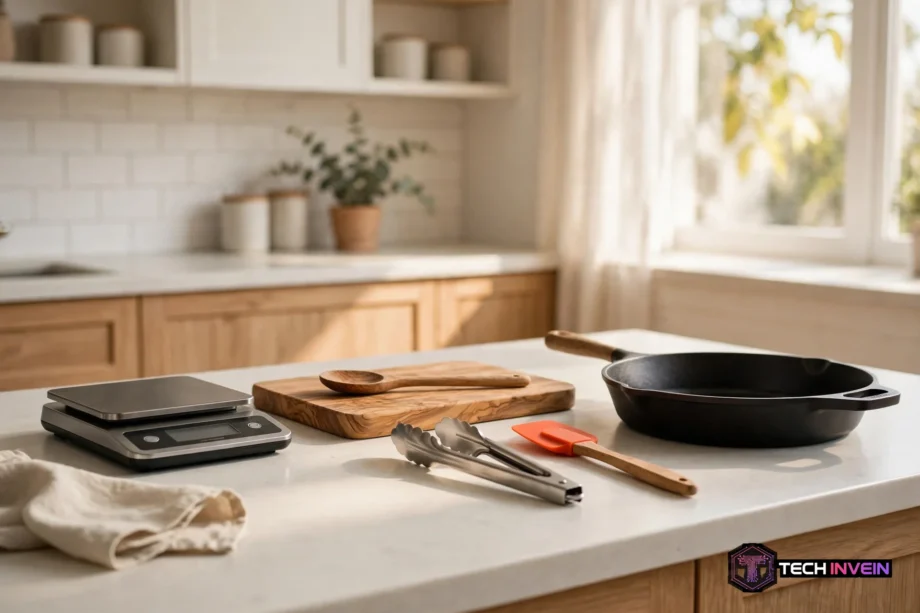
The best kitchen gadgets are the ones you reach for without thinking. Not the flashiest tools. Not the ones with the longest feature list. The ones that save you time on a Tuesday night. This guide sorts 32 picks by material, type, and audience, so you can buy cooking equipment you will use instead of filling another drawer.
- How to Pick Kitchen Gadgets That Earn Their Space
- Best Kitchen Gadgets by Material
- Best Kitchen Gadgets by Who They Are For
- Small Kitchens and Tight Budgets
- What to Skip
- FAQs
- What kitchen gadgets should I start with?
- Are wooden or stainless steel gadgets better?
- Which eco friendly kitchen gadgets actually help?
- Are weird and funny kitchen gadgets worth buying?
- What should I look for in kitchen gadgets made in usa?
- How do I stop buying gadgets I never use?
- Where to Start
So how do you tell a keeper from clutter? First, start with one rule. If a tool will not earn its space weekly, skip it. Yet, that test kills most impulse buys before they happen.
How to Pick Kitchen Gadgets That Earn Their Space
Indeed, last spring I emptied two kitchen drawers and counted 34 tools. Then I cooked for two weeks using only the ones I grabbed without thinking. Eleven made the cut, and the rest went into a box, and six months later I missed none. That is the standard this guide uses. Therefore, a gadget has to solve a real problem, save time, or give steadier results. If it does none of those, it is decoration.
Next, ask three questions before you buy anything. Will you use it every week? Does it replace a slower manual job? Can you clean it in under a minute? Then, two yes answers mean it is worth a closer look. Otherwise, one or zero means you should walk away, no matter how good it looks in a video.
Accuracy tools deserve special attention, because they change results more than most people expect. A cheap instant-read thermometer, for example, ends the guessing on chicken and pork. It also helps you learn your oven, since most ovens run hotter or cooler than the dial. If your bakes keep coming out uneven, it is worth learning how to test your oven temperature sensor before you blame the recipe.
Yet, budget matters too, but not the way most lists frame it. The best professional chef tools, the everyday cooks tools pros reach for, are not always the priciest ones. Specifically, a cook’s knife that holds an edge, a heavy pan that heats evenly, and a scale that reads fast will beat a drawer full of novelties. Therefore, spend on the tools you touch daily. Save on the rest.
Finally, one more thing to check before checkout: size. Measure your drawer and your counter gap. Small kitchen gadgets only help if they fit where you cook.
Best Kitchen Gadgets by Material
Indeed, material decides how a tool feels, how long it lasts, and how much care it needs. Wood is warm and quiet. Steel is tough and heavy. Silicone is flexible and easy to clean. Once you know which material suits your habits, half your choices make themselves.
Wooden Kitchen Gadgets
Wooden kitchen gadgets have one big advantage: they are kind to your pans. A wooden spoon will not scratch nonstick, and it does not get hot the way a metal spoon does in a simmering pot. Wooden boards are also easier on knife edges than glass or stone, which is why serious cooks keep one for daily prep.
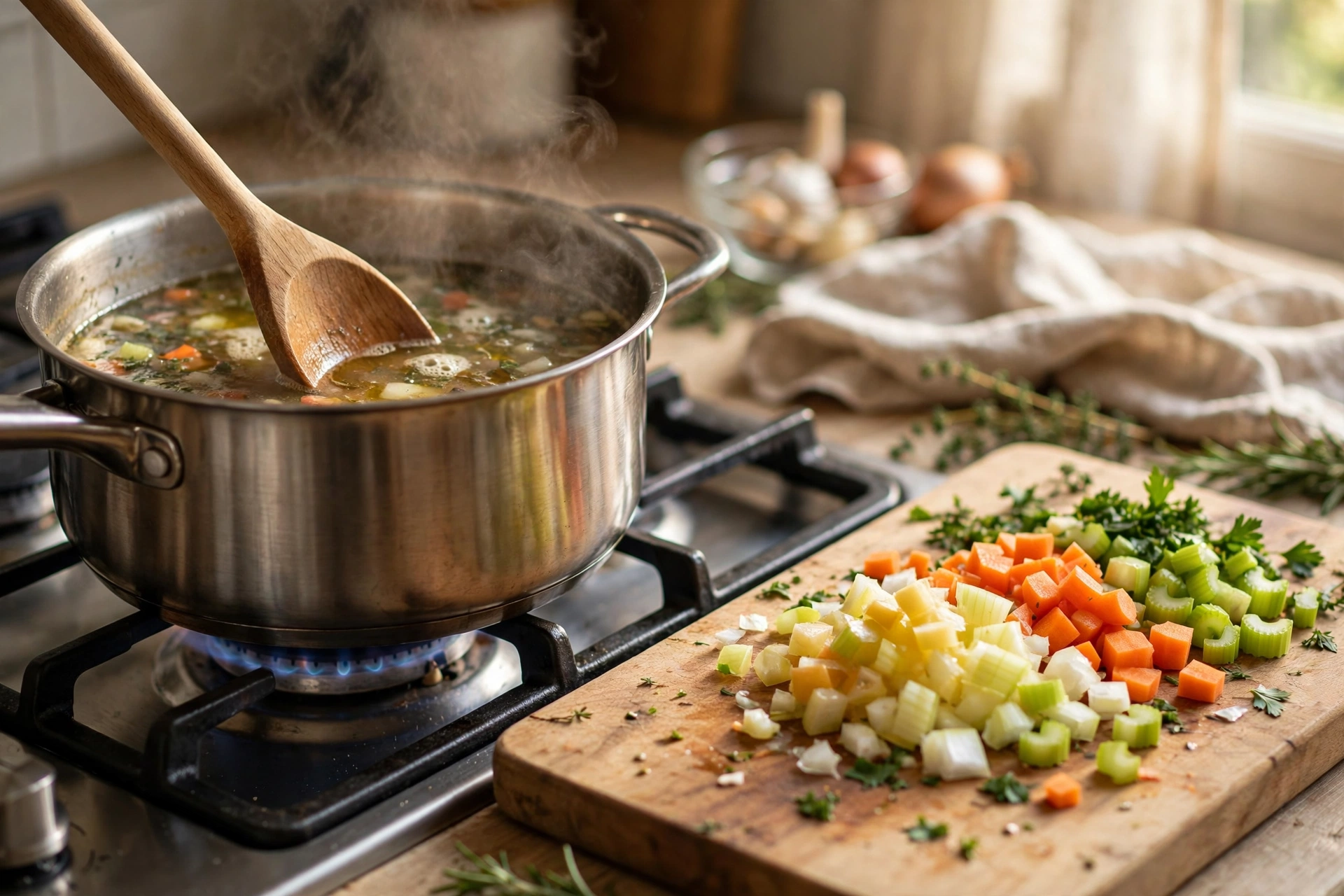
However, wood does need a little care. Hand wash it, dry it right away, and rub in food-safe oil now and then. Skip the dishwasher, because long hot cycles crack boards and split handles. Nevertheless, a wooden spoon, a medium board, and a spatula cover most daily jobs. Vintage kitchen gadgets in wood, like old rolling pins, still show up at flea markets and still work fine.
Want to buy local? Some kitchen gadgets made in usa carry that label, and wooden tools are one of the easiest categories to find them in. Small workshops turn bowls, spoons, and boards in maple and walnut, and the quality is often a step above mass-market versions.
Stainless Steel Kitchen Gadgets
Meanwhile, stainless steel kitchen gadgets are the workhorses. Specifically, they do not stain, they do not hold smells, and they survive the dishwasher without complaint. A steel bench scraper moves chopped vegetables from board to pan in one sweep. Steel tongs give you control over hot food that a fork never will. Steel measuring cups keep their shape for years.
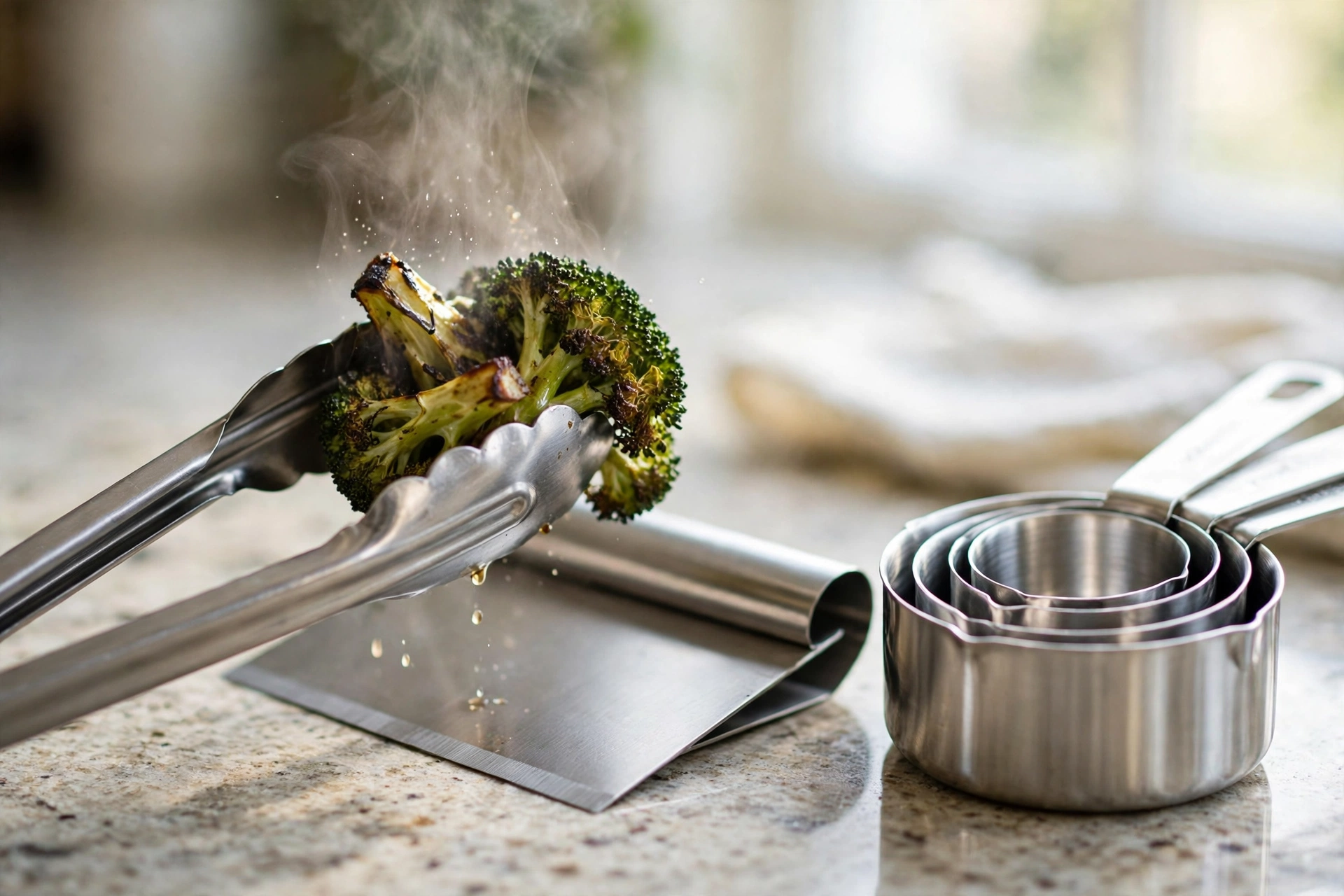
However, weight is the trade-off. A full steel set feels solid, but it fills a drawer fast. So buy your most-used pieces in steel, and let lighter materials cover the rest. A steel colander, a box grater, and one good peeler are the core.
Silicone Kitchen Gadgets
Meanwhile, silicone kitchen gadgets win on cleanup. Spatulas scrape bowls clean, baking mats replace parchment, and lids stretch over bowls of different sizes. Silicone handles heat well, so a spatula can sit in a hot pan without melting, if you check its rated temperature first.
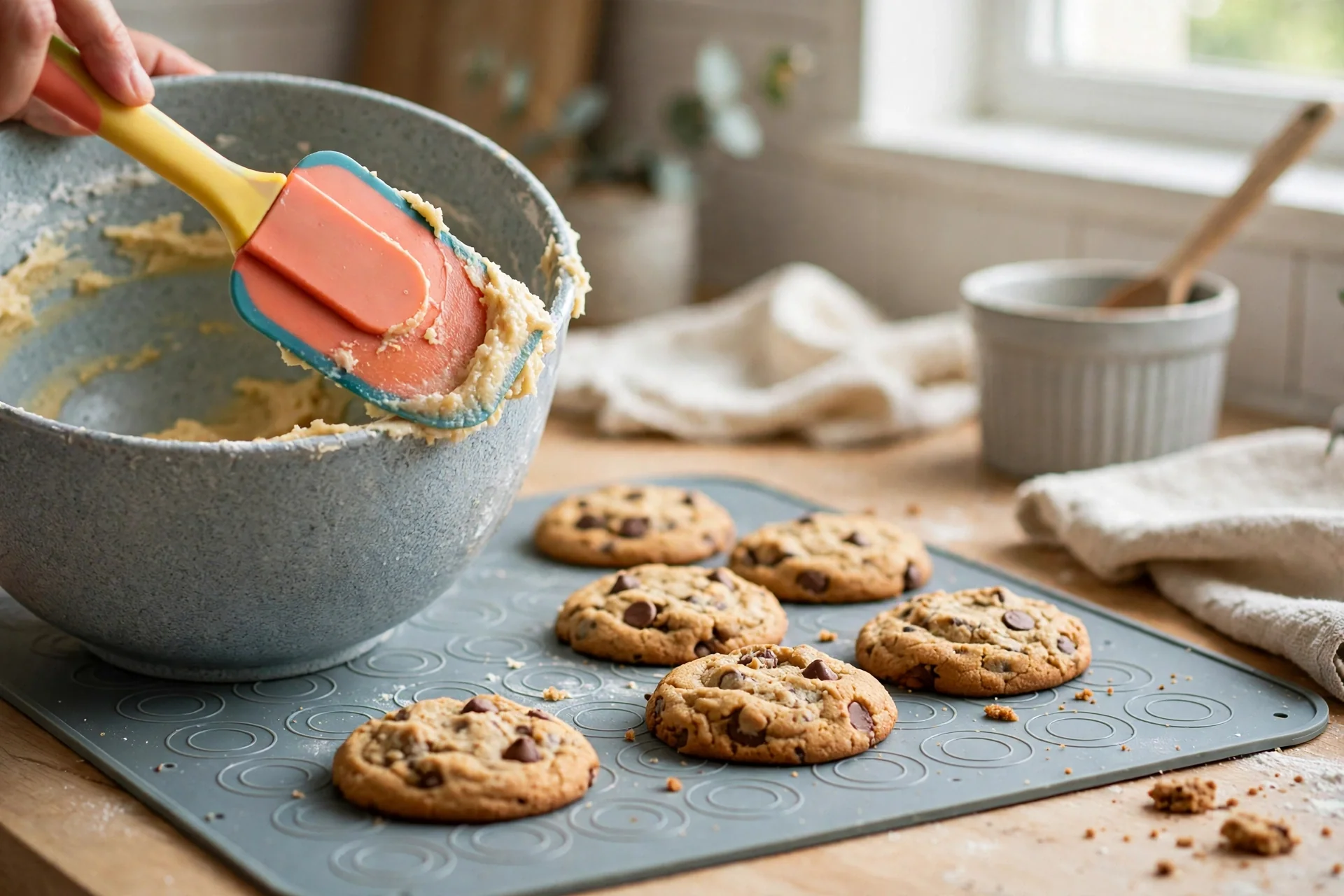
However, there is a catch. Indeed, cheap silicone can feel floppy, and a floppy spatula is useless for thick dough. Specifically, look for a firm core inside the spatula head. That detail separates tools that last from ones that bend on day one. Newer 3d printed kitchen gadgets vary in quality, so read recent reviews before trusting one with hot food.
Metal Kitchen Gadgets
Finally, metal kitchen gadgets cover everything that is not stainless, from cast iron to aluminum to copper. Specifically, a cast iron skillet, once seasoned, fries, sears, and bakes with a crust nothing else matches. Aluminum sheet pans are cheap, light, and perfect for roasting vegetables. Copper heats fast, but it costs more.
Here is a practical rule for metals. Therefore, buy cast iron for heat, aluminum for everyday trays, and steel for tools that touch food directly. That split keeps your spending sane and your drawer manageable. And if you spot vintage kitchen gadgets in cast iron at a thrift store, check for cracks and deep rust. A smooth, flat pan with light surface rust is a bargain. A cracked one is not.
Table: Material picks at a glance
| Material | Best pick | Best for | Watch out for |
|---|---|---|---|
| Wood | Spoon and board set | Daily prep, nonstick pans | Needs hand washing |
| Stainless steel | Tongs and bench scraper | Hot food, heavy use | Heavy in a drawer |
| Silicone | Spatula and baking mat | Easy cleanup, baking | Cheap ones bend |
| Metal | Cast iron skillet | Searing and baking | Needs seasoning |
Best Kitchen Gadgets by Who They Are For
Indeed, a great gadget for one cook can be pointless for another. A parent cooking for kids needs different tools than someone prepping for one. This section groups the rest by audience, so you can skip to your situation.
Healthy Eating Picks
Searching for the best kitchen gadgets for healthy eating usually leads to the same few winners. A kitchen scale is first. It makes portions honest and baking repeatable, because a cup of flour can weigh very differently depending on how you scoop it. A steamer basket is second. It cooks vegetables fast without drowning them in oil or water. A sharp knife is third, because dull knives make prep slow and prep is where healthy cooking usually falls apart. And when you cook meat, check the official safe-temperature guidance at FoodSafety.gov before you serve it.
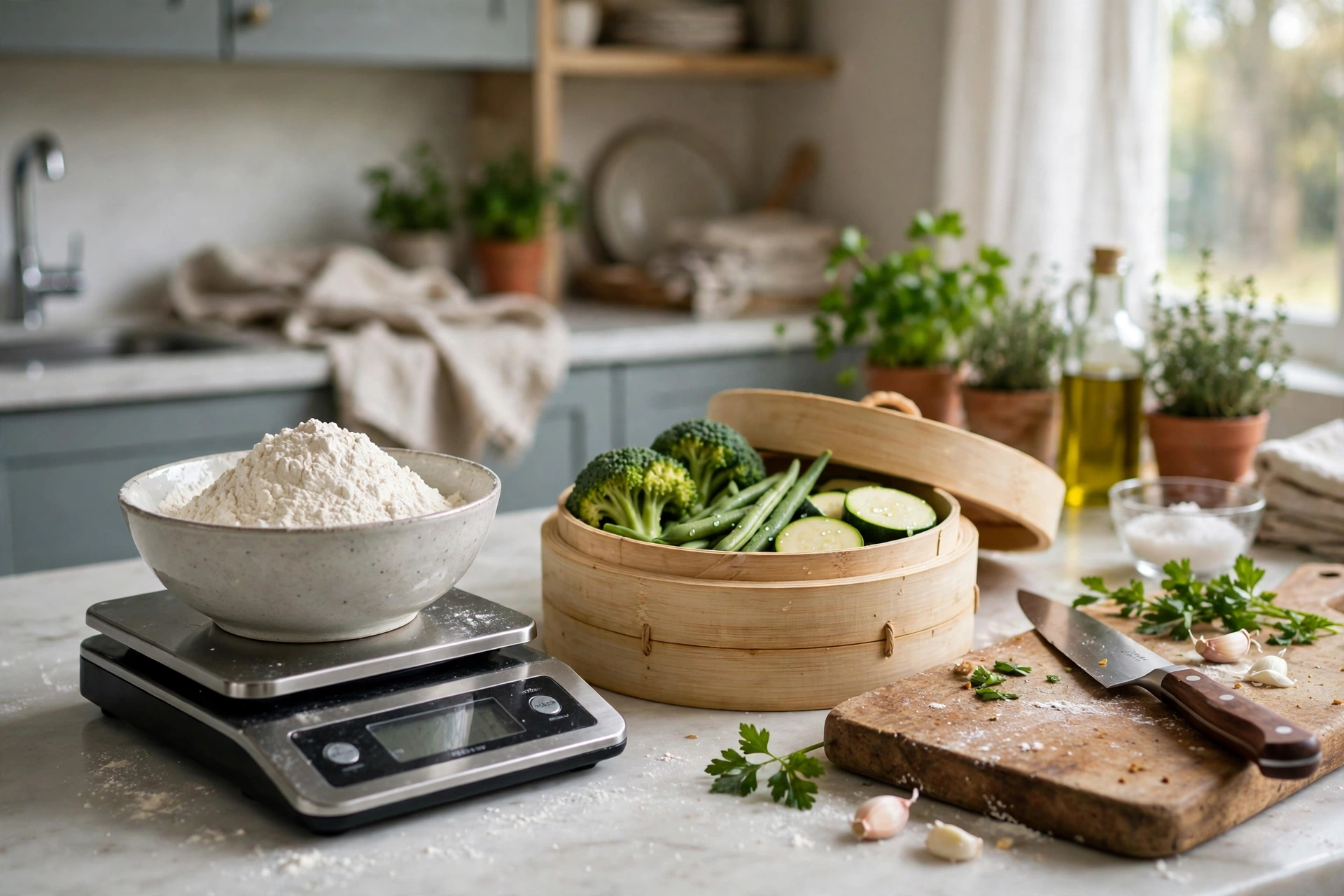
What about the fun stuff, like spiralizers and smoothie makers? They help only if they match food you already eat. A spiralizer is great if you eat zucchini noodles weekly. It is clutter if you try it twice and forget it. Buy for the meals you cook now.
Kids in the Kitchen
Childrens kitchen gadgets work best when they are safe, small, and a little bit fun. Nylon knives cut soft fruit without cutting fingers. Small aprons and step stools matter more than most admit, because a kid who cannot reach the counter cannot help. Cookie cutters and mini rolling pins turn baking into a project kids ask to repeat.
Keep it simple. Two or three kid-sized tools beat a whole set. And let kids own their tools. A child with their own apron and cutter set is more likely to want to cook.
Eco-Friendly Choices
Eco friendly kitchen gadgets are not just about the material. They are about waste. Beeswax wraps replace cling film. Glass containers replace single-use bags. Cloth napkins replace paper ones. The greenest gadget is often the one that stops you buying disposables every week.
Cleanup counts here as well. A dishwasher, used full on an efficient cycle, usually beats hand washing for water use, which surprises many people. If your dishwasher connects to an app, you can check cycle times and settings instead of guessing. Our Bosch dishwasher app guide shows what those controls look like in daily use.
Fun and Weird Picks
Now for the fun aisle. Funny kitchen utensils, weird kitchen gadgets, strange kitchen gadgets, and strange kitchen tools all live here, and some are genuinely useful. A garlic crusher shaped like a sea creature still crushes garlic. A platypus-shaped jar spatula still scrapes the last of the peanut butter out. The joke gets you to buy it, but the function keeps it in the drawer.
Unique kitchen utensils and creative kitchenware make great gifts for the same reason. They are cheap, they make people laugh, and the good ones still work. Weird kitchen utensils like egg separators shaped like animals or avocado tools with three functions fall in the same group. Buy them as gifts or small treats, not as the core of your kitchen.
Unusual kitchen equipment deserves a warning, though. A tool that does one strange job well is fine. A tool that does it badly is a drawer filler. Check reviews for the same complaint twice before you buy. And purple kitchen gadgets exist in surprising numbers, from peelers to kettles. Color is a fine reason to pick one version over another, as long as the tool itself is sound.
Some shoppers love delightfully gadgety kitchens products like clip-on strainers, magnetic measuring spoons, and jar openers. The test stays the same. Does it fix a daily annoyance? A clip-on strainer that saves you holding a heavy pot with one hand passes. A gadget that only looks clever does not.
Small Kitchens and Tight Budgets
Small spaces force good choices. Mini kitchen tool sets, stacking measuring cups, and magnetic strips that hold knives on the wall all save drawer space. A good starting kit is short: a chef knife, a cutting board, a saucepan, a sheet pan, tongs, a spatula, and a thermometer. That kit cooks almost anything and fits in one drawer and one shelf.
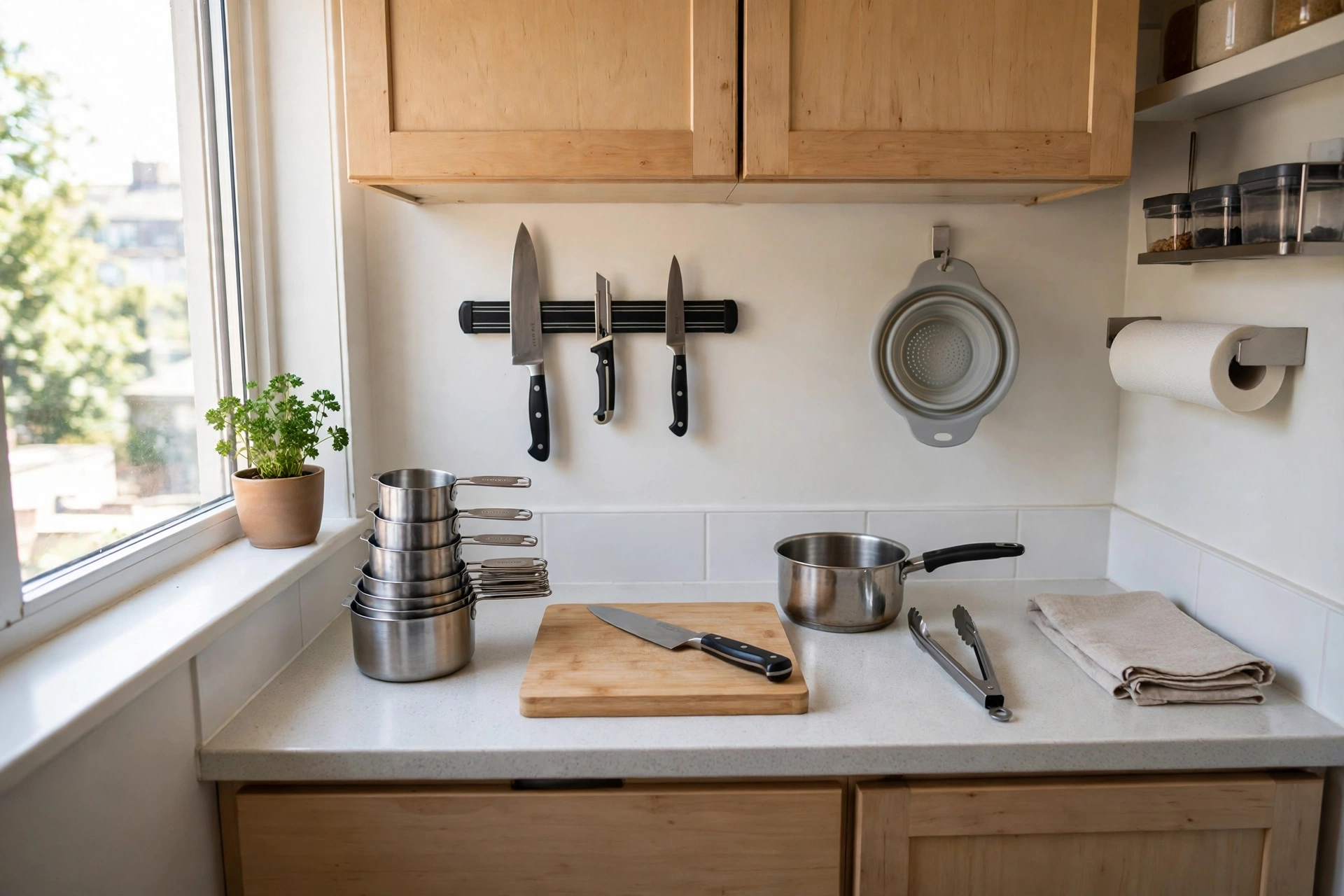
Lighting helps small kitchens more than people expect. A bright counter makes prep faster and safer, and a small room feel bigger. If your counters sit in shadow, our guide to installing LED strips under kitchen cabinets walks through a simple weekend project that changes how the whole room feels.
On a tight budget, buy in this order. First, the knife and board. Second, the pan and thermometer. Third, the small helpers like peelers and spatulas. Cool kitchen appliances and modern kitchen products can wait. An air fryer or a stand mixer is a treat, not a starting point, and both are cheaper once you know you use them weekly.
Where do awesome kitchen gadgets and cool food gadgets fit in? They are extras you add once the basics are covered. A herb stripper or a butter curler will not change your cooking, but can make it more fun. Helpful kitchen gadgets earn that label only when they help with a job you actually do, just as our smart fridge guide tests big appliances. The best kitchen supply is not the biggest one. It is the one where every item has a reason to be there.
What to Skip
Most regret buys share a pattern. They do one narrow job, they are hard to clean, or they duplicate a tool you already own. Egg cookers, single-fruit slicers, and most novelty choppers fall into this trap. A knife and a board already do their jobs, and faster once you count washing up.
Also, watch out for sets. A 30-piece set looks like value, but half the pieces are fillers you will never touch. Instead, buy the five tools you need at good quality, not thirty at low quality.
Finally, ignore the idea that you need everything at once. Kitchens grow. Buy the core kit, cook with it for a month, and notice what you miss. That missing tool is your next purchase. Everything else is marketing.
FAQs
What kitchen gadgets should I start with?
Start with a chef knife, a cutting board, a saucepan, a sheet pan, tongs, a spatula, and an instant-read thermometer. That kit handles almost every everyday meal. Add tools only after you notice a gap in your cooking, not before. This keeps your drawer useful and your spending low.
Are wooden or stainless steel gadgets better?
Neither wins outright, because they do different jobs. Wood is gentle on pans and knives and feels good in the hand, but it needs hand washing. Stainless steel survives the dishwasher, lasts for years, and suits heavy daily use. Most good kitchens use both, with wood for prep and steel for heat and heavy work.
Which eco friendly kitchen gadgets actually help?
The ones that replace disposables help most. Beeswax wraps replace cling film, glass containers replace single-use bags, and cloth napkins replace paper ones. The savings add up weekly. Also run your dishwasher full on an efficient cycle, since that usually uses less water than washing the same load by hand.
Are weird and funny kitchen gadgets worth buying?
Some are, as long as the tool works well beneath the joke. A funny garlic crusher or a shaped jar spatula earns its place if you reach for it weekly. Treat these as gifts or small extras, not core tools. Read reviews first, and skip anything where two reviewers report the same flaw.
What should I look for in kitchen gadgets made in usa?
Check what the label actually covers, since some products are only assembled in the USA from imported parts. Wooden boards, spoons, and cast iron are the easiest categories to find fully domestic options in. Compare the warranty and the material quality, not just the label, before you pay extra.
How do I stop buying gadgets I never use?
Use the weekly test before every purchase. If you cannot name a weekly job the tool will do, do not buy it. Wait a month after spotting something you want, and see if you still miss it. Most impulse buys fade in that month, and the ones that do not are usually worth the money.
Where to Start
Pick your core kit first, then add one section at a time. If you cook daily, start with the material picks. If you cook for kids or want greener choices, start with the audience picks. Either way, buy the tool you will use this week, not the one that looks best in a photo. Your next step: open one drawer, pull out three tools you never touch, and make space for the one you need.