


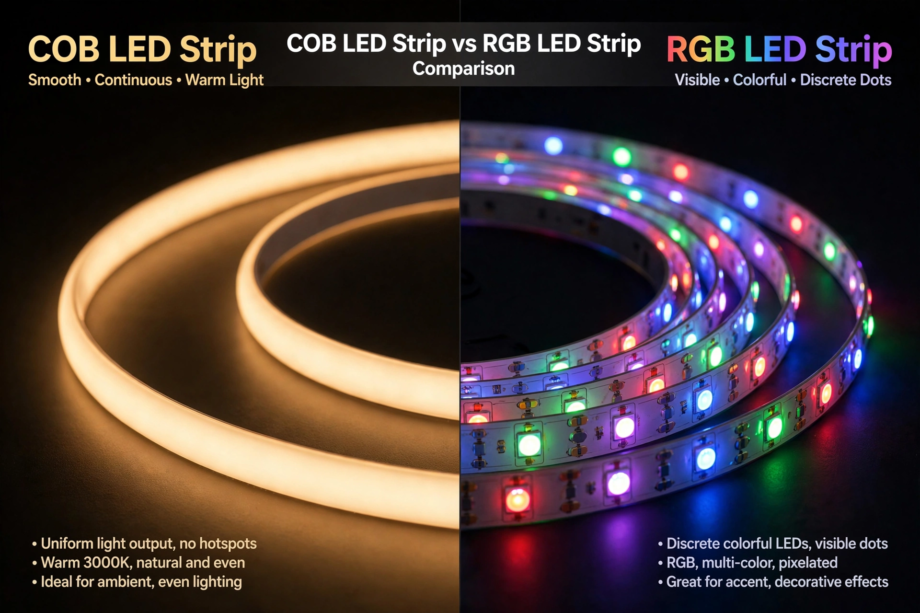
For ambient lighting with no visible dots, COB LED strips beat standard RGB strips. COB packs hundreds of tiny diodes under a phosphor coating, producing a smooth, continuous line of light. RGB strips show individual dots unless you add a diffuser. But RGB wins for color effects and price, so the right choice depends on what your ambient lighting needs to do.
- COB vs RGB LED Strip Ambient Lighting: What They Actually Mean
- Light Quality: COB Wins Clearly
- Color and Effects: RGB Wins Clearly
- White Light Quality
- Flexibility and Installation Differences
- Price Comparison
- Which Should You Buy?
- Can You Mix Them?
- Future-Proofing Your Choice
- FAQs
- Are COB LED strips brighter than RGB strips?
- Do COB strips need a diffuser?
- Can COB strips change colors?
- How long do COB strips last compared to RGB?
- Are COB strips harder to cut and connect?
- Which is better for under kitchen cabinets?
- Do smart home platforms support COB strips?
- Conclusion
This is the question I get most about LED strips. People want that perfectly even glow they see in high-end installs, but they also want colors. COB and RGB solve different halves of that problem. Let’s break down exactly where each one wins.
COB vs RGB LED Strip Ambient Lighting: What They Actually Mean
Choosing between cob vs rgb led strip ambient lighting comes down to glow quality, color, and cost.
First, COB stands for Chip on Board. Instead of individual LED packages spaced along the strip, hundreds of bare LED chips are bonded directly to the circuit board and covered with a continuous phosphor layer. The result looks like a solid ribbon of light. You can’t see individual points, even up close.
On the other hand, RGB strips use SMD technology: separate red, green, and blue LED packages mounted at intervals along the strip. Each package is a visible dot. The strip mixes colors by varying the brightness of each channel. It’s flexible, cheap, and great at effects, but the dots are always there without help.
However, note that COB and RGB aren’t mutually exclusive anymore. RGB COB strips exist, combining the dot-free COB light surface with full color changing. They cost more, but they answer the “why not both” question.
Light Quality: COB Wins Clearly
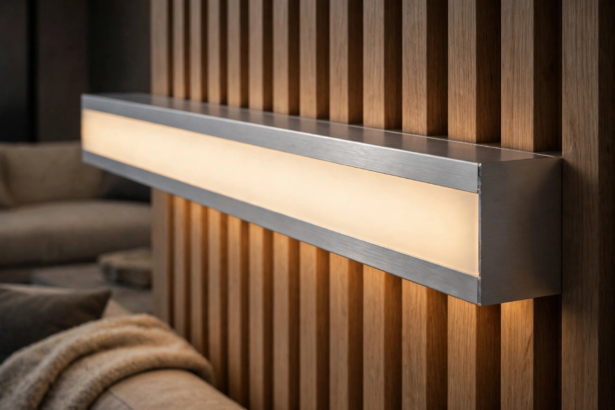
Specifically, for pure ambient lighting, meaning soft background glow that sets a mood, COB is in another league. The light is perfectly even with no hot spots. It looks like a neon tube or a fluorescent bar, not a string of dots. On a wall or ceiling, the glow is perfectly continuous.
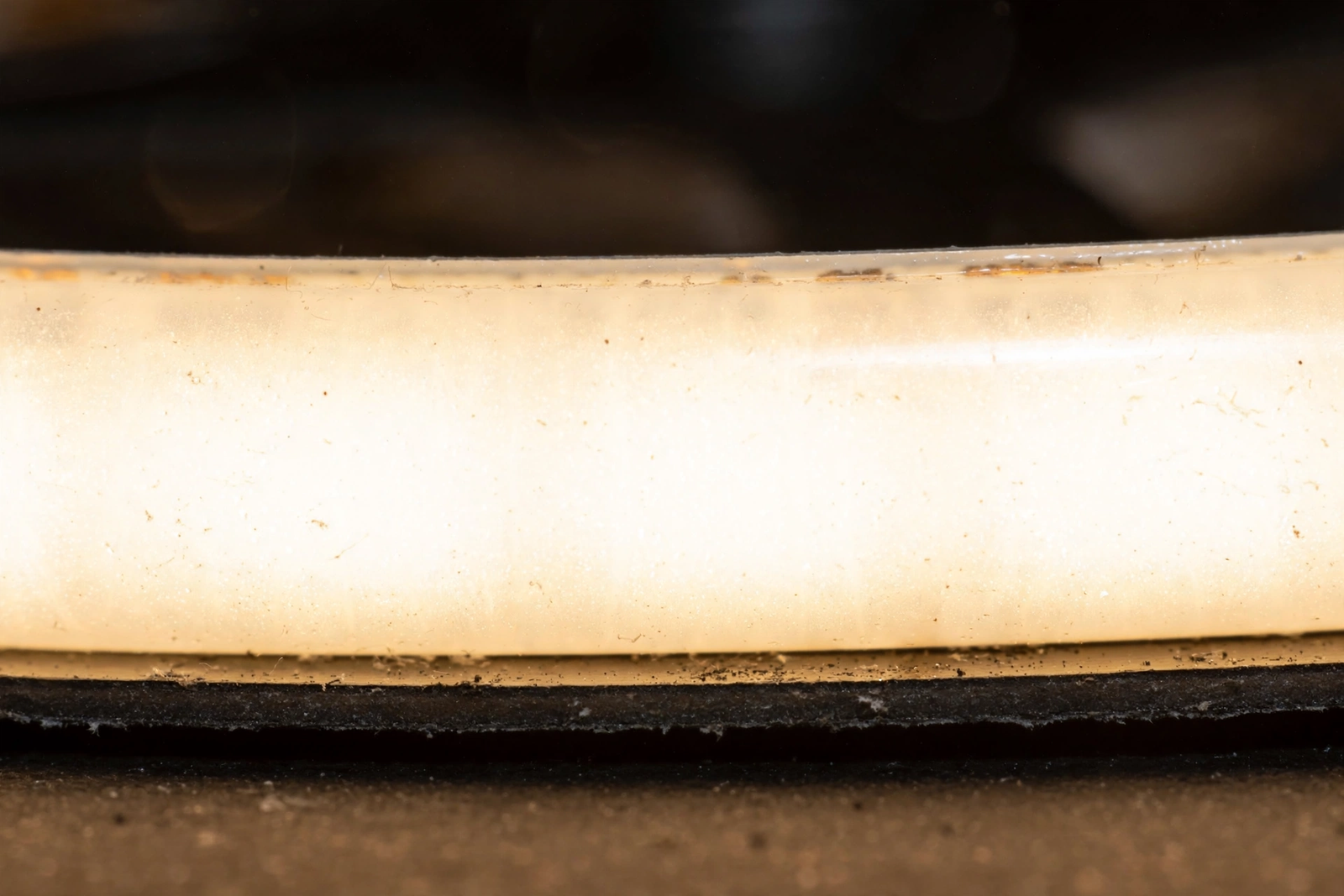
Meanwhile, standard RGB strips can approach this with a diffuser channel, but it’s never quite as clean. Even through a milky diffuser, dense RGB strips can show subtle banding if you look closely. COB through the same diffuser looks like a solid bar of light. No contest.
In addition, there’s a comfort factor too. Individual bright dots create glare. Your eyes keep catching the brightest points. COB’s even surface is easier to look at directly, which matters for ambient lighting that’s in your field of view for hours.
Color and Effects: RGB Wins Clearly
Conversely, here’s where RGB fights back. Standard addressable RGB strips can run chase effects, rainbows, music sync, and per-zone colors. Each LED, or group of LEDs, is individually controllable. That’s what makes gaming setups and party lighting possible.
For instance, basic COB strips are single color or tunable white. They do one beautiful thing: glow evenly. RGB COB strips add color changing, but most aren’t individually addressable, so you get smooth color washes rather than chase effects. For a deeper technical comparison, see this COB vs SMD breakdown. If you want your lights to dance, standard RGB is still king.
Therefore, for ambient lighting specifically, ask yourself how often you’ll actually use effects. Most people set a color or warm white and leave it. If that’s you, COB’s superior light quality matters more than RGB’s party tricks.
White Light Quality
In fact, this is a bigger deal than people expect. Standard RGB strips make “white” by turning red, green, and blue on full. The result is a cold, slightly purple-tinted white that looks artificial. It’s fine for accent colors but unpleasant as actual illumination.
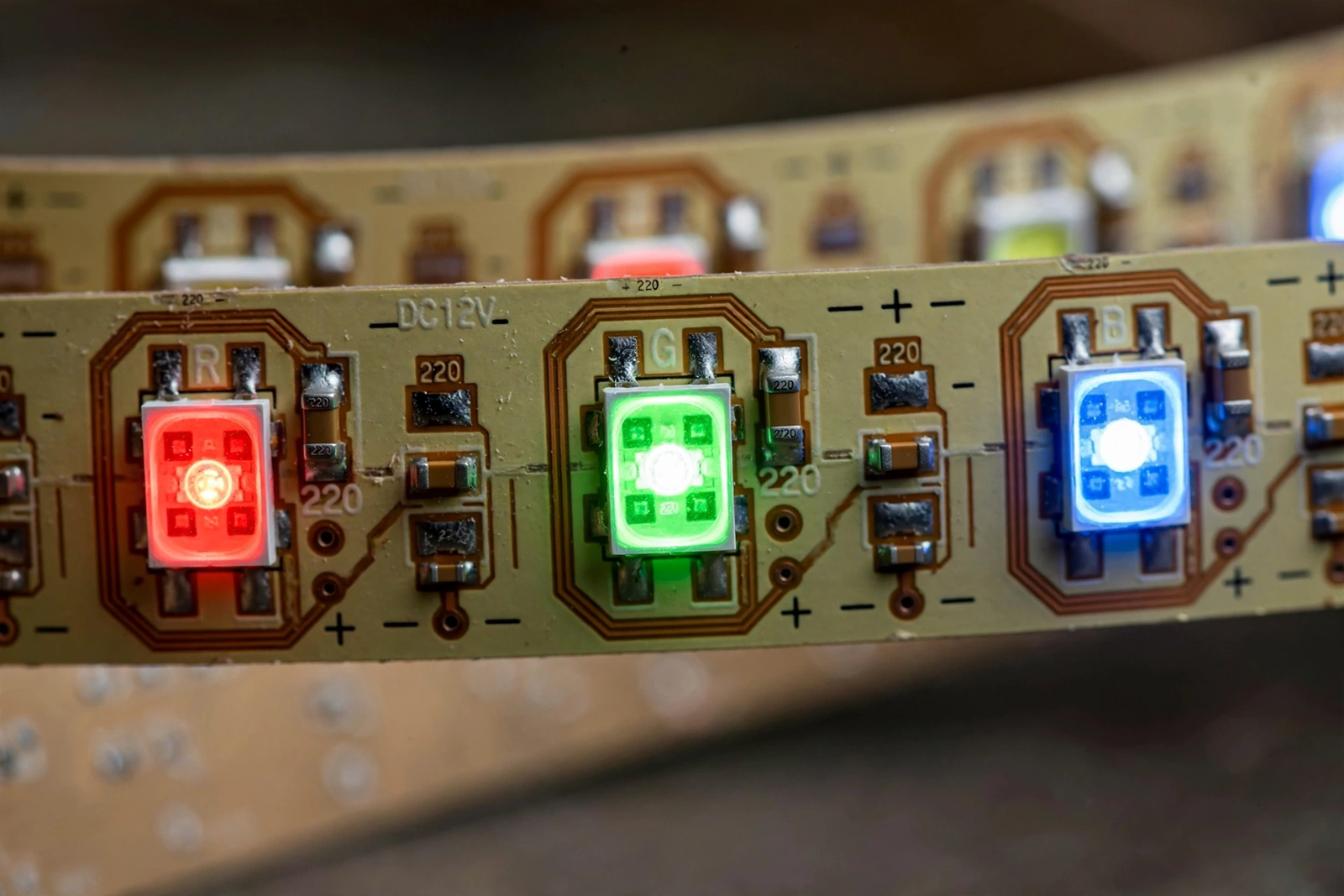
As a result, COB strips, especially tunable white COB, produce clean white light with high color rendering. RGBW and RGBCCT strips add a dedicated white channel to fix this, and they’re a solid middle ground. But a quality white COB strip renders colors in your room more accurately than any RGB-mixed white.
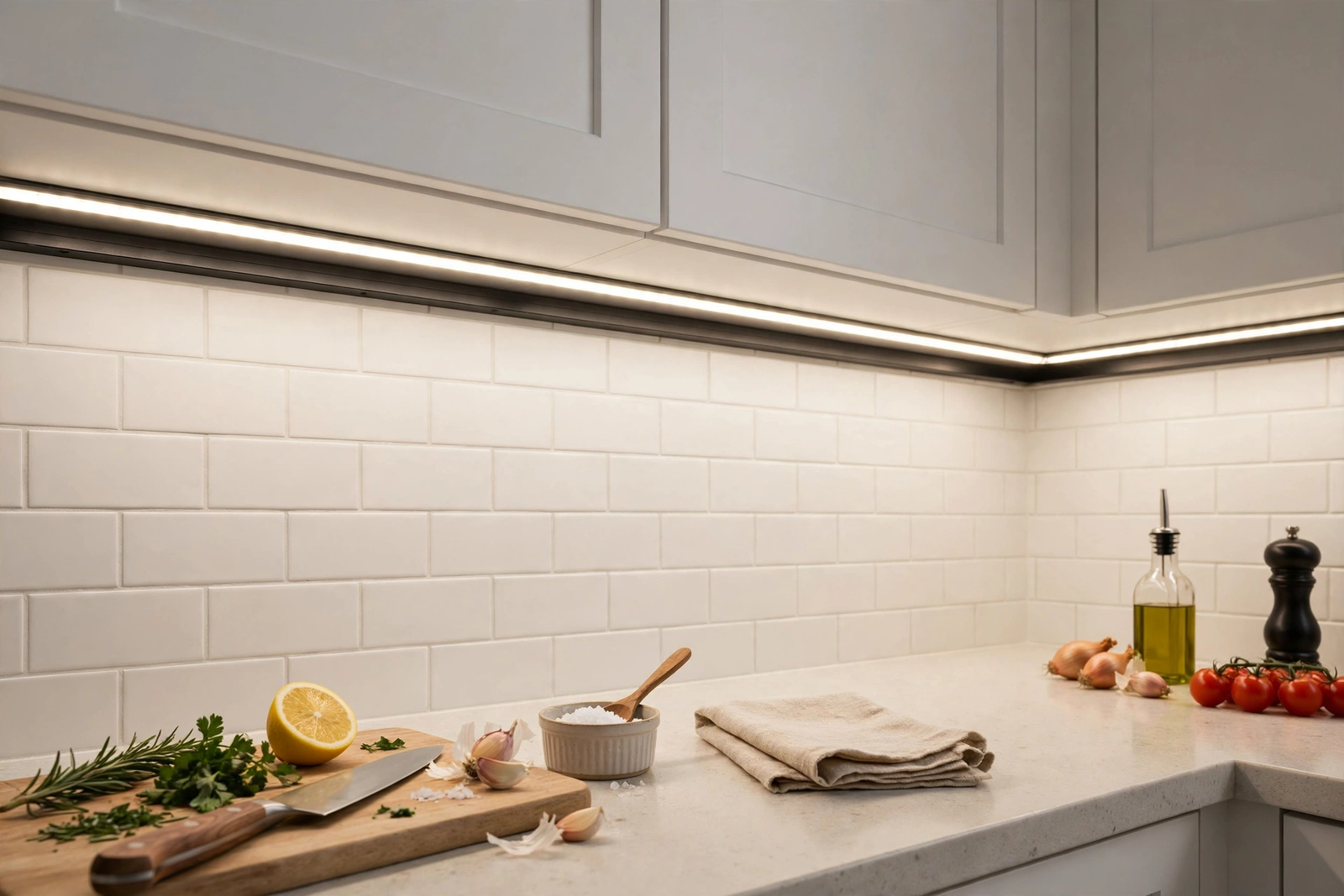
If your ambient lighting doubles as functional lighting, say under kitchen cabinets or in a home office, white quality matters enormously. This is where COB pulls ahead for real-world use.
Table: COB vs RGB for Ambient Lighting
| Feature | COB LED Strip | RGB LED Strip |
|---|---|---|
| Visible dots | None, continuous line | Yes, needs diffuser |
| White light quality | Excellent, high CRI | Poor, bluish mix |
| Color effects | Limited (RGB COB: washes) | Excellent (chase, rainbow, zones) |
| Flexibility | Good, but avoid sharp bends | Excellent, very flexible |
| Cutting | Can cut, but resealing is harder | Easy, marked cut points |
| Price | Higher | Lower |
| Best for | Ambient glow, task lighting | Gaming, parties, accents |
Flexibility and Installation Differences
Standard RGB strips are more forgiving to install. They bend around corners easily, cut cleanly at marked points, and reconnect with simple solder joints or clip connectors. If you’re doing a complex layout with lots of turns, RGB is easier to work with.
COB strips are flexible but more delicate. The phosphor coating can crack if you bend too sharply, and that crack shows as a dark line in the glow. Gentle curves are fine; tight 90-degree bends are risky. Plan your layout with wider turns.
Cutting COB strips works, but resealing the cut end neatly takes more care than with SMD strips. If your install needs many cuts and joins, factor in the extra fuss. For simple straight runs, COB is no harder than anything else.
Price Comparison
First, standard RGB strips are the budget option. A decent 5-meter RGB strip costs a fraction of a comparable COB strip. If you’re lighting a whole room on a budget, RGB gives you more feet of light per dollar.
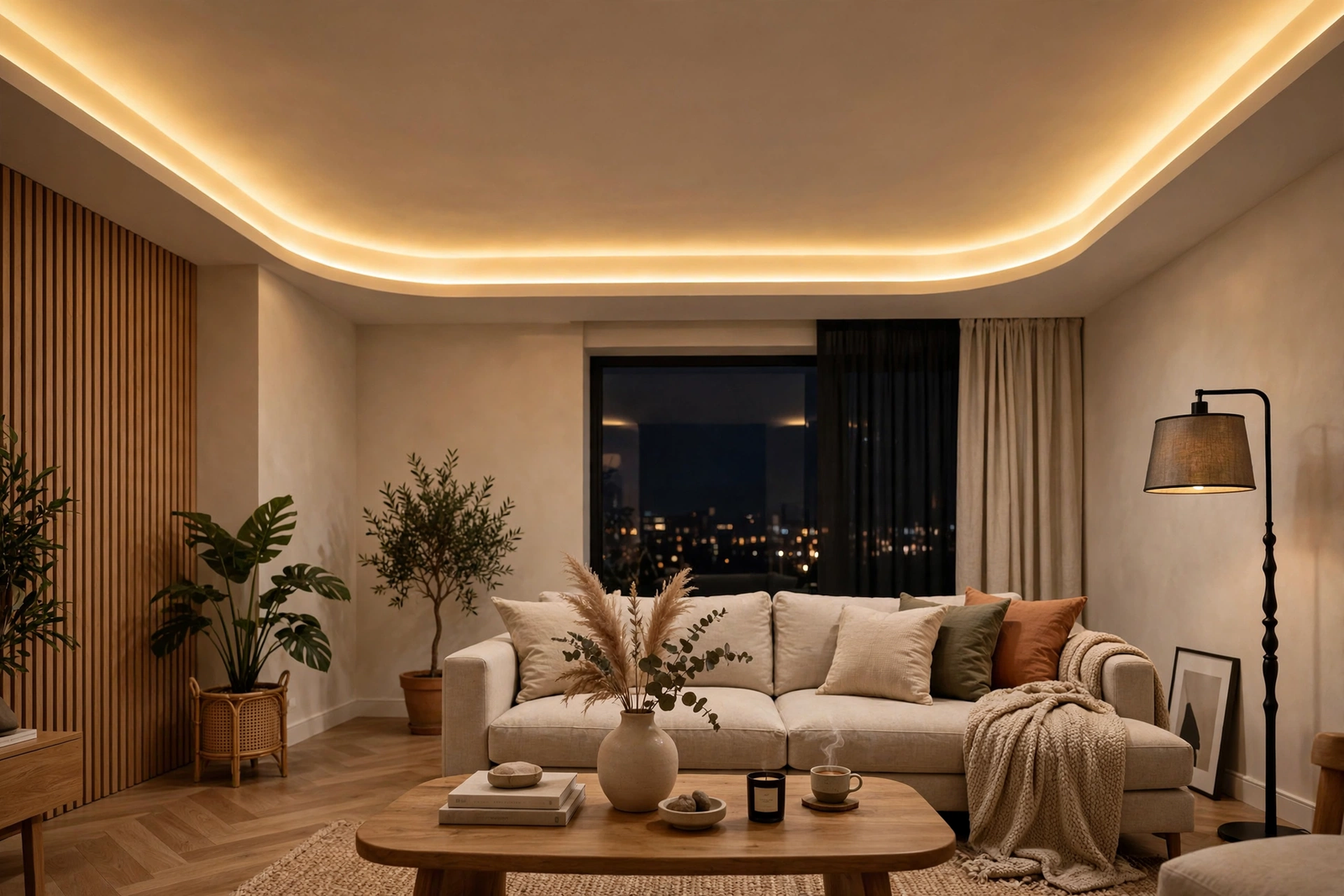
On the other hand, COB strips cost more per meter, and RGB COB costs more still. But remember the hidden cost: RGB strips often need aluminum channels with diffusers to look good, which adds several dollars per foot. A COB strip can look great with minimal diffusion, so the total project cost gap is smaller than the strip prices suggest.
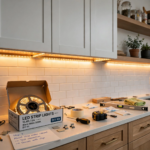
I priced this out for a 15-foot under-cabinet run last year. Cheap RGB strip plus channels and diffusers came to about the same as a COB strip in basic channels. The COB result looked better. Don’t compare strip prices alone; compare total project cost.
Which Should You Buy?
Thus, choose COB if your priority is beautiful, even ambient light. Bedrooms, living rooms, home theaters, under-cabinet task lighting, bathroom mirrors, anywhere the light itself is the feature. The dot-free glow looks premium and feels comfortable.
Alternatively, choose RGB if you want color effects, music sync, or gaming ambiance. Kids’ rooms, gaming setups, party spaces, holiday decorating. The effects are genuinely fun, and no COB strip can chase rainbows down a wall.
Choose RGB COB if you want both and your budget allows. You get smooth, dot-free light with full color changing. You give up addressable effects, but for ambient lighting, that’s a trade most people are happy to make.
Can You Mix Them?
Indeed, absolutely, and it’s often the smartest approach. Use COB for the main ambient runs where light quality matters: under cabinets, along coves, behind the TV. Use addressable RGB for accent zones where effects matter: behind the gaming desk, along shelves, around the ceiling perimeter.
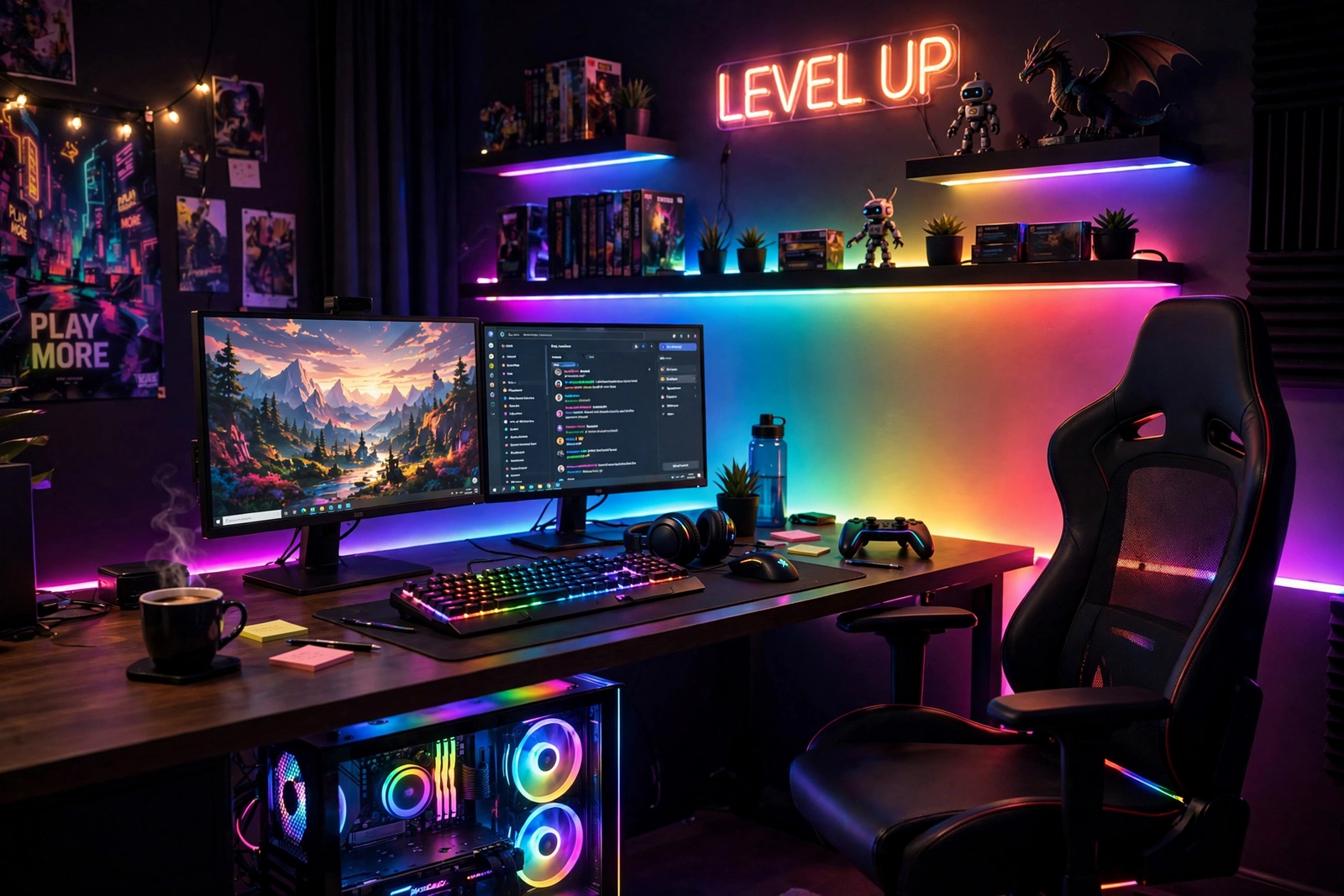
Run them on separate controllers so each does its job. The COB handles the beautiful everyday glow. The RGB handles the fun. Together they cover everything, and neither has to compromise.
Future-Proofing Your Choice
LED technology moves fast, and it’s worth thinking about where things are headed. COB strips are getting cheaper every year as manufacturing scales up. What was a premium product two years ago is now mid-range. If budget is the only thing pushing you toward RGB, consider whether waiting a few months changes the math.
On the RGB side, addressable technology keeps improving. Newer chips offer smoother dimming, better color accuracy, and higher density. The gap between RGB dot visibility and COB smoothness is narrowing as RGB strips pack more LEDs per meter. A 144 LED-per-meter addressable strip through a good diffuser looks remarkably clean.
My advice: buy for what you need now, not for what might come later. Both technologies are mature enough that whatever you install today will serve you well for years. The worst choice is paralysis, staring at options for months while your room sits dark. Pick the one that matches your priority, install it properly, and enjoy it.
FAQs
Are COB LED strips brighter than RGB strips?
Not necessarily in raw lumens. Some high-density RGB strips match or beat COB on total output. But COB light feels brighter in use because it’s perfectly even with no wasted glare. Your eyes perceive the smooth, uniform glow as more comfortable and often more effective. For the same wattage, COB usually gives a more pleasant result even if the lumen numbers are similar.
Do COB strips need a diffuser?
Not for dot elimination, since there are no dots to hide. But a channel with a diffuser still helps by protecting the strip, spreading the light slightly wider, and giving a finished look. Many people run COB strips in shallow channels with frosted covers purely for protection and aesthetics. The light was already smooth; the channel just makes the install cleaner.
Can COB strips change colors?
Single-color and tunable white COB strips cannot. RGB COB strips can change colors across the whole strip at once, producing smooth color washes with no visible diodes. What they generally can’t do is addressable effects where different sections show different colors simultaneously. If you need per-zone control, standard addressable RGB is the tool for that job.
How long do COB strips last compared to RGB?
Both are rated around 30,000 to 50,000 hours in good conditions. COB strips have an advantage in practice because the phosphor layer protects the diodes from dust and minor damage, and they tend to run slightly cooler for the same brightness. Heat is the real lifespan killer for both types, so mounting in an aluminum channel extends either one significantly.
Are COB strips harder to cut and connect?
Somewhat. You can cut COB strips at their marked points like any strip, but the phosphor coating makes clean cuts trickier, and soldering to the tiny pads takes a steadier hand. Clip connectors exist for COB but fit less reliably than on SMD strips. If your project needs many cuts and joins, standard RGB strips are more forgiving to work with.
Which is better for under kitchen cabinets?
COB, without question. Under-cabinet lighting is task lighting you look at every day, and you want even, high-quality white light with no glare spots on the counter. A tunable white COB strip in a shallow channel is the ideal setup. Save the RGB strips for accent areas where color matters more than light quality.
Do smart home platforms support COB strips?
Yes, as long as the controller is compatible. The strip type doesn’t matter to your smart home; the controller does. A COB strip on a compatible smart controller works with Alexa, Google Home, or Apple Home just like any other strip. When shopping, check the controller’s compatibility, not the strip’s. Many popular smart strips use standard controllers across their product lines.
Conclusion
For ambient lighting with no visible dots, COB LED strips are the better choice. The even glow with no hot spots, superior white light, and comfortable viewing experience are exactly what ambient lighting should be. RGB strips win on effects, flexibility, and price, making them better for fun accent lighting.
Next step: decide whether your space needs beautiful light or fun light. If it’s beautiful, go COB. If it’s fun, go RGB. If you can’t decide, RGB COB splits the difference. Whatever you choose, invest in proper mounting and a quality power supply. The strip gets the attention, but the supporting hardware determines whether your install looks great in year three or starts flickering in month six. Don’t overlook the power supply either; a quality driver with proper headroom is the foundation everything else builds on. Size it right, wire it neatly, and your lighting will serve you well for many years to come. Enjoy the glow.
For the best cob vs rgb led strip ambient lighting, test both types in your actual room before committing.