

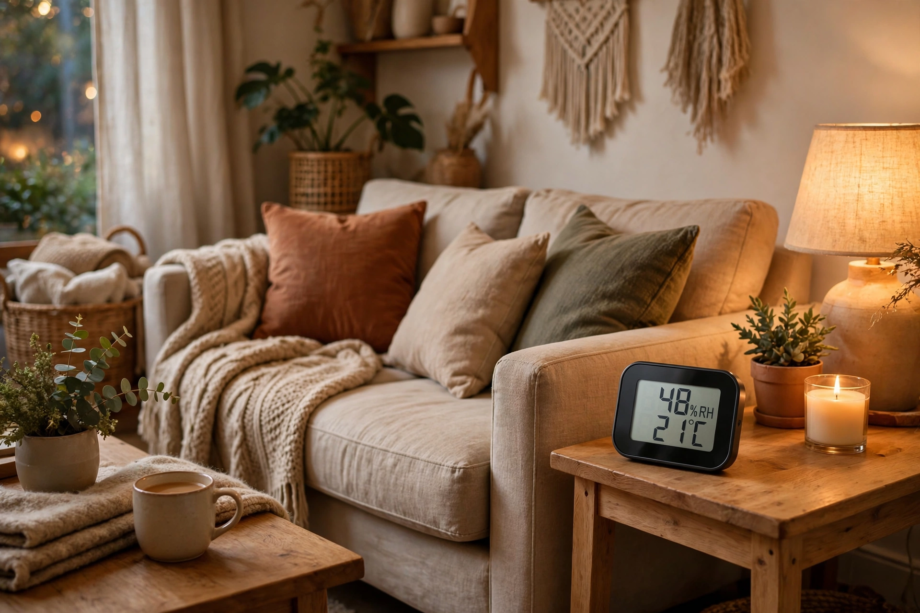
What should the humidity be in your house? For most homes, 30-50% relative humidity hits the mark. But your ideal number shifts with the outdoor temperature, your home’s age, and who lives there. A new house in mild weather might love 45%, while an older home in a deep freeze needs closer to 30%.
- What Should the Humidity Be in Your House? Start With 30-50%
- Match Your Humidity to the Outdoor Temperature
- How to Measure Your Home’s Humidity Correctly
- Adjusting the Target for Your Household
- Your 7-Day Humidity Action Plan
- Common Humidity Mistakes to Avoid
- FAQs
- What should house humidity be in winter?
- How does the ideal humidity change in summer?
- Is 55% humidity too high for a house?
- Where should I put my hygrometer?
- Can I use my thermostat to check humidity?
- Why is my house humid even with the AC on?
- Your House, Your Number
Generic charts give you a starting point, not an answer. This guide helps you find your house’s real number: how to measure each room correctly, how to adjust for winter cold snaps, and a simple 7-day plan that takes you from guessing to knowing. No HVAC degree required.
What Should the Humidity Be in Your House? Start With 30-50%
The 30-50% range is the foundation everything else builds on. For example, the EPA recommends it, HVAC pros design for it, and it keeps both mold and dry-air misery away. If you remember nothing else from this article, remember those two numbers.
However, here’s what the generic charts don’t tell you: 50% humidity at 70°F indoors is a completely different situation than 50% at the same indoor temperature when it’s -10°F outside. Your windows, walls, and attic don’t care about the EPA chart. They care about physics. Indeed, cold surfaces condense moisture, and the colder it is outside, the lower your indoor humidity must be to stay safe.

That’s why “your house” matters more than “a house.” In contrast, a well-insulated new build with double-pane windows tolerates 45% all winter. A 1960s ranch with single-pane glass and minimal wall insulation might weep condensation at 35%. In other words, the right number is the highest humidity you can hold without condensation, and finding it is a measurement exercise, not a guessing game.
Match Your Humidity to the Outdoor Temperature
This is the single most useful chart for winter. As outdoor temperature drops, lower your indoor humidity target to match. Otherwise, condensation and mold follow. HVAC engineers publish versions of this table to prevent window condensation and the mold that follows it.
Table: Maximum indoor humidity by outdoor temperature
| Outdoor temp (°F) | Max indoor RH | Why it matters |
|---|---|---|
| Above 40 | 45-50% | Windows stay clear; full comfort range |
| 20 to 40 | 35-40% | Light condensation risk on glass |
| 0 to 20 | 25-35% | Condensation likely above 35% |
| -20 to 0 | 15-25% | Ice can form inside window frames |
| Below -20 | 15% or less | Extreme cold demands very dry air |
Next, here’s a memory trick I wish someone had taught me years ago: for every 20 degrees the outdoor temperature drops below 40°F, shave about 10 points off your indoor target. At 40°F outside, 45% is fine. At 20°F, aim for 35%. At 0°F, hold near 25%. Still, it’s not laboratory precise, but it keeps you on the safe side of condensation in real houses.
Your windows are the final judge. If they fog on the inside, your humidity is too high for current conditions, whatever the chart says. Instead, dial it down 5% and check again the next morning. In contrast, if the air feels desert-dry and nobody’s windows are sweating, you have room to add moisture.
How to Measure Your Home’s Humidity Correctly
A $15 digital hygrometer answers the “what should it be” question for your specific rooms. If you’re curious how these gadgets actually sense moisture, HowStuffWorks explains hygrometer sensors in plain English. Yet placement determines whether the number means anything. Specifically, a hygrometer in the wrong spot measures a microclimate, not your home.
Follow these four placement rules. First, set it at chest height, about 4-6 feet off the floor, in the center of the room. Humidity stratifies, so floor and ceiling readings lie. Meanwhile, a heating vent can make one corner read 15% lower than the room average. Second, keep it at least three feet from vents, radiators, and drafty windows. A heating vent can make one corner read 15% lower than the room average. Third, avoid direct sunlight, which warms the sensor and fakes a low reading. Fourth, wait 30 minutes after moving it before trusting the number; sensors need time to settle.
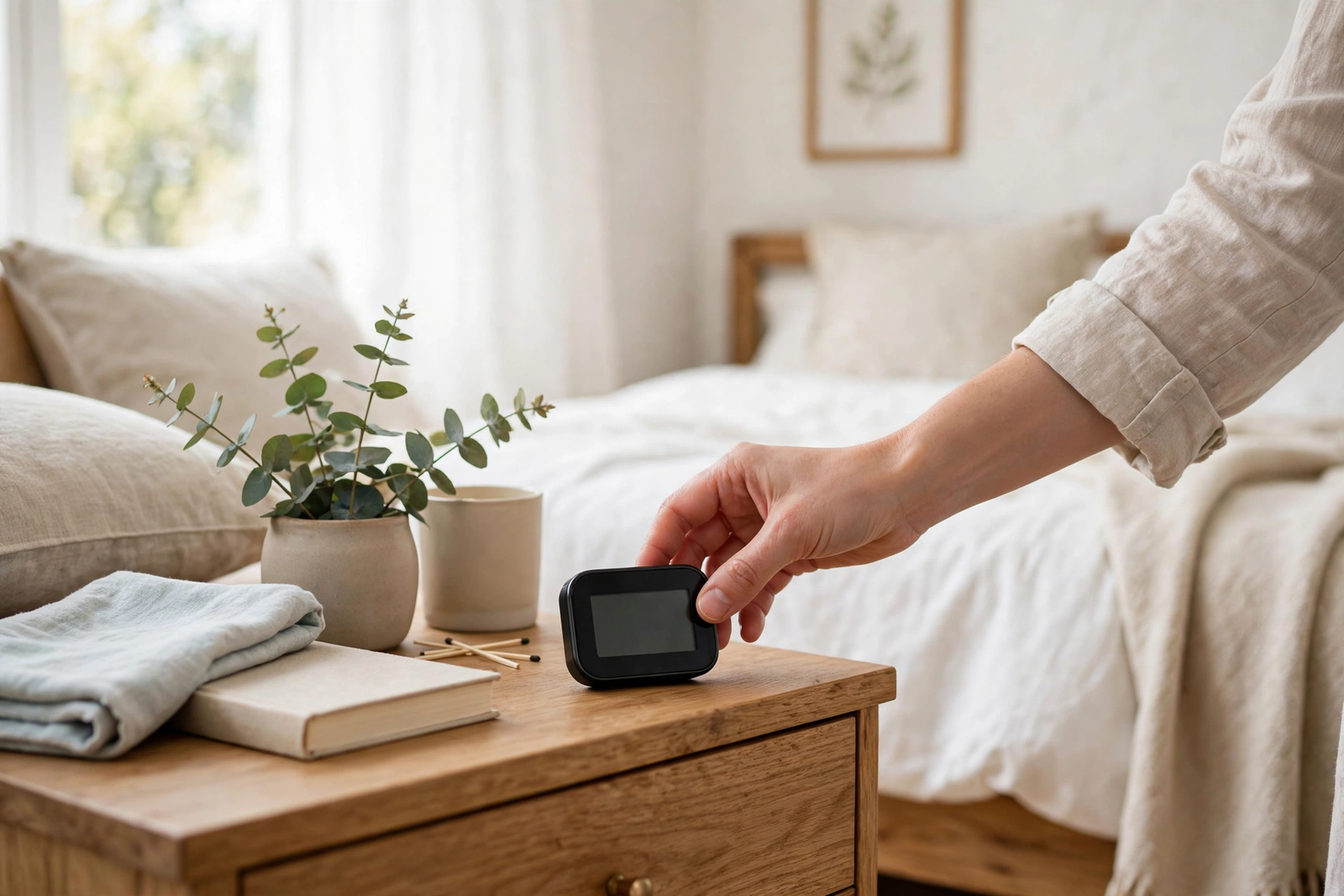
Test multiple rooms, because your house isn’t one climate. Bedrooms, basements, and bathrooms routinely differ by 10 points or more. Check morning and evening too, as humidity swings with daily temperature cycles and household routines like showers and cooking.
Want to verify your hygrometer’s accuracy? Try the salt test. Seal the device in a bag with a bottle cap of damp table salt for 8-12 hours. It should read 75%. If yours reads 70%, add 5 points to every future reading. Moreover, cheap hygrometers are often off by a few points, and knowing your offset beats buying a pricier unit.
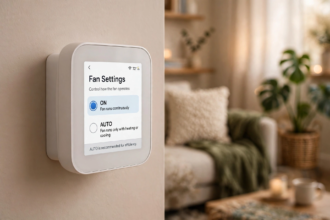
Many smart thermostats also display humidity for the hallway they’re mounted in. That’s a useful second opinion. Nevertheless, it only reflects one spot. If the thermostat reading disagrees wildly with your hygrometer, learning how to reset a Honeywell thermostat can rule out a sensor glitch before you trust either number.
Adjusting the Target for Your Household
The chart gives you the safe maximum. Your household determines where inside the safe zone you should aim.
With babies or elderly family members, favor 40-50%. Airways in the very young and very old irritate easily in dry air, and this band minimizes both respiratory complaints and allergen load. Pediatric guidance consistently lands here, so it’s the default for nurseries.
With asthma or allergies in the house, stay under 50% and mean it. In fact, dust mites thrive above that line, and their debris is a top indoor allergen. If mite debris is adding to your household dust, see whether an air purifier helps with dust. If allergy symptoms flare at home, humidity is a suspect worth investigating. An air purifier can help with the allergens themselves, though drying the air is what starves the mites.
With wood instruments, hardwood floors, or fine furniture, hold 40-45% steady. In particular, wood swells and shrinks with humidity swings, and stability matters more than the exact number. A guitar kept at a swinging 30-55% will suffer more than one held at a constant 38%. Museums target tight bands for exactly this reason.
In an older or poorly insulated house, run 5-10 points lower than the chart suggests. Cold walls and single-pane windows condense at humidity levels a modern house shrugs off. North-facing rooms and corners deserve extra attention, since they’re always the coldest surfaces. Thus, when in doubt in an old house, 35% is a safer winter bet than 45%.
Your 7-Day Humidity Action Plan
Finally, enough theory. Here’s how to dial in your house in one week.
Day 1: Buy two hygrometers. Basic digital models cost about $15 each at any hardware store like Home Depot. Also, two units let you compare rooms simultaneously, which beats moving one device around.
Day 2: Place them right. One goes in the bedroom at nightstand height; the other in the living area. Follow the placement rules above, keep both away from vents and windows, and give them a few hours to settle.
Days 3-4: Log readings. Spend these two days noting numbers morning and evening. Jot them down, because memory lies about trends. You’re after the range, not a single snapshot.
Day 5: Compare against the chart. Afterward, check the outdoor temperature, find your max on the table, and see where your rooms land. Above the max? You need less moisture. Below 30%? You need more.
Day 6: Fix the obvious. Feeling damp? Run bathroom fans longer, fix that dripping tap, and check the dryer vent. Too dry instead? A portable humidifier in the bedroom plus an open bathroom door after showers does the trick.

Day 7: Re-measure and set it. Check whether your fixes moved the needle. Then set your humidifier, dehumidifier, or humidistat to hold the new target. Recheck monthly, since seasons shift the goalposts.
One more tip: log readings for a full year if you’re keen. You’ll discover your house’s personality, like the basement that always runs damp in July or the bedroom that crashes every January. For instance, that diary becomes invaluable when something changes and you need to know what’s normal for your home.
Common Humidity Mistakes to Avoid
Even informed homeowners trip on these. First, trusting a single reading. One hygrometer in the hallway doesn’t represent the basement or bedroom. Measure where you live, not where it’s convenient.
Second, chasing the number instead of the symptom. If windows are clear, skin feels fine, and nobody’s sniffling, 52% is not an emergency. In contrast, foggy windows at 40% mean your specific house needs less, whatever the chart says. Symptoms beat statistics.
Third, forgetting that humidity work is seasonal. The humidifier setting that saved January will swamp the house in April if you never dial it back. As a result, spring window mold is a classic “forgot to adjust” problem. Put a seasonal reminder on your calendar.
Fourth, running a humidifier and dehumidifier against each other. It sounds absurd, but it happens in zoned homes: the basement dehumidifier dries air that the upstairs humidifier just moistened. Therefore, coordinate whole-house equipment instead of letting rooms fight.
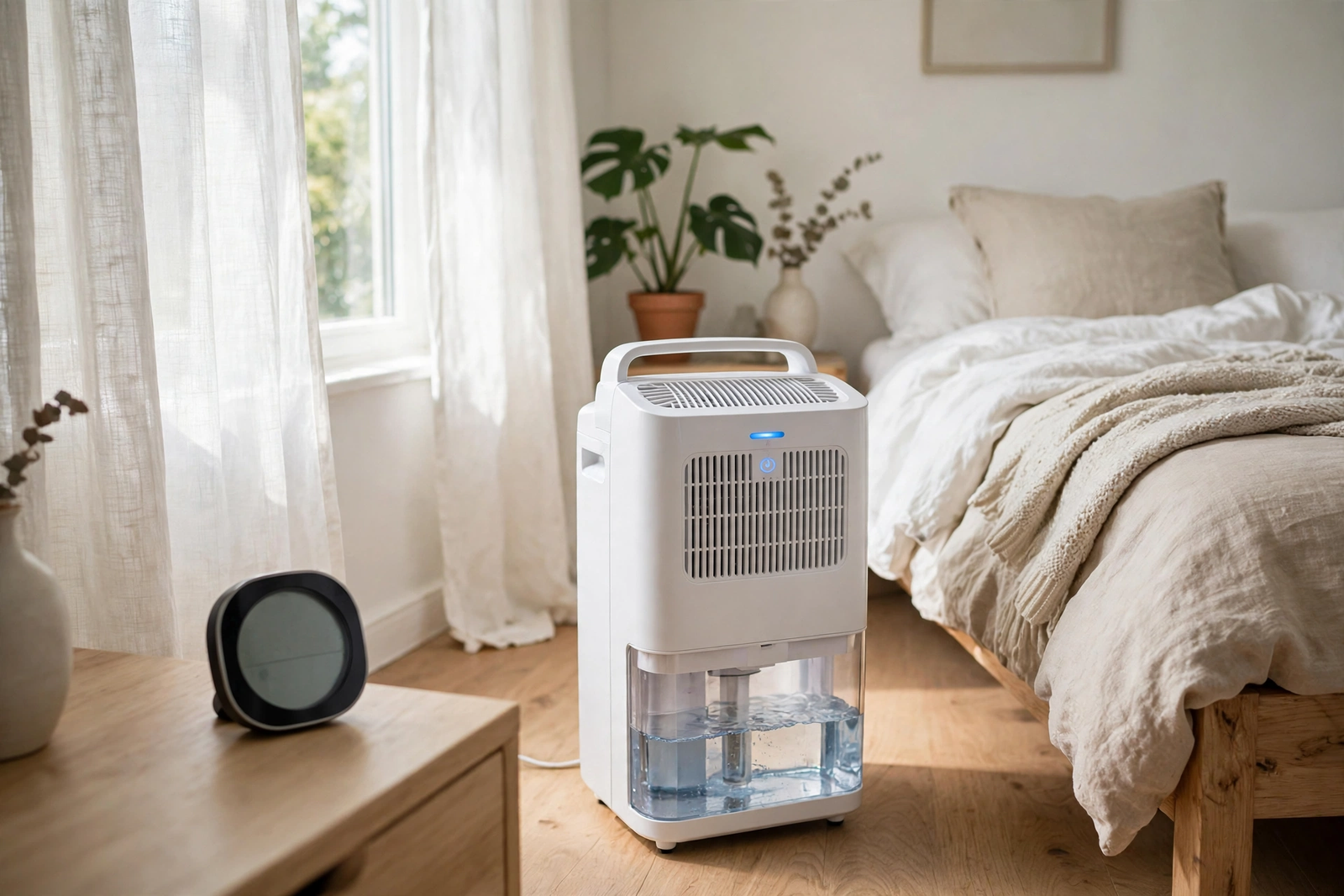
Finally, ignoring the obvious moisture sources while buying gadgets. A $200 dehumidifier can’t outrun a dryer venting indoors or a shower fan that exhausts into the attic. Fix sources first; equipment second.
FAQs
What should house humidity be in winter?
Follow the outdoor temperature chart: 35-40% when it’s 20-40°F outside, dropping toward 25-30% near 0°F. The colder it gets, the lower you go to prevent window condensation. In mild winters that rarely freeze, 40-45% stays comfortable. Watch your windows; fogging means you’re too high for current conditions.
How does the ideal humidity change in summer?
Aim for 40-50% in summer. Your air conditioner naturally dehumidifies as it cools, so this range usually happens on its own in a well-sized system. If the house stays above 55% despite the AC running, the unit may be oversized and short-cycling, or you may need a dedicated dehumidifier for the dampest rooms.
Is 55% humidity too high for a house?
It’s borderline. The EPA draws the line at 60%, but sustained 55% gives dust mites a foothold and risks condensation. Brief peaks after showers are harmless if they fall back. If rooms sit at 55% all day, improve ventilation or run a dehumidifier. If dampness is triggering allergies, an air purifier can help with allergens during the fix.
Where should I put my hygrometer?
At chest height in the center of the room you use most, at least three feet from vents, windows, and heat sources, and out of direct sunlight. Wait 30 minutes after placing it before reading. Test bedrooms, basements, and bathrooms separately; each can differ by 10 points. Avoid kitchens during cooking; the steam lies.
Can I use my thermostat to check humidity?
Yes, as a rough guide. Many smart thermostats display humidity for the hallway where they’re mounted. It’s useful for trends but only reflects one location, and hallway air isn’t bedroom air. For decisions about humidifiers or dehumidifiers, confirm with a dedicated hygrometer placed in the room you actually care about.
Why is my house humid even with the AC on?
Usually one of three causes: an oversized AC that cools too fast to dehumidify, a moisture source like a damp basement or venting dryer, or humid outdoor air leaking in through gaps. Check the filter first, since clogged airflow kills moisture removal. If the system short-cycles, meaning it runs in brief bursts, sizing is the likely culprit.
Your House, Your Number
So what is the right number for your home? Start at 30-50%. Then let the outdoor thermometer, your windows, and your hygrometer refine it. The chart keeps you safe, the rooms tell you the truth, and the 7-day plan turns both into a number you can set and forget.
Comfort isn’t a universal constant; it’s a negotiation between your house, your climate, and your family. Indeed, measure honestly, adjust seasonally, and recheck when something feels off. Do that, and the air in your home will finally feel the way it should in every room, every season.