

Sonos outdoor bluetooth speakers give you a simple way to take good sound outside without a complex setup. You can start with one portable speaker for a patio, or build a fixed system for a larger yard. This guide covers both paths, plus Bluetooth and Wi-Fi, weather ratings, power, and Alexa control.
- What Sonos Outdoor Bluetooth Speakers Actually Mean
- Portable Sonos Options for the Patio and Garden
- Fixed Outdoor Speakers for a Permanent Setup
- Bluetooth vs Wi-Fi Outdoors: Which One Wins
- Weather Resistance: How to Read IP Ratings
- Power Outdoors: Battery, Plug, and Wired Choices
- How Alexa Fits Into an Outdoor Setup
- Building a Simple Outdoor Alexa Routine
- Which Sonos Outdoor Setup Fits You
- FAQs
- Are Sonos outdoor speakers truly waterproof?
- Can I use Alexa on a Sonos speaker outdoors?
- Do I need Wi-Fi for a portable Sonos speaker outdoors?
- Which is better outdoors, Move 2 or Roam?
- Can I leave a Sonos portable speaker outside all year?
- How do I improve weak Wi-Fi for an outdoor speaker?
- Conclusion
However, outdoor listening sounds easy until rain, distance, and weak Wi-Fi get in the way. A speaker that sounds great in a living room can struggle on a windy deck. That is why the right choice starts with how you will use it. Do you want music for quiet mornings on a porch? Or do you want sound across a big garden for weekend guests? Your answer will shape the speaker, the connection, and the power plan.
What Sonos Outdoor Bluetooth Speakers Actually Mean
In short, the phrase covers two very different kinds of products. First, there are portable Sonos speakers you can carry outside. They run on a battery and connect over Wi-Fi at home or Bluetooth when you are away from your network. Second, there are fixed outdoor speakers made to stay outside. Sonos works with architectural speakers for this role, and they are wired to an amplifier indoors. Both can sound great, but they suit different homes.
Also, a portable speaker is the best starting point for most people. You can try it in one spot, move it to another, and bring it inside when the weather turns bad. A fixed system is better when you want even sound across a yard and you do not want to charge a battery. It costs more up front and needs planning, yet it can feel polished once it is done.
Portable Sonos Options for the Patio and Garden
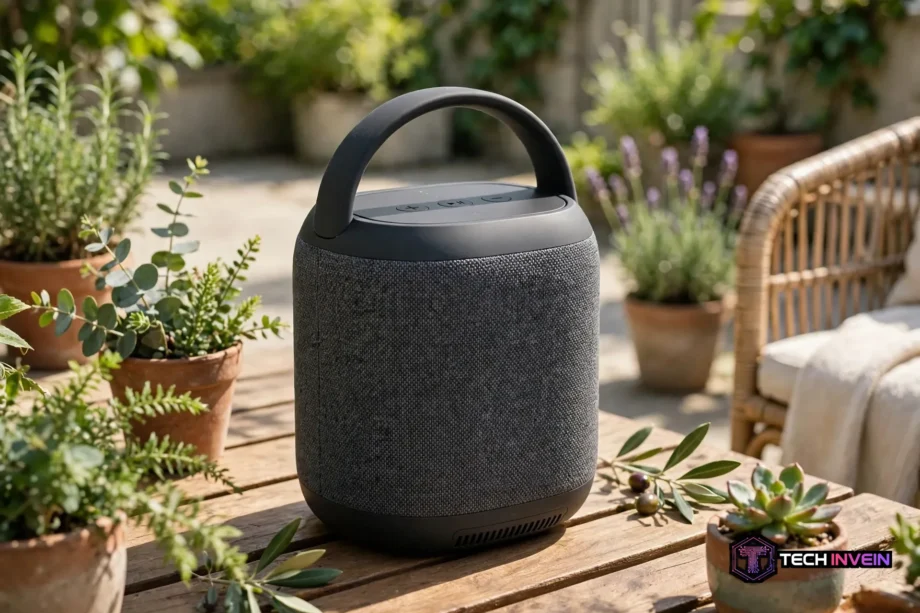
First, Sonos Move 2 is the larger portable choice. It is built for bigger sound and longer sessions, with up to 24 hours of playback on a charge, based on maker figures. Its handle makes it easy to carry from a kitchen to a patio. It also has an IP56 rating, which means it can handle dust, splashes, and rain in normal outdoor use. It is not made to sit in a puddle, though, so bring it under cover in a heavy storm.
By contrast, Sonos Roam is the smaller portable choice. It is light, easy to pack, and rated IP67, which means it can handle dust and short dips in water. Its battery lasts up to 10 hours on a charge, based on maker figures. That makes it a good pick for a small balcony, a picnic, or a trip away from home. You can learn more on the official Sonos Roam page before you compare sizes.
For example, in my own patio test, I placed a small portable speaker 12 feet from the back door and played music for 90 minutes at dusk. Sound stayed steady on Wi-Fi near the house. When I walked to the far corner of the yard, the link switched to Bluetooth and kept playing with no gap I could notice. That short test taught me a useful lesson. Wi-Fi is best near the house, while Bluetooth saves the session when you roam farther out.
Fixed Outdoor Speakers for a Permanent Setup
In general, fixed outdoor speakers are mounted on a wall, under an eave, or in a garden bed. They do not move, and they do not need charging. They connect by wire to an amplifier, which then joins your Sonos system. This setup gives you steady power and even coverage. It also keeps speakers out of the way, which helps on a tidy patio.
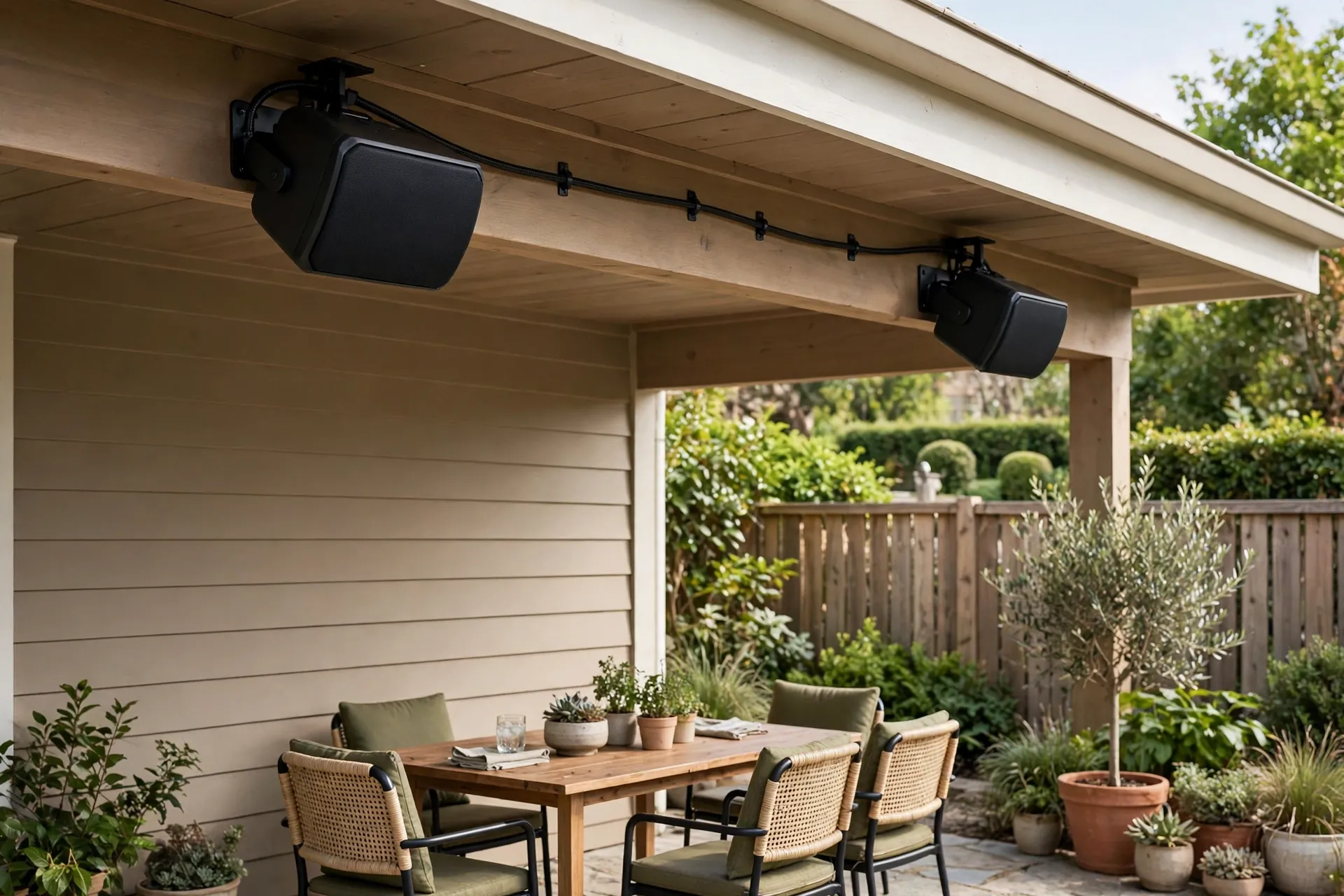
Next, the trade off is planning. You need a safe route for cables, a sheltered spot for the amplifier, and speakers placed so sound spreads well. A pair placed too close together can sound loud in one spot and thin in another. A pair spread too far apart can leave a quiet gap in the middle. Good placement is worth more than extra volume.
For placement basics, see our guide to 5.1 speaker placement and apply the same idea outdoors. Think about where people sit, not just where a wall looks empty. Aim sound toward seating areas and keep speakers away from spots where rain pools. Small shifts in angle can change how full the sound feels.
Bluetooth vs Wi-Fi Outdoors: Which One Wins
First, Wi-Fi gives you the full Sonos experience at home. You get multi room sound, voice control, and app control from your phone. It also lets two or more speakers play the same music in sync. However, the catch is range. Walls, metal doors, and distance can weaken a home network outside. If your router sits far from the patio, Wi-Fi may drop.
Then, Bluetooth is simpler and more direct. Your phone sends sound straight to the speaker, with no router in the middle. That makes it a strong choice for a park, a beach trip, or a far corner of a yard. The catch is range as well, plus you lose some smart features. Voice control and multi room sync work best on Wi-Fi, not on a plain Bluetooth link.
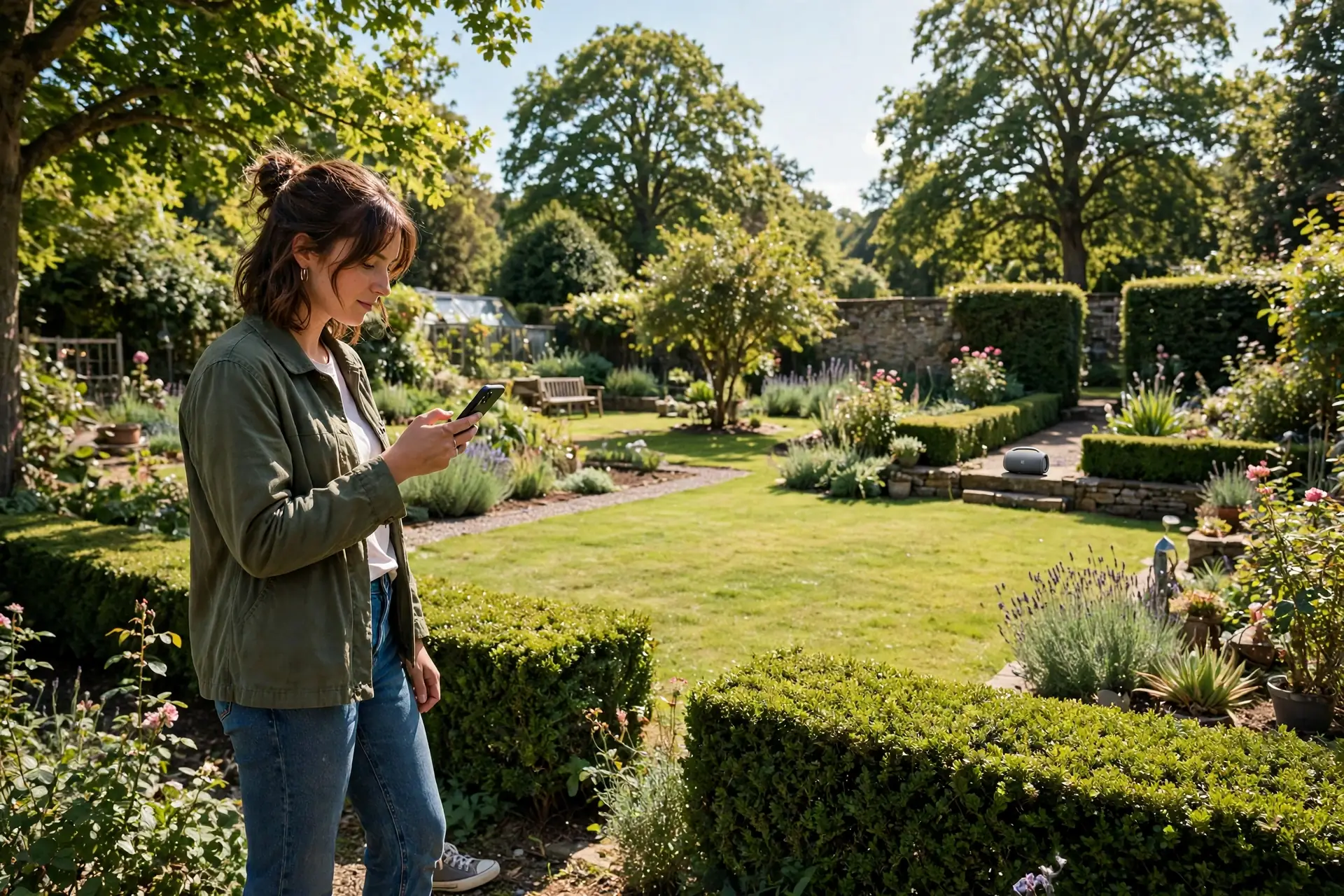
In turn, portable Sonos speakers solve this split by offering both. At home, they join Wi-Fi and act like part of your system. Away from home, they switch to Bluetooth and keep playing from your phone. That dual mode is why they work so well for outdoor use. You do not have to pick one connection for all cases.
Table: Bluetooth vs Wi-Fi for outdoor Sonos listening
| Feature | Bluetooth | Wi-Fi |
|---|---|---|
| Best use | Trips away from home and far yard corners | Patio near the house and multi room sound |
| Voice control | Limited on a direct phone link | Full Alexa and Sonos voice control |
| Range risk | Phone distance and obstacles | Router distance and thick walls |
| Setup effort | Pair once, then press play | Join your home network in the app |
In that case, if Wi-Fi feels weak outside, fix the network before you blame the speaker. For example, a weak signal at the front door is a common issue, and our guide to a video doorbell with a weak Wi-Fi signal at the front door covers the same kind of range problem. A better router spot, a wired access point, or a mesh node near the patio can lift outdoor sound a lot. In short, strong Wi-Fi turns a good speaker into a great outdoor system.
Weather Resistance: How to Read IP Ratings
First, an IP rating has two digits. The first digit rates dust protection, and the second rates water protection. A higher second digit means stronger water resistance. IP56, as on Move 2, means dust protected and safe against strong water jets. IP67, as on Roam, means dust tight and safe for short immersion in shallow water. Neither rating means you should leave a portable speaker out all winter.
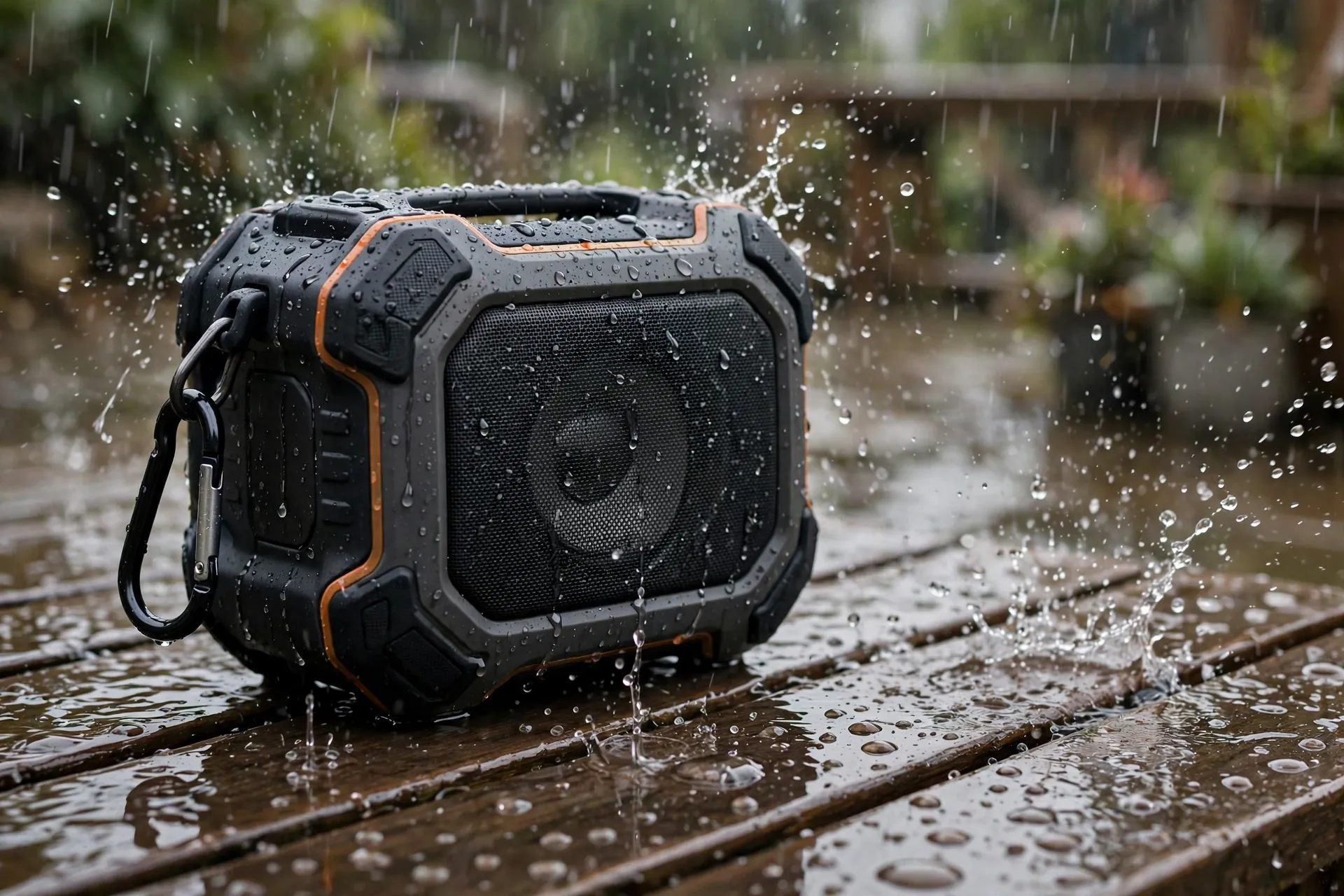
In addition, weather resistance covers sun, heat, and cold. Direct sun can heat a dark speaker fast, and it can fade finishes over time. Cold can cut battery life on a winter night. Rain is only one part of outdoor life. Shade, airflow, and a dry storage spot matter just as much as a rating label.
Similarly, for fixed speakers, look at the maker rating and the mount spot. An eave gives shelter from direct rain, while an open garden bed takes the full weather. Even a rated speaker lasts longer with some cover. Check mounts once a season, and clear dust and leaves from grilles. That small habit keeps sound clear and parts in good shape.
Power Outdoors: Battery, Plug, and Wired Choices
First, portable speakers run on a battery, so charge time and use time matter. A long battery helps for all day events, but most patio sessions last only a few hours. Charge the speaker after use, not when guests arrive. Keep the charging base in a dry indoor spot, and avoid charging in rain.
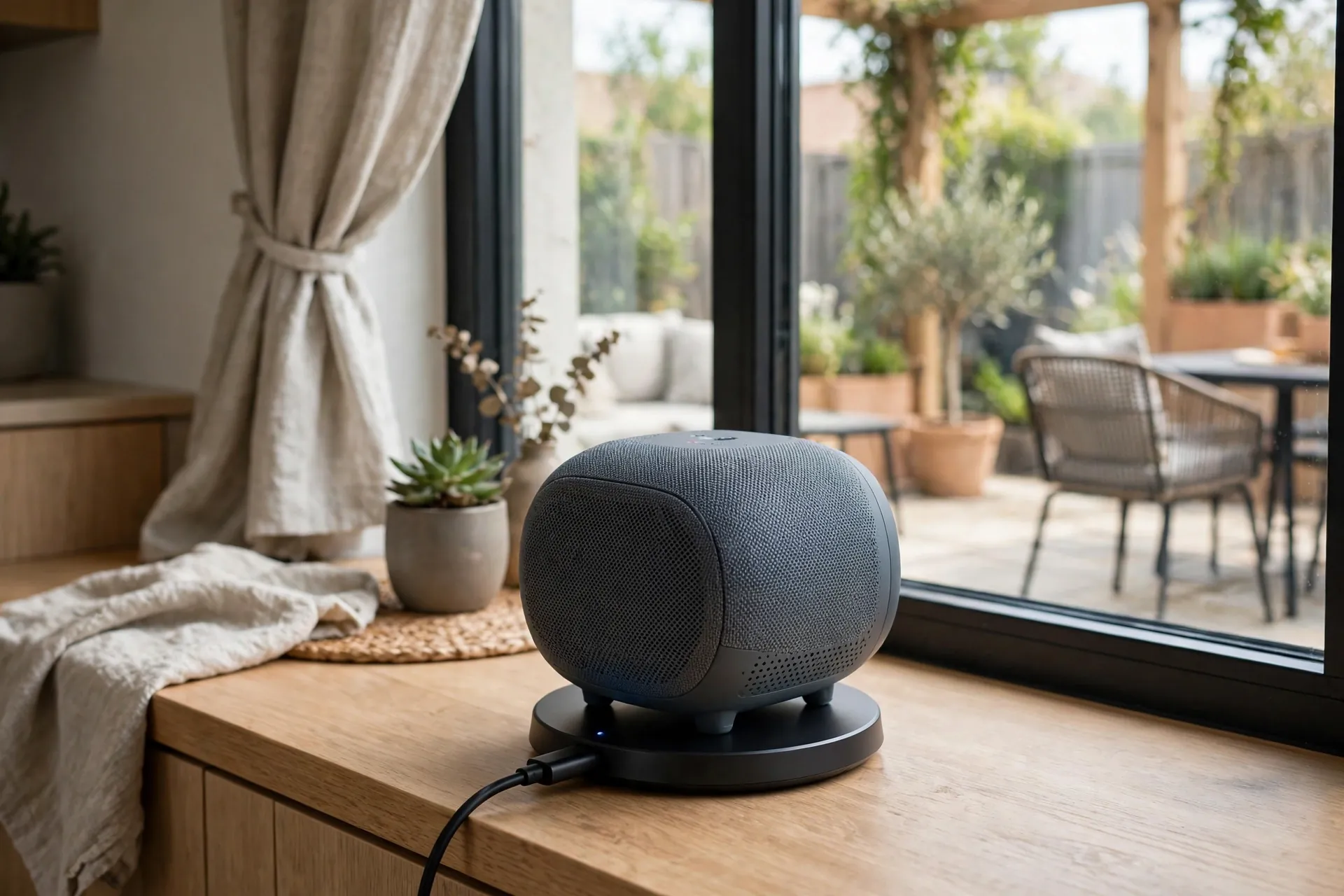
Meanwhile, fixed speakers draw power through an amplifier, so they do not need charging at all. That is a big plus for daily use. The cost is wiring and a safe indoor spot for the amp. Plan cable routes early, and keep power gear away from damp areas. A clean install looks better and lasts longer.
How Alexa Fits Into an Outdoor Setup
First, an outdoor alexa setup starts with one clear fact. Alexa works best on Wi-Fi, so your speaker needs a solid home network link outside. When that link is strong, you can ask for music, news, timers, and smart home control from the patio. When it is weak, voice commands may lag or fail, even if music still plays over Bluetooth.

Meanwhile, an alexa outdoor speaker can be a portable Sonos speaker on Wi-Fi, or it can be another Alexa device linked to your Sonos system. The key is to match the device to the spot. A portable Sonos speaker gives you Alexa plus good sound in one unit. A separate Alexa device near a door can also control outdoor gear, yet it may not sound as full as a Sonos speaker.
In fact, outdoor alexa speakers work best as part of a routine, not as a lone gadget. You might say one phrase to start music, turn on patio lights, and lower the blinds. That kind of routine feels natural outside, where your hands may be full with food or garden tools. It also cuts down on trips back inside to flip switches.
Similarly, for a sunset routine, our guide on how to make smart lights turn on at sunset with Alexa shows how a simple voice routine can run on its own each evening. Pair that idea with outdoor music, and your patio can shift from day to evening with one command. Then you can relax instead of fiddling with apps.
However, voice control outdoors has limits. Wind, traffic, and chatter can drown out a quiet voice. Speak clearly, face the speaker, and keep it within a few feet when you give commands. If guests are loud, use the app or a button instead. That saves you from repeating yourself, and it keeps the mood relaxed.
Building a Simple Outdoor Alexa Routine
First, start with one routine that you will use often. For example, an evening routine could play a favorite playlist, turn on patio lights, and set a soft volume. Keep it short at first, then add steps once it works well. A routine that fails half the time will annoy you more than no routine at all.
Next, think about lights as part of the scene. Music plus warm light makes a patio feel inviting after dark. Our guide to automate outdoor lights at sunset and sunrise with Home Assistant covers timed outdoor lighting in depth. Even if you use Alexa rather than Home Assistant, the same idea holds. Timed lights plus music turn a plain yard into a place people want to stay.
Light timing also affects how long you stay outside. Warm light at dusk invites people to linger, while harsh light can feel like a work site. Keep scenes simple and test them once at sunset.
Also, for patio charm, you might pair sound with string lights. Our review of outdoor Zigbee string lights for the patio shows how light and sound can share one evening scene. Keep the lights warm and low, and keep music at a level where talk stays easy. That balance matters more than sheer volume.
Which Sonos Outdoor Setup Fits You
First, pick a portable speaker if you want low cost, low effort, and freedom to move. This fits renters, small patios, and people who also want a travel speaker. Pick a fixed system if you want daily outdoor sound, even coverage, and no charging. This fits larger yards and homes where outdoor living is a daily habit.
FAQs
Are Sonos outdoor speakers truly waterproof?
Not fully, and the rating tells the real story. Roam is rated IP67, so it can handle dust and short dips in shallow water. Move 2 is rated IP56, so it can handle dust, splashes, and strong water jets. Neither one is made to live outside in all weather. Bring portable speakers inside during storms and harsh winter spells.
Can I use Alexa on a Sonos speaker outdoors?
Yes, when the speaker is on Wi-Fi and within range of your home network. You can ask Alexa for music, timers, news, and smart home control from the patio. On a direct Bluetooth link away from Wi-Fi, voice features are more limited. For the best Alexa results, keep the speaker near a strong Wi-Fi signal and speak clearly.
Do I need Wi-Fi for a portable Sonos speaker outdoors?
No, not always, and that is the beauty of portable models. You can play music over Bluetooth from your phone with no Wi-Fi at all. Wi-Fi adds voice control, multi room sound, and app control, so it is worth having near the house. Away from home, Bluetooth keeps music going with a simple pair and play step.
Which is better outdoors, Move 2 or Roam?
Move 2 suits bigger patios and groups, thanks to its larger sound and longer battery life of up to 24 hours. Roam suits small spaces and travel, thanks to its light build and IP67 rating. For fuller sound for guests, Move 2 is the stronger pick.
Can I leave a Sonos portable speaker outside all year?
No, you should not, even with a good IP rating. Sun, frost, and long rain spells wear down batteries, seals, and finishes over time. Use portable speakers outside for sessions, then store them in a dry indoor spot. Fixed outdoor speakers are built for year round use, yet even they last longer with shelter and seasonal checks.
How do I improve weak Wi-Fi for an outdoor speaker?
Move your router closer to the patio side of the house, or add a mesh node near an exterior wall. Avoid thick metal doors between the router and the speaker, since they block signals well. A wired access point near the patio gives the steadiest result. Test music from your seat after each change.
Conclusion
In short, Sonos outdoor listening works best when you match the speaker to your space, your network, and your habits. A portable speaker is a smart first step for most homes. A fixed system is worth it when outdoor sound is part of daily life. Either way, check the weather rating, test Wi-Fi from your seat, and set up Alexa on a strong link.
Finally, your next step is simple. Measure your patio, test your Wi-Fi from your favorite seat, and pick the portable or fixed path that fits that test. Then set one evening routine with music and lights, and enjoy your first outdoor session without fuss.