

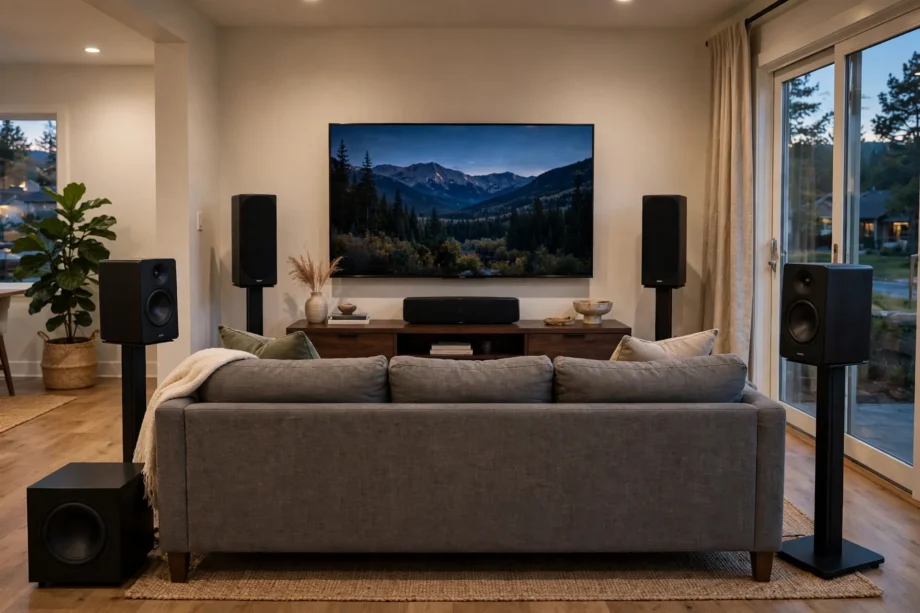
Good 5.1 speaker placement turns a set of speakers into a cinema. The same speakers can sound flat in one layout and stunning in another, and the difference is usually just angles and height. This guide shows where each speaker goes, how high to mount it, and how to test the result.
- What 5.1 Actually Means
- Front Speakers: Left, Center, and Right
- Surround Speakers: The Heart of 5.1 Speaker Placement
- Subwoofer Placement: Test, Do Not Guess
- Height, Distance, and Symmetry
- Setting 5.1 Surround Sound Up Step by Step
- 5.1 Compared With 7.1, 5.1.2, and 5.1.4
- Rooms That Break the Rules
- Common Placement Mistakes
- Frequently Asked Questions
- Where should I put surround sound speakers in a 5.1 system?
- How high should 5.1 speakers be mounted?
- Can I place 5.1 speakers in the ceiling?
- Where is the best place for a subwoofer?
- Is 7.1 better than 5.1 speaker placement?
- Do I need to calibrate after moving a speaker?
- Your Next Step
What 5.1 Actually Means
The numbers in 5.1 are simple. The 5 stands for five main speakers: front left, center, front right, and two surrounds. The .1 stands for one subwoofer, which handles deep bass. Together they place dialogue in front of you, music across the front, and effects around you. That split is why a well placed 5.1 set beats a louder stereo pair for films.
Your AV receiver sends each channel to its speaker, so labels matter. Connect the center output to the center speaker, the surround outputs to the side speakers, and the subwoofer output to the sub. Mixing up left and right surrounds flips effects across the room, so a car that should pass left to right will pass the wrong way. Label wires as you connect them.
Start from your main seat, not from the walls. Dolby speaker setup guides use the same seat centered approach for their layouts. Pick the seat where you watch most films, then measure angles from that seat. Two rooms with the same size can need different speaker spots if the sofa sits in a different place. The seat is the center of the system, and every angle in this guide is measured from it.
Front Speakers: Left, Center, and Right
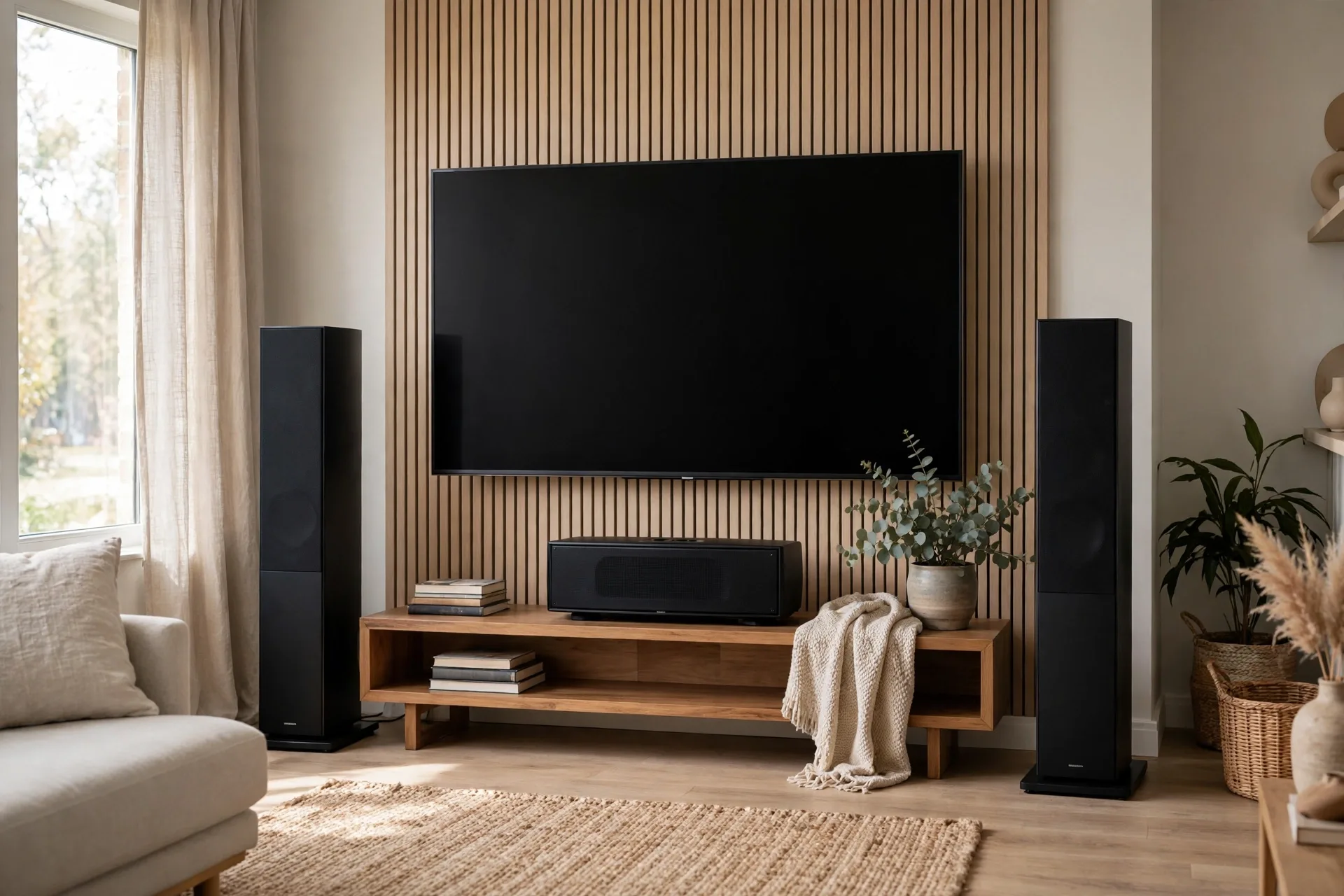
Place the front left and right speakers at seated ear height, forming an angle of about 22 to 30 degrees from your main seat. That spread gives a wide, stable front stage without leaving a hole in the middle. Angle them slightly toward your seat, a small toe in, so their sound aims at you rather than at the side walls.
Keep front speakers about two to three feet from the front wall where you can. Pushing them hard against the wall can boost bass and muddy dialogue. If space forces them close to the wall, use the receiver room correction and listen for boominess in male voices. A small gap often cleans up the sound more than a new speaker would.
The center speaker carries most dialogue, so its spot matters most. Place it as close to the screen center as you can, either just below or just above the screen, angled toward your ears. Never hide it deep inside a closed cabinet, since the cabinet colors the sound and blocks high frequencies. If it must sit in a cabinet, pull it to the front edge.
Surround Speakers: The Heart of 5.1 Speaker Placement
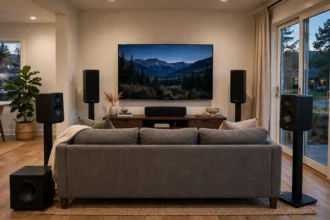
Where to place surround sound speakers is the question most owners get wrong. In a 5.1 system, place the two surrounds to your sides or slightly behind you, at an angle of about 90 to 110 degrees from your main seat. That puts them beside your ears or just behind them, never in front of you. Surrounds placed too far forward collapse the sound field and make effects feel like they come from the TV.
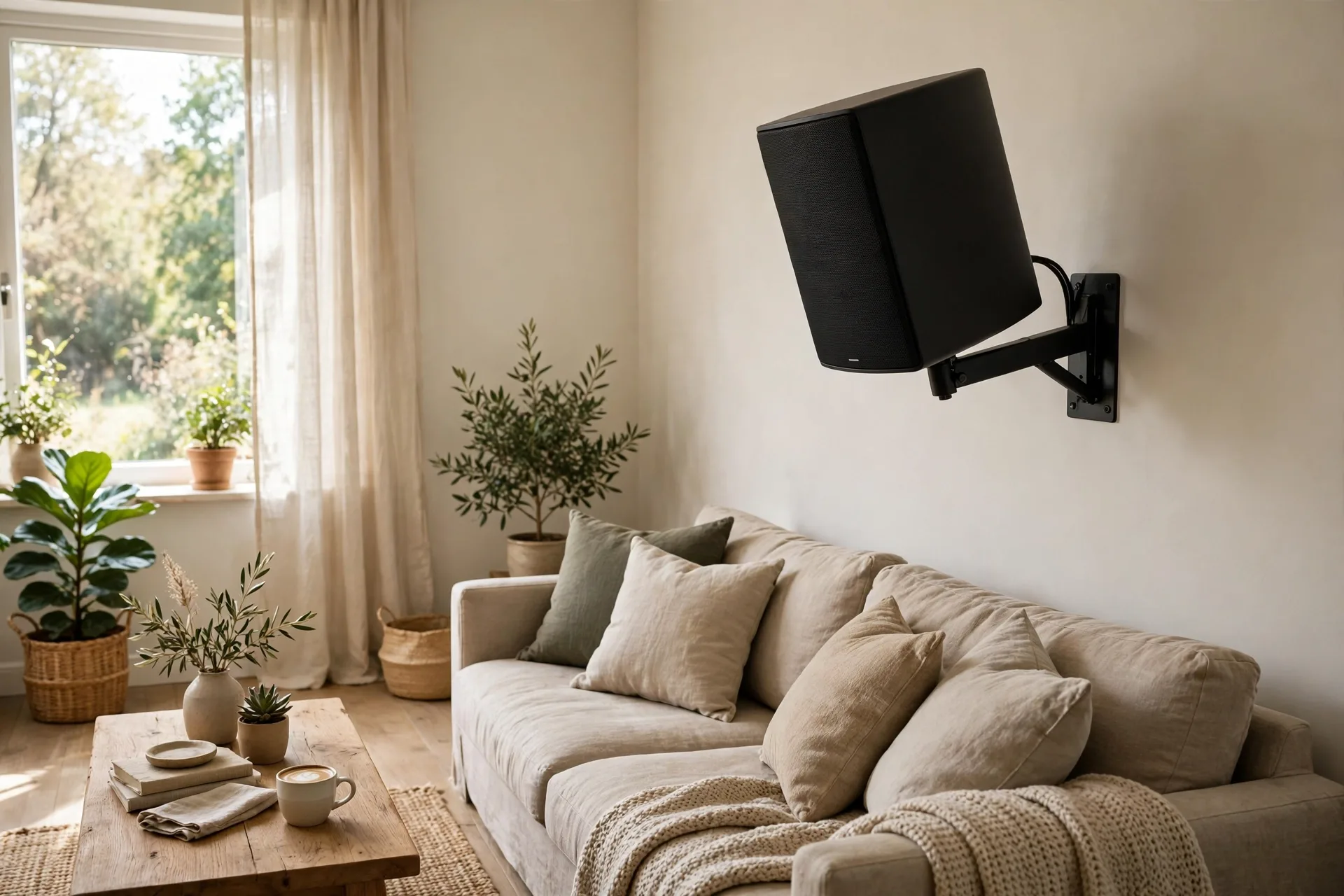
Mount surrounds a little above ear level, roughly two feet above seated ear height, or about five to six feet from the floor in most rooms. That height keeps effects diffuse, which is what surround channels are meant to be. If they sit exactly at ear level and point straight at you, effects can feel too sharp and local, like someone whispering beside your head.
Angle surrounds slightly toward your seat, with little or no toe in for diffuse models. Bipole and dipole surrounds spread sound wider and suit side wall spots well, while direct speakers suit rooms where you can place them a little behind the seat. Check the current guidance on the manufacturer page for your speaker type, since designs differ.
Subwoofer Placement: Test, Do Not Guess
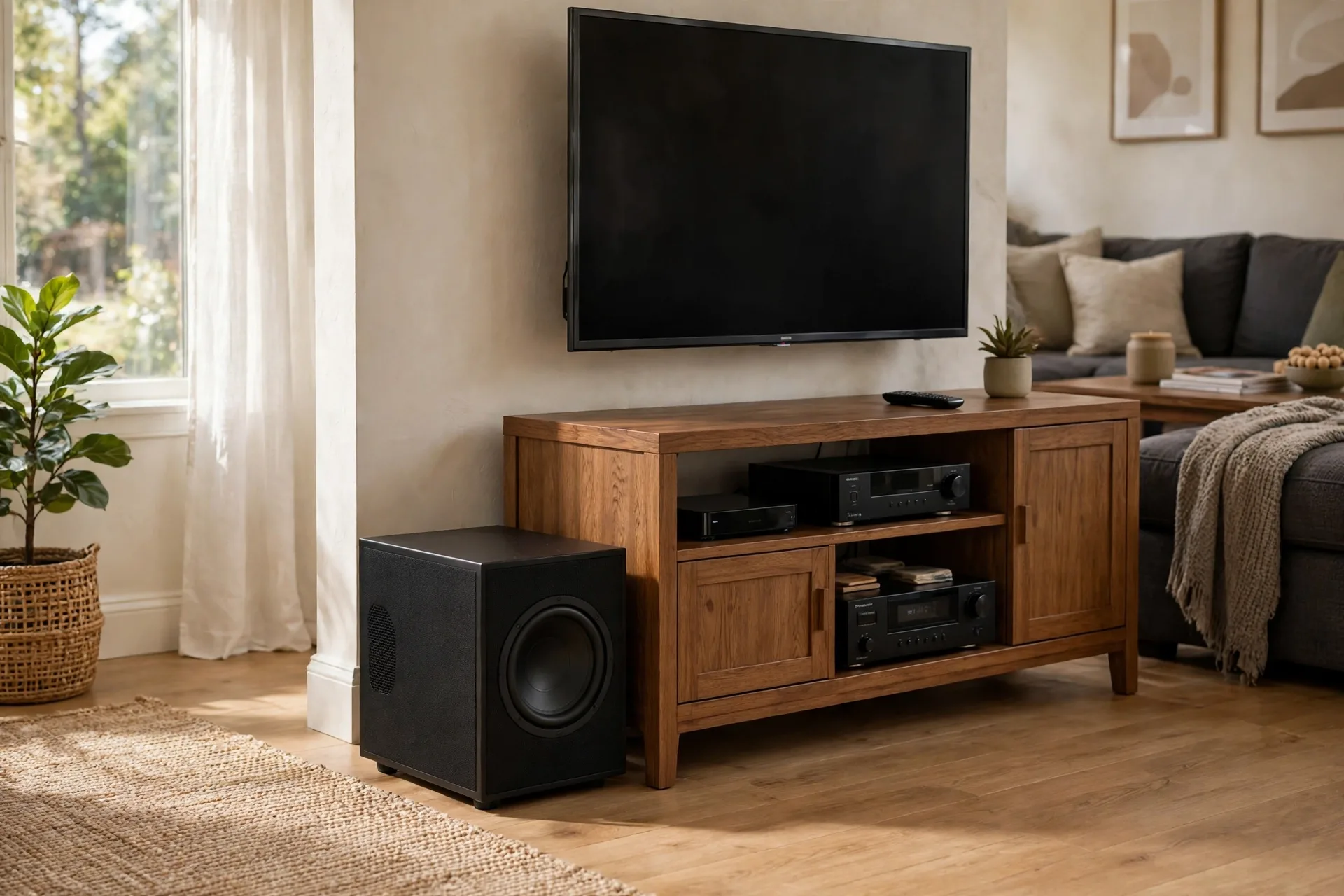
Bass behaves differently from other sound. It bounces off walls and piles up in corners, so the same subwoofer can boom in one spot and vanish in another. Corner placement boosts bass output, which suits a small sub in a large room, but it can also make bass uneven across seats. Start with a front wall spot near a corner, then test before you settle.
Try the subwoofer crawl. Place the sub at your main seat, play a bass heavy scene, and crawl around the room edges listening for the spot where bass sounds smooth and even. Then move the sub to that spot. It looks odd, but it works, because bass at your seat and bass at the sub spot are closely linked in most rooms.
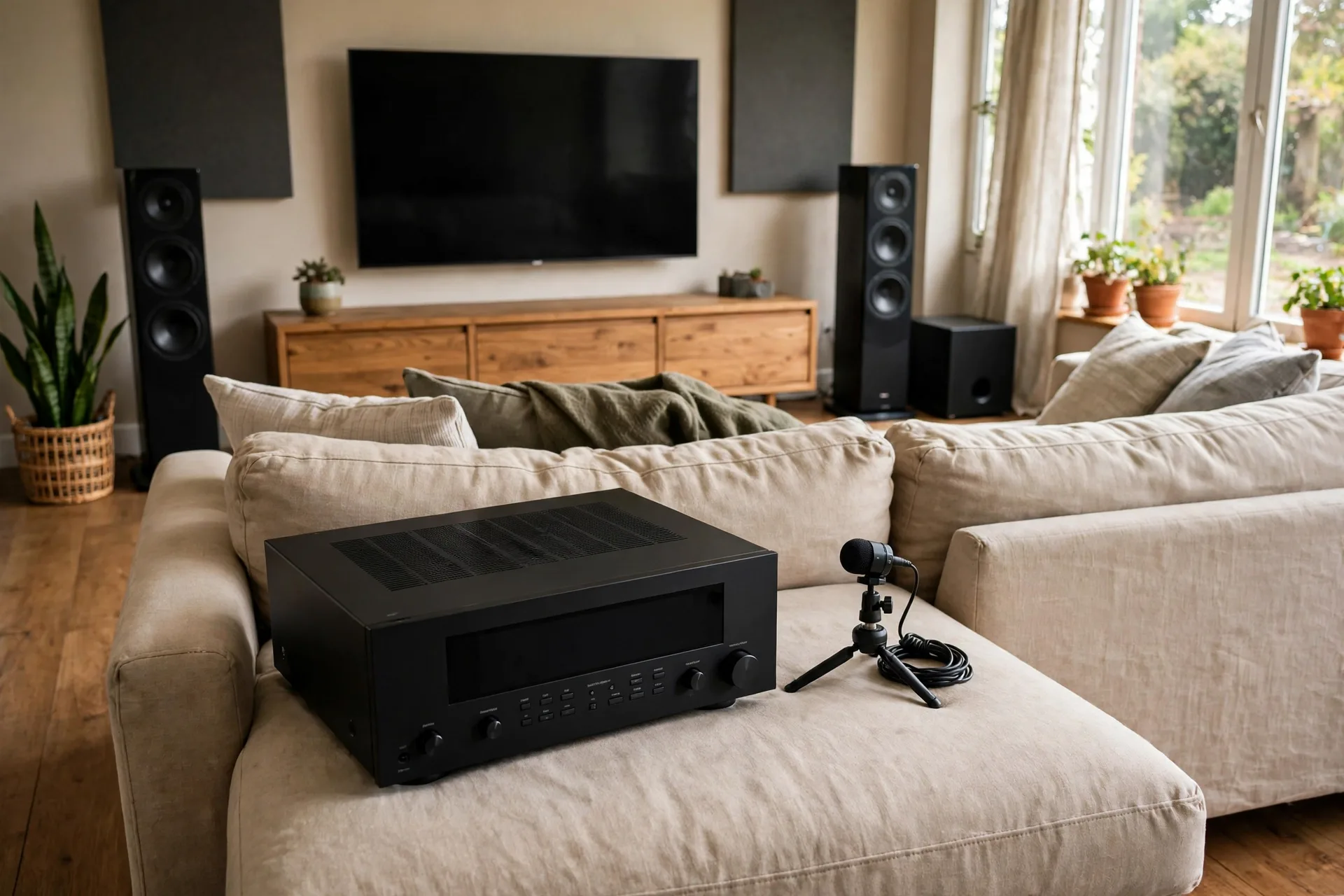
After placement, set the subwoofer crossover in the receiver, often around 80 Hz for typical bookshelf speakers. That setting hands deep bass to the sub and lets the main speakers focus on the rest. Run receiver calibration after moving the sub, since distance and level settings change with every move. Trust your ears for the final level: bass should support a film, not dominate it.
Height, Distance, and Symmetry
Keep speaker distances as even as you can. If the left front speaker sits eight feet from your seat, try to place the right front speaker near eight feet too. The receiver can correct small gaps with delays, but large gaps force heavy correction and can blur the sound stage. Symmetry is free, so use it where the room allows.
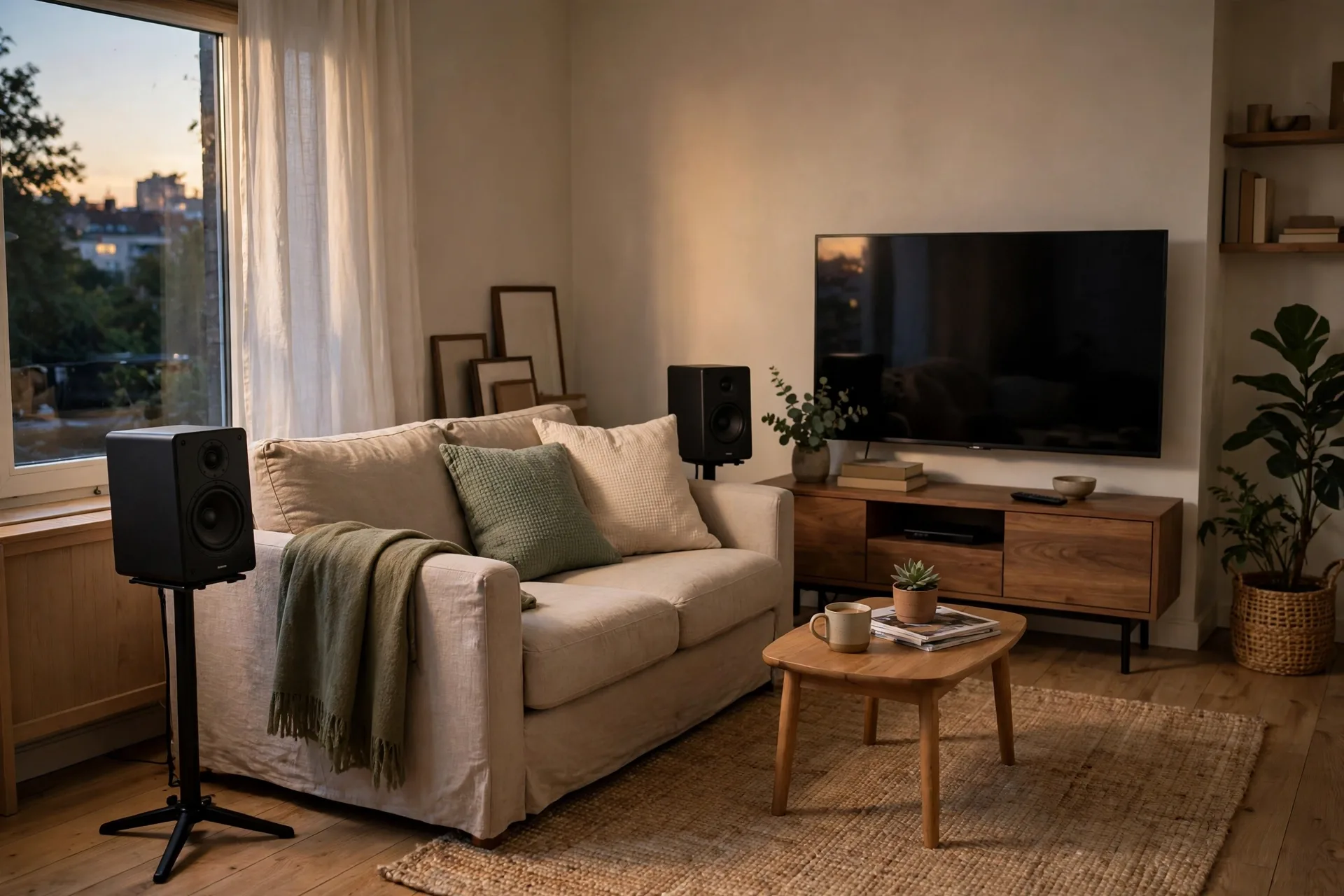
Height follows the same logic. Front speakers at ear level, center near the screen and angled to ears, surrounds a little above ear level, and the sub on the floor. If a speaker must sit high, angle it down toward your ears. A speaker firing over your head wastes its detail on the ceiling.
Have you measured your room yet? A tape measure and a phone angle app beat guesswork. Mark each speaker spot on the floor with tape, sit in your main seat, and check angles and sightlines before you drill any holes. Moving tape costs nothing. Moving a wall mounted speaker costs time and filler.
Setting 5.1 Surround Sound Up Step by Step
Setting 5.1 surround sound up goes smoothly in order. First, place speakers using the angles in this guide. Second, connect wires to the matching receiver outputs and label them. Third, set speaker sizes in the receiver menu: small for compact speakers, so bass goes to the sub. Fourth, run room calibration with the setup microphone at your main seat.
After calibration, test with a film you know well. Listen for dialogue from the center, music across the front, and effects moving smoothly from front to surround. Play a scene with a passing car or a rainstorm. If effects jump or vanish between speakers, check the surround angles and levels before you blame the speakers.
Fine tune by ear after calibration. Raise the center channel a notch if dialogue feels quiet in action scenes. Lower the sub a notch if bass overwhelms voices. Small changes, one at a time, with a familiar scene as your test, beat large random tweaks. Write down settings that work, so a later reset does not lose them.
5.1 Compared With 7.1, 5.1.2, and 5.1.4
Home theater speaker placement grows with channel count, but the 5.1 base stays the same. A 7.1 system keeps the 5.1 layout and adds two rear speakers behind your seat, at about 135 to 150 degrees. That rear pair suits larger rooms where seats sit well away from the back wall. If your sofa touches the back wall, 7.1 rear speakers have nowhere sensible to go, and 5.1 is the better fit.
Speaker positioning for 7.1 also keeps side surrounds at 90 to 110 degrees, just like 5.1. The rear pair fills the gap behind you, so effects can travel fully around the room. Do not move your 5.1 surrounds to the back wall when you upgrade. Keep them at the sides and add the rear pair behind.
A 5.1.2 system adds two height speakers to a 5.1 base, and 5.1.4 adds four. Height speakers sit overhead or use upward firing modules that bounce sound off the ceiling. They add rain, aircraft, and tall room effects. Start with a solid 5.1 layout first, since height channels cannot fix front or surround speakers placed in the wrong spots.
Table: Speaker placement at a glance for 5.1 speaker placement
| Speaker | Angle from main seat | Height | Key tip |
|---|---|---|---|
| Front left and right | 22 to 30 degrees | Seated ear level | Angle slightly toward seat |
| Center | 0 degrees, on screen axis | Near screen, angled to ears | Never hide deep in a cabinet |
| Surround left and right | 90 to 110 degrees | About 2 feet above ear level | Sides or slightly behind, never in front |
| Subwoofer | Test by ear | Floor | Try the subwoofer crawl |
Rooms That Break the Rules
Real rooms rarely match diagrams. A sofa against the back wall leaves no room for surrounds behind you, so place them at your sides at 90 degrees on stands or wall mounts. That side spot still gives a strong surround effect, and it beats pushing surrounds forward where they ruin the front stage.
Open plan rooms lose side walls, so use speaker stands for surrounds. Place them just behind the sofa ends, angled toward the seat. Keep wires tidy with covers along the floor edge, and choose stands heavy enough that a bump from a pet or child does not topple a speaker.
Small rooms need smaller moves. A compact 5.1 set with bookshelf speakers often beats large floor standing speakers that overwhelm the space. Keep speakers away from corners where you can, and use the receiver calibration fully. In a small room, correct placement matters even more, since errors sit closer to your ears.
Common Placement Mistakes
One common mistake is placing all speakers at the same height on a shelf. Front speakers at ear level, surrounds higher, and the center near the screen each serve a different job. Lining them up like books ignores those jobs and flattens the sound field.
Another mistake is pointing surrounds straight forward from the front wall. Surrounds belong at your sides, not beside the TV. Front wall surrounds turn a 5.1 system into an expensive stereo set with extra speakers doing little work. Move them back and the whole system wakes up.
A third mistake is skipping calibration. Even perfect placement benefits from level and distance correction, since no two speakers sit exactly the same distance from your seat. Run calibration after every move, and recheck it when furniture changes. Five minutes with a microphone saves hours of guessing.
Frequently Asked Questions
Where should I put surround sound speakers in a 5.1 system?
Place them to your sides or slightly behind you, at about 90 to 110 degrees from your main seat, and a little above ear level. That spot wraps effects around you without pulling them forward toward the TV. If your sofa sits against the wall, use the side position at 90 degrees.
How high should 5.1 speakers be mounted?
Front speakers should sit at seated ear height, and the center should sit near the screen, angled toward your ears. Surrounds should sit about two feet above seated ear level, roughly five to six feet from the floor. That height keeps surround effects diffuse rather than sharp and local.
Can I place 5.1 speakers in the ceiling?
Ceiling speakers suit height channels in Atmos layouts, but they are a poor swap for ear level 5.1 speakers. Dialogue and front effects sound disconnected when they come from above. Keep the five main 5.1 speakers near ear level and use ceiling speakers only for added height channels.
Where is the best place for a subwoofer?
Start near a front wall corner, then test with the subwoofer crawl: place the sub at your seat, listen around the room edges, and move the sub to the smoothest spot. Corners boost bass, but the smoothest spot often sits elsewhere. Recalibrate the receiver after every move.
Is 7.1 better than 5.1 speaker placement?
7.1 adds rear speakers behind you, which helps in larger rooms with space behind the seats. In small rooms or where the sofa touches the back wall, 5.1 often sounds better, since rear speakers have no sensible spot. Choose based on your room, not on channel count alone.
Do I need to calibrate after moving a speaker?
Yes, run receiver calibration after any move. Calibration sets levels, distances, and delays so sound from each speaker arrives together at your seat. Even a small move changes timing, and calibration corrects it faster and more accurately than guessing by ear.
Your Next Step
Measure your main seat angles this weekend, move your surrounds to 90 to 110 degrees, and run calibration. That single afternoon often improves sound more than any upgrade purchase. Good 5.1 speaker placement is mostly patience and a tape measure, and your next film will show the difference.