

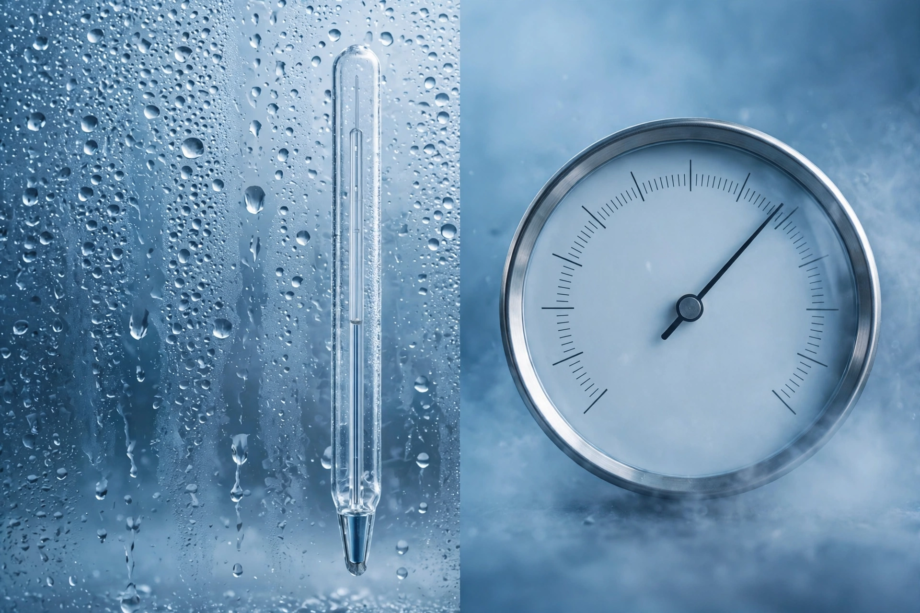
What is dew point vs humidity? Dew point is the temperature at which air must cool for water vapor to condense into dew. It measures the actual amount of moisture in the air. Humidity, or relative humidity, is the percentage of moisture in the air compared to the maximum it can hold at the current temperature.
- What Is Dew Point vs Humidity? The Short Answer
- What Is Relative Humidity, Exactly?
- What Is Dew Point, Exactly?
- Dew Point vs Humidity: Side-by-Side Comparison
- Why Dew Point Tells You How It Really Feels
- What Should the Dew Point Be in Your House?
- How to Measure Dew Point at Home
- FAQs
- Is dew point or humidity more important for comfort?
- What is a comfortable dew point for sleeping?
- Can the dew point be higher than the temperature?
- Why is my house humid when the AC is running?
- Does a dehumidifier lower the dew point?
- What dew point causes mold to grow?
- The One Number Worth Watching
In short, dew point tells you how much moisture is really there, while relative humidity tells you how full the air is at that moment. That difference matters more than most people think. Meanwhile, a 90% humidity reading on a cool morning can mean far less moisture than a 50% reading on a hot afternoon. Once you understand both numbers, you will read weather apps and thermostat screens with completely new eyes.
What Is Dew Point vs Humidity? The Short Answer
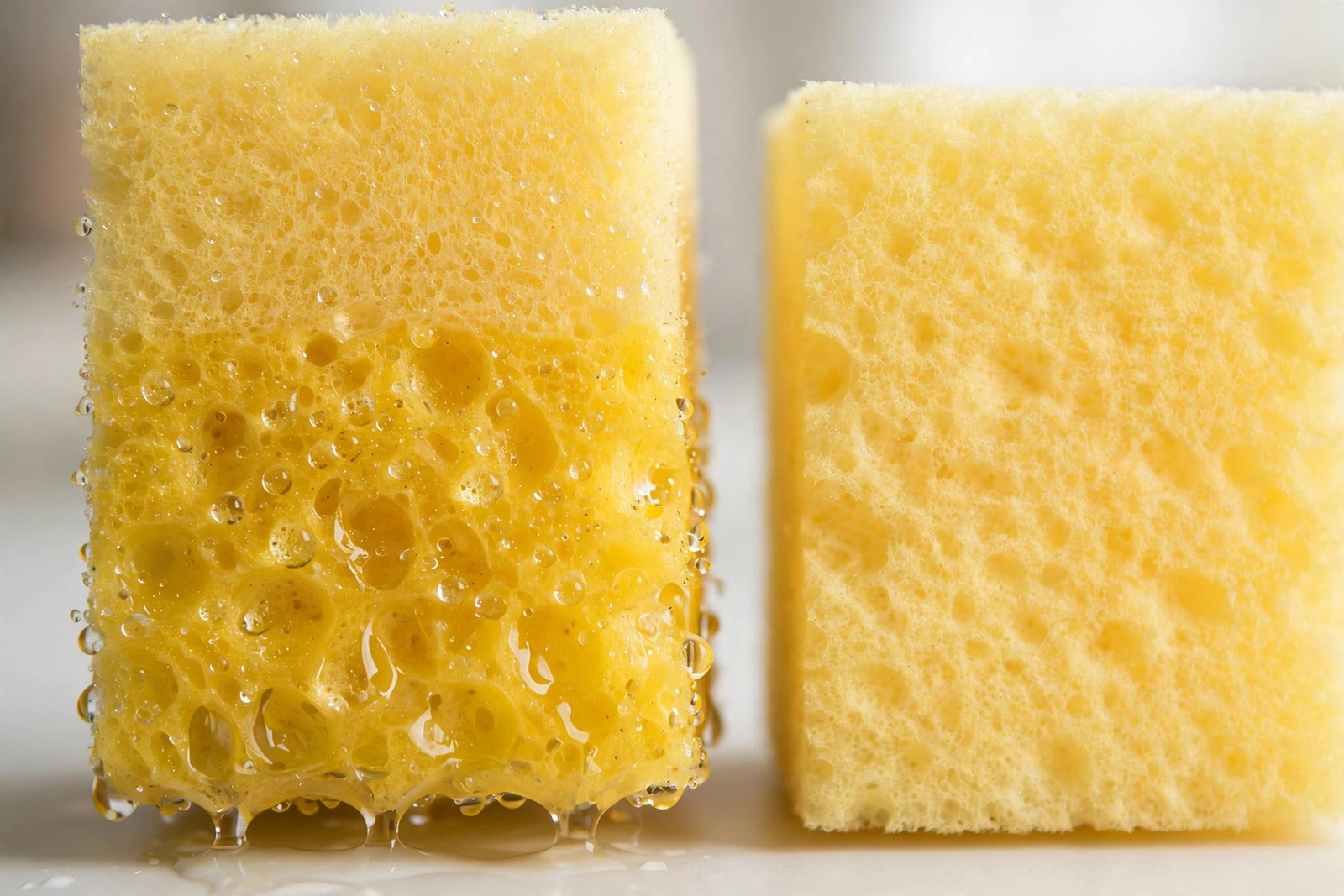
Think of the air as a sponge. Relative humidity tells you how squeezed or saturated that sponge is right now. Dew point tells you how much water is actually inside the sponge, no matter its size.
Here’s why the sponge changes size. Warm air can hold much more water vapor than cold air. For example, at 86°F a cubic meter of air can hold about 30 grams of water. Then cool that same air to 50°F and it can hold only about 8 grams. Therefore, the same amount of moisture gives a low humidity reading on a hot day and a high reading on a cold day.
In fact, dew point cuts through that confusion. It still stays steady while temperature swings up and down through the day. If the dew point is 65°F at noon, it will likely still be near 65°F at midnight, unless a new air mass moves in. That stability is therefore why meteorologists trust dew point more than humidity when they judge how muggy a day will feel.
What Is Relative Humidity, Exactly?
Relative humidity (RH) is a percentage. Specifically, it answers one question: of all the water vapor this air could hold at its current temperature, how much does it actually hold?
However, at 100% RH the air is fully saturated. It cannot hold another drop, which means excess moisture condenses into fog, dew, or rain. At 50% RH, the air holds half of its maximum. Simple enough.
The catch is the word “relative.” Because warm air holds more moisture, RH swings wildly with temperature even when the actual moisture never changes. Take air with a dew point of 60°F. At an air temperature of 80°F, the RH sits near 50%. Then cool that air to 65°F overnight and the RH climbs toward 85%, although not a single drop of water was added. Your weather app still screams “humid!” while the air itself hasn’t changed at all.
However, this is the number one reason RH misleads people. A 100% humidity reading at 40°F describes bone-dry-feeling air, since cold air holds almost nothing. Meanwhile, a 55% reading at 95°F can feel absolutely oppressive. If you judge mugginess by RH alone, you’ll be wrong half the time.
What Is Dew Point, Exactly?
Dew point is the temperature to which air must be cooled, at constant pressure, for water vapor to start condensing into liquid. When the air temperature drops to meet the dew point, you get dew on the grass as a result. Fog and window condensation form the same way.

Unlike RH, dew point is an absolute measure. It doesn’t care what the current air temperature is. A dew point of 70°F means the same heavy moisture load whether the thermometer reads 75°F or 95°F. That’s why a single dew point number tells you more about comfort than RH ever could.
In fact, two rules govern the relationship. First, the dew point can never be higher than the air temperature. Second, when the two numbers meet, relative humidity hits 100% and condensation begins. The gap between them even has a name: dew point depression. A small gap means damp air; a large gap means dry air.
Where does the word come from? From actual dew. On clear nights, grass cools faster than the air above it. When the grass surface drops to the dew point, vapor condenses into the droplets you see sparkling at sunrise. Your cold drink sweats for the same reason: the glass surface is below the room’s dew point.
Dew Point vs Humidity: Side-by-Side Comparison
The table below puts the two metrics head to head for a clear comparison.
Table: Dew point vs relative humidity compared
| Feature | Dew Point | Relative Humidity |
|---|---|---|
| What it measures | Actual moisture in the air | Moisture relative to max capacity |
| Units | Degrees (°F or °C) | Percentage (0 to 100%) |
| Changes with temperature? | No, stays stable | Yes, swings as temperature changes |
| Best for comfort judgment | Yes, the gold standard | Misleading on its own |
| Predicts condensation | Directly, when surfaces cool to it | Only at 100% |
| Typical comfortable range | 50 to 60°F indoors | 30 to 50% indoors |
Notice the comfort row. Both metrics have a sweet spot, and they usually agree with each other. At a normal room temperature of 72°F, a dew point of 55°F works out to roughly 45% RH. That’s the overlap zone where most people feel great. Problems start when the two disagree, for instance high RH on a cold day that still feels dry.
Why Dew Point Tells You How It Really Feels
Your body cools itself by evaporating sweat. However, when the air already holds lots of moisture, sweat evaporates slowly and, as a result, you feel sticky. Dew point measures that moisture load directly, therefore it predicts your comfort far better than RH.
Meteorologists use rough comfort bands that work in any climate, and as Fox Weather’s meteorologists explain, dew point is the most reliable single number for judging mugginess. Below 55°F dew point, most people feel comfortable. From 55 to 60°F, it’s slightly humid. From 60 to 65°F, it feels muggy. Above 65°F, it’s oppressive, and above 70°F it can even be dangerous during heat waves because sweat barely evaporates.
Here’s a real-world example that shows why RH alone fails. Picture a summer evening at 80°F with 60% RH. The dew point is about 65°F, which is why it feels muggy. Now picture a winter morning at 40°F with 90% RH. The dew point is only about 37°F, yet the air actually feels crisp and dry despite the scary-looking 90%. Same “high humidity” label, completely different feel. In contrast, the dew point number never lies to you like that.
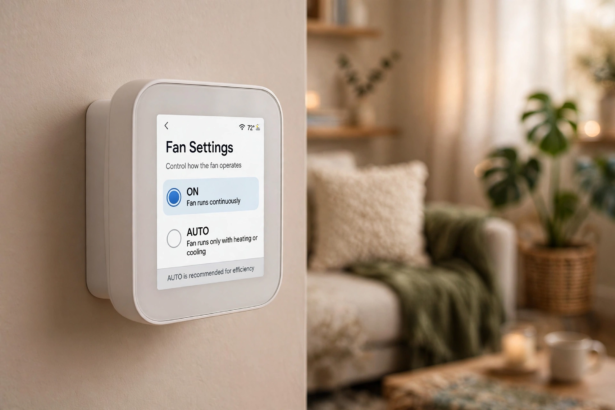
This also explains a common thermostat mystery. Your smart thermostat might show 45% humidity in both summer and winter, yet summer feels sticky and winter feels dry. The RH is the same, yet the summer dew point is 20 degrees higher. Once you start watching the dew point instead, the mystery disappears.
What Should the Dew Point Be in Your House?
First, aim for a dew point between 50 and 60°F indoors. In that range, the air feels comfortable, wood furniture stays happy, and mold stays away. The COPD Foundation cites 40 to 60°F as the healthy indoor band, which lines up well with everyday experience.
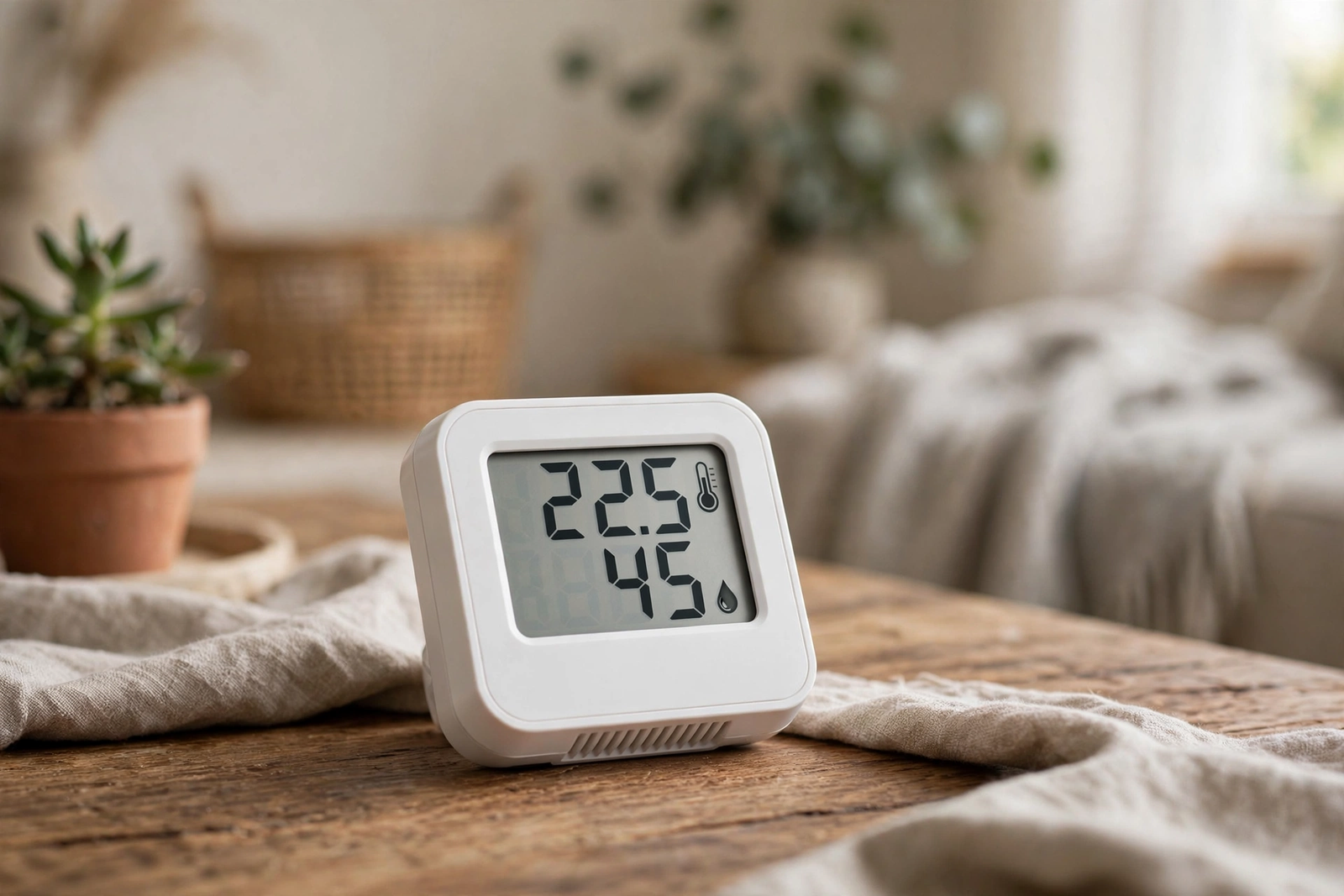
Below 40°F dew point, the air gets uncomfortably dry. Skin cracks, sinuses sting, static shocks multiply, and wood floors can shrink and gap. Above 60°F, things turn sticky. Above 65°F indoors, you’re inviting condensation on cool surfaces, musty smells, and dust mites, which thrive when humidity stays high. Indeed, dust mites are one reason allergy sufferers feel worse in damp homes.
Damp rooms also tend to be dusty rooms, since mite debris builds up in bedding and carpets.
If your home feels both damp and dusty, an air purifier can help with the dust while you bring the humidity down.
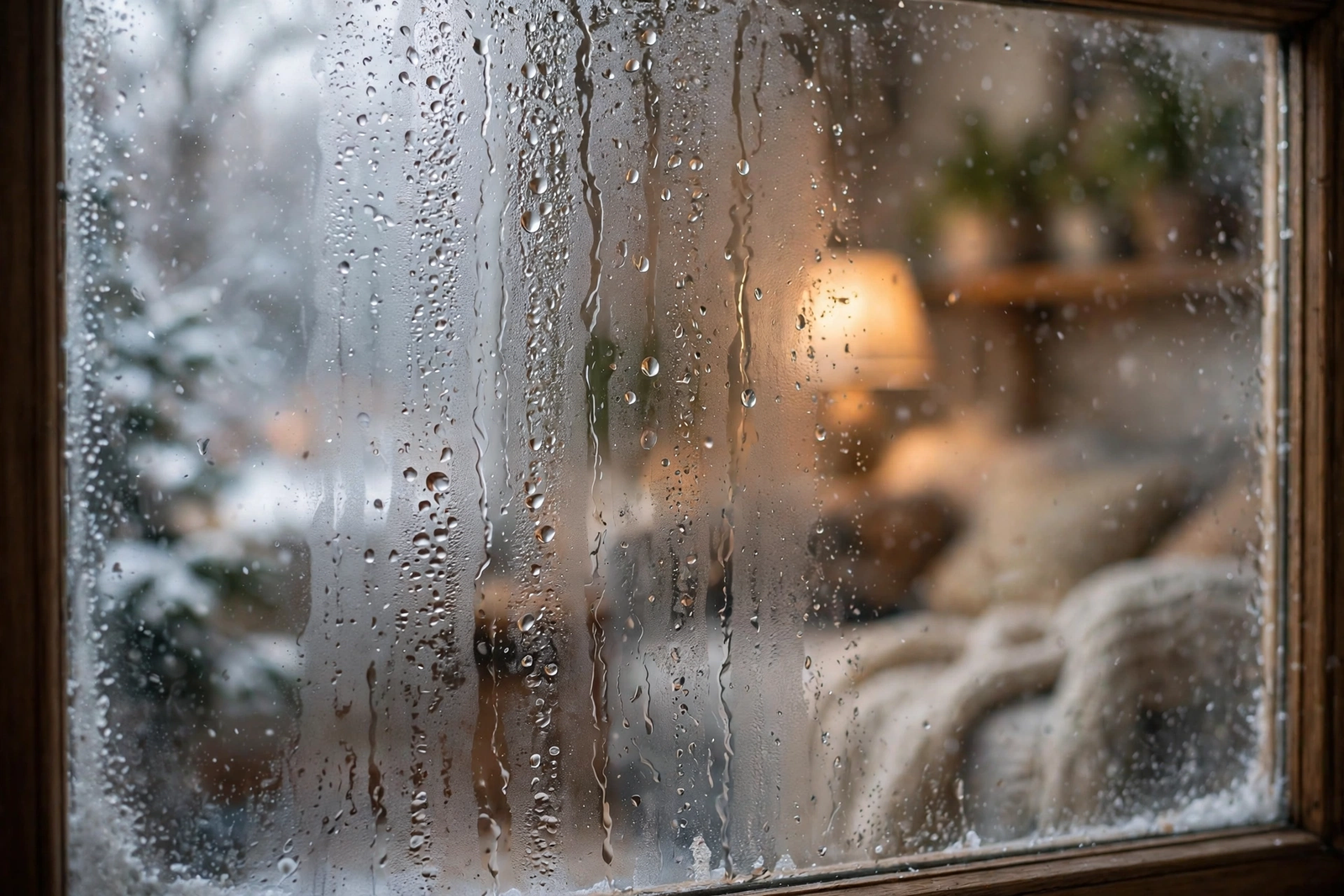
Watch your windows in winter. If they fog up on the inside, your indoor dew point is higher than the glass surface temperature. That’s condensation forming exactly the way the definition predicts. The fix is to lower indoor moisture with ventilation or a dehumidifier instead of just wiping the windows harder.
In fact, your air conditioner is secretly a dehumidifier too. As warm indoor air passes over the cold evaporator coil, moisture condenses and drains away. This directly lowers the dew point, which is why a properly sized AC makes the house feel comfortable even at 76°F. An oversized AC, however, cools too fast and shuts off before removing much moisture, leaving you cold and clammy. HVAC pros call this the latent load problem, and it’s a great argument for right-sizing your equipment.
How to Measure Dew Point at Home
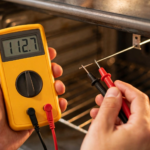
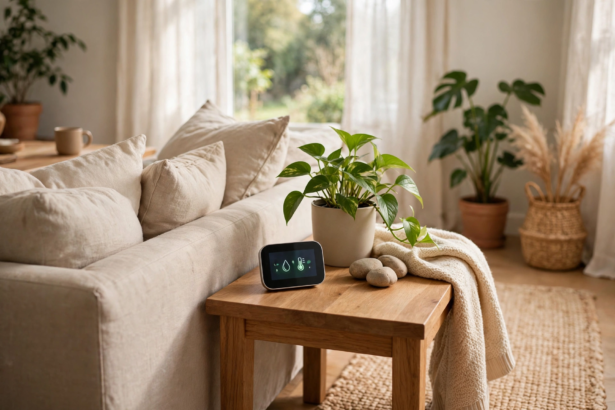
You don’t need a weather station. For example, a $15 digital hygrometer from any hardware store shows temperature and RH, and most models calculate dew point for you. Place one in your bedroom. Also put one in the basement, as those rooms often tell different moisture stories.

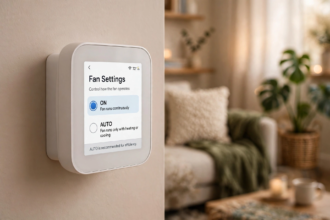
Many smart thermostats display humidity, and some show dew point directly. If yours only shows RH, you can convert it with a free online dew point calculator. Next, just enter the temperature and RH, and it spits out the dew point in seconds. Thermostat humidity readings are worth checking when your home feels off, and if the thermostat itself acts up, learning how to reset a Honeywell thermostat can rule out a settings glitch.
For a quick no-tool check, try the ice water test. For example, fill a glass with ice water, wait a few minutes, then look at the outside of the glass. Heavy condensation means your indoor dew point is high. No condensation at all suggests dry air. It’s crude, but it demonstrates the exact physics: a cold surface below the dew point collects water.
Also track readings for a week before making changes, because dew point follows weather patterns. Dew point follows weather patterns, which means a single muggy day doesn’t prove your house has a moisture problem. Nevertheless, if the indoor dew point sits above 60°F for days while the outdoor air is drier, you’ve got an indoor moisture source to find, like, for instance, a bathroom fan that vents into the attic or a damp crawl space.
FAQs
Is dew point or humidity more important for comfort?
Dew point matters more for comfort because it measures the actual moisture in the air. Relative humidity shifts with temperature, which means it can look scary on a cold morning when the air is actually dry. If you want one number for mugginess, watch the dew point. Above 65°F feels sticky no matter what the percentage says.
What is a comfortable dew point for sleeping?
Most people sleep best with an indoor dew point between 50 and 55°F, which usually means 40 to 50% RH at normal bedroom temperatures. Above 60°F, sheets feel clammy and sleep quality drops. Below 40°F, dry air can irritate your nose and throat overnight. A bedroom hygrometer is the easiest way to check where you stand.
Can the dew point be higher than the temperature?
No, the dew point can never exceed the air temperature. When the two are equal, relative humidity hits 100% and the air is saturated. Any extra cooling just condenses vapor into dew or fog. That gap tells you how close the air is to saturation.
Why is my house humid when the AC is running?
An oversized air conditioner cools the air too quickly and shuts off before removing much moisture. The temperature drops, but the dew point stays high, leaving you cold and clammy. Short cycling is the classic symptom. A properly sized system runs longer cycles, which wrings far more moisture from the air and lowers the dew point properly.
Does a dehumidifier lower the dew point?
Yes, that’s exactly what a dehumidifier does. First it pulls air over cold coils. Second, it condenses the vapor into water and drains it away. Since dew point reflects actual moisture content, removing water lowers the dew point directly. That’s why a basement feels far more comfortable after a dehumidifier runs, even though the temperature barely changed.
What dew point causes mold to grow?
Mold risk climbs when indoor dew point stays above 60°F for days, especially near cooler surfaces. Condensation on windows, pipes, or inside walls gives mold the dampness it needs. Keep the dew point between 50 and 60°F. Otherwise, mold gets the sustained dampness it wants. Ventilate bathrooms and kitchens well.
The One Number Worth Watching
So what is dew point vs humidity, in one line? Dew point is the moisture truth; relative humidity is the moisture mood. One stays honest through every temperature swing, while the other changes its story by the hour.
First, start glancing at the dew point on your weather app instead of fixating on the humidity percentage. Indoors, keep it between 50 and 60°F. A cheap hygrometer from Home Depot makes a fine witness. Finally, once you think in dew point, muggy days stop being a mystery, thermostat readings finally make sense, and you’ll know exactly when to run the dehumidifier instead of just cranking the AC.