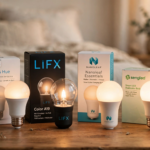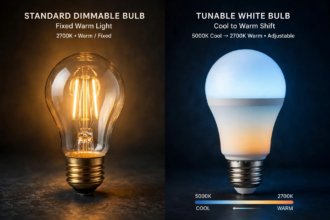



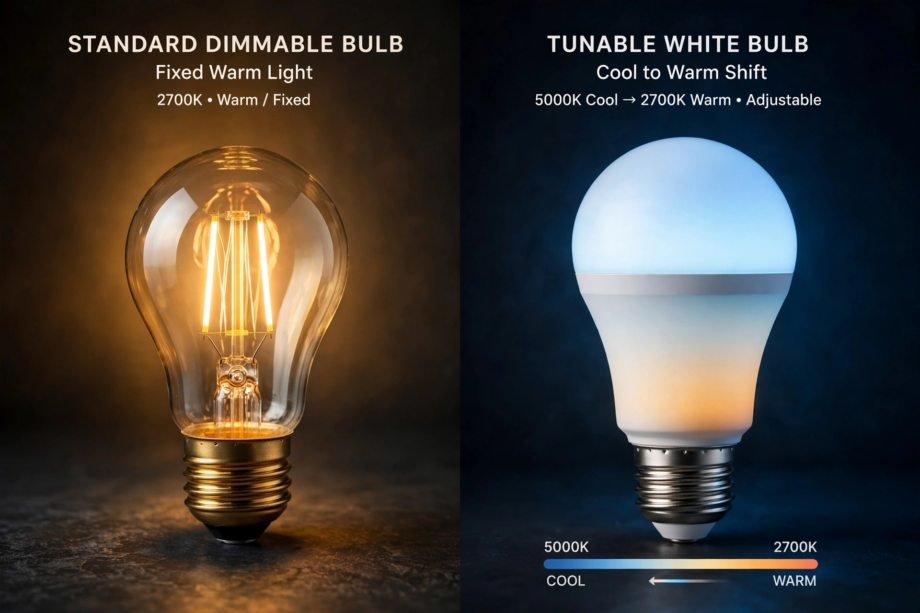
For circadian rhythm sleep, tunable white smart bulbs beat standard dimmable bulbs. Dimmable bulbs only reduce brightness, but they still emit the same blue-rich color temperature. Tunable white bulbs shift both brightness AND color, going from cool daylight to warm amber. That color shift is what tells your brain it’s nighttime.
- What Dimmable Smart Bulbs Do
- What Tunable White Smart Bulbs Do
- Head-to-Head: The Differences That Matter
- Tunable White vs Dimmable Smart Bulbs for Circadian Rhythm Sleep: Real-World Test
- When Dimmable Is Enough
- When Tunable White Is Worth It
- The Brightness Factor Nobody Talks About
- What About Full RGB Bulbs?
- Setting Them Up for Sleep
- FAQs
- Can I mix dimmable and tunable white bulbs in the same room?
- Do tunable white bulbs use more electricity?
- How long do tunable white smart bulbs last?
- Is 2700K warm enough for good sleep?
- Can dimmable bulbs work with Home Assistant circadian automations?
- Should I replace all my home’s bulbs with tunable white?
- Do I need a hub for tunable white bulbs?
- The Bottom Line
For instance, walk into any store and you’ll see two types of smart bulbs that sound similar. “Dimmable” and “tunable white.” The price difference is real. So is the performance difference, especially if you care about sleep.
Let’s break down what each one actually does, where they overlap, and which one deserves a spot in your bedroom.
What Dimmable Smart Bulbs Do
Specifically, a dimmable smart bulb does one thing: it gets brighter and darker. That’s it. Also, the color of the light stays exactly the same whether it’s at 100% or 5%.
In fact, most dimmable-only smart bulbs are fixed at one color temperature, usually 2700K (warm white) or 3000K. When you dim them, you get less of that same light. Also, the spectrum doesn’t change.
However, this helps with sleep in one way: less light overall means less melatonin suppression. Dimming a bright bulb to 10% is genuinely better for your evening wind-down than leaving it at full blast. No argument there.
Yet here’s the limitation. A dimmed cool-white bulb is still a cool-white bulb. It’s just a quieter version of the same blue-rich light. Your eyes’ circadian sensors still pick up that blue content, even at low brightness.
What Tunable White Smart Bulbs Do
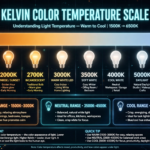
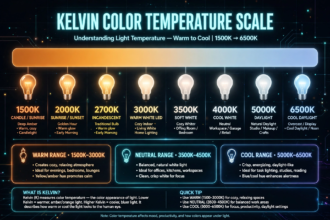
In contrast, tunable white bulbs change both brightness and color temperature. They slide along the white light spectrum, typically from warm amber (around 2000K-2200K) to cool daylight (5000K-6500K).
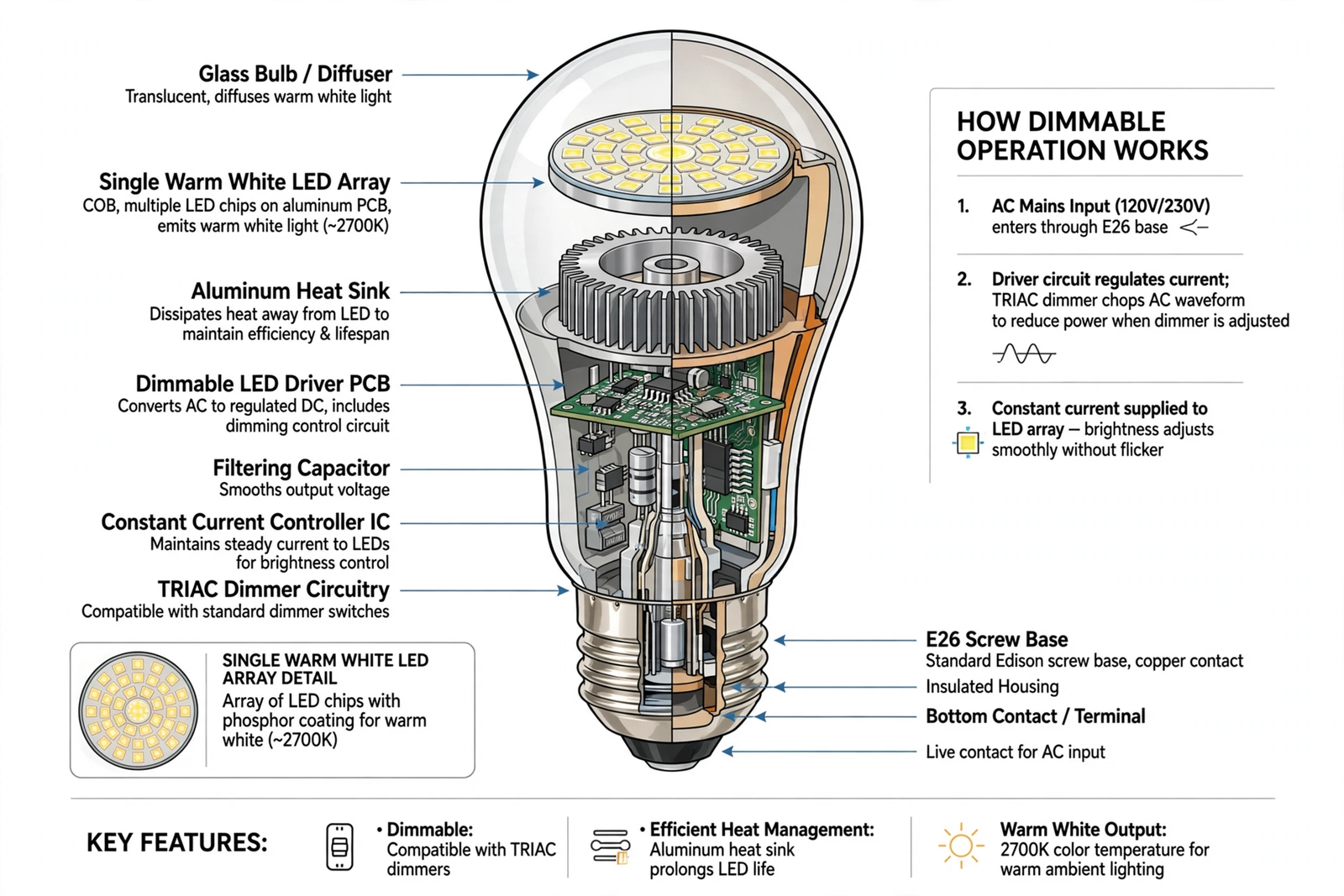
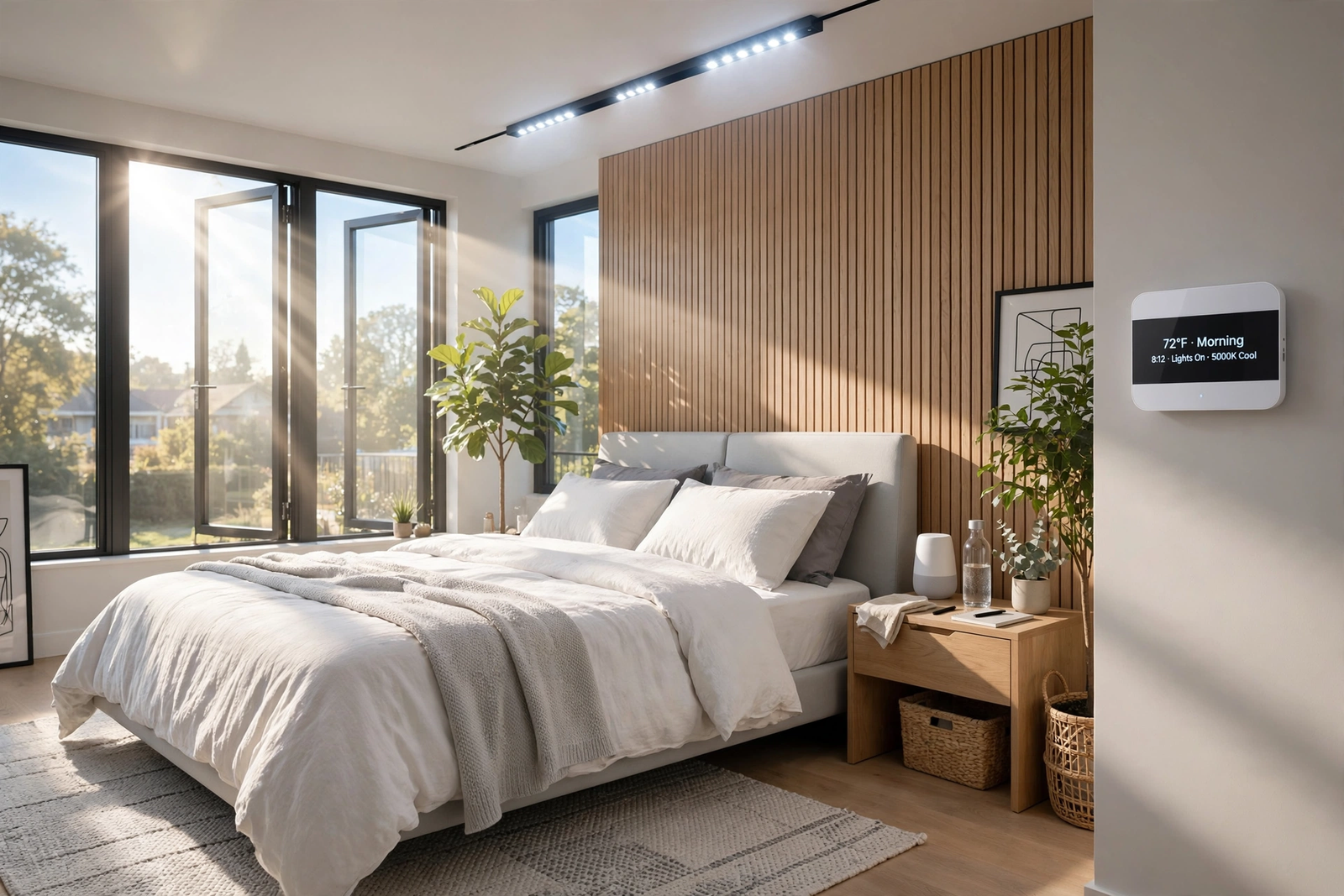
Therefore, this is the key difference. In the morning, a tunable white bulb can blast cool 5500K light that signals “wake up” to your brain. In the evening, the same bulb shifts to 2200K amber that barely registers on your circadian system.
Moreover, you’re not just getting less light at night. You’re getting fundamentally different light. Light that works with your biology instead of against it.
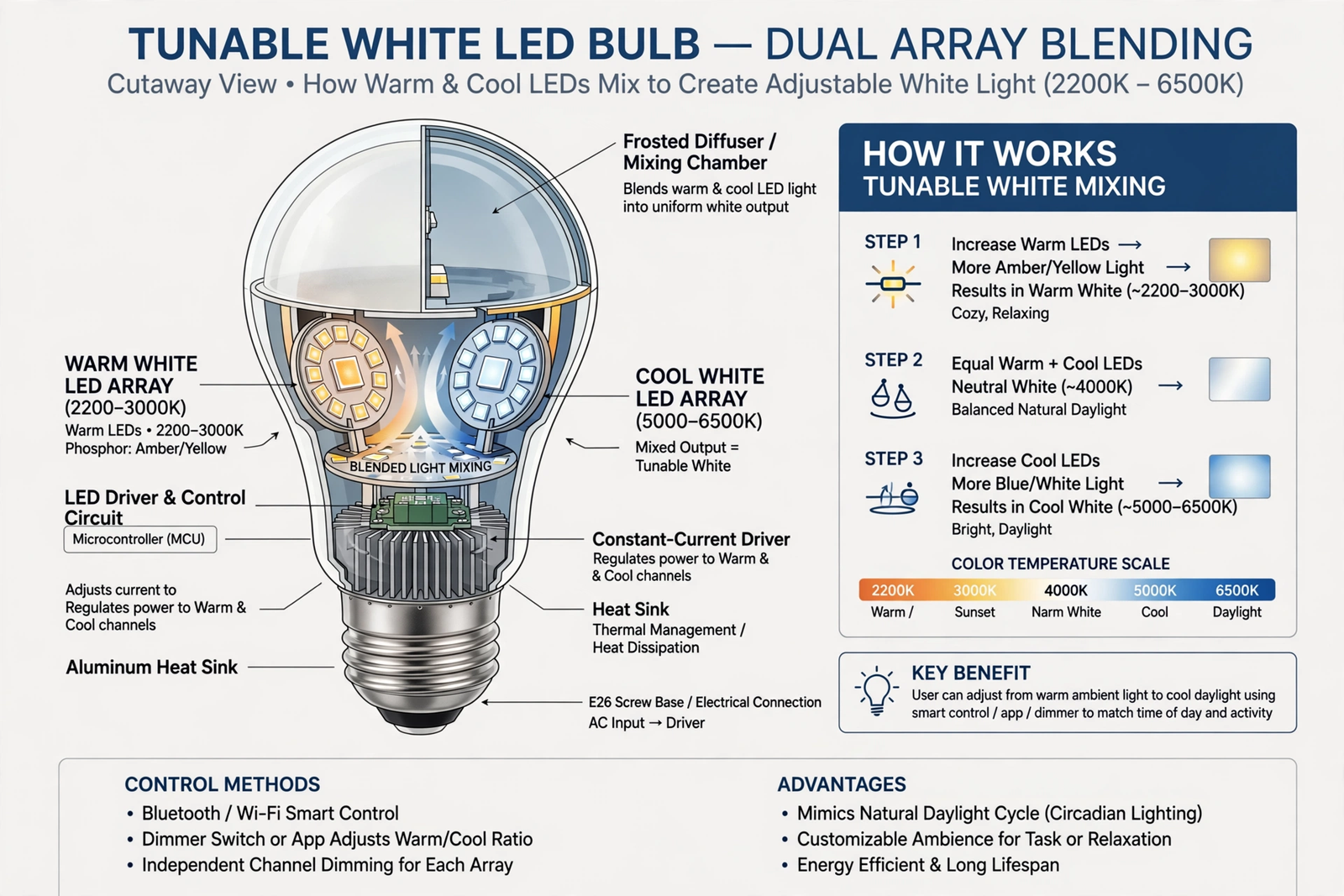
Meanwhile, the technology isn’t complicated. Tunable white bulbs contain two sets of LEDs: warm white and cool white. By blending them in different ratios, the bulb produces any color temperature in between. More warm LEDs, more amber. More cool LEDs, more daylight.
Head-to-Head: The Differences That Matter
Table: Tunable white vs dimmable bulbs for sleep
| Feature | Dimmable Only | Tunable White |
|---|---|---|
| Brightness control | Yes | Yes |
| Color temperature shift | No | Yes (2000K-6500K typical) |
| Evening blue light | Reduced by dimming only | Nearly eliminated at warm settings |
| Morning alertness boost | No | Yes (cool bright light) |
| Typical price per bulb | $8-15 | $15-35 |
| Circadian automation | Manual or basic schedules | Full sunrise/sunset routines |
Evening Light Quality
Specifically, this is where tunable white pulls ahead decisively. A dimmable bulb at 10% brightness still emits its full spectrum, just less of it. If it’s a 2700K bulb, you’re getting dim warm light. Still, that’s decent, actually.
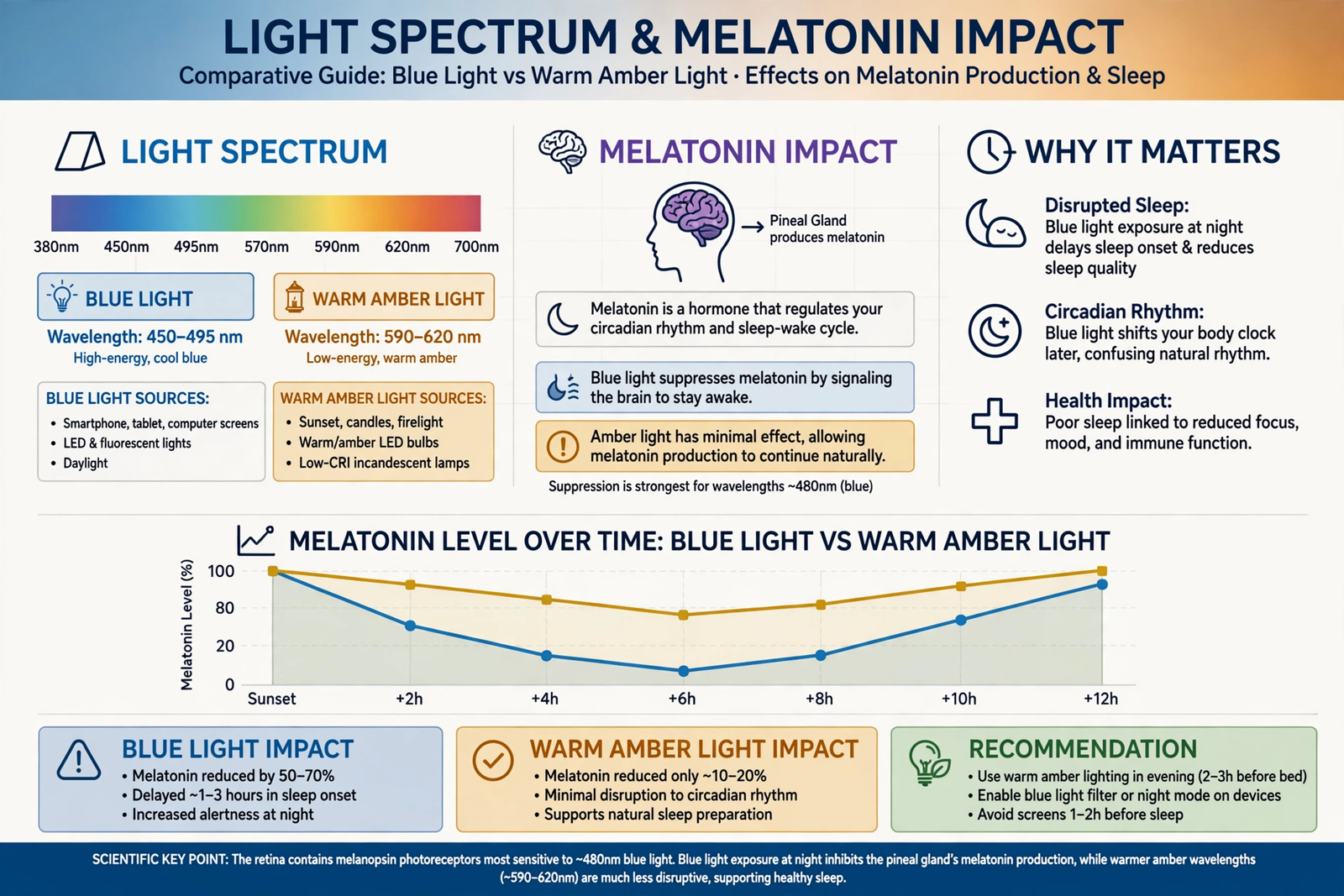
But a tunable white bulb at 2200K and 10% is a different animal entirely. Also, the blue content drops to almost nothing. Research shows warm white LEDs suppress melatonin roughly three times less than cool white LEDs. Tunable white at its warmest setting pushes that advantage even further.
For example, think of it this way. Dimmable is like turning down the volume on a song you don’t like. Tunable white is like changing the song entirely.
Morning Wake-Up
On the other hand, dimmable bulbs can’t help you wake up. They’re the same color in the morning as at night. If your bulb is warm white, your mornings start with warm white. That’s cozy but not energizing.
Conversely, tunable white bulbs flip to cool daylight in the morning. That blue-rich light suppresses melatonin and boosts alertness. In fact, it’s the closest thing to actual sunrise you can get from a bulb. Many people find they wake up feeling more alert with a cool bright ramp-up versus a standard alarm in a dark room.
Cost Difference
Naturally, dimmable-only smart bulbs are cheaper. You’ll find them for $8 to $15 each. Tunable white starts around $15 and goes up to $35 for premium brands.
As a result, for a two-bulb bedroom setup, the difference is maybe $20 to $40 total. Check our Govee compatibility guide if you’re considering budget tunable options. However, that’s not nothing, but spread over the years you’ll own the bulbs, yet it’s a small premium for a real functional upgrade.
Even so, if budget is truly tight, start with dimmable. Dimming alone is a genuine improvement over fixed bright bulbs. Upgrade to tunable white later when you can.
Tunable White vs Dimmable Smart Bulbs for Circadian Rhythm Sleep: Real-World Test
I ran both types in my bedroom for two weeks each to see if the difference was noticeable or just theoretical. Also, the results surprised me.
For instance, week one with dimmable warm bulbs (2700K fixed, dimmed to 10% at night): I fell asleep about 10 minutes faster than with my old fixed-brightness bulbs. The dimming alone made a real difference. My eyes felt less strained in the evening, and I wasn’t staring at the ceiling as long.
Then week two with tunable white bulbs (shifting from 5000K morning to 2200K evening, dimmed to 10%): I fell asleep another 5-8 minutes faster. But the bigger change was mornings. Waking up to cool bright light felt noticeably different. For automating this daily cycle, Apple Home’s adaptive lighting handles it without extra apps from waking up to warm dim light. I felt alert faster, without needing as much coffee.
What’s the takeaway? In short, dimmable gives you most of the nighttime benefit. Meanwhile, tunable white adds the morning advantage and a bit more evening comfort. If you can only pick one upgrade, dimming matters most. But the full tunable white experience covers both ends of the day.
When Dimmable Is Enough
However, let’s be fair. Tunable white isn’t always necessary.
For instance, if your bulb is already warm white (2700K) and you just need it dimmer at night, a dimmable bulb does the job. The color is already sleep-friendly. Dimming handles the intensity. You’re getting maybe 70% of the circadian benefit for half the price.
Similarly, dimmable also makes sense for rooms where you don’t spend evening hours. A hallway, a closet, a laundry room. These don’t need circadian cycling. Save the tunable white bulbs for bedrooms and living spaces where you actually wind down.
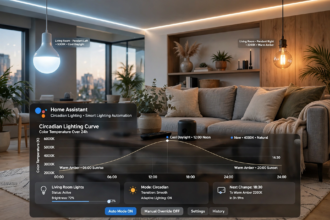
And if you’re running Home Assistant with Adaptive Lighting, even dimmable-only bulbs get some circadian benefit from the brightness curve. The integration dims them along the daily cycle. You miss the color shift, but the brightness rhythm alone helps.
When Tunable White Is Worth It
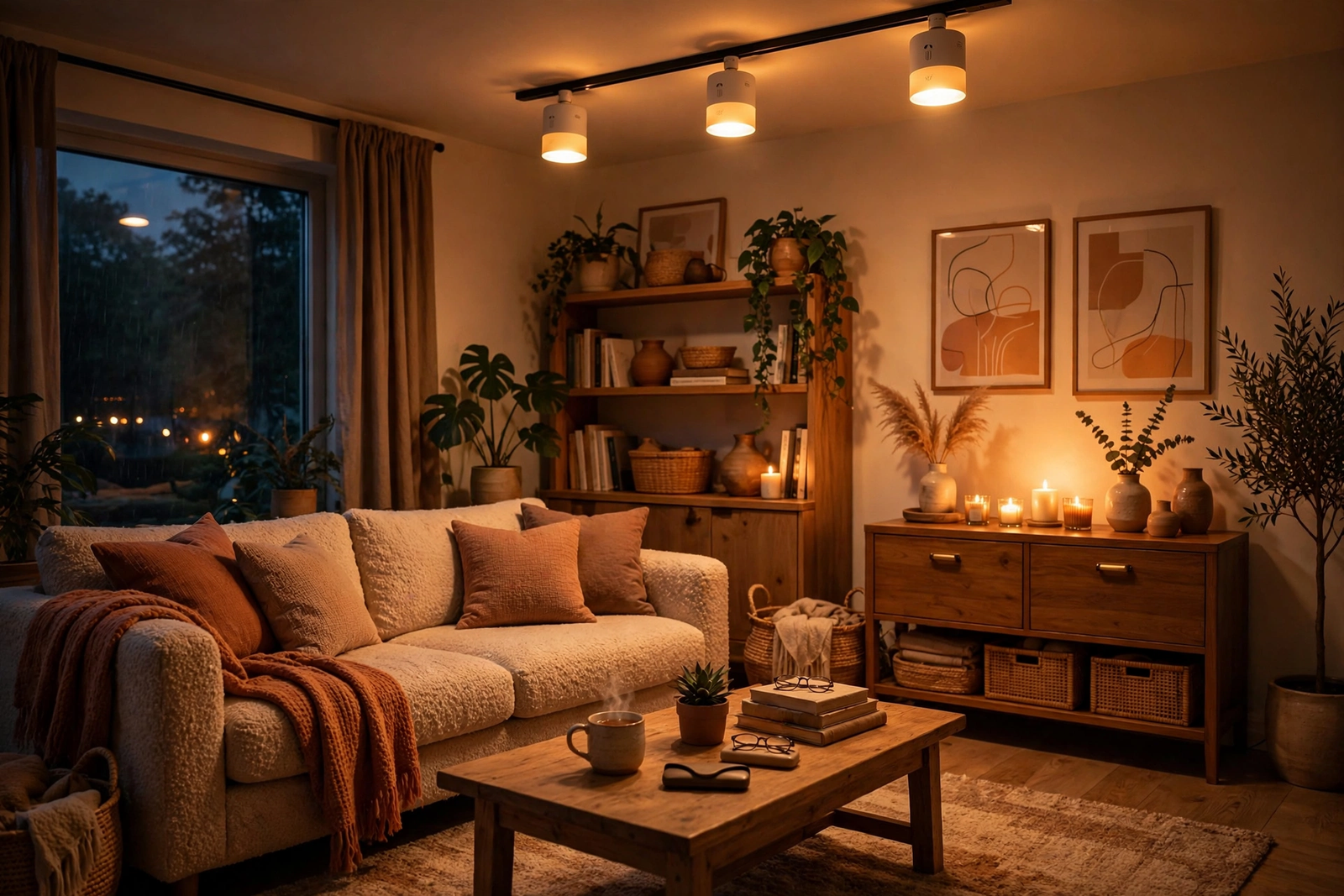
First, bedrooms. That’s the main answer. If you’re buying bulbs specifically to improve sleep, tunable white is worth the premium.
Second, it’s also worth it if you work from home in the same room where you relax. A home office that doubles as an evening lounge benefits enormously from shifting between cool focus light during work hours and warm dim light after hours. One bulb, two completely different environments.
Third, anyone with sleep difficulties should prioritize tunable white. If you already struggle to fall asleep, every bit of blue light reduction helps. The color shift gives you an advantage that dimming alone can’t match.
For more on picking the right bulbs for sleep-focused setups, check our guide to smart bulbs and what actually matters when buying them.
The Brightness Factor Nobody Talks About
In fact, here’s something that surprised me when I dug into the research. Brightness might matter more than color temperature for sleep.
A 2021 modeling study in PLOS One compared 3000K and 5700K light sources and concluded that intensity deserves more weight than color temperature when designing nighttime lighting. In plain terms: dimming a cool bulb can do more for your sleep than swapping to a warm bulb at the same brightness.
However, this doesn’t mean color doesn’t matter. It does. But it means a dimmable bulb turned way down is already doing most of the work. The tunable white color shift is the finishing touch, not the whole game.
What’s the practical takeaway? If you can only afford one upgrade, dimming capability matters most. Get bulbs that dim smoothly to 1%. Then, when budget allows, step up to tunable white for the color advantage.
For example, I tested this in my own bedroom. Swapping from fixed bright bulbs to dimmable warm bulbs made a noticeable difference in how fast I felt sleepy. Upgrading those to tunable white made a smaller but real additional improvement. The first step was bigger than the second. Both were worth it.
What About Full RGB Bulbs?
Meanwhile, RGB bulbs can do everything tunable white does, plus millions of colors. Why not just get RGB?
That said, two reasons: price and simplicity. RGB bulbs cost more than tunable white. And for circadian purposes, you never use the colors. You’re paying for a feature that sits idle.
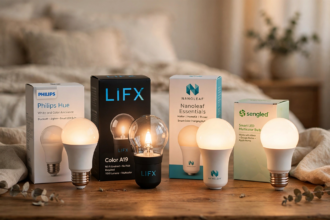
However, the exception is bulbs like the LIFX, where the RGB LEDs enable an extremely warm 1500K low end that tunable-white-only bulbs can’t reach. In that specific case, the RGB hardware serves the circadian goal. But for most brands, tunable white gives you everything you need for less money.
Setting Them Up for Sleep
Finally, whichever type you choose, the schedule matters more than the hardware.
For Dimmable Bulbs
Set a simple routine: full brightness during the day, dimming to 10-20% starting two hours before bed, down to 1-5% at bedtime. If your bulb is warm white (2700K), this is a solid sleep-friendly setup.
For Tunable White Bulbs
Add the color dimension: cool white (5000K+) and bright in the morning, transitioning to warm (2700K) by late afternoon, then deep amber (2200K or lower) and dim in the final two hours before bed. Most apps have a circadian or natural light mode that does this automatically.
If you’re on Apple Home or Google Home, both offer adaptive lighting features that handle the daily cycle without extra apps.
FAQs
Can I mix dimmable and tunable white bulbs in the same room?
Yes, but keep them on separate controls. Use tunable white for your main wind-down lights (bedside lamps) and dimmable for secondary fixtures. Trying to synchronize them on one schedule gets messy because they respond differently. Separate automations for each type works best.
Do tunable white bulbs use more electricity?
No. They use the same or slightly less power than equivalent dimmable bulbs. The dual LED arrays don’t draw more current than a single array at the same brightness. And because circadian schedules run bulbs dimmer in the evening, total energy use often drops.
How long do tunable white smart bulbs last?
Typically 15,000 to 25,000 hours, same as other LED smart bulbs. The tunable circuitry doesn’t meaningfully reduce lifespan. At average bedroom use of 3-4 hours daily, that’s 10+ years. You’ll probably replace them for tech reasons before they burn out.
Is 2700K warm enough for good sleep?
It’s decent but not ideal for sensitive sleepers. 2700K still contains measurable blue light that can affect melatonin in some people. Dropping to 2200K or lower makes a meaningful difference in melatonin impact. If your tunable bulb goes that low, use it every evening. If it bottoms out at 2700K, compensate by dimming further and starting your wind-down earlier.
Can dimmable bulbs work with Home Assistant circadian automations?
Yes. Home Assistant’s Adaptive Lighting integration controls brightness on any dimmable bulb. You just won’t get the color temperature shifts. The brightness curve alone still provides real circadian benefit. It’s a good middle ground if you’re not ready to replace all your bulbs.
Should I replace all my home’s bulbs with tunable white?
Not necessary for every room. Prioritize bedrooms and living areas where you spend your evenings winding down. Hallways, bathrooms, and utility rooms do fine with basic dimmable or even fixed bulbs. Spend the tunable white budget where it actually affects your sleep quality.
Do I need a hub for tunable white bulbs?
Depends on the brand you choose. Philips Hue needs its Bridge for full functionality. WiZ, LIFX, and Govee connect over WiFi with no hub required. IKEA needs the DIRIGERA hub. Hub-based systems tend to be more reliable and work offline during internet outages, while WiFi bulbs are simpler to set up initially.
The Bottom Line
Tunable white beats dimmable for circadian sleep. The color shift gives you something dimming alone can’t: light that actually changes its biological impact through the day. But dimming is the bigger half of the equation, so a dimmable warm bulb is already a massive upgrade over fixed bright lighting.
If sleep is the goal, get tunable white for the bedroom. If budget is tight, get dimmable warm bulbs and dim them aggressively at night. Either way, you’re doing more for your sleep than most people.
Next step: check what bulbs are in your bedroom right now. If they’re fixed brightness, that’s your first upgrade. If they dim but don’t shift color, consider tunable white next.