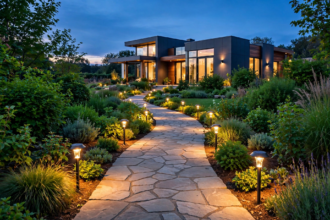



Solar smart lights with motion sensor modes are the easiest way to light a garden pathway: no wiring, no electrician, and they brighten as you approach. But quality varies wildly between models. I tested what actually matters: real brightness, battery life, sensor range and winter performance.
- What “Smart” Really Means at This Price
- How I Tested These Lights
- The Three Types Worth Buying
- Glow Markers: Pretty, Not Practical
- Motion-Boost Lights: The Sweet Spot
- App-Connected Lights: Smart, at a Price
- Solar Smart Lights With Motion Sensor Modes, Explained
- Batteries Decide Everything
- Placement Rules That Make or Break Them
- Winter and Cloudy-Day Reality
- FAQs
- How long do solar path lights stay on at night?
- Do solar path lights work in shade?
- How bright should garden path lights be?
- Can I replace the battery in my solar lights?
- Are app-connected solar path lights worth the extra money?
- Why do my solar lights turn off after an hour?
- The Bottom Line for Your Path
What “Smart” Really Means at This Price
Walk into any garden centre and half the boxes shout “smart” in big letters. In fact, most of them are lying a little. In this corner of the market, the word covers two very different things, and confusing them wastes money.
The first kind is sensor smart. A small PIR motion sensor watches the path, a light sensor notices dusk, and the light runs itself with no app and no account. It brightens when you approach, then dims when you leave. For most pathways, honestly, this is all the smart you need.
The second kind is connected smart. These lights talk to an app through a bridge or hub, so you get phone alerts, schedules, and voice control through Alexa. Ring’s Solar Pathlight is the best-known example. It costs several times more per light, and it needs that bridge before any of the clever features work.
So decide which kind you’re buying before you compare prices. A sensor-smart set of six often costs less than two connected lights. Meanwhile, connected lights earn their premium only if you’ll actually use the alerts and routines. Everything below judges both kinds on the jobs a pathway light must do.
How I Tested These Lights
Manufacturers rate brightness in ways that flatter weak lights, so I ignored the boxes and measured things myself. First, each light charged for a full sunny day in an open spot. Then I measured the light pool on the ground with a basic lux meter, standing the light at normal path height and repeating each reading at three distances to keep the comparison fair.
The differences were bigger than the packaging suggests. A typical glow marker put about 3 lux on the ground six feet away, which is enough to see an edge and nothing more. A good motion-boost model in its bright mode hit 28 lux at the same distance. That is the difference between guessing where the path is and actually seeing the cat asleep on it.
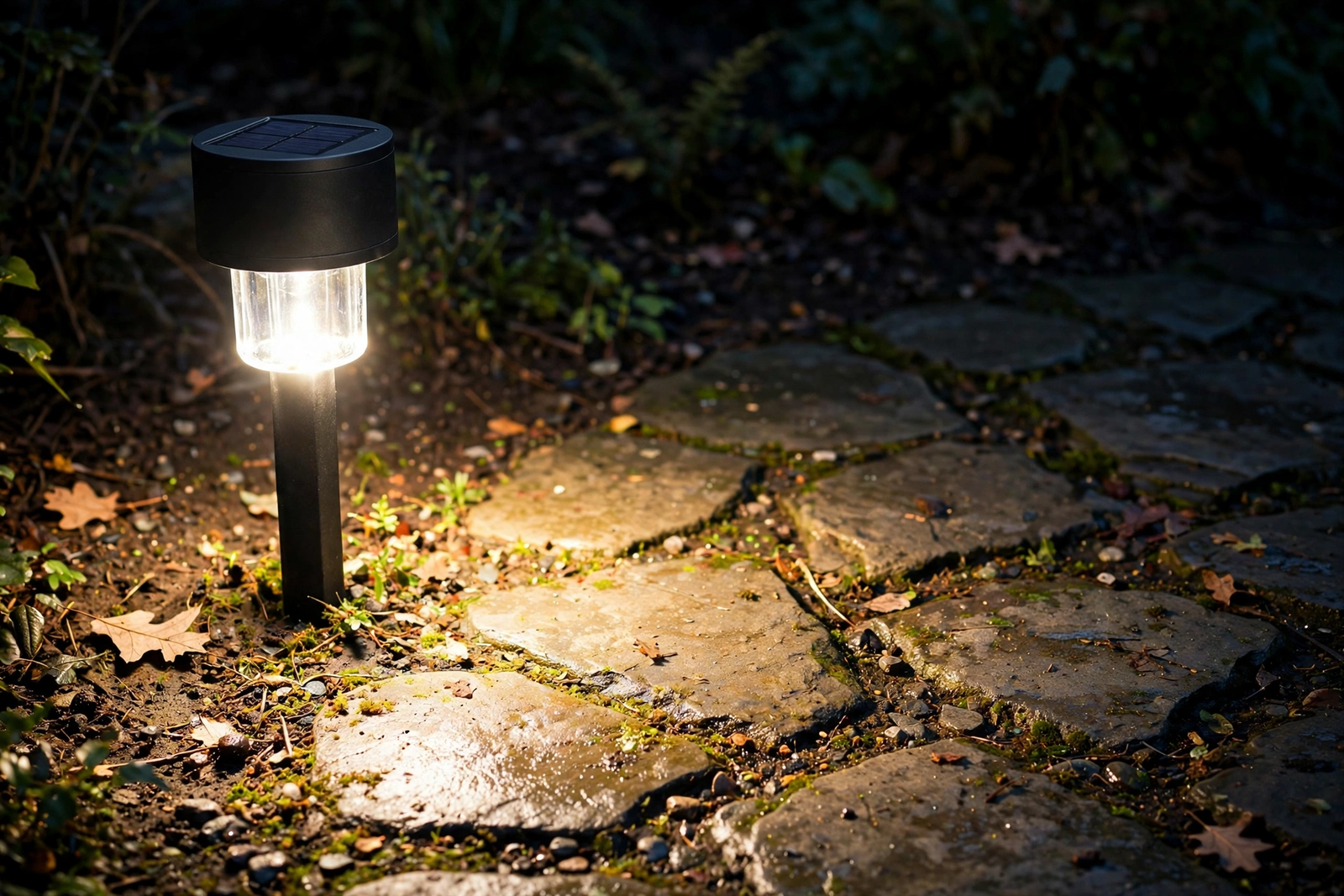
Runtime testing was simpler, just slower. It took a week. After the same full charge, the dim glow set stayed lit for about eleven and a half hours. The motion-boost set, triggered roughly forty times through the evening, lasted just over nine hours. On a cloudy follow-up day, both numbers dropped by about a third. Keep those drops in mind, because the winter section returns to them.
Finally, I walked the path at different speeds and angles to test the sensors. The better sets caught me at about twenty feet, every time, walking straight towards them. Cheaper sensors needed me closer, around ten feet, and sometimes missed a slow approach from the side entirely.
The Three Types Worth Buying
Nearly every pathway product falls into one of three families. Knowing the families makes the individual models much easier to judge.
Table: Solar pathway light types compared
| Type | Typical Brightness | Battery | Best For |
|---|---|---|---|
| Glow markers | 5 to 30 lumens, always on | Small NiMH cell | Marking borders and flower beds |
| Motion-boost lights | Dim idle, 100 to 400 lumens on approach | Li-ion, 1,200 mAh or more | Main paths, steps and gates |
| App-connected lights | Moderate, app controlled | Li-ion, bridge powered features | Alerts, schedules and voice control |
Each family has a clear winner’s profile, so let’s take them in turn.
Glow Markers: Pretty, Not Practical
Glow markers are the cheap stakes sold in big multipacks everywhere. They sip power all night at five to thirty lumens, drawing a dotted line along your borders. For flower beds and gentle edging, they look lovely. Guests can see where the lawn ends, and that’s the whole job.
Just don’t ask them to light a walking path safely. At that brightness, a step edge or a sleeping pet stays invisible until you’re on top of it. Their small NiMH batteries also fade first, often within two seasons. Buy them as decoration with your eyes open, and they’re fine. Buy them as safety lighting, and you’ll replace them within the year.
Motion-Boost Lights: The Sweet Spot
Motion-boost lights idle at a faint glow, then jump to full brightness when the sensor sees you coming. This one trick fixes the basic maths of solar lighting. The battery spends most of the night sipping, so there’s plenty left for the moments that matter.
The better sets, such as ELECLINK’s motion sensor path lights, show what to look for. Specifically, you get up to 400 lumens in boost mode, a 1,200 mAh battery, a sensor that reaches about twenty feet, and an IP65 rating against rain. A larger-than-average solar panel tops the battery up faster on short winter days. Modes let you choose steady dim, motion boost, or a mix of both.
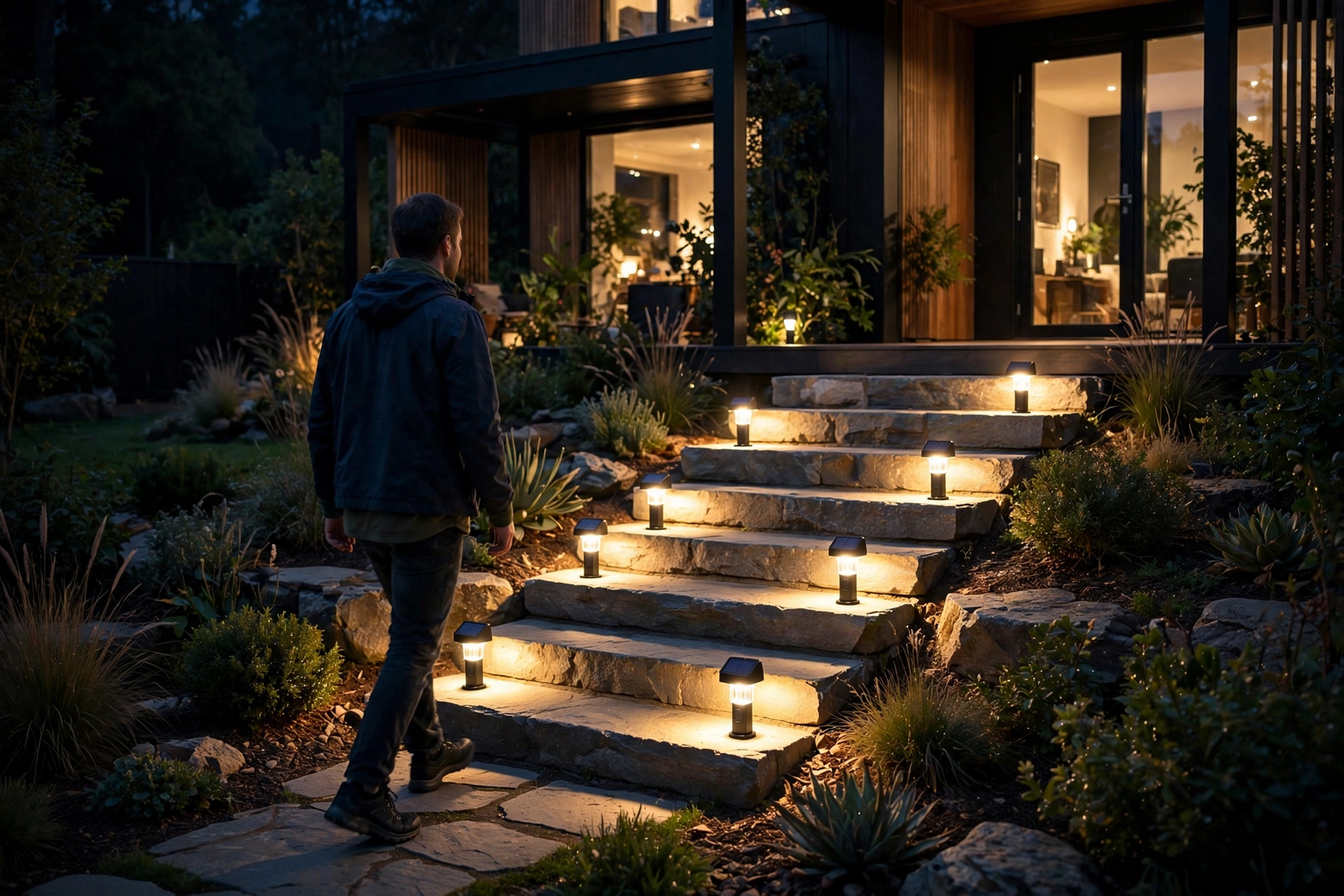
In my testing, this family handled the main garden path best. The boost fired early enough to light the steps before I reached them, and the idle glow still marked the route for guests. If you buy one type from this whole review, buy this one.
App-Connected Lights: Smart, at a Price
Ring’s Solar Pathlight leads the connected family. It links through a Ring Bridge to the Ring app and Alexa, so motion at the garden gate can ping your phone and trigger other lights. You can also set schedules and adjust behaviour from the sofa, which no sensor-only light allows.
Still, the catch is cost and commitment. Each light costs far more than a sensor-smart rival, the bridge adds another box to your network, and the cleverness stops if you leave the ecosystem. For a front path you already monitor with a Ring doorbell, it makes real sense. For a simple back garden path, it’s usually money spent on features you’ll open twice.
Solar Smart Lights With Motion Sensor Modes, Explained
The modes menu confuses everyone, so here’s the plain version. Mode one is steady: the light stays at one brightness from dusk until the battery fades. Mode two is motion only: dark until triggered, then bright for twenty to thirty seconds. Mode three is the hybrid: a dim idle glow that boosts on approach.
Hybrid mode wins for pathways, almost every time. It really is not close. The idle glow marks the route, the boost does the safety work, and the battery survives the night. Motion-only mode suits a side gate nobody uses until they use it. Steady mode belongs on short summer evenings only, because it drains small batteries before midnight in winter.
Sensor behaviour matters too. The PIR sensor reads body heat moving across its zones, so it fires best when you walk across its view rather than straight at it. Our guide to stopping false motion alerts explains the same sensor logic for doorbells, including why leaves and warm air cause phantom triggers. Angle your path lights slightly across the walkway, and detection gets earlier and calmer at once.
Batteries Decide Everything
Ask any owner whose solar lights died within a year, and the battery did it. LEDs last for decades, and panels degrade slowly. The rechargeable cell inside is the weak link, so buy with the battery in mind first.
Three chemistries show up in these lights. NiMH cells power the budget sets and typically last one to three years. Lithium-ion cells in mid-range lights run two to four years, but they lose twenty to thirty percent of their capacity below freezing. LiFePO4 cells, found in premium fixtures, tolerate cold best and can last five to seven years or more.
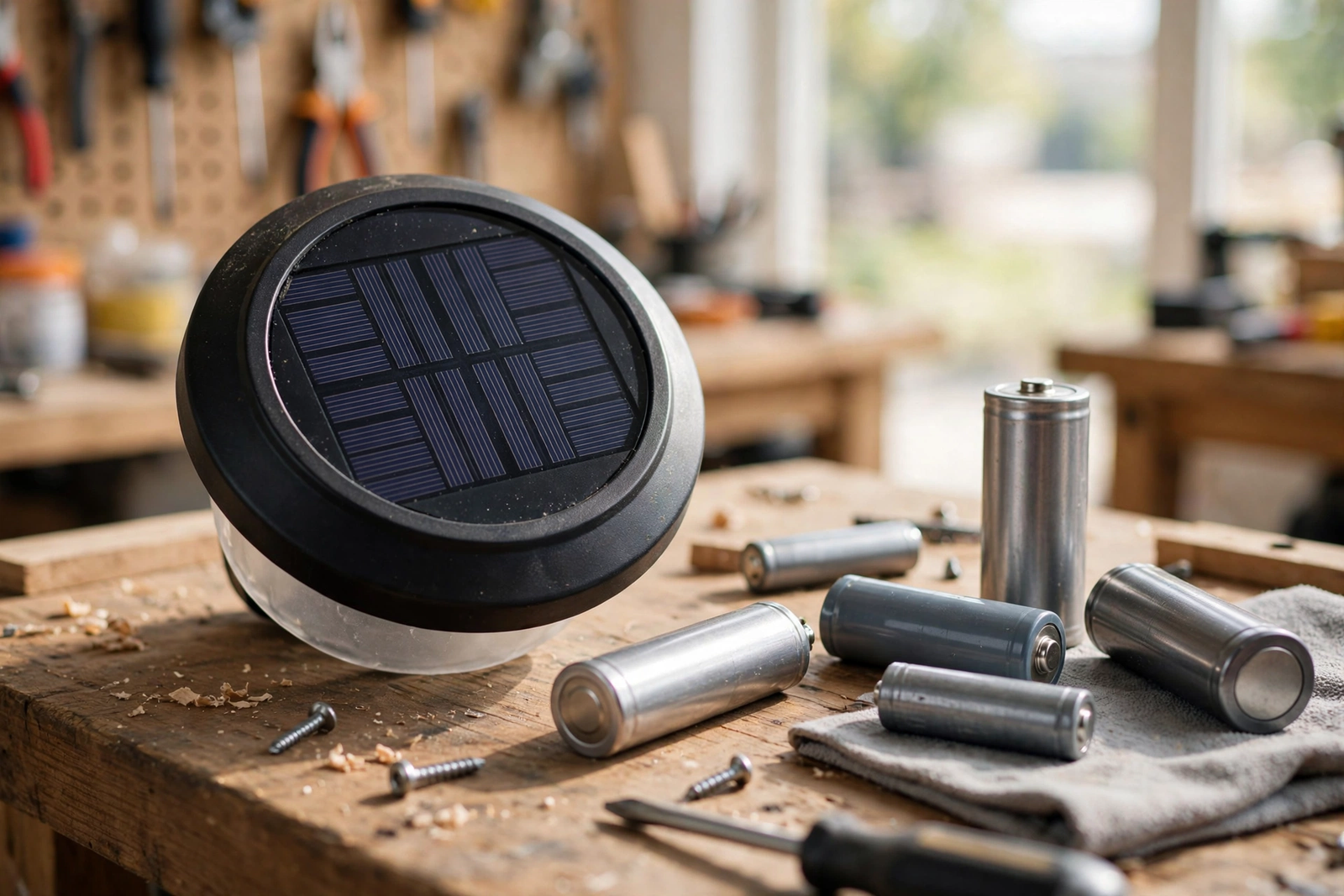
Capacity counts as well. As a floor, look for about 1,000 mAh in a small light and 1,800 mAh or more in a bigger one. Better still, choose models with a replaceable battery. Many use a standard AA NiMH or an 18650 lithium cell, and a cheap swap restores a fading light completely. A sealed unit with a dead battery is landfill, however pretty it looked in June.
If you want the plain engineering picture before comparing spec sheets, the solar lamp overview on Wikipedia lays out how the panel, battery, and controller share the work. It’s a useful five-minute read, and it makes the marketing claims much easier to see through.
Placement Rules That Make or Break Them
Even the best light fails in the wrong spot. Solar lights live or die by the sun their panel actually receives, so place the panel’s view of the sky first and the light’s view of the path second. Six hours of direct sun is a fair target. A spot that’s lovely and shaded at noon will starve the battery all year.
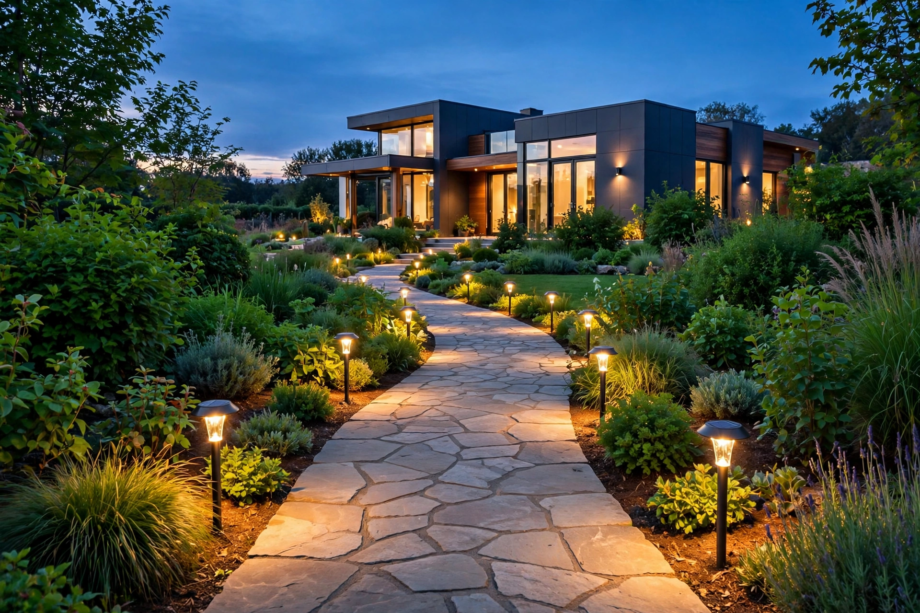
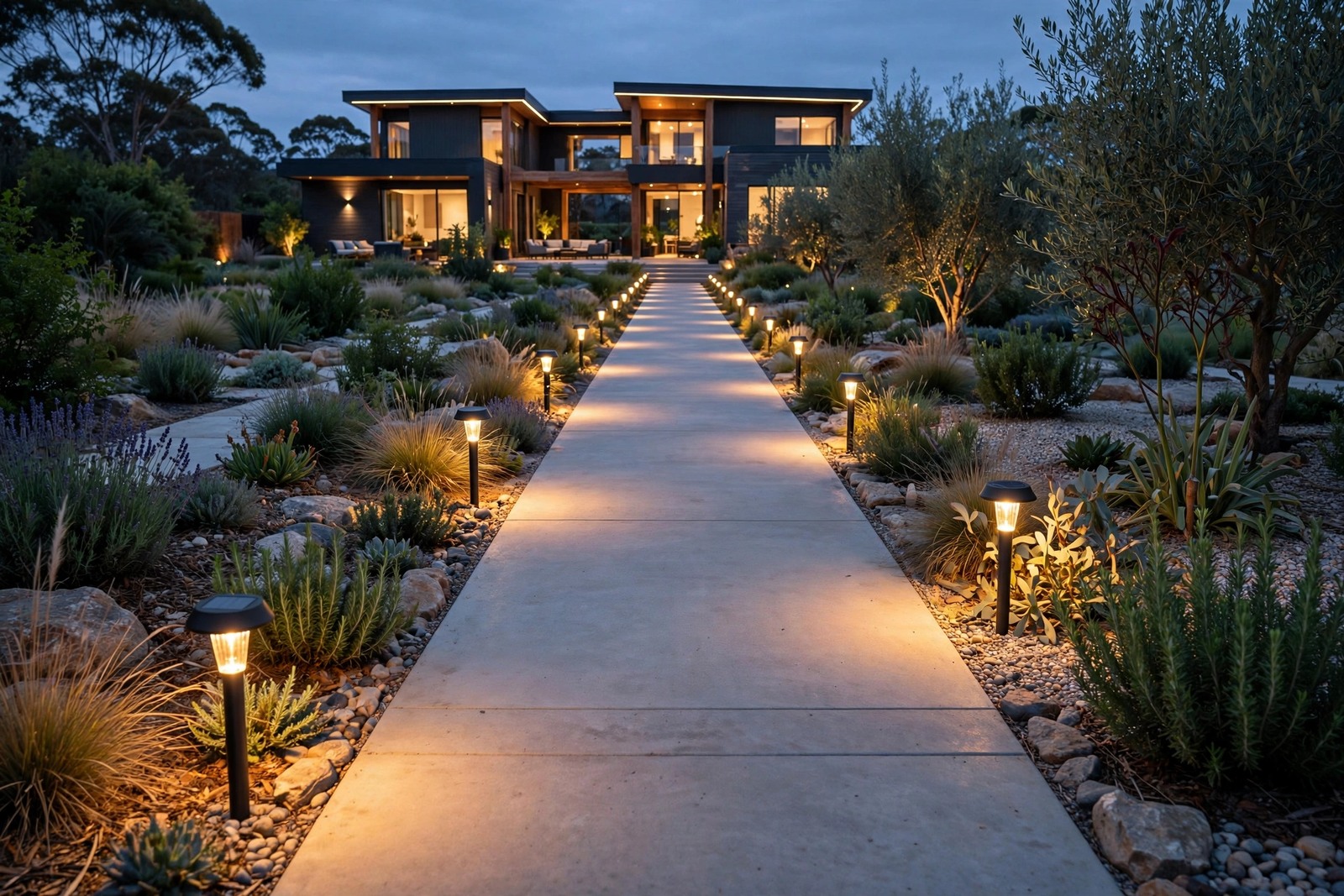
Space path lights about six to eight feet apart, alternating sides if the path is wide. Closer spacing looks better in photos than in person, and it wastes money. Instead, put the brightest motion-boost units where decisions happen: steps, gates, and the corner where the path turns. Glow markers can fill the easy straight stretches between them.
Also think about what the sensor sees. A light aimed at a busy pavement will boost for every passer-by and flatten its battery by midnight. Angle it into your property instead. And keep the panel clean: a dusty or leaf-covered panel can halve the charge, so wipe it monthly.
If your path sits in permanent shade, accept the physics and go wired instead. A low-voltage LED strip handles shaded paths beautifully, and our WLED on ESP32 setup guide shows a cheap way to control it from your phone.
Wired strips need a little power planning, though. Long runs lose voltage along the cable, so the far end glows dimmer than the start unless you plan the feed points in advance.
Our voltage drop calculation guide walks through those numbers in plain language. Read it before you bury any cable, because fixing a dim run after the fact means digging twice.
For mounting strips under step edges or along a low wall, the finish matters as much as the light itself. A bare strip outdoors collects water, glares harshly, and looks unfinished within a season.
An aluminum channel with a diffuser protects the strip from weather and softens the light into an even line. It’s the difference between a DIY experiment and a fitting that looks built in.
Choosing the strip itself deserves a minute of thought too, since garden lighting is all about mood at low brightness.
Our COB vs RGB strip comparison explains which style gives smooth, dot-free light for paths and steps. For most gardens, the smooth option wins, because visible dots cheapen the whole scene.
Winter and Cloudy-Day Reality
Here’s the honest part most listings skip. Solar lights work in winter, but they work less. Shorter days and a lower sun mean a smaller charge, while longer nights demand more of it. Expect roughly fifty to sixty percent of summer performance, and plan your brightness around December, not July.
Panels still charge on overcast days, just slowly, at perhaps ten to twenty-five percent of a clear-sky rate. Monocrystalline panels handle dull days better than cheaper polycrystalline ones. A bigger battery bridges one or two grey days in a row, which is another reason the motion-boost sets cope best.
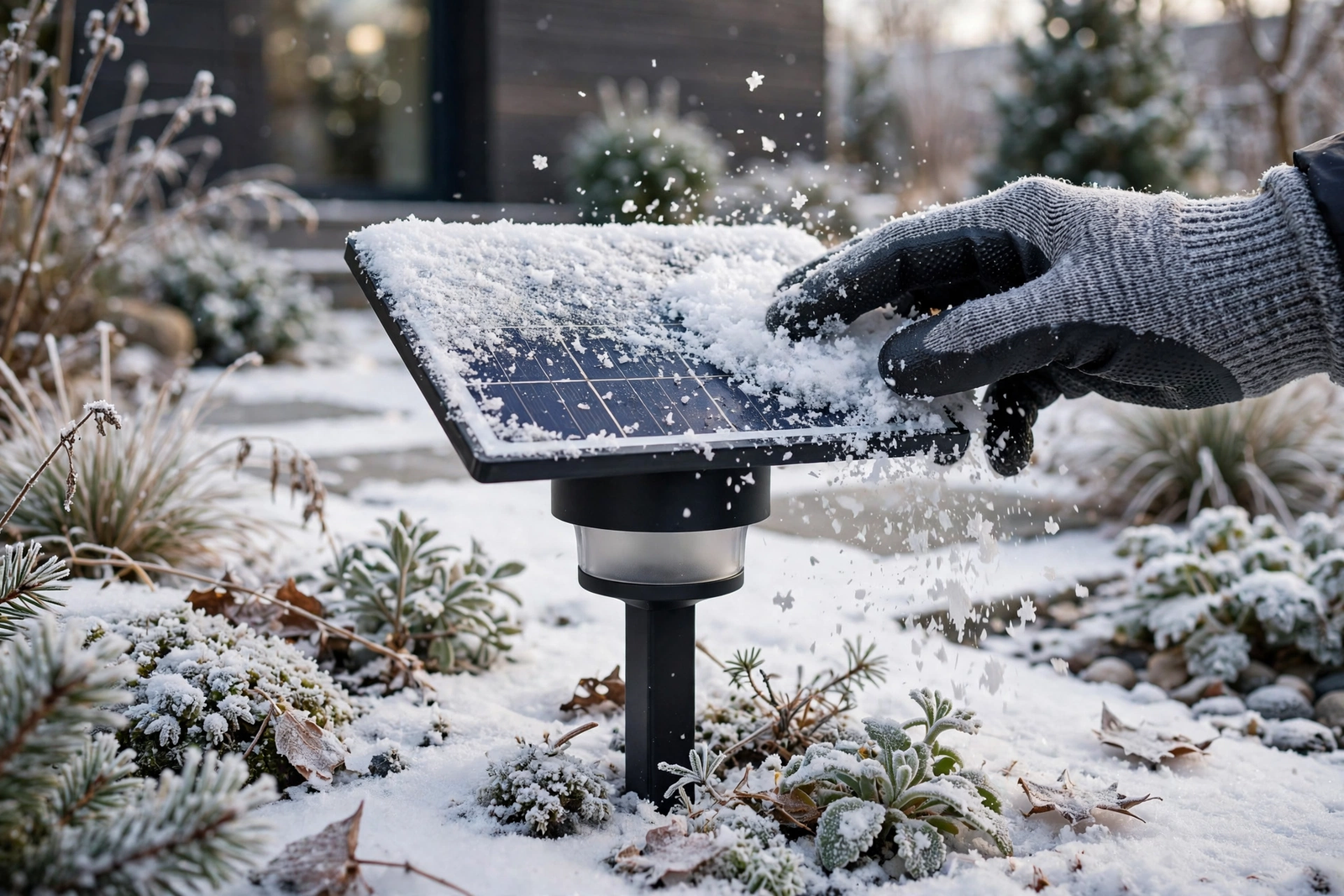
Snow needs a manual fix. There is no way around it. A panel wearing a white hat charges nothing at all, so brush it off when you pass. Cold itself mostly hurts the battery, not the LED, and it hurts cheap lithium cells worst. If your winters sit below freezing for weeks, LiFePO4 models or a wired backup for the main steps will save your frustration.
FAQs
How long do solar path lights stay on at night?
On a full summer charge, most quality sets run eight to twelve hours in steady mode. Motion-boost modes stretch the same battery further, because the bright light only fires when someone approaches. In winter, expect four to six hours instead. Shorter days charge less, longer nights demand more, and small batteries show it first.
Do solar path lights work in shade?
Poorly, if we’re being honest. The panel needs direct sun for a proper charge, and heavy shade can cut charging to a fraction of normal. A light under a tree may glow for an hour and quit. Either move it to a sunnier edge, choose a model with a separate cabled panel, or switch that spot to wired lighting.
How bright should garden path lights be?
For simply marking an edge, ten to thirty lumens is enough. For walking safely, you want at least a hundred lumens where feet land, and three hundred or more at steps and gates. That’s why hybrid lights work so well: a dim glow marks the route, and the motion boost delivers real brightness at the moments that matter.
Can I replace the battery in my solar lights?
Often, yes. Many better lights use a standard AA NiMH or 18650 lithium cell behind a screwed cover, and a replacement costs very little. Swapping it restores a dim, short-lived light to full strength. Sadly, the cheapest sets are sealed shut. Check for a battery compartment before buying, because it doubles the useful life of the light.
Are app-connected solar path lights worth the extra money?
Only if you’ll use what the app adds: motion alerts, schedules, and links to doorbells or Alexa routines. For lighting a path, a sensor-smart light does the same job for a fraction of the price. Connected lights also need a bridge, which adds cost and one more box. Buy them for the notifications, not for the light itself.
Why do my solar lights turn off after an hour?
Usually the battery never got a full first charge. New lights should sit in direct sun, switched off, for a day or two before their first night. A dirty panel, a shaded spot, or an ageing battery causes the same symptom later on. Clean the panel, check the mode setting, and test again before replacing anything.
The Bottom Line for Your Path
For most gardens, the answer is a good motion-boost set: dim at rest, properly bright when you approach, and honest about its battery. Add glow markers only as decoration, and buy app-connected lights only when you truly want alerts and routines in your life.
So your next step is refreshingly cheap. Buy one motion-boost set for the main path, place it where the panel sees real sun, and live with it for a week of evenings. If the steps feel safe and the battery survives the night, expand along the rest of the path with confidence.