

Good subwoofer placement can change a home theater more than a bigger subwoofer can. Put the sub in the wrong spot and bass sounds boomy in one seat and thin in the next. Put it in the right spot and the same sub sounds deep, clean, and even. This guide shows simple tests you can do at home.
- Start With the Front of the Room
- Try the Subwoofer Crawl
- Where to Place a Subwoofer With a Soundbar
- Corner, Mid Wall, or Near Your Seat?
- How Far From the Wall?
- Two Subwoofers: When One Is Not Enough
- Set Crossover, Phase, and Level After Placement
- Fix Common Placement Problems
- A Simple Placement Checklist
- Frequently Asked Questions
- Where should a subwoofer be placed in a living room?
- Is it better to put a subwoofer in a corner?
- Can I put a subwoofer behind the couch?
- Where do you put a subwoofer with a soundbar?
- Does subwoofer direction matter?
- Why does bass sound different in each seat?
- Conclusion
Why does the spot matter so much? Bass waves are long. They bounce off walls, floors, and ceilings, and those reflections can add up or cancel out. That is why two rooms with the same sub can sound very different. Your room is part of the sound system, whether you like it or not.
Start With the Front of the Room
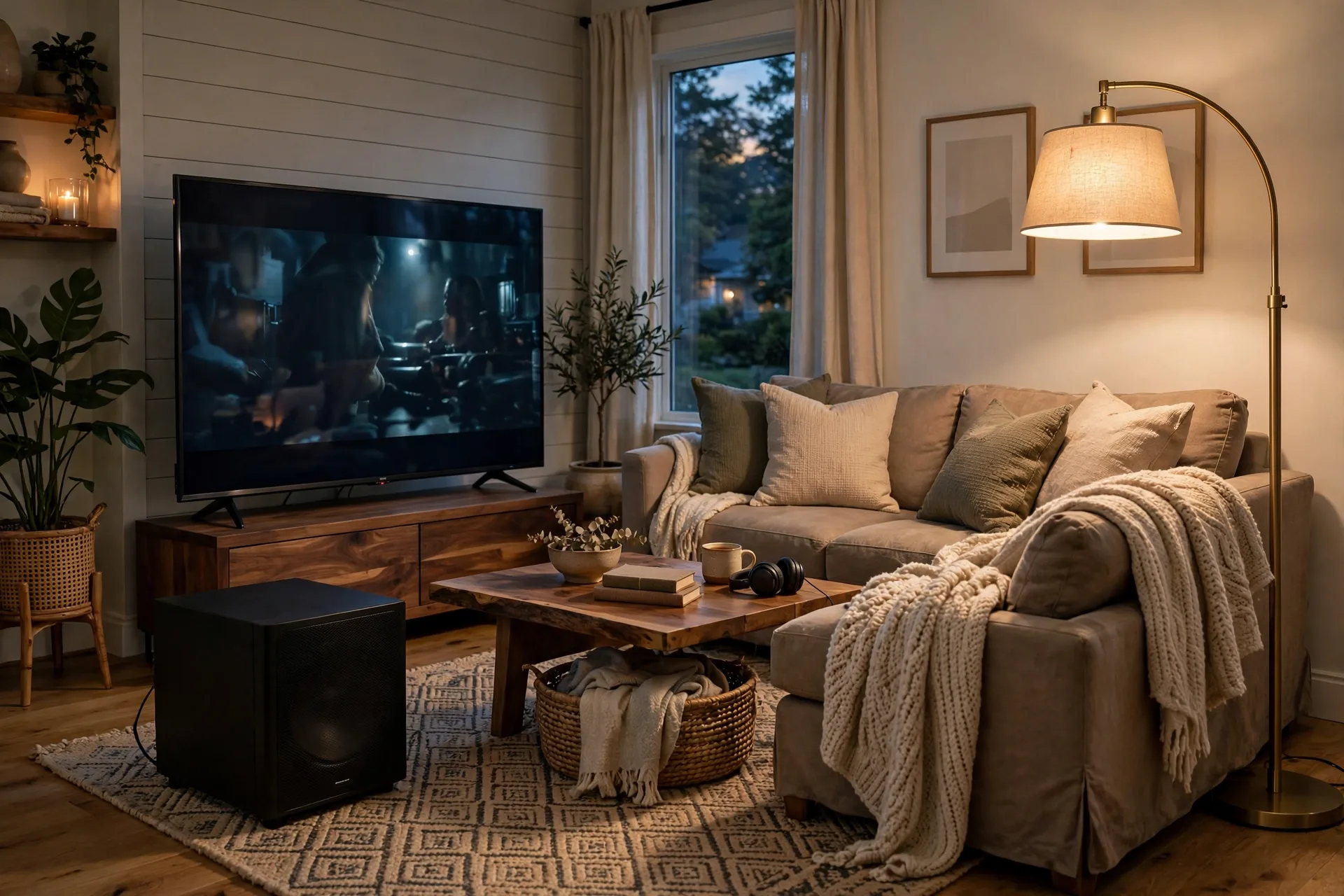
For most living rooms and home theaters, the front wall is the best place to start. That is the wall your TV sits on. Place the sub near one of your front speakers, or in a front corner, and listen from your main seat. This keeps bass close to the action on screen, so explosions and music feel connected to what you see.
A front corner gives you the most output. Walls on two sides plus the floor reinforce the bass, so a small sub can sound bigger than it is. The trade off is control. Corner bass can sound muddy if your room is small or square. So treat the corner as a starting point, not a final answer. Maker guidance agrees with that approach: SVS subwoofer placement advice suggests starting in a corner and moving away only if bass quality at your seat is not right.
What if the front corner is taken by a door, a plant, or a bookshelf? Try the space beside the TV stand, or a few feet along the front wall. Small moves matter here. Even shifting the sub by a foot can calm a boomy note or fill a thin one. Keep notes as you go, so you can compare spots fairly.
Try the Subwoofer Crawl
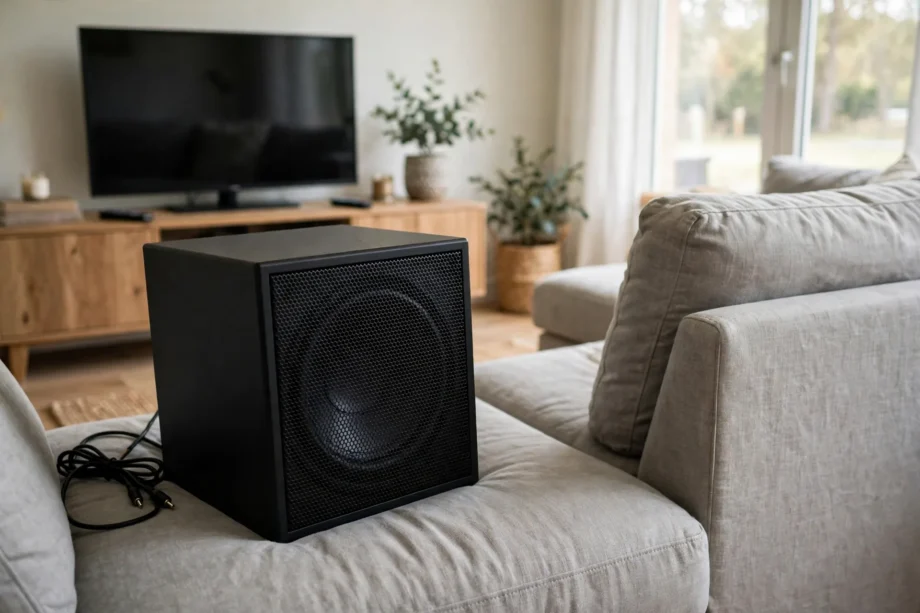
Have you heard of the subwoofer crawl? It sounds odd, but it works, and it costs nothing. Put the subwoofer in your main listening seat, right where you normally sit. Play a track or movie scene with steady, repeating bass. Then crawl around the edges of the room with your head at seated ear height and listen.
You are listening for the spot where bass sounds full and smooth, not just loud. Loud spots often fool you. They sound exciting for a minute, then tiring. The best spot usually sounds tight and even, with notes you can follow rather than a vague rumble. Mark that spot with tape or a small object.
Now swap places. Move the sub to the marked spot and sit back in your seat. Play the same track again. Does it still sound good? If yes, you have found a strong candidate. If it sounds worse, do not worry. Try the second best spot from your crawl and compare. Most rooms give you two or three good options.
One tip from my own setup: I ran the crawl in a rectangular living room and expected the front corner to win. It did not. A spot along the side wall, about a third of the way into the room, sounded cleaner at my couch and at the armchair beside it. The corner was louder, but the side wall spot was easier to listen to for a whole film. Trust your ears over any chart.

Where to Place a Subwoofer With a Soundbar
Soundbar subs are usually wireless, which gives you more freedom. The same rules still apply. Start near the front of the room, close to the soundbar if you can. That keeps bass tied to dialogue and effects instead of floating somewhere behind you.
In a small flat, the front corner beside the TV stand is often the practical winner. It hides the sub, keeps cables short, and adds punch. If bass sounds boomy there, pull the sub a few inches away from each wall. That small gap can reduce the boom without losing much depth.

Can you put a soundbar sub behind the couch? You can, and some people love it. Bass feels close and physical, which suits action films. The risk is that bass can feel detached from the screen, and guests on the far side of the room may hear it differently. Test it for a full evening before you commit, not just for one scene.
Corner, Mid Wall, or Near Your Seat?
Each common spot has a job. Corners give maximum output. Mid wall spots along the front wall often give smoother, more musical bass. Near seat placement gives strong, direct bass at one seat but can sound uneven elsewhere. None of them is right for every room, which is why testing beats guessing.
Caption: Common subwoofer spots compared
| Spot | What you gain | What to watch for | Best for |
|---|---|---|---|
| Front corner | Most output from a small sub | Boomy or muddy bass | Small rooms and films |
| Mid front wall | Smoother, more even bass | Less punch than a corner | Music and mixed use |
| Side wall | Good balance across seats | May need longer cables | Wide living rooms |
| Near your seat | Strong, direct bass feel | Uneven sound for other seats | One main listener |
Square rooms deserve extra patience. In a square room, the same bass problems tend to stack up, so corners can sound very uneven. Try mid wall spots first, and use the crawl to check several seats, not just your own. A spot that sounds great for you but terrible for your partner is not a great spot.
How Far From the Wall?
Leave breathing room around the sub, especially if it has a rear port. A port is the hole or tube that lets air move in and out. Block it and you can get chuffing noises, which sound like puffing air on loud bass notes. Four to six inches of clearance is a safe starting point for most rear ported subs.
Down firing subs point their driver at the floor. They are more forgiving about wall distance, but they still need space under the cabinet. Check your manual for the minimum clearance, and do not push the sub hard into thick carpet if the manual warns against it. A small isolation pad can help on hard floors and reduce rattles.
Front firing subs are the simplest to place. Point the driver into the room, keep the port clear, and focus on location rather than angle. Bass spreads in all directions at low frequencies, so the exact angle matters less than the spot itself. That is good news if your room layout limits your options.
Two Subwoofers: When One Is Not Enough
Do you need two subs? Not always. One well placed sub can sound excellent in a small or medium room. Two subs help most in larger rooms, or when several people watch together. They smooth out the differences between seats, so the person at the end of the couch hears bass closer to what you hear in the middle.
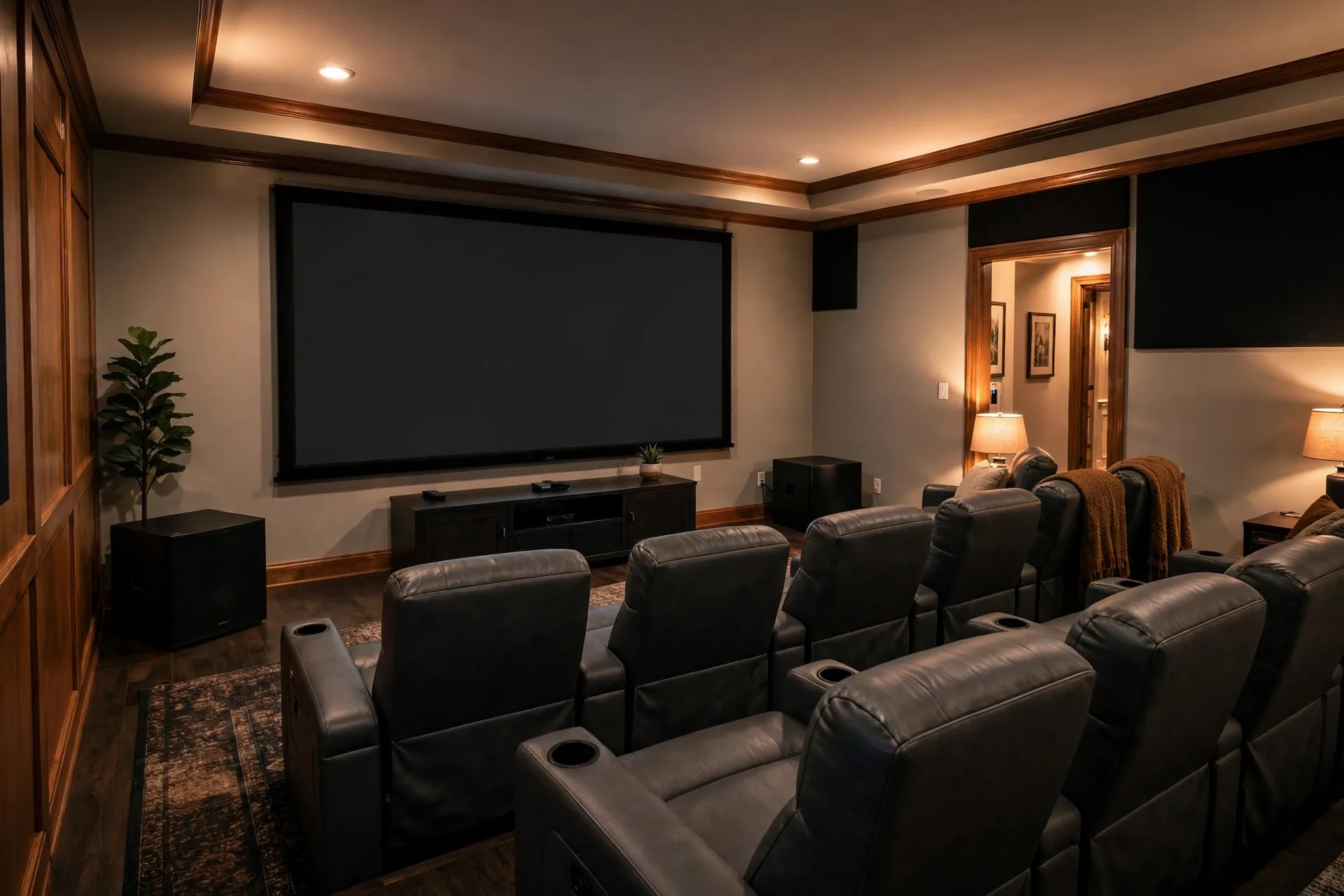
If you add a second sub, try opposite corners or opposite mid wall spots first. That layout tends to even out room effects better than putting both subs together. Set each sub to a similar level before you run your receiver calibration, then let the calibration fine tune the balance. Do not just turn both up and hope for the best.
Two subs also give you a backup plan. If one spot is boomy and the other is thin, the pair can average out. That is the real benefit. You are not chasing louder bass. You are chasing bass that sounds the same from more seats.
Set Crossover, Phase, and Level After Placement
Placement comes first, settings second. Moving the sub changes everything, so do not spend an hour tweaking settings for a spot you will move tomorrow. Once the spot is set, start with a crossover around 80 Hz. That is a common starting point that hands low bass to the sub and keeps voices with your main speakers.
Phase is a simple switch, usually 0 or 180 degrees. If bass sounds thin or hollow after placement, flip the phase and listen again. One setting will usually sound fuller at your seat. There is no universal right answer here. Your room and your distance from the sub decide it.
Level is about blend, not volume. Turn the sub up until you notice it, then back off a touch. Bass should support the sound, not dominate it. A good test is dialogue. If voices sound thick or chesty, the sub level is probably too high. If a film feels flat, nudge it up a little and test again.
Run your receiver room calibration last, after placement, crossover, phase, and level are close. Calibration can fix small problems, but it cannot fix a terrible spot. Think of it as polish, not rescue. If calibration makes big cuts or boosts, that is a hint your placement still needs work.
Fix Common Placement Problems
Boomy bass is the most common complaint. Move the sub away from the corner, a few inches at a time, and retest. Add a rug or soft furniture near bare walls if the room echoes. Both steps tame reflections that make bass sound muddy.
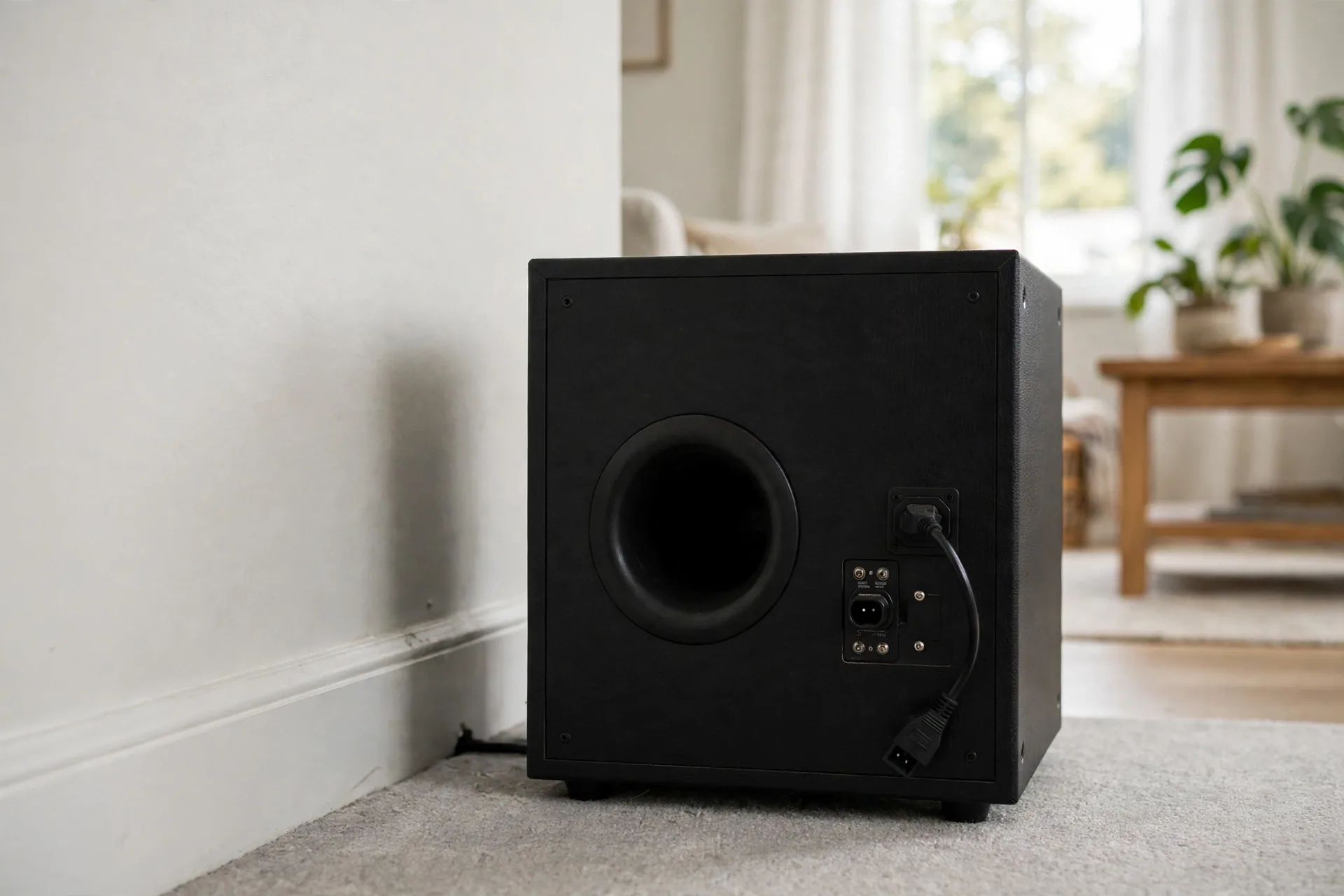
Thin bass in your seat but loud bass elsewhere means you may be sitting in a null, a spot where waves cancel out. Move your seat a foot forward or back if you can, or move the sub along the wall. Small shifts often fix a null faster than turning the volume up.
Rattles are not always the sub’s fault. Check nearby objects first. A loose picture frame, a hollow cabinet door, or a glass shelf can buzz on bass notes. Fix the rattle at its source before you blame the sub or move it to a worse spot.
Neighbors are a real factor in flats. A sub on a hard floor can send vibrations downstairs. Try an isolation pad, pull the sub away from shared walls, and keep late night levels lower. You will still enjoy films, and you will keep the peace.
A Simple Placement Checklist
- Start at the front wall, near a front speaker or in a front corner.
- Run the subwoofer crawl and mark your best two or three spots.
- Test each spot from your main seat with the same track.
- Check other seats, not just your own.
- Leave clearance around ports and drivers.
- Set crossover near 80 Hz, test phase, then set level by ear.
- Run receiver calibration last and retest with a full film.
This checklist takes an evening, not a weekend. You will learn more about your room in that evening than any placement chart can teach you. And once you find the spot, you can stop fiddling and just enjoy the films.
Frequently Asked Questions
Where should a subwoofer be placed in a living room?
Start at the front wall near your TV, either in a corner or beside a front speaker. Then run the subwoofer crawl to find the spot that sounds smoothest from your seat. Corners give more output, while mid wall spots often sound cleaner and more even.
Is it better to put a subwoofer in a corner?
A corner can be better if you want maximum punch from a small sub, because nearby walls reinforce the bass. It can also sound boomy in small or square rooms. Try the corner first, then compare it with a mid wall spot and keep the one that sounds cleaner.
Can I put a subwoofer behind the couch?
Yes, you can put a subwoofer behind the couch, and it can feel powerful for the main listener. The risk is uneven sound for other seats and bass that feels detached from the screen. Test it for a full film before you decide, and keep the port clear.
Where do you put a subwoofer with a soundbar?
Place a soundbar sub near the front of the room if you can, close to the soundbar or in a front corner. That keeps bass tied to dialogue and screen action. If front placement is not possible, test a side wall spot and listen from your main seat.
Does subwoofer direction matter?
Direction matters less than location for low bass, because bass spreads in all directions. What matters more is keeping ports and drivers clear of walls and furniture. Point a front firing sub into the room and give a rear ported sub several inches of clearance.
Why does bass sound different in each seat?
Bass waves reflect off walls and can add up or cancel out in different spots. That creates loud spots and quiet nulls around the room. Two subs, or a better single spot found with the crawl, can smooth those differences so more seats sound alike.
Conclusion
Start at the front wall, run the crawl, and test a few spots with the same track. Small moves can make a big difference, and your ears are the best tool you own. Once you find a spot that sounds smooth from more than one seat, lock in your settings and run calibration. Your next step is simple: pick one evening this week, run the crawl, and see what your room has been hiding.