


A sliding glass door lock is any lock that secures a sliding patio door, from the weak factory latch to double-bolt locks, Charlie bars, and foot bolts. The factory latch alone is not enough. The best setup pairs a double-bolt lock with a security bar and an anti-lift fix, which together stop the three ways intruders actually get through these doors. Below, every sliding glass door lock type is ranked by what it actually stops. Spend once, spend right.
Our Mission
Our mission at techinvein.com is honest home security advice. Sliding glass doors are the weakest common entry point in most houses, and most articles either sell you a gadget or tell you to put a stick in the track. This guide covers every sliding glass door lock type, what each one actually stops, and the setup that makes sense at three budgets.
Why the Factory Latch Isn’t Enough
Most sliding glass doors ship with a simple hook or claw latch. It keeps the door closed against wind. It does not keep anyone out. Intruders defeat these doors three ways: prying the panels apart at the latch point, lifting the sliding panel up and off its track, or simply smashing the glass. Your lock strategy has to address all three, and no single factory latch does.
This is worth internalizing before you spend money: a sliding glass door lock that only stops sliding does nothing against lifting, and one that only stops lifting does nothing against prying. Layering is the whole game.
Not sure which sliding glass door lock is on your door right now? Look at the door edge: a small hook or claw means a basic mortise latch, a rectangular housing with two bolts means a double-bolt, and a bar lying across the track means a previous owner already added a security bar.
Every Sliding Glass Door Lock Type, Ranked
Mortise latch (factory standard). The hook bolt built into the door edge. Fine as a daily-use latch, useless as security on its own. If yours is broken or worn, a sliding door lock replacement restores basic function, but do not mistake that for an upgrade.
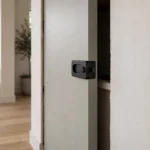
Double-bolt lock. The strongest mechanical option. Two heavy bolts shoot into the frame, usually at the top and bottom of the panel, spreading the locking force across a wide area. Prying tools concentrate force on one point, which is exactly what this defeats. Locksmiths consistently rank it first for sliding doors. Newer models add a small key that locks the bolts in place, which also stops children from slipping out to the backyard.
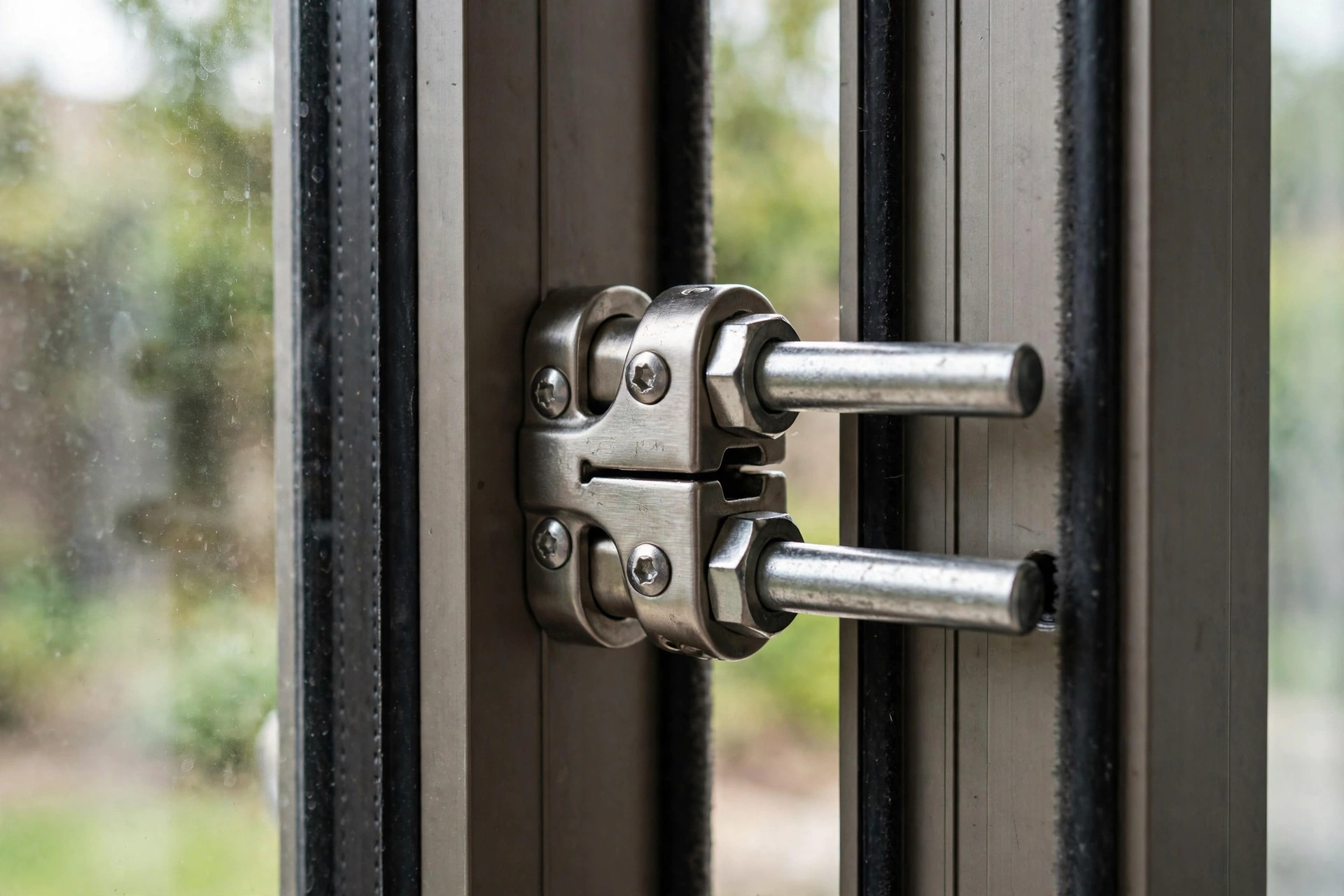
Keyed patio deadbolt. A true keyed lock on both sides, in mortise or surface-mount form. Strong, but costs more and needs careful fitting. Worth it on doors you want keyed from outside.
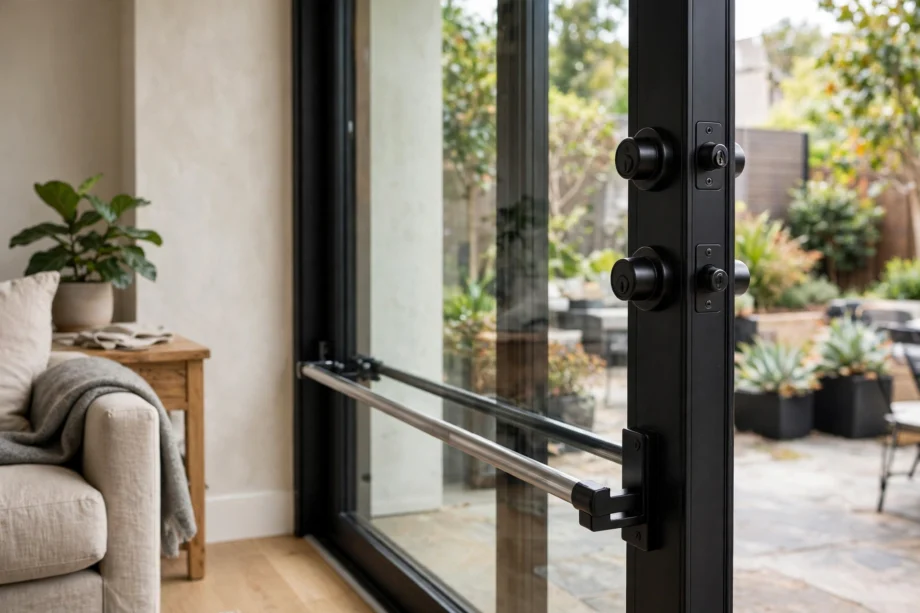
Charlie bar (security bar). A hinged bar mounted to the frame that folds down across the track. A big step up from a wooden dowel: it cannot be knocked out of position the way a loose rod can, and it physically blocks the panel from sliding even if the latch is defeated. The main downside is bulk, and it does not stop the door being lifted off its track.
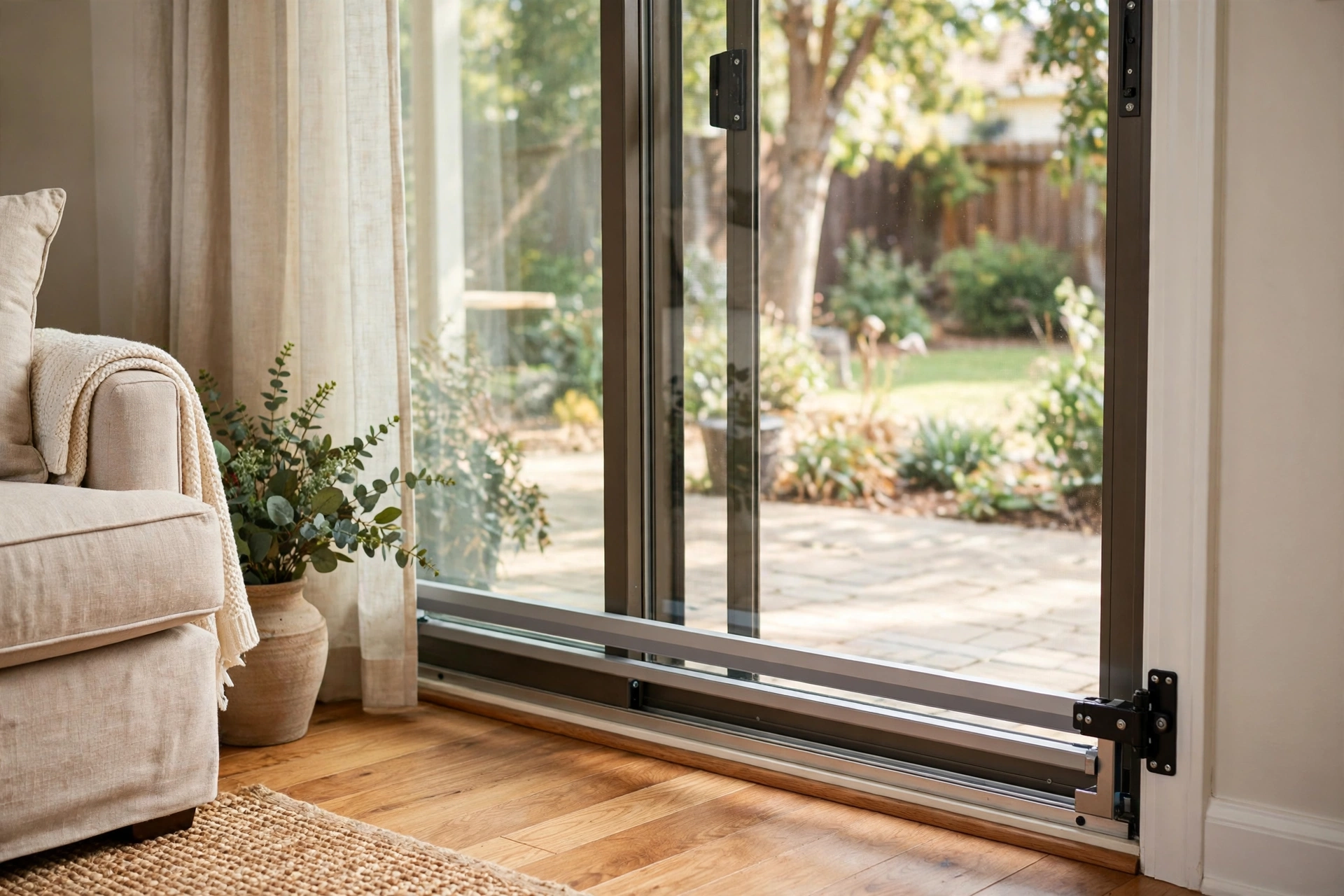
Foot bolt. A spring-loaded bolt mounted low on the active panel that drops into the track or a floor hole. Cheap, simple, and effective as a secondary lock. It also resists lifting, since it pins the panel downward. Best paired with something else rather than used alone.
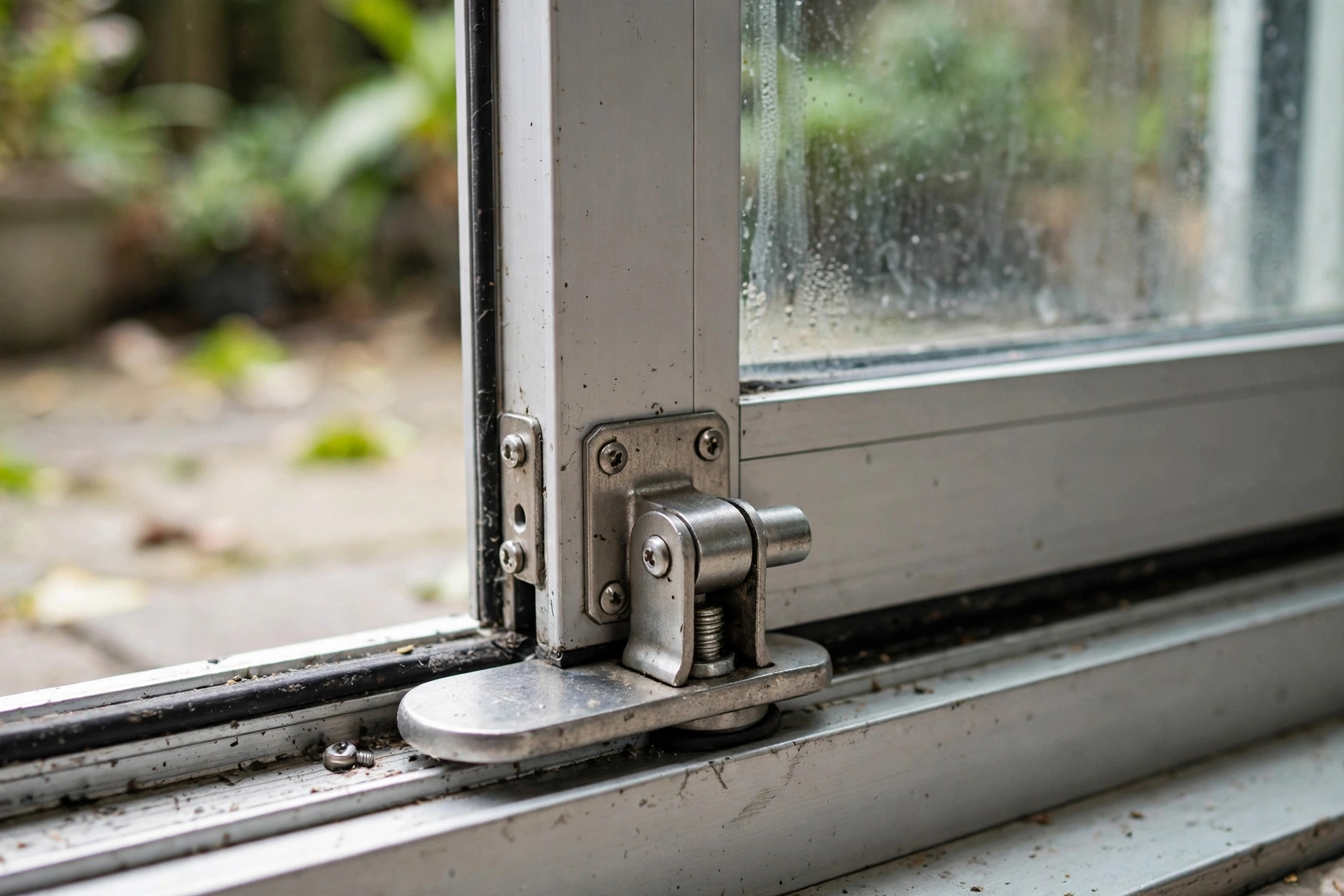
Loop or clamp lock. A keyed loop that clamps onto the track and locks the door in place. The clever bit: it can hold the door in a vented position, a few inches open for air, while still locked. Good for people who want airflow without an open invitation.
Track or pin lock. A pin that blocks the door from sliding. Lowest cost, lowest security. Fine as a backup, not as your only line of defense.
The Anti-Lift Fix Nobody Talks About
Lifting the panel off its track is the attack most homeowners never consider. Many sliding doors can be lifted straight up and swung out from the bottom with basic tools, bypassing every lock on the panel. The fix costs almost nothing: drive screws into the top track to block the panel from being lifted past them, or install anti-lift pins. Do this before buying any fancy lock. A double-bolt lock on a door that can be lifted out is security theater.
Keyed vs Keyless: Which Sliding Glass Door Lock Fits Your Life
Once you know the types, decide how you want to operate them. A keyed sliding glass door lock, with a key on the outside, suits rentals, shared houses, and anyone who wants the door truly locked from both sides. The tradeoff is key management: lose the key and you are calling a locksmith.
A keyless or smart sliding glass door lock trades the key for a code or phone app. Great for families with kids who lose keys and for Airbnb-style turnovers. Just remember that electronics add convenience, not strength: the mechanical bolt underneath is what stops an intruder. Judge a smart lock by its hardware first and its app second.
One caution on double-key deadbolts, which need a key on both sides: they slow emergency exits. If the door is also a fire escape route, a thumbturn on the inside is the safer choice.
Beyond the Lock: Film, Sensors, and Glass
Locks stop the door from moving. They do nothing about the glass, which is the other half of the problem.
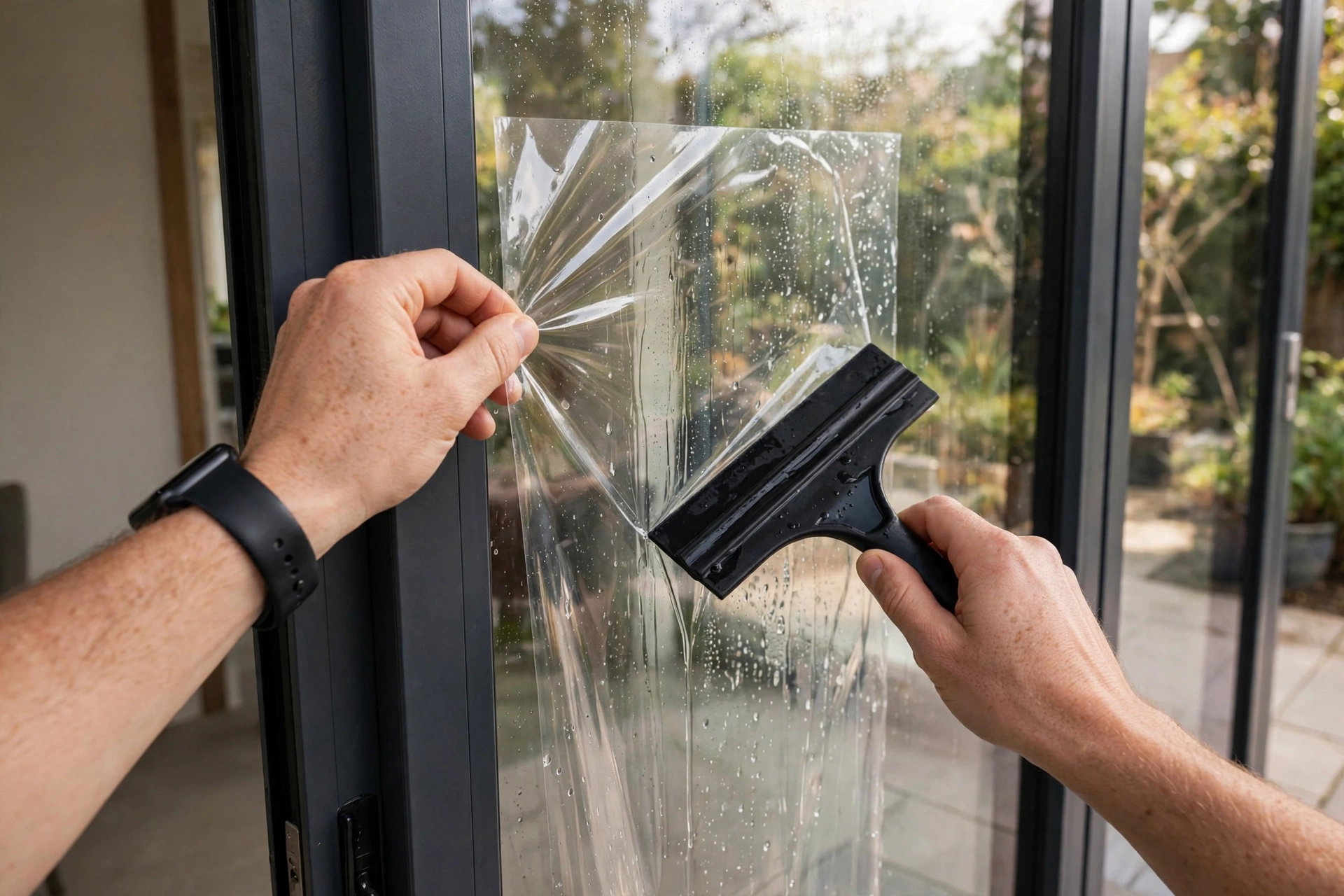
Security film. A clear heavy-duty polyester sheet applied to the inside of the glass. It will not make the glass unbreakable, but it holds shattered pieces together, making entry slow, noisy, and difficult. Reputable brands include 3M. This is one of the highest-value upgrades per dollar.
Door and window sensors. A contact sensor alerts you the moment the door moves. A glass-break sensor listens for the sound of shattering glass. Together with a lock, they turn a break-in attempt into an alarm event instead of a silent entry. For the camera side of this, our smart door lock with camera guide covers video coverage for entry points.
Laminated or impact glass. If you are replacing the door or glass anyway, laminated glass has a plastic layer fused between panes that refuses to fall apart when broken. The most thorough fix, and the most expensive.
Coverings. Curtains or blinds on a sliding door do not stop anyone, but they remove the window-shopping incentive. If intruders cannot see in, they cannot plan. Our sliding glass door window covering guide covers options that fit these doors.
My Recommended Setup by Budget
Under $25. A wooden dowel cut to fit the track plus screws in the top track to prevent lifting. Crude, but it closes the two biggest holes for almost nothing. Upgrade the dowel to a purpose-built adjustable security bar ($15 to $40) when you can; it fits consistently and cannot be knocked loose.
Around $100. A double-bolt sliding glass door lock plus a Charlie bar plus security film on the glass. This is the sweet spot: strong mechanical resistance to prying and sliding, film against smashing, and the anti-lift screws are free.
$200 and up. Everything above, plus door and glass-break sensors tied into your alarm or smart home system, and a camera covering the patio. At this point the door is no longer the easy target, which is the actual goal of any serious sliding glass door lock upgrade. Most burglars pick the easiest entry, not the most rewarding one.
If you want keyless convenience on top of security, look at a sliding door smart lock as part of the package. Just remember that smart features are convenience; the mechanical strength underneath is what stops intruders.
FAQs
What is the best sliding glass door lock?
A double-bolt sliding glass door lock is the strongest single mechanical upgrade, locking the panel at two points against prying. Pair it with a security bar in the track and anti-lift screws in the top track, and add security film on the glass. No single product covers all three attack methods alone.
Can a sliding glass door be kicked in?
Kicking usually targets the latch point or the glass. A double-bolt lock resists the latch attack by spreading force across two bolts. Against the glass, security film or laminated glass is the defense. A bare factory latch with standard glass is genuinely easy to defeat, which is why layering matters.
Do security bars really work on sliding doors?
Yes. A properly fitted security bar or Charlie bar physically prevents the panel from sliding, even if the lock is bypassed. Adjustable bars cost $15 to $40. They do not stop lifting. Combine them with anti-lift screws in the top track.
How do I stop my sliding door from being lifted off the track?
Drive screws into the top track above the panel to block it from being lifted past them, or install anti-lift pins. This is a free or near-free fix and it closes an attack path that bypasses every lock mounted on the panel itself.
Should I put a sensor on my sliding glass door?
Yes. A contact sensor that alerts when the door moves and a glass-break sensor that hears shattering glass turn a break-in attempt into an alarm event. Locks delay intruders; sensors make sure the delay counts. Neither replaces the other, so budget for both if the sliding glass door lock is your main entry concern.
Quick Takeaways
- The factory sliding glass door lock is a closer, not security. Intruders pry, lift, or smash; your setup must address all three.
- A double-bolt lock is the strongest mechanical upgrade. A Charlie bar or security bar is the best cheap backup.
- Anti-lift screws in the top track cost almost nothing and close the attack that bypasses every panel lock.
- Security film on the glass and door plus glass-break sensors cover the half of the problem locks cannot touch.
- Best value setup: double-bolt lock, security bar, security film, anti-lift screws. Add sensors and a camera when budget allows.
Disclaimer
This sliding glass door lock guide is for general information only. No lock makes a home break-in proof; layered measures reduce risk but cannot eliminate it. Verify lock compatibility with your door’s brand and dimensions before buying, and consider a professional locksmith for installations you are not comfortable doing yourself.