

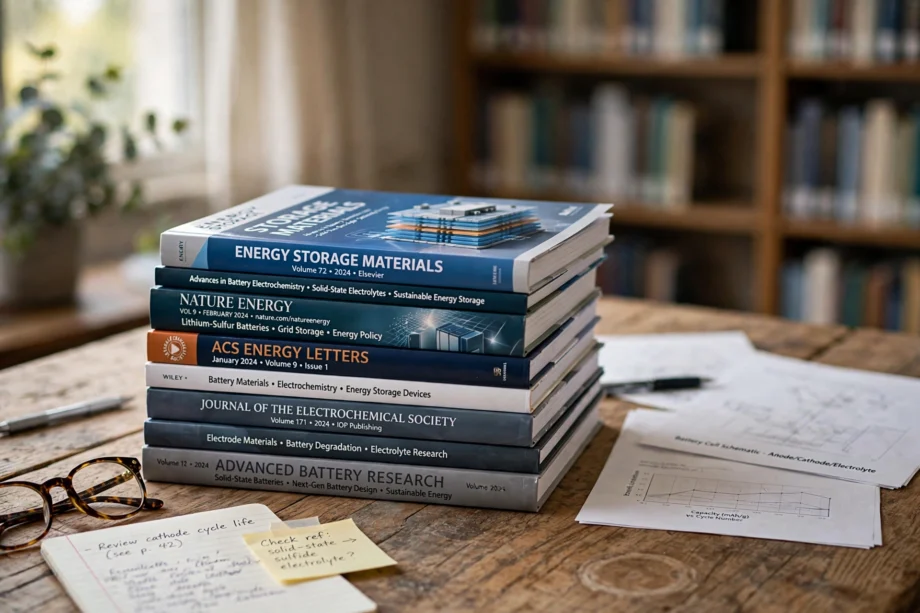
The Journal of Energy Storage is a peer-reviewed scientific journal published by Elsevier that covers research on energy storage technologies. It publishes studies on batteries, thermal storage, grid-scale systems, and the economics of storing energy. If you have ever wondered where the science behind home batteries and grid storage gets published, this journal is one of the main places.
- What Is the Journal of Energy Storage?
- What Topics Does It Cover?
- Battery and Electrochemical Storage
- Thermal and Mechanical Storage
- Grid Integration and System Modeling
- Safety, Testing, and Lifecycle Analysis
- Markets, Policy, and Economics
- How Influential Is It?
- Who Reads It?
- How to Use It Without an Academic Background
- Start With Review Papers
- Learn to Read a Battery Paper’s Key Numbers
- Check Whether Results Are Practical
- What It Does Not Publish
- How to Access Papers
- Journal of Energy Storage vs Similar Journals
- Why This Matters for Smart Home Readers
- FAQs
- What is this journal about?
- What is its impact factor?
- Who publishes it?
- Is it open access?
- What topics does the journal accept?
- How can a non-academic read its papers?
- How is it different from Energy Storage Materials?
- Conclusion
This guide explains what the journal covers, who reads it, and how influential it is. It also shows how you can use it even if you aren’t an academic. Whether you are a student picking a research topic, an engineer tracking new developments, or just curious about where battery breakthroughs get announced, you will find what you need here.
What Is the Journal of Energy Storage?
The Journal of Energy Storage (often shortened to J. Energy Storage) is a scientific journal launched by Elsevier in 2015. It focuses entirely on energy storage as a field, which also makes it unusual. Most journals treat storage as a side topic inside broader energy publications, yet here storage is the main event.
Its ISSN is 2352-152X. It publishes research from universities, national labs, and industry teams around the world. You can browse its official Elsevier journal page for the current aims, scope, and editorial board. Energy storage touches everything from electric cars to solar farms. Because of that, the journal attracts authors from engineering, chemistry, economics, and policy backgrounds. That mix is also part of its appeal: a grid economist and a battery chemist can publish in the same venue.
What Topics Does It Cover?
The scope is deliberately wide, since energy storage itself spans many technologies. The journal’s official scope includes the areas below, and it is worth reading them because they show how broad “storage” really is.
Battery and Electrochemical Storage
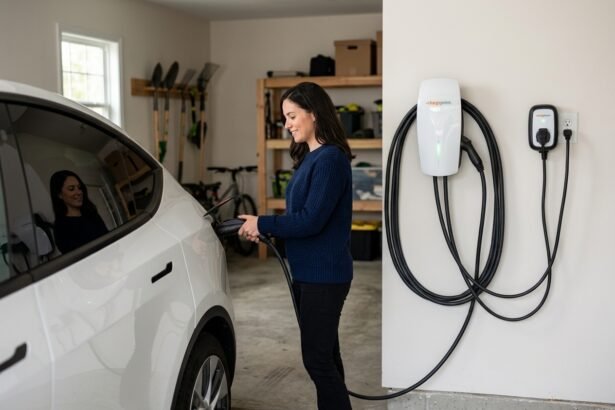
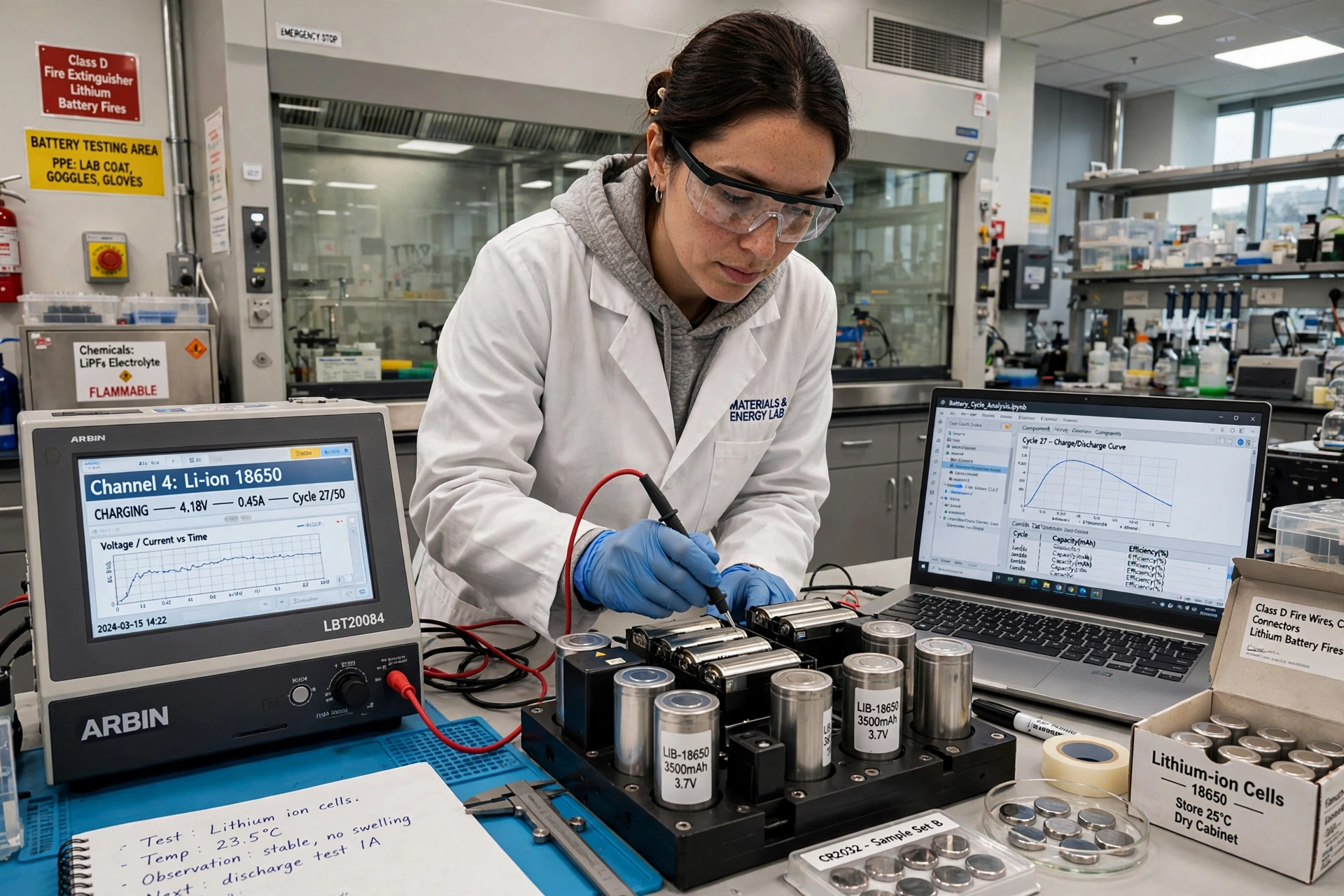
This is the largest category. Papers cover lithium-ion advances, solid-state batteries, sodium-ion chemistry, and flow batteries. Researchers report new electrode materials, electrolyte formulations, and cell designs, along with the test data to back their claims. Much of this work eventually reaches consumers through products like EV chargers and home batteries.
Because batteries dominate both the research and the market, roughly a fifth of the journal’s papers therefore focus on battery electricity topics. If you follow EV or home battery news, most of the underlying science first appears in venues like this one.
Thermal and Mechanical Storage
Not all storage is chemical. The journal also publishes work on thermal storage (storing heat in molten salt or phase-change materials), compressed air systems, flywheels, and pumped hydro innovations. These technologies matter for industry and long-duration grid storage, since batteries aren’t always the cheapest answer there.
Grid Integration and System Modeling
A battery is only useful if it works with the grid. Many papers model how storage systems behave at scale: how to size a battery for a solar farm, how to control thousands of home batteries as one virtual power plant, and how storage affects electricity prices. This systems-level work is therefore what turns lab chemistry into real infrastructure.
Safety, Testing, and Lifecycle Analysis
The journal takes safety seriously. Papers cover fire testing, failure analysis, and lifecycle assessment, meaning the full environmental cost of building and recycling storage systems. So for anyone buying or deploying storage, this is the most practical section of the journal.
Markets, Policy, and Economics
Still, storage doesn’t deploy itself; money and rules decide. The journal publishes techno-economic analyses, market models, and policy studies that explain when storage pays for itself and what regulations help or hurt. Business readers often start here, since these papers explain the economics behind technologies like home EV charging and residential storage.
How Influential Is It?
In academia, journals are ranked by citation metrics, and this one scores well. Its impact factor sits around 10 based on recent Journal Citation Reports releases, placing it in the top quartile (Q1) for energy engineering and electrical engineering categories. Its Scopus CiteScore is around 16.6, and its h-index of 166 reflects a large body of frequently cited work.
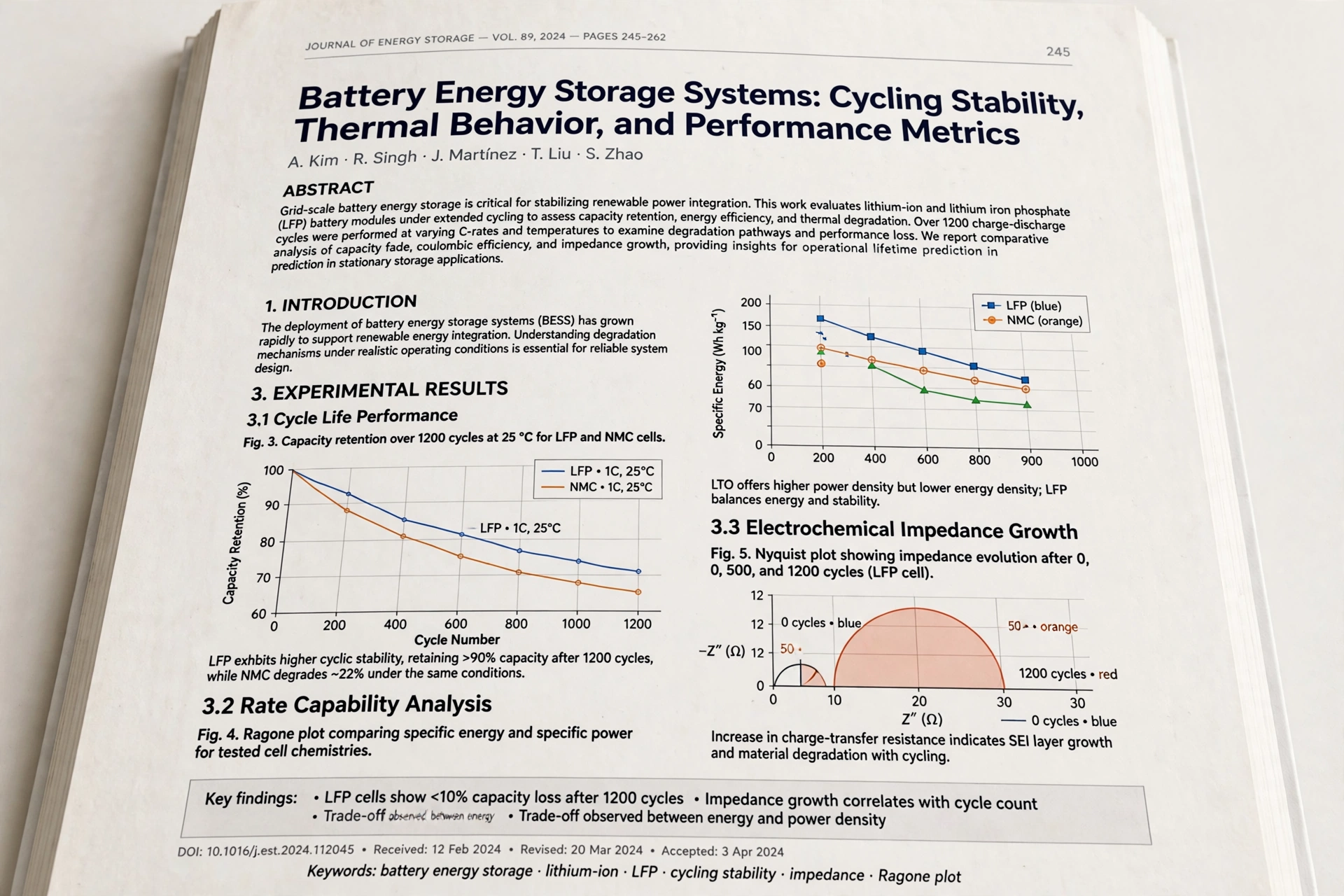
What do those numbers mean in plain terms? For example, an impact factor around 10 means the average paper gets cited about ten times within two years, which is strong for an engineering journal. Q1 means it ranks in the top 25 percent of journals in its field. As a result, researchers treat a publication here as a solid, respected achievement.
For comparison, its sister publication Energy Storage Materials focuses more narrowly on materials science and carries a higher impact factor (around 19). The Journal of Energy Storage is broader, covering systems, markets, and applications alongside the chemistry.
Who Reads It?
The readership splits into three rough groups, and you might belong to one of them without realizing it.
First, academic researchers use it to publish findings and track competitors. A PhD student working on sodium-ion batteries might read it weekly. Second, industry engineers at battery makers, utilities, and solar developers read it for practical advances they can commercialize. Third, analysts, investors, and policymakers read the economics and market papers to understand where the industry is heading.
There is also a growing audience of curious non-specialists. Because home batteries and EVs keep making headlines, more general readers land on these papers through Google Scholar. The journal’s abstracts are written for specialists, yet the conclusions often contain plain-language takeaways.
How to Use It Without an Academic Background
You don’t need a university login to benefit from this journal. Here is a practical approach for non-academics who want reliable information.

Start With Review Papers
Review papers summarize dozens or hundreds of studies on one topic, such as “the state of solid-state batteries in 2026.” They are the fastest way to get up to speed, and they are usually written more accessibly than single-experiment papers. Then search the journal’s site for “review” plus your topic, and start with the most cited results.
Learn to Read a Battery Paper’s Key Numbers
When a paper claims a battery breakthrough, check four numbers before getting excited. First, round-trip efficiency: what percentage of energy survives a full charge-discharge cycle? Second, cycle life: how many cycles before capacity drops significantly? Third, depth of discharge: was that cycle life measured at full or partial discharge? Fourth, the C-rate: how fast was it charged and discharged?
A paper reporting 10,000 cycles sounds amazing until you notice it was tested at tiny currents no real application would use. Honest papers report realistic conditions, so learning to spot the difference protects you from hype. This single skill separates meaningful breakthroughs from lab curiosities.
Check Whether Results Are Practical
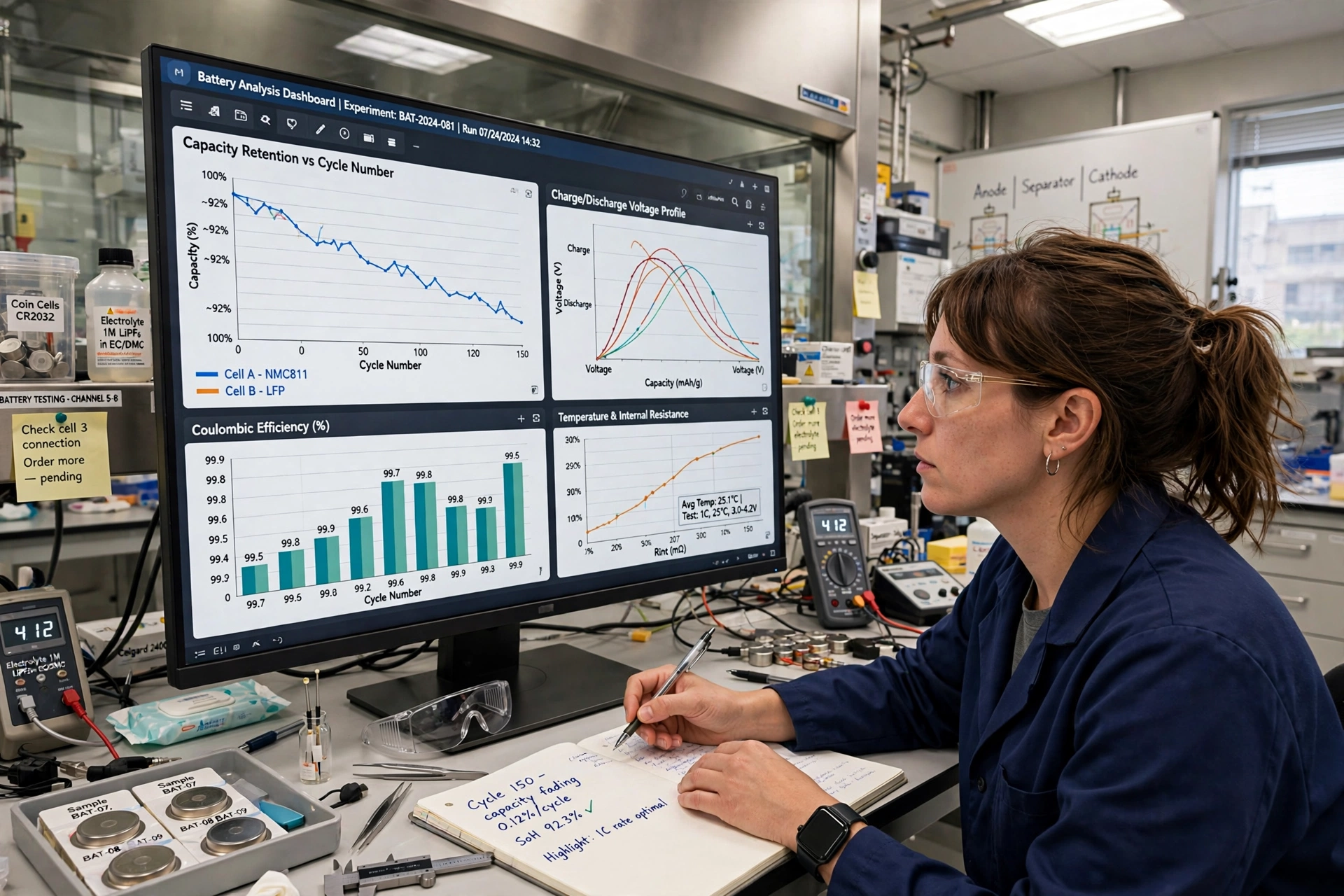
Ask two questions. Was the test done at room temperature or in extreme conditions? And was the cell a realistic size or a tiny coin cell? Coin-cell results often do not scale to real batteries, so treat them as early-stage science rather than near-term products.
What It Does Not Publish
The journal is strict about scope, which actually helps readers trust what they find. It doesn’t welcome papers primarily about fuel cells, electrolysers, hydrogen production, or electrocatalysis. Those belong in specialized journals.
More importantly for readers, the editors require that energy storage be the central contribution of every paper. A study that merely mentions batteries as a possible future application gets rejected. This rule keeps the journal focused and saves you from wading through irrelevant results.
How to Access Papers
The Journal of Energy Storage is a hybrid journal. Most papers sit behind a paywall, but authors can pay an open-access fee (around $3,690) to make their paper free for everyone. Many authors also post free preprint versions on servers or their university pages.
If you hit a paywall, try three things before giving up. First, search the paper title plus “PDF” or “preprint,” since authors often share legal free copies. Second, check Google Scholar, which links to free versions when they exist. Third, many public libraries provide database access that includes Elsevier journals.
Journal of Energy Storage vs Similar Journals
Several journals cover adjacent territory, so here is how this one differs from its closest neighbors.
Table: Energy storage journals compared
| Journal | Publisher | Focus | Impact Factor (approx) |
|---|---|---|---|
| Journal of Energy Storage | Elsevier | All storage types, systems, markets | ~10 |
| Energy Storage Materials | Elsevier | Battery materials science | ~19 |
| Journal of Power Sources | Elsevier | Batteries, fuel cells, capacitors | ~8 |
| Batteries & Supercaps | Wiley | Electrochemical storage | ~5 |
The pattern is clear. If you want materials chemistry, Energy Storage Materials leads. If you want the full picture from chemistry to grid economics, the Journal of Energy Storage is the broader and more practical choice.
Why This Matters for Smart Home Readers
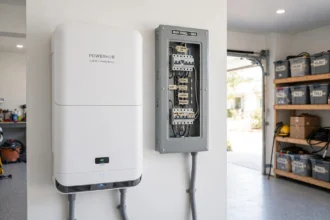
You might wonder why a smart-home blog covers an academic journal. The connection is direct: every home battery, from wall-mounted units to EV chargers paired with storage, descends from research published in venues like this one. The safety standards, the battery chemistries, and the grid-integration software all started as papers.
Understanding where the science comes from also helps you judge product claims. When a company announces a “revolutionary” home battery, you can check whether peer-reviewed research supports the underlying chemistry. That habit turns marketing into verifiable fact.
FAQs
What is this journal about?
It’s a peer-reviewed scientific journal published by Elsevier since 2015, focused entirely on energy storage technologies. It covers batteries, thermal and mechanical storage, grid integration, safety testing, and energy markets. Its ISSN is 2352-152X and it ranks in the top quartile of energy engineering journals.
What is its impact factor?
The impact factor sits around 10 based on recent Journal Citation Reports, with a Scopus CiteScore near 16.6. These place it in Q1, the top 25 percent of journals in energy and electrical engineering. Metrics shift slightly each year, so check the latest Journal Citation Reports for the current figure.
Who publishes it?
Elsevier B.V., based in the Netherlands, publishes the journal. It launched in 2015 and has grown into one of the main venues for storage research worldwide. Elsevier also publishes the related but more materials-focused journal Energy Storage Materials, so the two titles complement each other rather than competing directly.
Is it open access?
It’s a hybrid journal. Most articles are paywalled, but authors can pay an open-access fee of roughly $3,690 to make their paper freely available. Many authors also share free preprint versions on university pages or preprint servers, which Google Scholar usually finds.
What topics does the journal accept?
It accepts work on electrochemical, chemical, mechanical, electrical, and thermal storage, plus grid integration, system modeling, safety testing, lifecycle analysis, and storage economics. Energy storage must be the paper’s central contribution. It doesn’t welcome fuel cells, electrolysers, or hydrogen production as primary topics.
How can a non-academic read its papers?
Start with review papers. They summarize the whole field accessibly and quickly. Search paper titles plus “PDF” or “preprint” for free legal copies, use Google Scholar to find open versions, and check whether your public library offers database access. Focus on the abstract and conclusions if the methods sections feel too technical.
How is it different from Energy Storage Materials?
Energy Storage Materials focuses narrowly on battery materials science and carries a higher impact factor around 19. The Journal of Energy Storage is broader, covering all storage types plus systems engineering, grid integration, safety, and markets. Choose the former for chemistry depth and the latter for the full picture.
Conclusion
The Journal of Energy Storage is where the science behind modern batteries and grid storage gets published, debated, and refined. You now know what it covers, how influential it is, and how to read it even without an academic background.
Your next step: pick one topic you care about, such as home battery safety or solid-state batteries, and search the journal for a recent review paper. Reading just one good review will teach you more about where the technology is heading than a whole month of news headlines. And if home energy storage interests you practically, our guide to home EV charger installation costs connects the research to real buying decisions.