

A residential energy storage system is a home battery that stores electricity from your solar panels or the grid, then powers your house during outages or expensive peak hours. The best-known example is the Tesla Powerwall, but many brands now compete. For homeowners with solar panels or unreliable grid power, a home battery is going mainstream.
- What Is a Residential Energy Storage System?
- How Does a Home Battery Work?
- AC-Coupled vs DC-Coupled: What Is the Difference?
- Key Specs Explained in Plain English
- Popular Home Batteries Compared
- What Can a Home Battery Actually Power?
- What Does a Residential System Cost?
- Do You Need Solar Panels Too?
- Installation: What to Expect
- FAQs
- What is a residential energy storage system?
- How much does a home battery cost?
- How long can a home battery power a house?
- Do I need solar panels to get a home battery?
- What is the lifespan of a residential battery?
- Can a home battery power an air conditioner?
- Is a home battery worth it?
- Conclusion
This guide explains how home batteries work, what the key specs mean, what they cost in 2026, and how to decide what size you need. No engineering degree required.
What Is a Residential Energy Storage System?
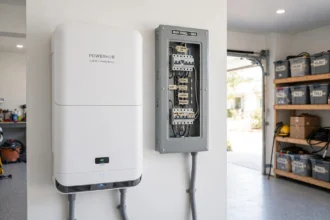
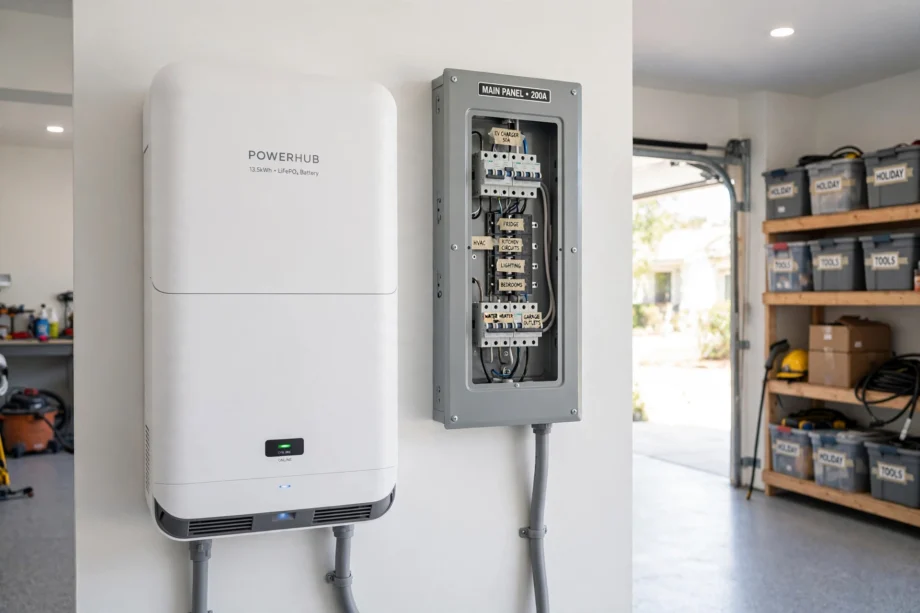
A residential energy storage system is a rechargeable battery installed in your home, usually on a garage wall or outside pad. It holds 10 to 20 kilowatt-hours (kWh) of electricity, which is enough to run your essential circuits for many hours. Unlike a noisy gas generator, for instance, it switches on instantly, runs silently, and needs no fuel.
Most systems pair with rooftop solar, storing midday surplus for evening use. As a result, your self-consumption climbs sharply. But they also work without solar, charging from the grid overnight at cheap rates. Either way, the result is the same: your home draws less from the grid when power costs most.
How Does a Home Battery Work?
The daily routine is straightforward, because the system’s software handles all of it. Here is what happens behind the scenes.
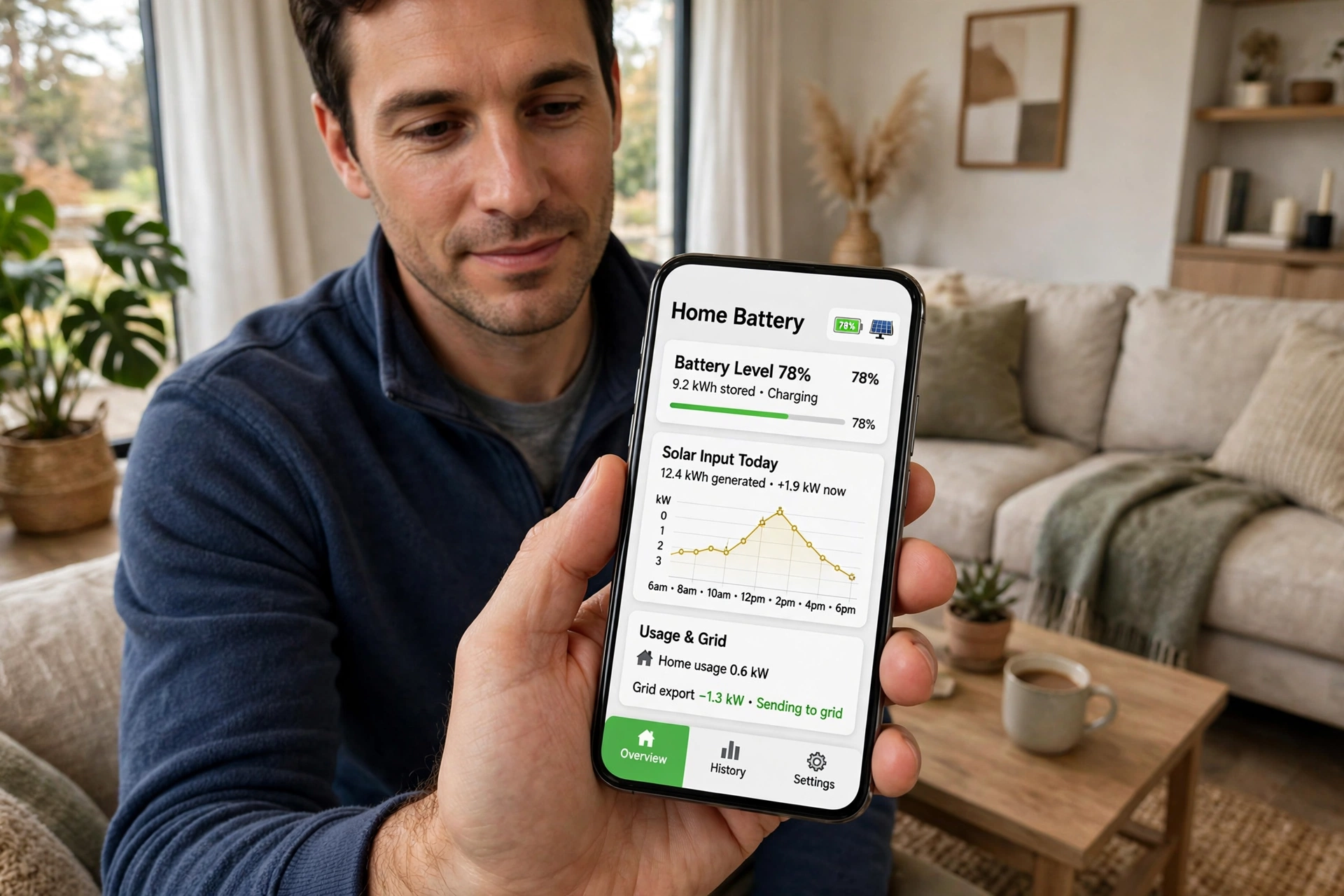
When your solar panels produce more than the house needs, usually around midday, the extra power flows into the battery instead of exporting to the grid. The battery’s inverter then converts the panels’ DC power into charging current, while the management system tracks every cell.
In the evening, when the sun drops and electricity rates spike, the flow reverses. The battery discharges through its inverter, which converts stored DC back into the AC your home uses. So your lights, fridge, and Wi-Fi run on your own stored sunshine while your neighbors pay peak rates.
During a grid outage, the system isolates your home from the grid in a fraction of a second and keeps your backed-up circuits running. When the grid returns, it reconnects automatically. Indeed, most owners never notice the switchover except for a brief flicker.
AC-Coupled vs DC-Coupled: What Is the Difference?
You will see these terms in quotes, so here is the plain version. In a DC-coupled system, the solar panels charge the battery directly as DC power, which is slightly more efficient. The Tesla Powerwall 3, for example, uses this approach with its built-in solar inverter.
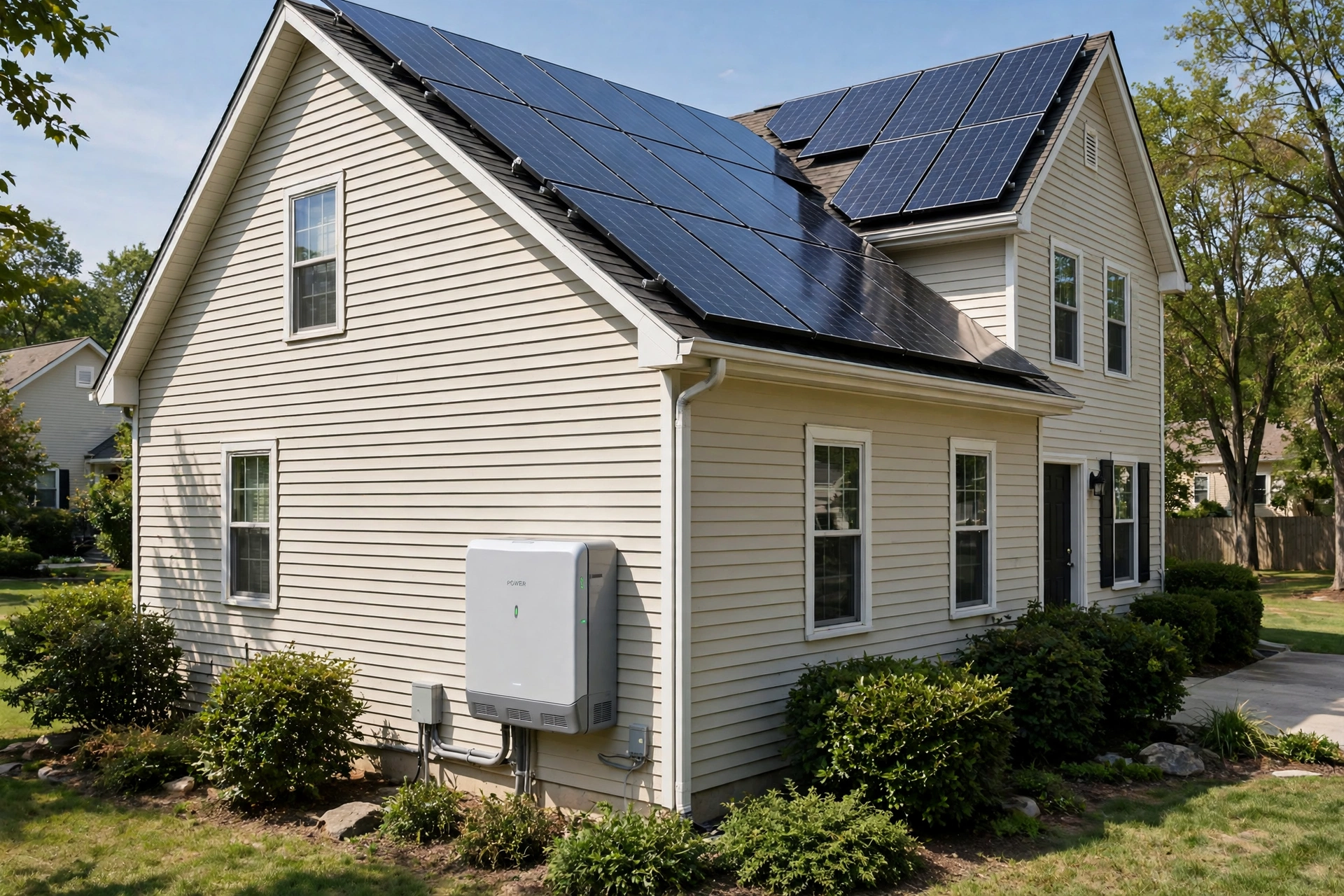
In an AC-coupled system, the solar panels first convert to AC through their own inverter, then the battery converts back to DC for storage. This adds a small efficiency penalty. Still, it makes adding a battery to existing solar installations easy. If you already have panels, AC-coupled is usually the simpler retrofit.
For new solar-plus-storage installs, therefore, DC-coupled tends to win on efficiency. For adding storage to panels you already own, AC-coupled avoids replacing working equipment. Either way, the difference in daily savings is modest. So don’t overthink it.
Key Specs Explained in Plain English
Battery quotes throw around technical terms. Here is what each one actually means for your home.
Capacity (kWh)
Capacity tells you how much energy the battery holds. A 13.5 kWh battery, like the Tesla Powerwall 3, for instance, stores 13.5 kilowatt-hours of usable energy. Bigger capacity therefore means longer backup and more solar you can keep instead of exporting.
Power Output (kW)
Power tells you how much load the battery can handle at once. The Powerwall 3 delivers 11.5 kW continuous, enough to run most homes including an air conditioner. However, a battery with high capacity but low power might store plenty of energy yet stall when the AC kicks on.
Depth of Discharge (DoD)
DoD is the percentage of capacity you can actually use. Modern lithium batteries allow 90 to 100 percent DoD, so a 13.5 kWh battery gives you nearly all 13.5 kWh. Older lead-acid batteries only allowed 50 percent. That is also one reason they fell out of favor.
Round-Trip Efficiency
This measures how much energy survives the full charge-discharge cycle. Modern home batteries hit 90 percent or better, so you lose roughly a tenth to heat and conversion. Higher efficiency therefore means more of your solar actually reaches your evening loads.
Warranty
Most manufacturers warrant 10 years with at least 70 percent capacity retention. Tesla’s warranty, for instance, guarantees 70 percent after a decade and allows unlimited cycles for solar self-consumption. Still, read the fine print, because some warranties limit annual throughput.
Popular Home Batteries Compared
The market has several strong options. Here is how the most-quoted models stack up using manufacturer and installer-reported figures. Prices move often, so treat these as ballparks and get fresh quotes.
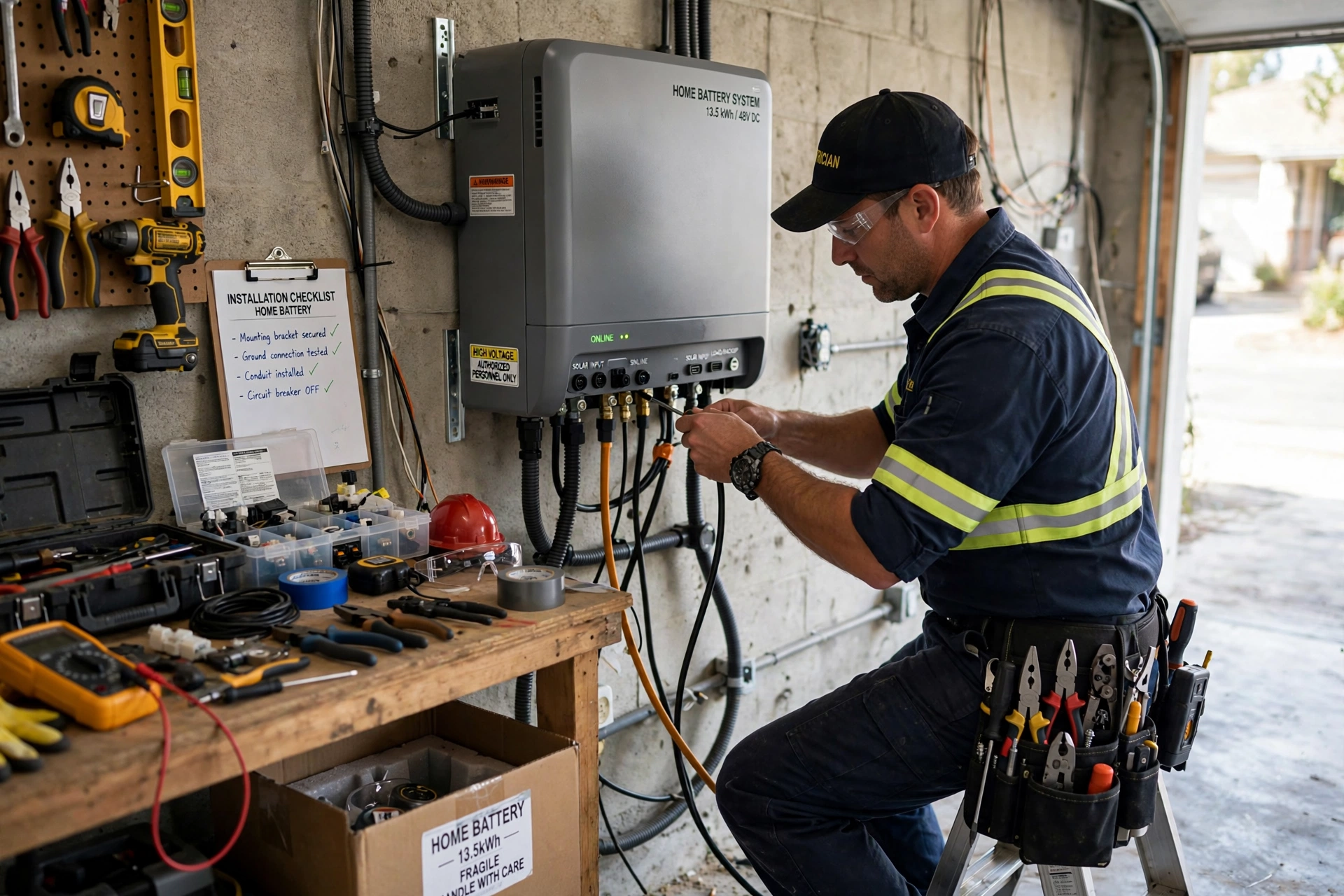
Table: Popular residential batteries compared (approximate 2026 figures)
| Feature | Tesla Powerwall 3 | LG Chem RESU | Sonnen Eco |
|---|---|---|---|
| Usable capacity | 13.5 kWh | 9.8 to 16 kWh | 10 to 20 kWh |
| Chemistry | LFP | NMC lithium-ion | LFP |
| Continuous power | 11.5 kW | 5 to 7 kW | Varies by size |
| Typical installed cost | ~$15,600 | ~$7,000 to $10,000 | ~$11,000 to $15,000 |
| Warranty | 10 years | 10 years | 10 years |
The Tesla Powerwall leads on power output and installer availability, which is why it appears in so many quotes. LG’s RESU suits smaller budgets and lower loads, while Sonnen targets buyers who value long cycle life and are willing to pay for it. Enphase’s IQ Battery is another common option, especially paired with Enphase microinverters.
What Can a Home Battery Actually Power?
This is the question every buyer asks, so let us work it through with real numbers. Take a typical evening of essential loads: refrigerator (150W), LED lights around the house (100W), Wi-Fi router and modem (20W), TV (150W), and phone chargers (30W). That totals roughly 450 watts, or 0.45 kW.

A 13.5 kWh battery divided by 0.45 kW gives 30 hours of runtime for those essentials. In practice, installers estimate 8 to 14 hours for a broader set of circuits, because real homes also run microwaves, washing machines, and other intermittent loads. Add an air conditioner (3,000W+) and runtime drops to a few hours.
The takeaway: a single home battery comfortably covers essentials overnight and through most outages. Whole-home backup including heavy appliances usually needs two units or careful load management. Your installer should model your actual loads rather than guessing.
What Does a Residential System Cost?
A single installed home battery typically costs $12,000 to $18,000 in the US before incentives, with the Tesla Powerwall 3 landing around $15,600 installed according to installer surveys. Smaller-capacity alternatives can dip under $10,000, while two-battery setups for larger homes run $25,000 to $35,000.
The 30 percent federal tax credit applies to standalone battery storage, which can cut thousands off the net cost. Many states add their own rebates, and some utilities pay homeowners for letting them draw on batteries during grid emergencies. Always compare quotes on an after-incentive basis.
Payback usually comes from three streams: avoided outage costs, lower bills through time-of-use shifting, and increased solar self-consumption. Homes with expensive evening rates and frequent outages see the fastest returns, often inside 7 to 10 years.
For perspective on how home energy investments scale, our breakdown of home EV charger installation costs covers the other major home-energy purchase buyers often make alongside a battery.
Do You Need Solar Panels Too?
Solar and storage are better together, but neither strictly requires the other. Here is how the combinations play out.
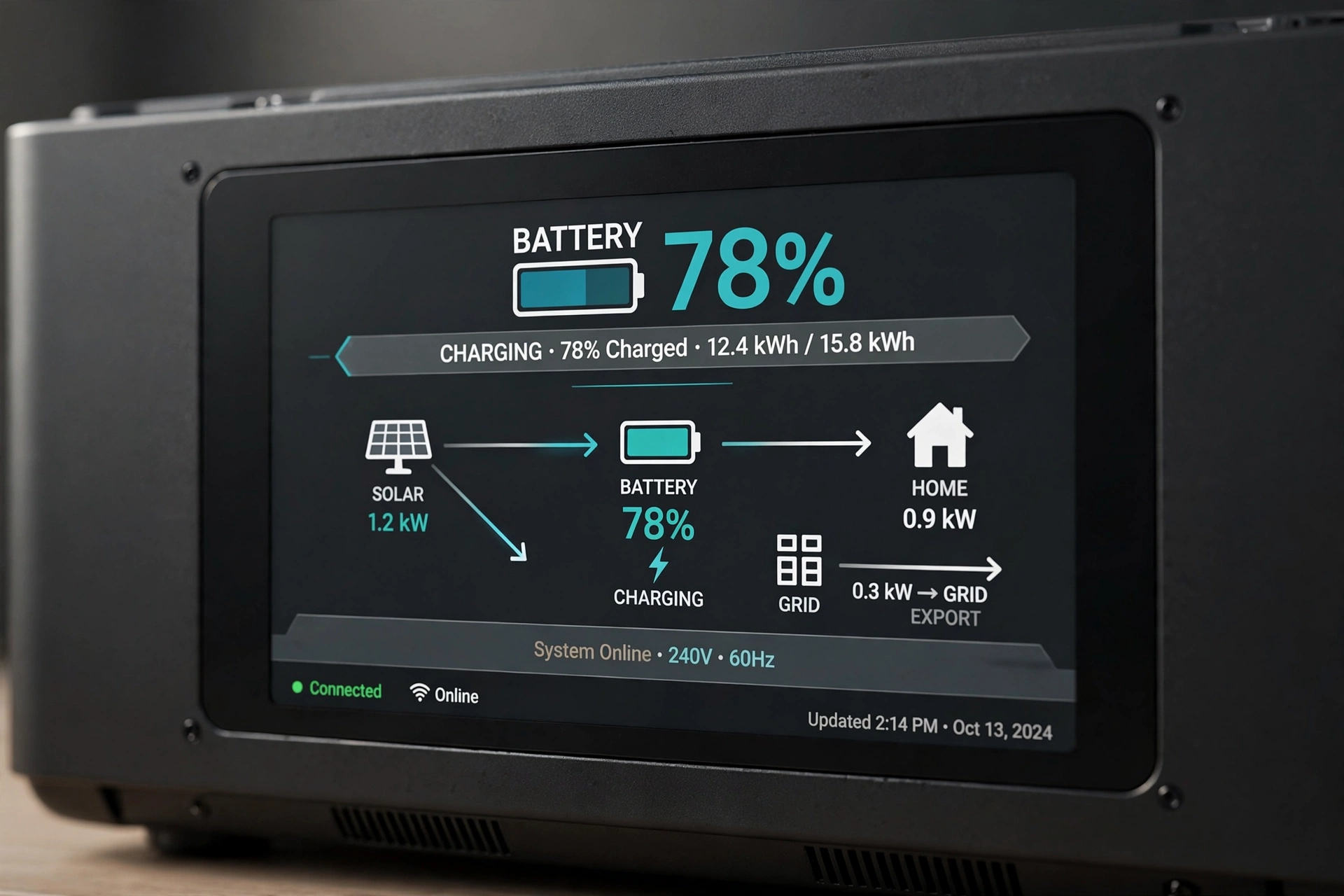
Solar without storage exports midday surplus at whatever rate your utility pays, which keeps shrinking in many markets. Adding a battery lets you use that surplus yourself in the evening, which is usually worth far more per kWh.
Storage without solar still saves money through time-of-use arbitrage: charge overnight at cheap rates, discharge during expensive peaks. Homes with an electric vehicle get even more value, and our guide to what an EV charger is explains how cars and batteries work together. It still provides backup power regardless of weather, however. So a battery alone is a legitimate purchase, though solar makes the economics stronger.
If you are starting from scratch, get quotes for solar and storage together. Installers often discount the bundle, and you only deal with one permitting process. If you already have panels, adding an AC-coupled battery is straightforward. Either way, ask each installer to model your specific usage, since generic estimates often miss the details that determine payback.
Installation: What to Expect
Installation is simpler than most buyers fear. First, a certified electrician mounts the battery, wires it to your electrical panel through a backup gateway, and configures the software. As a result, most single-battery installs finish in one day.
You’ll need a suitable location: a garage wall, exterior wall, or concrete pad with clearance for ventilation and service access. Batteries work indoors and outdoors within their rated temperature range, though extreme cold can limit charging.
Permitting varies by area but usually takes one to four weeks. Your installer typically handles permits, utility interconnection paperwork, and inspection scheduling. If you are also planning other upgrades, budget the full project together rather than piecemeal. Because requirements differ so much by location, local installer experience matters more than brand choice.
Homes adding an EV charger at the same time should mention it upfront, since the electrician can size the panel and run both circuits in one visit. Coordinating the two projects saves real money on labor.
FAQs
What is a residential energy storage system?
It is a rechargeable home battery, typically 10 to 20 kWh, that stores electricity from solar panels or the grid. It powers your home during outages and expensive peak-rate hours. Popular models include the Tesla Powerwall 3, LG Chem RESU, and Sonnen Eco, all using lithium battery chemistry.
How much does a home battery cost?
A single installed system typically costs $12,000 to $18,000 before incentives in the US, with the Tesla Powerwall 3 around $15,600 installed. The 30 percent federal tax credit plus state rebates can cut net costs substantially. Two-battery setups for larger homes run $25,000 to $35,000.
How long can a home battery power a house?
A 13.5 kWh battery powers essential loads (fridge, lights, Wi-Fi, TV) for roughly 24 to 30 hours, since those draw under 500 watts combined. With normal household use including intermittent appliances, installers estimate 8 to 14 hours. Running air conditioning cuts runtime to a few hours.
Do I need solar panels to get a home battery?
No. A battery without solar still saves money through time-of-use arbitrage and provides backup power. Solar improves the economics by supplying free charging energy, but grid-charged batteries work fine. Many owners add solar later, so buy a system that supports both.
What is the lifespan of a residential battery?
Most lithium home batteries are warranted for 10 years at 70 percent capacity retention and rated for 6,000 or more cycles. With daily cycling, expect 12 to 15 years of useful service. LFP chemistry generally outlasts older NMC in stationary applications.
Can a home battery power an air conditioner?
Yes, if the battery’s power output is high enough. The Powerwall 3’s 11.5 kW continuous output can start and run most residential AC units. Lower-power batteries may struggle with the startup surge. However, AC use drains capacity fast, so expect only a few hours of cooling per charge.
Is a home battery worth it?
It depends on your rates and outage history. Homes with expensive evening electricity rates, shrinking solar export payments, or frequent outages see paybacks of 7 to 10 years. Homes with cheap flat-rate power and a reliable grid benefit less. Model your specific bills before deciding.
Conclusion
A residential energy storage system turns your home from a passive electricity buyer into an active energy manager. You store cheap or solar power, use it when rates peak, and ride through outages without a generator’s noise and fumes.
Your next step: list your essential circuits, check your utility’s time-of-use rates, and get quotes from two or three certified installers. Those three inputs determine everything about sizing and payback. And if an electric vehicle is in your future, read our guide to what an EV charger is so your panel upgrade covers both projects at once.