


Why Night Shift Wrecks Your Sleep
A circadian lighting schedule for shift workers uses smart bulbs to copy daylight on your clock, not the sun’s. Bright, cool light wakes you up before a shift. Then warm, dim light helps you wind down after it. Finally, true darkness protects your daytime sleep.
- Why Night Shift Wrecks Your Sleep
- How Light Controls Your Body Clock
- A Circadian Lighting Schedule for Shift Workers, Hour by Hour
- What You Need Before You Start
- Setting Up the Automation, Step by Step
- Step 1: Turn Off the Default Sunrise Mode
- Step 2: Build Your Wake Phase
- Step 3: Add the Wind-Down Phase
- Step 4: Protect Your Daytime Sleep
- Step 5: Add a Manual Override
- Rotating Shifts: Use a Compromise Schedule
- Fine-Tuning During the First Two Weeks
- Mistakes That Quietly Undo the Schedule
- Mistake 1: Bright Light on the Way Home
- Mistake 2: Flipping Back Every Weekend
- Mistake 3: One Bright Room
- FAQs
- What is the best light color for night shift workers?
- How bright should my lights be during a night shift?
- Can smart bulbs really help me sleep during the day?
- Should I follow the same schedule on my days off?
- How long does it take to adjust to a new lighting schedule?
- Do I need smart bulbs in every room?
- Start With One Room Tonight
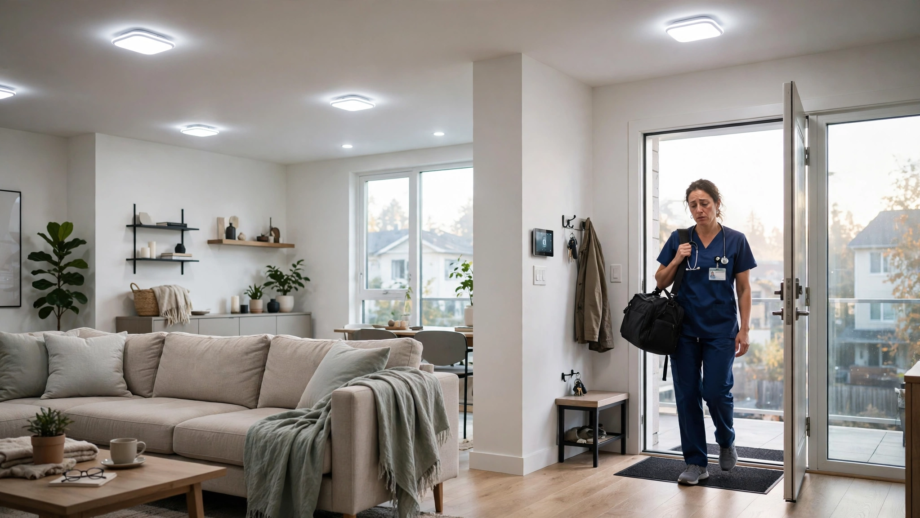
Your body clock expects light in the morning and darkness at night. Night shift flips both signals upside down. So you try to sleep when your body wants to wake, and you work when it wants to sleep. That mismatch is why night workers often feel tired for days, not just hours.
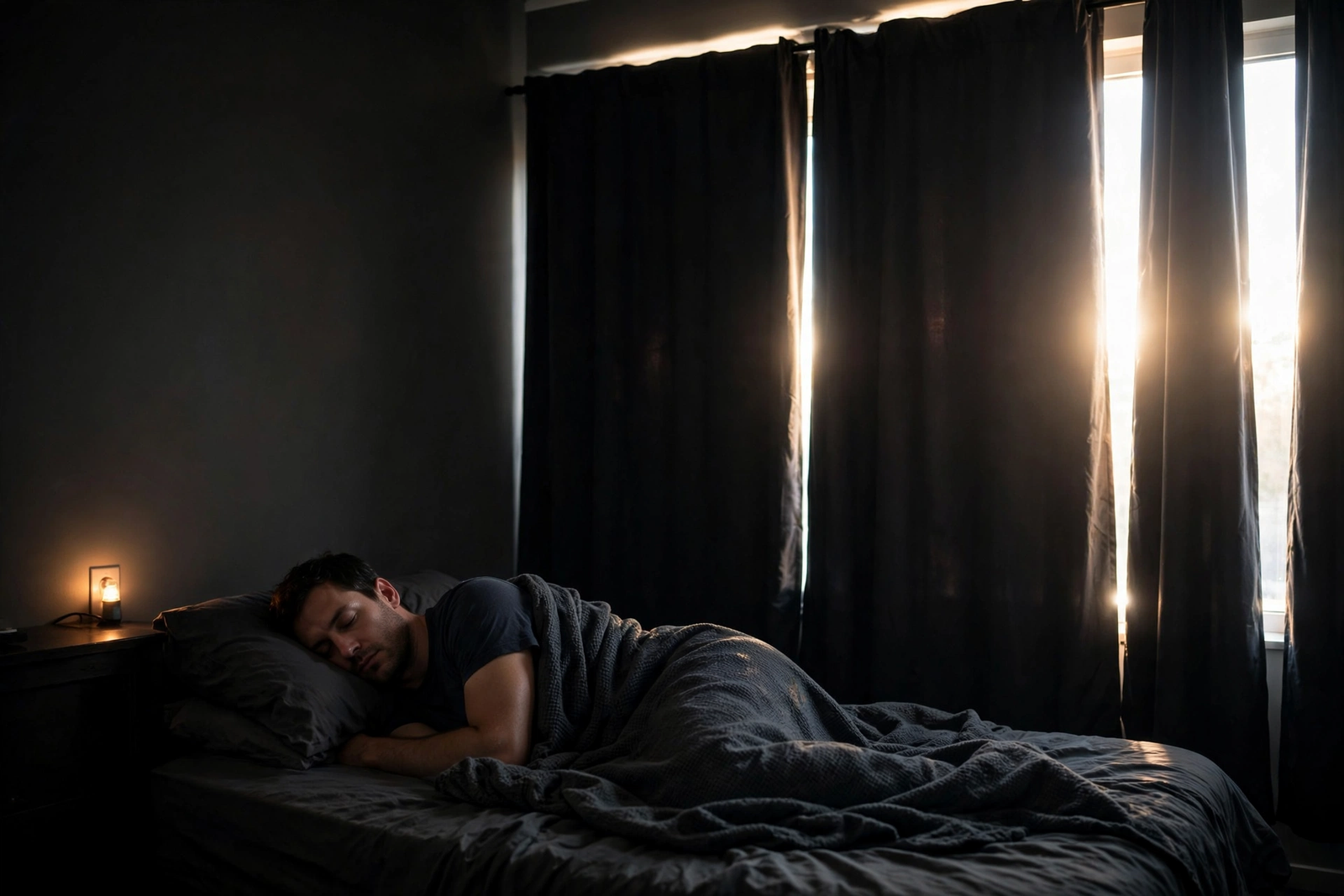
Smart bulbs can’t change your shift. They can change the light around it, though. Because the schedule runs on its own, the right light shows up even when you are too tired to think about switches.
The health stakes are real, too. Poorly aligned schedules are linked with worse mood, slower thinking, and groggy commutes. You cannot fix all of that with bulbs, of course. Still, light is the one input you control fully at home, and it’s the signal your clock listens to most.
How Light Controls Your Body Clock
First, your brain reads light through special cells in your eyes. These cells care less about what you see and more about brightness and color. Bright light with more blue in it tells your brain to stay awake. It also holds back melatonin, the hormone that makes you sleepy.
Color temperature is measured in kelvin. Low numbers like 2200K look warm and amber. High numbers like 6500K look cool and blue-white, much like midday sun. If you want the full breakdown, our guide to the best color temperature for sleep at night explains where each range helps most.
Brightness matters just as much. Researchers who study shift work often talk about 250 to 500 lux during the active part of a shift. A normal living room sits closer to 100 lux. So a single dim bulb rarely sends a strong enough signal on its own.
In my own setup, two 800-lumen bulbs at 6500K gave roughly 300 lux at pillow height in a small bedroom, measured with a phone lux app. One bulb alone managed barely 120 lux. That gap explains why so many people try circadian lighting once, feel nothing, and give up on it.
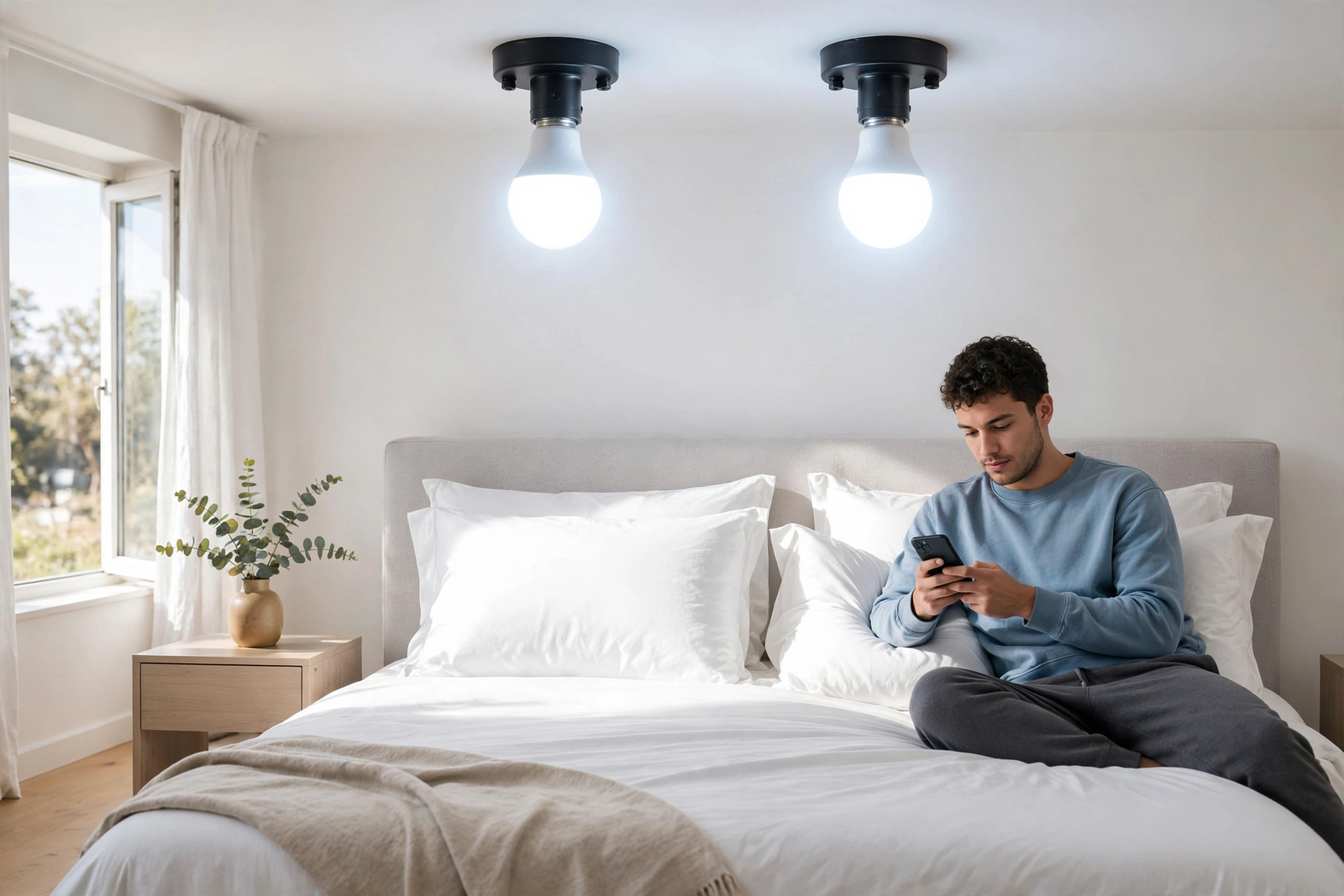
Consistency beats perfection here. Your clock learns from the pattern you repeat, not from one perfect day. So a schedule you follow six days a week at roughly the right times beats an exact plan you abandon by Thursday. Also, keep the same wake time on workdays, because a steady anchor makes every other phase easier to hold.
A Circadian Lighting Schedule for Shift Workers, Hour by Hour
Here is a sample schedule for a fixed night shift, 11 p.m. to 7 a.m., with sleep from about 8:30 a.m. to 4:30 p.m. Treat the times as a template, not a rule. Shift the whole pattern earlier or later so it matches your own roster.
Table: Example lighting schedule for a fixed night shift
| Time | Light Setting | Purpose |
|---|---|---|
| 4:30 p.m. wake-up | 6500K, 80 to 100 percent | Tell your brain the day has started |
| 6:00 to 10:30 p.m. | 5000K, bright | Build alertness before the shift |
| 11:00 p.m. to 3:00 a.m. | Bright workplace light | Stay alert through the first half |
| 3:00 to 7:00 a.m. | Dimmer and warmer, if you can | Start easing toward sleep |
| 7:00 a.m. commute | Sunglasses, no bright stops | Block morning sun from resetting your clock |
| 7:30 to 8:30 a.m. | 2200K, under 20 percent | Wind down at home |
| 8:30 a.m. to 4:30 p.m. | Lights off, blackout curtains | Protect daytime sleep |
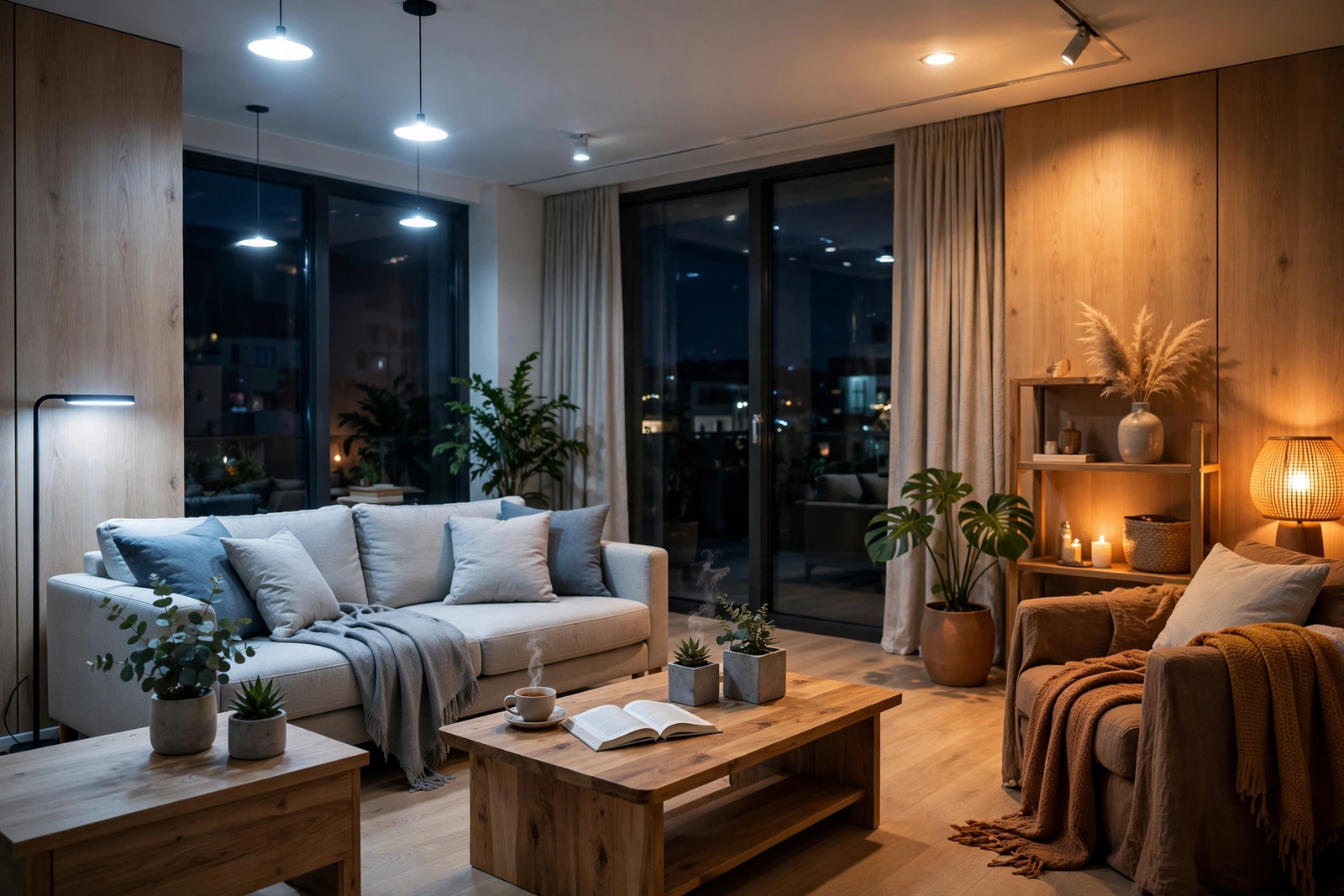
Notice the pattern in that table. The light gets brighter and cooler as your wake time starts. Then it fades and warms as your sleep time gets closer. Your bulbs simply repeat that same curve every single day.
What You Need Before You Start
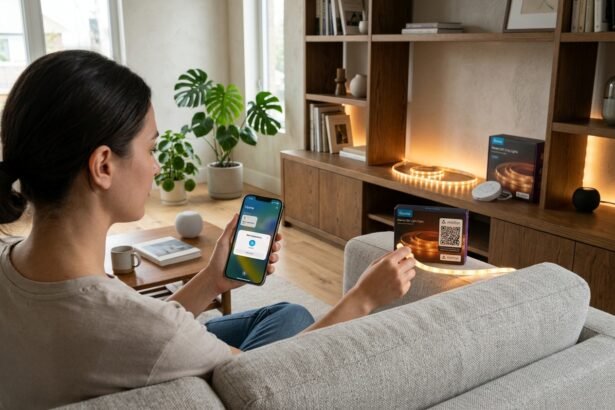
You don’t need a house full of gear. Most people start with bulbs in the bedroom and one living area. Add more rooms later, once the routine feels normal.
- Tunable white smart bulbs that cover roughly 2200K to 6500K.
- An app or hub that can run time-based schedules on its own.
- Blackout curtains for the windows, or a good sleep mask, for the daytime sleep block.
- A small portable light for breaks, if your workplace lighting is dim.
- Optional: blue-blocking glasses for the trip home, especially in summer when the sun is already up.
Choosing the bulb matters more than choosing the app. Our tested roundup of the best circadian rhythm smart bulbs for the bedroom covers models with wide temperature ranges and smooth dimming at low levels.
One more detail: put the brightest bulbs where you wake up, not where you relax. A lamp beside the sofa rarely helps at 4 p.m. Meanwhile, a bright bulb near the bathroom mirror hits your eyes at the exact moment you are getting ready. Placement, in other words, is half the system.
Setting Up the Automation, Step by Step
Step 1: Turn Off the Default Sunrise Mode
First, open your lighting app and disable any built-in circadian or natural light mode. Those features follow the real sun, which is the opposite of your schedule. Leaving one on explains the classic complaint: the lights dim at 7 p.m. while you are wide awake.
Step 2: Build Your Wake Phase
Next, create a schedule that starts 30 minutes before your alarm. Set the bedroom bulbs to fade up to 6500K at high brightness. A slow fade feels gentler than a sudden switch, yet the cool color still sends a clear wake signal.
If you run Home Assistant, our circadian lighting Home Assistant setup guide shows how to build the same phases with automations instead of a bulb app.
Step 3: Add the Wind-Down Phase
Then build the mirror image for the end of your shift. From about 90 minutes before your planned sleep time, step the bulbs down toward 2200K and low brightness. Two or three steps feel smoother than one big jump.
Step 4: Protect Your Daytime Sleep
After that, set every bulb in the bedroom to stay off during your sleep block. Disable motion-triggered lights on the way to the bathroom, or set them to 1 percent in a deep warm color. One bright hallway light can undo twenty minutes of careful wind-down.
For the sleep block itself, the settings in our Adaptive Lighting sleep mode guide keep night lights low and warm without waking the whole room.
Step 5: Add a Manual Override
Finally, save one scene you can trigger with a single tap or voice command. Call it Full Alert. It sets your main lights to 6500K at full brightness for emergencies, visitors, or a shift swap. Automation should help you, not trap you.
Rotating Shifts: Use a Compromise Schedule
Rotating rosters are harder, because your clock never fully settles. Experts who study shift work suggest a compromise position instead. Keep your sleep block anchored within a two to three hour window, even on days off. Your lights shift by hours, not by half a day.

Bulb choice helps here too. The differences in our tunable white vs dimmable smart bulbs comparison matter most on rotating schedules, because tunable bulbs change color while basic dimmers only change brightness.
For example, if your nights end at 7 a.m., sleep until early afternoon on workdays. On days off, wake a little earlier and take bright light then. You give up a normal weekend, but you keep most of your adaptation.
Some workers also split their sleep. A long anchor sleep after the shift, plus a 90-minute nap before the next one, keeps total sleep up when a single block fails. Your lighting should then treat the nap like a mini night: dim and warm before it, bright and cool right after it.
Fine-Tuning During the First Two Weeks
Expect the first three nights to feel only slightly different. Your clock shifts slowly, about an hour a day for most people. That’s normal biology, not a broken setup. Keep the schedule running anyway, because the signal needs repetition before your sleep responds.
Then adjust one variable at a time. If you still feel flat at the start of your shift, raise the wake phase brightness first. If you can’t fall asleep after your shift, move the wind-down earlier instead. Changing everything at once tells you nothing about what actually helped.
Keep a tiny log while you test. Note your sleep length, your wake time, and a simple one-to-five energy score at mid-shift. After two weeks, the pattern usually shows itself clearly. For instance, many people find their sleep grows by 30 to 45 minutes once the wind-down starts a full 90 minutes before bed.
Mistakes That Quietly Undo the Schedule
Most schedules fail for small, boring reasons. The automation is fine, yet one habit keeps feeding your brain the wrong signal. The three mistakes below are the ones worth checking first, because each one can cancel out a week of careful settings in a single morning.
Mistake 1: Bright Light on the Way Home
Morning sun after a night shift is the strongest clock-resetting signal there is. It tells your brain the day is starting, right when you need sleep. Sunglasses on the commute and a dark hallway at home protect the schedule you built.
The NIOSH training on night shift light exposure gives the same advice: more light in the first half of the shift, less in the second half, and care with sunglasses if you drive yourself home.
Mistake 2: Flipping Back Every Weekend
A full flip to daytime living for two days erases most of your adaptation. Monday night then feels like the first night all over again. The compromise schedule above avoids that crash, because your clock only moves a few hours at a time.

Mistake 3: One Bright Room
Your schedule is only as strong as your brightest room. A cool-white kitchen light at full power after your shift can restart your wake cycle. Put the kitchen and hallway on the same wind-down phase as the bedroom, so no room works against you.
FAQs
What is the best light color for night shift workers?
Use cool, blue-rich light around 5000K to 6500K during your wake hours and the first half of your shift. Then switch to warm light near 2200K to 2700K as your sleep time approaches. The contrast between the two signals matters more than any single perfect color.
How bright should my lights be during a night shift?
Aim for roughly 250 to 500 lux at eye level during the active part of your shift. Two bright smart bulbs in a small room usually reach that range. During your wind-down, drop below 100 lux. A free phone lux app gives you a rough but useful measurement.
Can smart bulbs really help me sleep during the day?
Yes, but they are only one part of the fix. The bulbs handle the light signals before and after sleep. You still need blackout curtains, a cool room, and a phone on silent. Together, those steps tell your body clock that daytime is your night, and sleep comes faster.
Should I follow the same schedule on my days off?
Mostly, yes. A full flip back to daytime living undoes your adaptation and makes the next shift brutal. Instead, use a compromise schedule and move your sleep block by only two or three hours. You still get a social life, and your body clock stays roughly where you need it.
How long does it take to adjust to a new lighting schedule?
Give it at least a week. Most people feel a small improvement in three or four days, because the wake and wind-down signals are consistent. Full adaptation to permanent nights can take two weeks or more. Judge the change by your sleep length, not by one rough night.
Do I need smart bulbs in every room?
No. Start with the bedroom and the room where you spend your wake-up hour. Those two spaces control the strongest signals of your day. The bathroom and hallway matter next, mainly at low brightness. Add other rooms only if you find yourself fighting bright light somewhere.
Start With One Room Tonight
You don’t need to rebuild your whole house this week. Start with the bedroom bulbs and one living area. Set the wake phase and the wind-down phase, then run them for seven days before you change anything.
Next, write down how you feel at the same time each day. If your daytime sleep gets longer and your shift feels easier, expand the schedule room by room. That slow, steady approach is what makes the system stick.