



No Wires, No Trench, No Electrician
The best smart outdoor pathway lights run on sunlight, not cables. You push them into the soil, they charge all day, and they light your path at dusk on their own. The smartest models add app control and motion alerts, yet none of them needs a wire.
- No Wires, No Trench, No Electrician
- The Best Smart Outdoor Pathway Lights, Pick by Pick
- Ring Solar Pathlight: Best True Smart Pick
- Ilanck 12-Pack: Best Budget Coverage
- TomCare Flame Torches: Best Decorative Glow
- URPOWER Motion Light: Best for Dark Corners and Steps
- What to Check Before You Buy
- How Many Lumens Do You Actually Need?
- Install in 15 Minutes: The Simple Method
- When Pathway Lights Are the Wrong Tool
- Keeping Solar Lights Alive for Years
- FAQs
- Do solar pathway lights work in winter?
- How long do solar path lights stay on at night?
- Are solar pathway lights bright enough for safety?
- Do I need WiFi for smart pathway lights?
- How far apart should I space pathway lights?
- Can I leave solar lights outside all year?
- Light the Path This Weekend
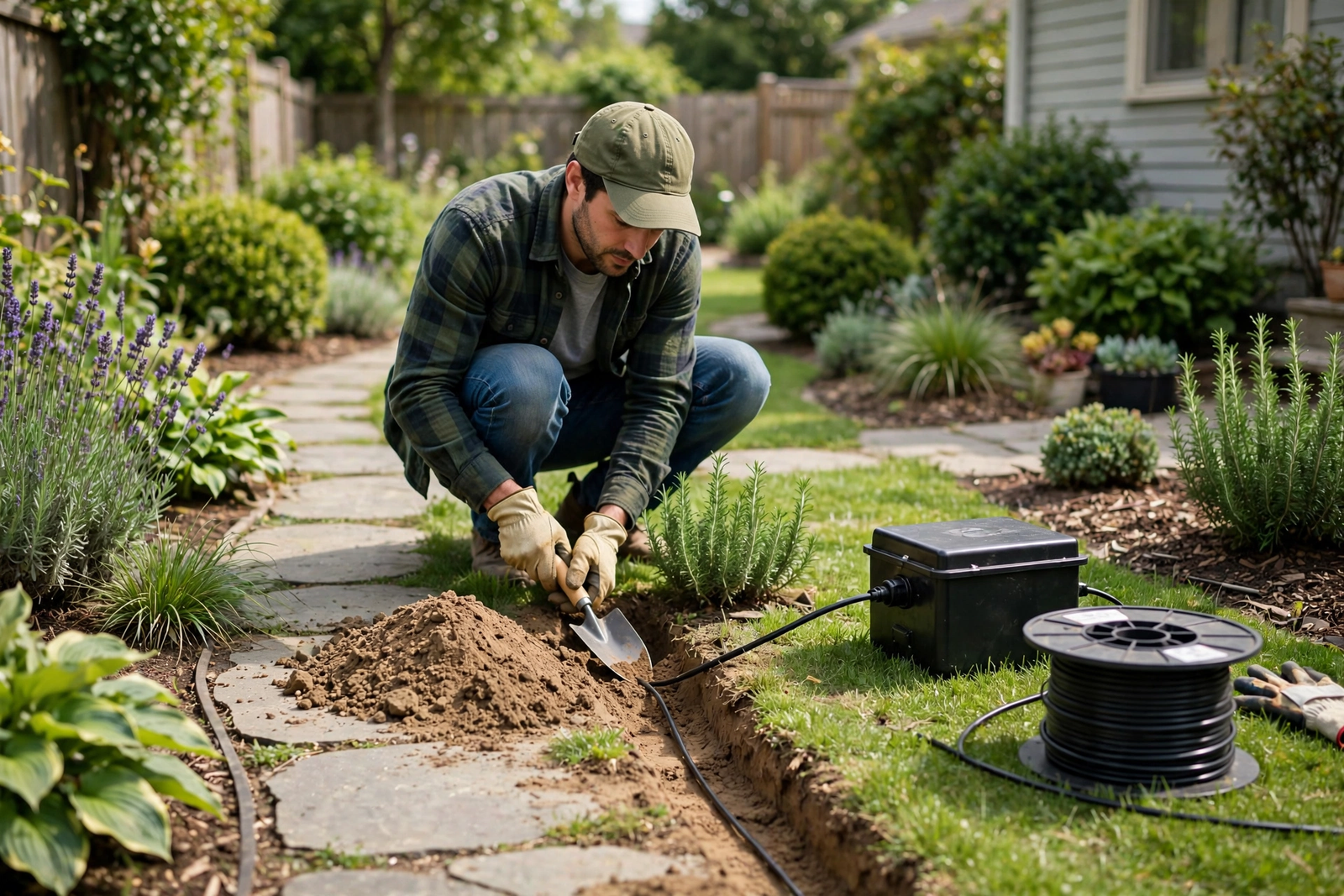
In contrast, traditional low-voltage path lighting is a weekend project. You dig a shallow trench, run cable, place a transformer, and connect every fixture by hand. It looks great when finished, but the work puts many people off for years. Renters cannot do it at all.
Be honest about the word smart in this category, though. Most solar path lights are simply automatic: a light sensor turns them on at dusk and off at dawn. A smaller group adds motion sensing. Only a few, led by Ring, connect to an app and the rest of your smart home. This guide ranks picks across all three levels, so you can choose the smartness you actually need.
The Best Smart Outdoor Pathway Lights, Pick by Pick
Ring Solar Pathlight: Best True Smart Pick
The Ring Solar Pathlight is the pick for smart home owners. It charges by solar, senses motion, and joins the Ring app when you add a Ring Bridge. From the app you set brightness, create schedules, and link the pathlights to other Ring devices. When a pathlight detects motion, your doorbell can start recording before a visitor even reaches the door.
That linking is the real upgrade. Our guide to the best video doorbell without a subscription shows why Ring owners like keeping everything in one app, and these pathlights extend that same system into the garden.
One honest catch: the app features need the Ring Bridge, a small hub that plugs in indoors. Without it, the pathlight still works as a solar motion light, but the schedules and linking stay off. So budget for the Bridge if you don’t own one, because it is the piece that makes this pick smart.
Ilanck 12-Pack: Best Budget Coverage
Long paths eat single lights for breakfast. The Ilanck 12-pack solves the maths by giving you a dozen stake lights in one box, at a price that makes covering 60 feet realistic. Each light charges its own small panel by day and switches on at dusk. Installation honestly takes about 10 to 15 minutes for the whole set, because you just assemble the stakes and push them in.
Still, brightness is modest, as with every budget solar stake. These are guide lights: they mark the edge of the path so your feet know where to go. If your path has steps or level changes, pair them with one brighter light at the hazard, rather than expecting the stakes to do safety work.
TomCare Flame Torches: Best Decorative Glow
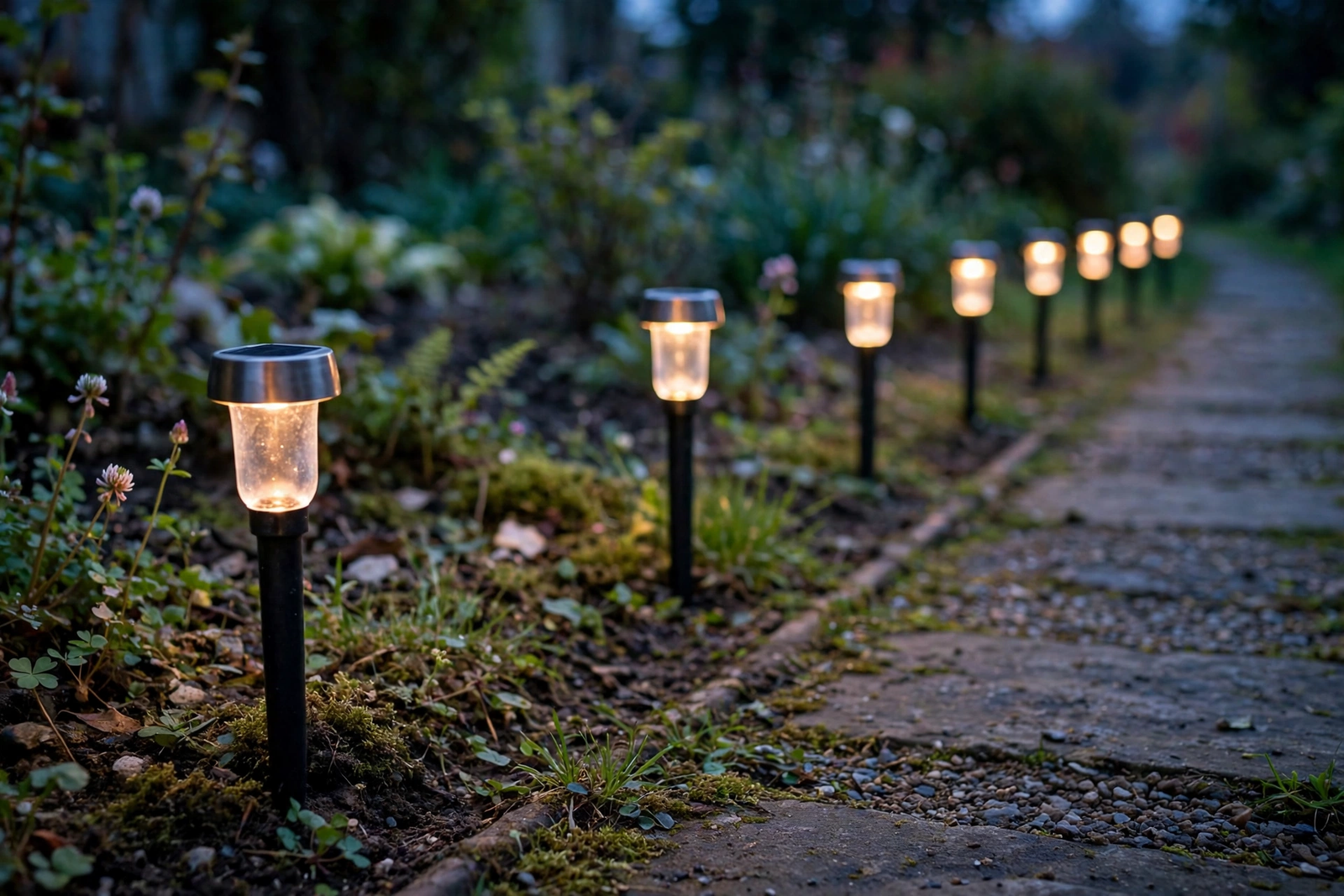
TomCare’s solar torches exist for mood, not navigation. Each 43-inch torch holds 96 small LEDs that flicker like a real flame, and the effect is surprisingly convincing from a few metres away. They line a garden path or patio with warm, moving light that guests always comment on.
Know what you are buying, though. Owners consistently say the glow is decorative and too dim to light your footing. Use them where atmosphere matters and the path itself is flat and familiar. For a front walk used by visitors at night, choose a brighter pick from this list instead.
Placement flatters them best along borders and beds. The flame reads clearly against dark planting, and it reflects nicely on pale gravel. Meanwhile, the tall stakes sway slightly in wind, which sells the illusion. Keep them out of the main walking line, though, because a knocked-over torch lights nothing.
URPOWER Motion Light: Best for Dark Corners and Steps
Some spots need light only when you arrive: a side gate, a bin store, the steps by the back door. The URPOWER solar light covers those with 40 LEDs and a 120-degree motion sensor. It stays dark to save its 2200mAh battery, then fires at full brightness when something moves within range. Its IP65 shell handles rain, snow, and heat without drama.
Because it is motion-only, placement matters more than power. Mount it where the sensor sees the approach, not where the light looks pretty at noon. Most people fix it to a fence post or wall with the included hardware instead of staking it.
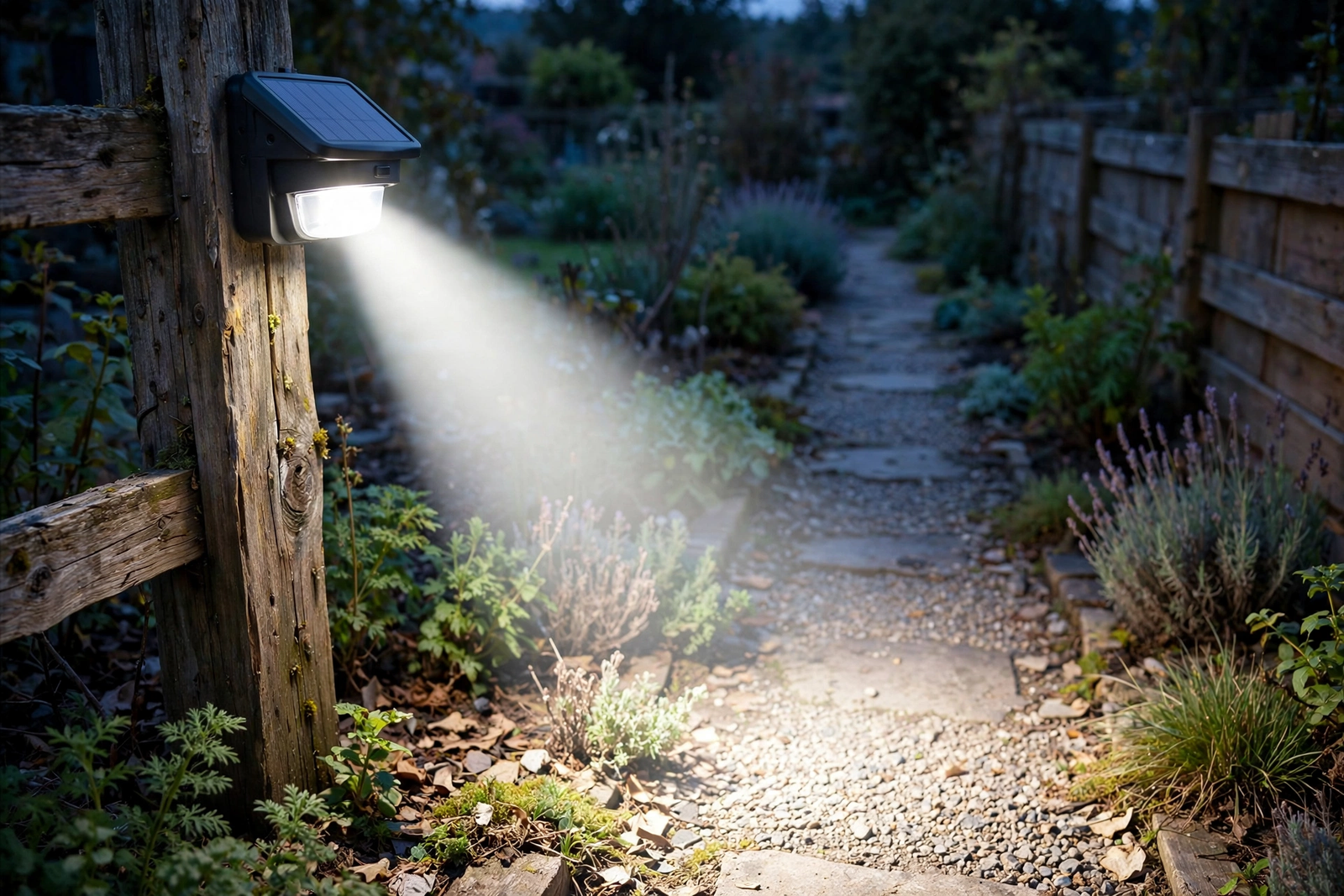
Table: The four picks at a glance
| Pick | Power | Smart Level | Best For |
|---|---|---|---|
| Ring Solar Pathlight | Solar plus battery | App, motion, Ring ecosystem | Smart homes |
| Ilanck 12-Pack | Solar | Automatic dusk to dawn | Long paths on a budget |
| TomCare Flame Torch | Solar | Automatic | Decoration and mood |
| URPOWER Motion Light | Solar | Motion sensor | Steps and side gates |
What to Check Before You Buy
First, look at the battery. A replaceable battery adds years to a light’s life, because the cell always dies before the LED does. Sealed units are cheaper, yet you throw the whole light away when the battery fades. Also check the panel size, since a bigger panel charges faster on cloudy days.
Next, check the weather rating. IP65 shrugs off rain and sprinklers, so it suits most gardens. If your path floods or sits near a pond, look for IP67 or higher instead. In addition, metal stakes survive mowing bumps better than thin plastic ones, especially along lawn edges.
Finally, think about the sensor. Dusk-to-dawn lights are simplest, because they need no setup at all. Motion models save power, yet they leave the path dark between visitors. Some lights offer both modes, and that flexibility is worth a small premium.
How Many Lumens Do You Actually Need?
Lumens decide whether a path light is a guide or a decoration. Many budget stakes produce only about 10 lumens. That is enough to show where the path edge is on a dark night, and nothing more. For steps, gates, and uneven ground, look for 50 lumens or more per light near the hazard.
Color matters too. Warm white around 2700K to 3000K flatters gardens and keeps glare low. The same trade-offs appear in our COB vs RGB LED strip comparison: color-changing light is fun for parties, but plain warm white shows edges and steps more clearly.
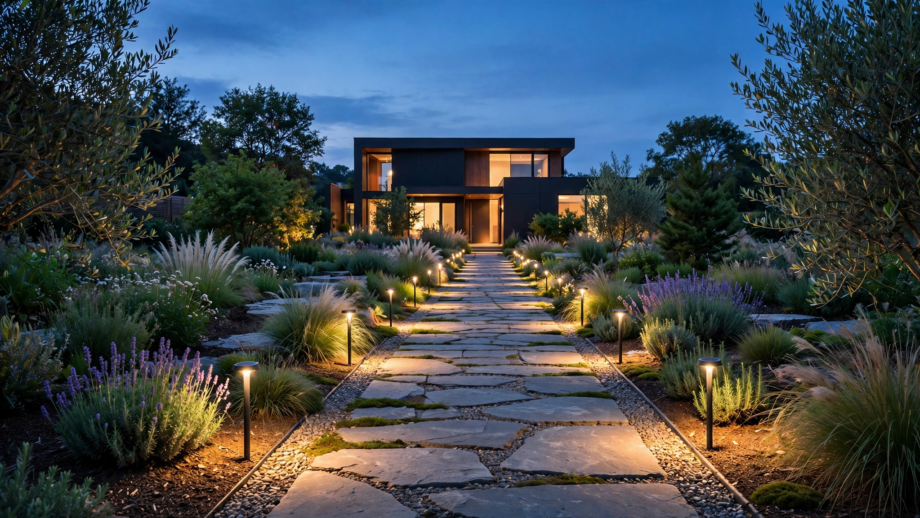
Spacing beats raw brightness in practice. On my 40-foot garden path, eight lights at 10-foot spacing left dark pools between each glow. Moving the same lights to about 5-foot spacing removed the gaps completely. Your eyes prefer a steady ribbon of light over bright spots separated by darkness, so buy enough lights before you buy brighter ones.
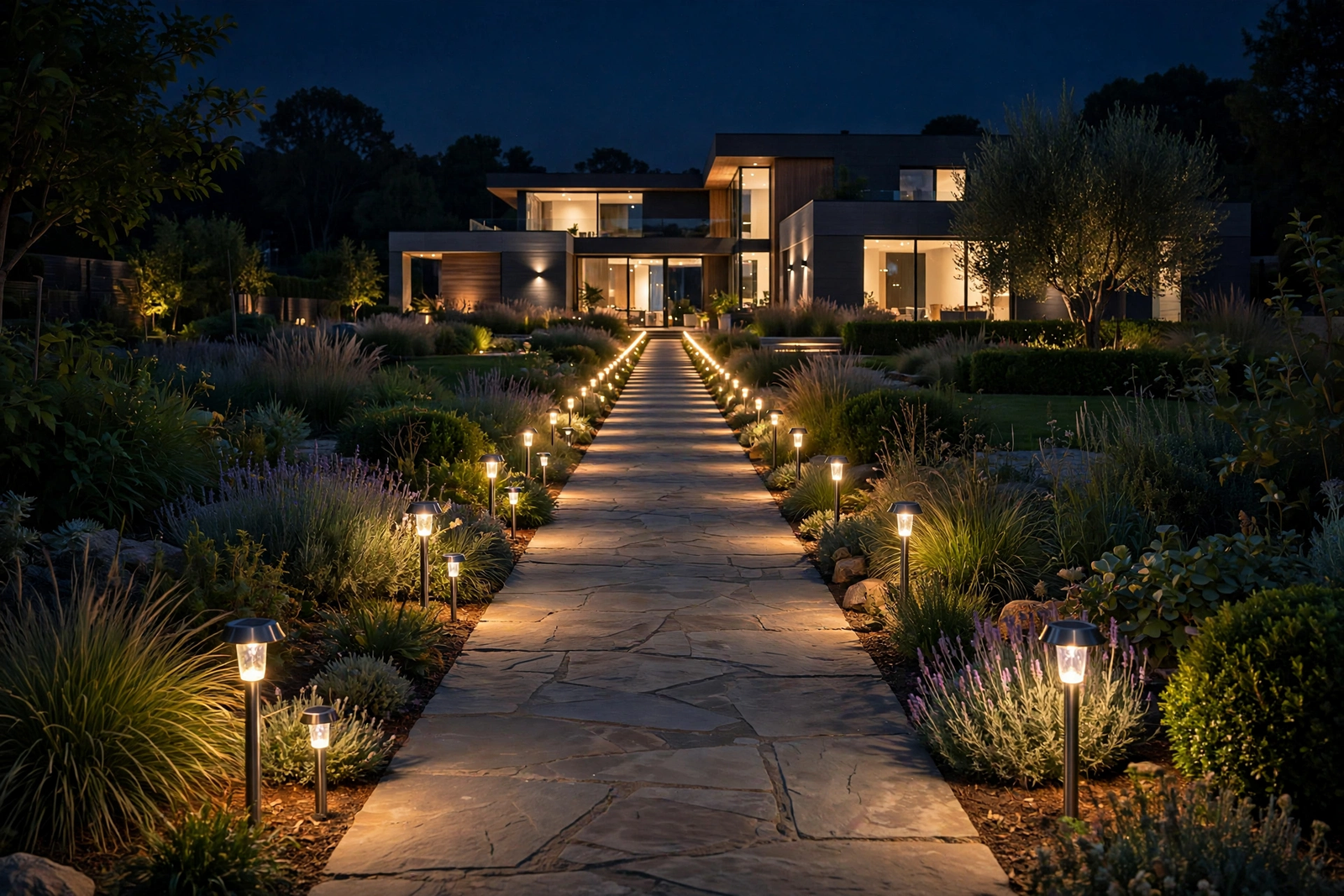
Beam shape matters as well. A narrow beam throws a bright coin of light straight down, while a wide diffuser spreads a soft pool. For paths, the wide pool wins, because your eyes track the ground ahead of your feet. Spot-style lights belong on features instead: a tree, a gate number, a statue.
Install in 15 Minutes: The Simple Method
- Charge the lights first. Most need a full day of sun, or a removed pull-tab, before their first night.
- Walk the path at dusk and mark each spot with a stone or a peg.
- Space lights 6 to 8 feet apart, and place them closer at curves and steps.
- Push the stakes into soft soil. If the ground is hard, water it or loosen it with a screwdriver first.
- Set the mode, brightness, or app pairing while you can still see the buttons.
- Walk the path again after dark and adjust any light that leaves a gap.
Placement decides whether solar works at all. The install tips at Solar Panels Network’s outdoor solar lighting guide repeat the same rule from experience: six to eight hours of direct sun, and keep the panel away from other lights that can confuse its dusk sensor.
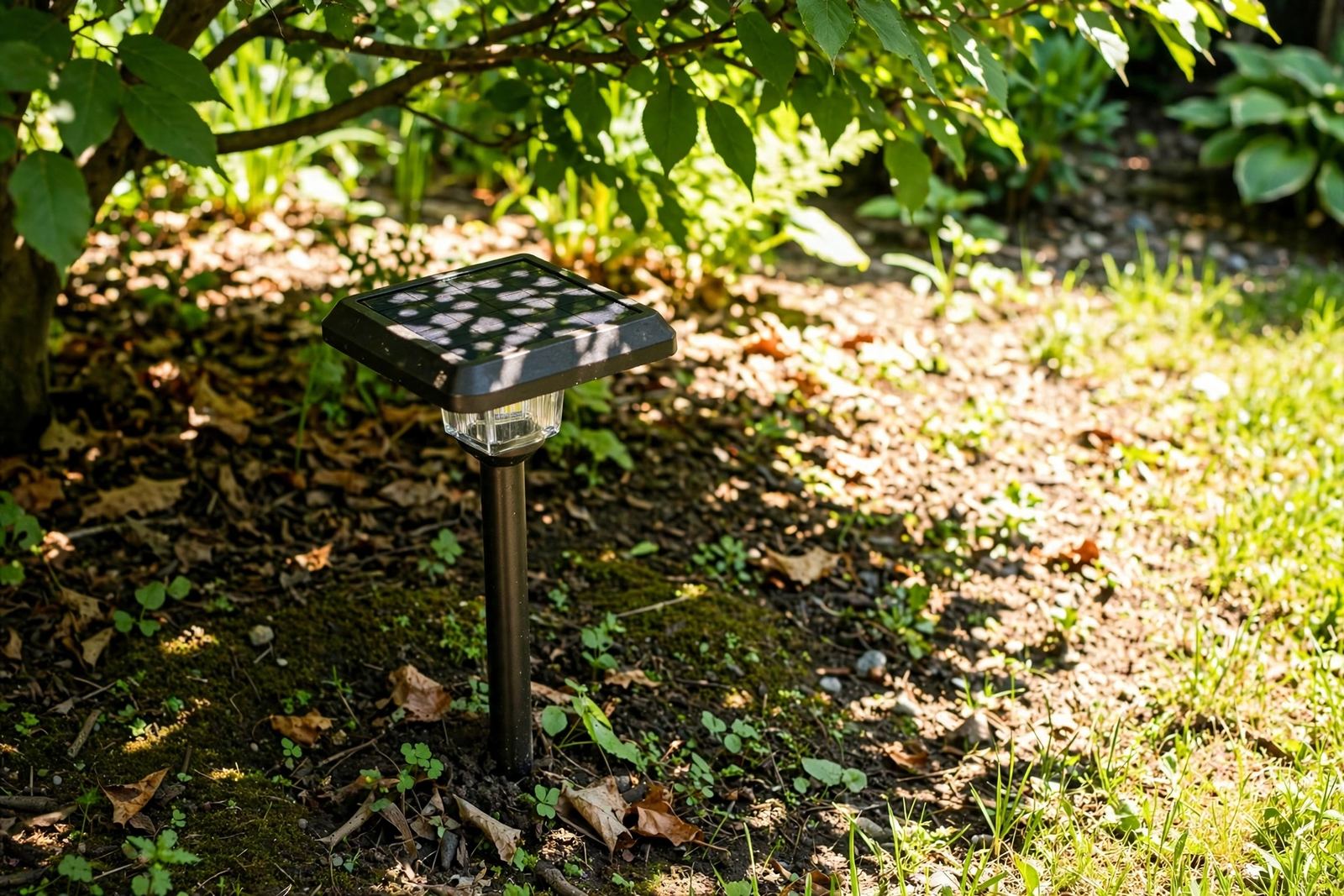
Shade is the silent killer of solar plans. A stake under a tree or an eave may get two hours of sun and then glow weakly for one hour at night. Before you blame the product, move it two feet into the open and test again. That single move fixes more solar lights than any warranty claim.
When Pathway Lights Are the Wrong Tool
Some jobs need more than a gentle glow. A long rural driveway, a dark parking area, or a security concern calls for a proper floodlight with hundreds of lumens. Pathway lights then become the finishing touch, marking the route between the bright zones instead of replacing them.
A porch fixture is another honest alternative. If your front path starts at a wired porch light, a smart bulb in that fixture may cover the first stretch for less money. Our guide to leaving the light switch on with a smart bulb covers the setup that makes that work reliably.
Renters sit in a sweet spot with all of this. Nothing here needs permission from a landlord, because nothing is wired or permanent. You install on Saturday, and you take every light with you when you move. That freedom is a real feature, not a footnote.
And if you enjoy building things, a DIY route exists too. Our WLED on ESP32 setup guide shows how tinkerers run addressable LED strips from a tiny controller, and the same approach can light a path with effects no solar stake can match.
Keeping Solar Lights Alive for Years
Solar lights ask for very little care. Still, a dirty panel charges slowly, so wipe each panel with a damp cloth every few months. Leaves and bird mess block more sun than you would guess. In fact, a panel under a tree can lose half its charge to grime and shade combined.
After two or three winters, most batteries fade. If your model allows it, swap the cell instead of replacing the whole light. Then store spare lights dry over winter if your climate is harsh, because frozen, empty batteries age fastest. Small habits like these double the useful life of a cheap set.
FAQs
Do solar pathway lights work in winter?
Yes, but expect less from them. Short days and low sun mean shorter charges, so a light that ran nine hours in July may manage four or five in December. Keep panels clean and free of snow, place lights where winter sun actually reaches, and accept the shorter nights as normal.
How long do solar path lights stay on at night?
With a full day of direct sun, most run eight to ten hours in summer, which covers the whole night. Cloudy days cut that sharply. Motion-sensing models stretch their battery by staying dark until needed, so they often outlast always-on stakes on the same dull day.
Are solar pathway lights bright enough for safety?
Some are, and many are not. A 10-lumen stake only marks an edge, which is fine on a flat, familiar path. For steps, gates, and level changes, choose fixtures with 50 lumens or more near the hazard, and space them closer. Judge by lumens, not by how bright the photos look.
Do I need WiFi for smart pathway lights?
Only for the app-connected models. Ring pathlights need a Ring Bridge and your home WiFi for app control, schedules, and linking with cameras. Simple solar stakes and motion lights work entirely on their own, with no network at all. Decide which kind of smart you want before you buy.
How far apart should I space pathway lights?
Start with 6 to 8 feet between low-output solar stakes. Brighter fixtures can stretch to 10 feet. Tighten the spacing at curves, steps, and gates, because those are the places your eyes need the most guidance. Then walk the path after dark and move any light that leaves a dark gap.
Can I leave solar lights outside all year?
Models rated IP65 or better can stay out through rain and snow, and most owners leave them in place. In very harsh winters, bringing them in protects the batteries and extends their life. If a light fades after two or three years, a replaceable battery usually revives it for a fraction of the cost.
Light the Path This Weekend
Choose by goal, not by box art. If you want a connected smart home, start with the Ring pathlights near the front door. If you want a long path covered cheaply, buy the multi-pack and space the stakes tightly.
Next, measure your path, divide the length by seven feet, and that is roughly how many lights you need. Order them today, charge them tomorrow, and walk the path tomorrow night. One dark gap fixed this weekend beats a perfect plan next spring.