


To size a low voltage transformer, add up the watts of every fixture, divide the total by 0.8, and round up to the next standard size. That is low voltage transformer sizing in one line. A yard with 80 watts of LED fixtures, for example, needs at least a 100-watt transformer, and a 150-watt unit is the smarter buy.
- What a Transformer Actually Does
- Low Voltage Transformer Sizing in Five Steps
- Watts vs VA: The LED Detail Most People Miss
- Voltage Drop: Why Size Is Only Half the Job
- Wire Gauge in Plain English
- Timers, Photocells, and Smart Control
- Five Sizing Mistakes That Dim Good Lights
- FAQs
- How many lights can a 300-watt transformer run?
- Is a bigger transformer always the safer choice?
- Can I run LED and halogen fixtures on one transformer?
- What happens if I overload a transformer?
- How far can I run 12-gauge landscape wire?
- Where should the transformer be mounted?
- Size It Once, Size It Right
What a Transformer Actually Does
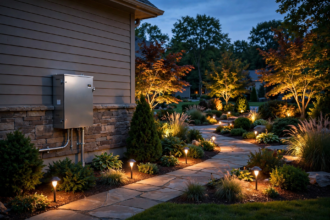
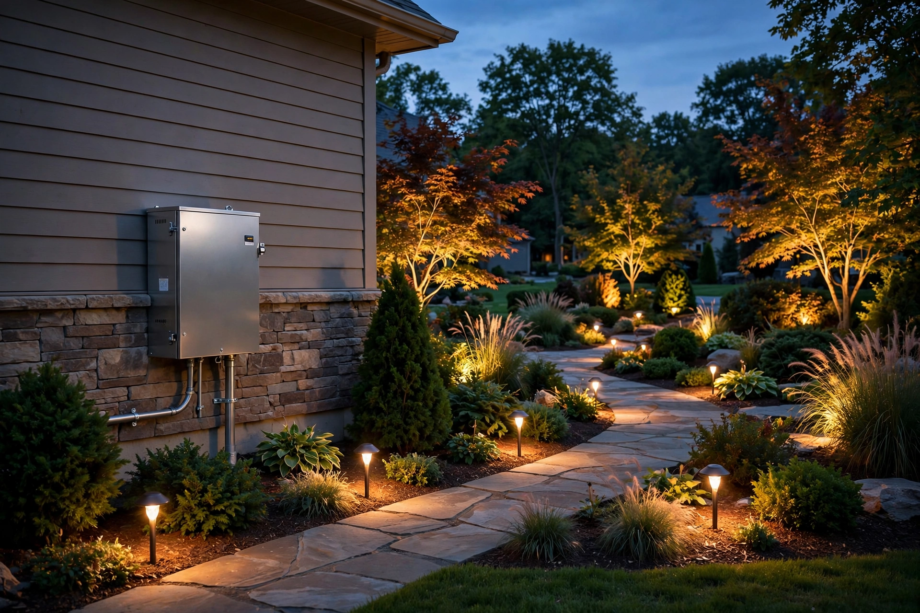
A landscape transformer takes the 120-volt power from an outdoor outlet and steps it down to a safe 12 volts. That low voltage, in fact, is why you can bury cable with a shovel and move fixtures without calling an electrician. The transformer is the one part of the system that handles real household current. It mounts on a wall near a GFCI outlet.
Size, in this guide, means wattage capacity rather than physical dimensions. A 300-watt transformer, for instance, can supply up to 300 watts of lighting on paper. In practice, you’ll load it to about 240 watts, and the steps below explain why that gap matters so much.
Two broad types sit on store shelves. Magnetic transformers, meanwhile, are the heavy, durable classics that suit larger systems and mixed loads. Electronic units are lighter and cheaper, and they’re fine for smaller LED-only setups. Either type works when it’s sized honestly, and either type disappoints when it’s sized by guesswork.
Low Voltage Transformer Sizing in Five Steps
Grab a notebook and walk your yard, because the whole method rests on an honest fixture list. Guessing the count at the kitchen table, instead, is how undersized systems happen. Follow these five steps in order.
- List every fixture you plan to install, including the two path lights you keep meaning to add.
- Write down each fixture’s rated watts from its label or spec sheet, not the brightness it claims to match.
- Add the watts together for one total, grouping fixtures by their wire run if you plan several runs.
- Divide that total by 0.8, which reserves twenty percent of the transformer’s capacity as working headroom.
- Round up to the next standard transformer size, such as 100, 150, 200, 300, or 600 watts.
Here’s the method on a real front yard. Twelve path lights draw 4 watts each, which gives you 48 watts. Four spotlights on the trees draw 8 watts each, adding 32 watts. Your total is 80 watts, and 80 divided by 0.8 equals exactly 100 watts.
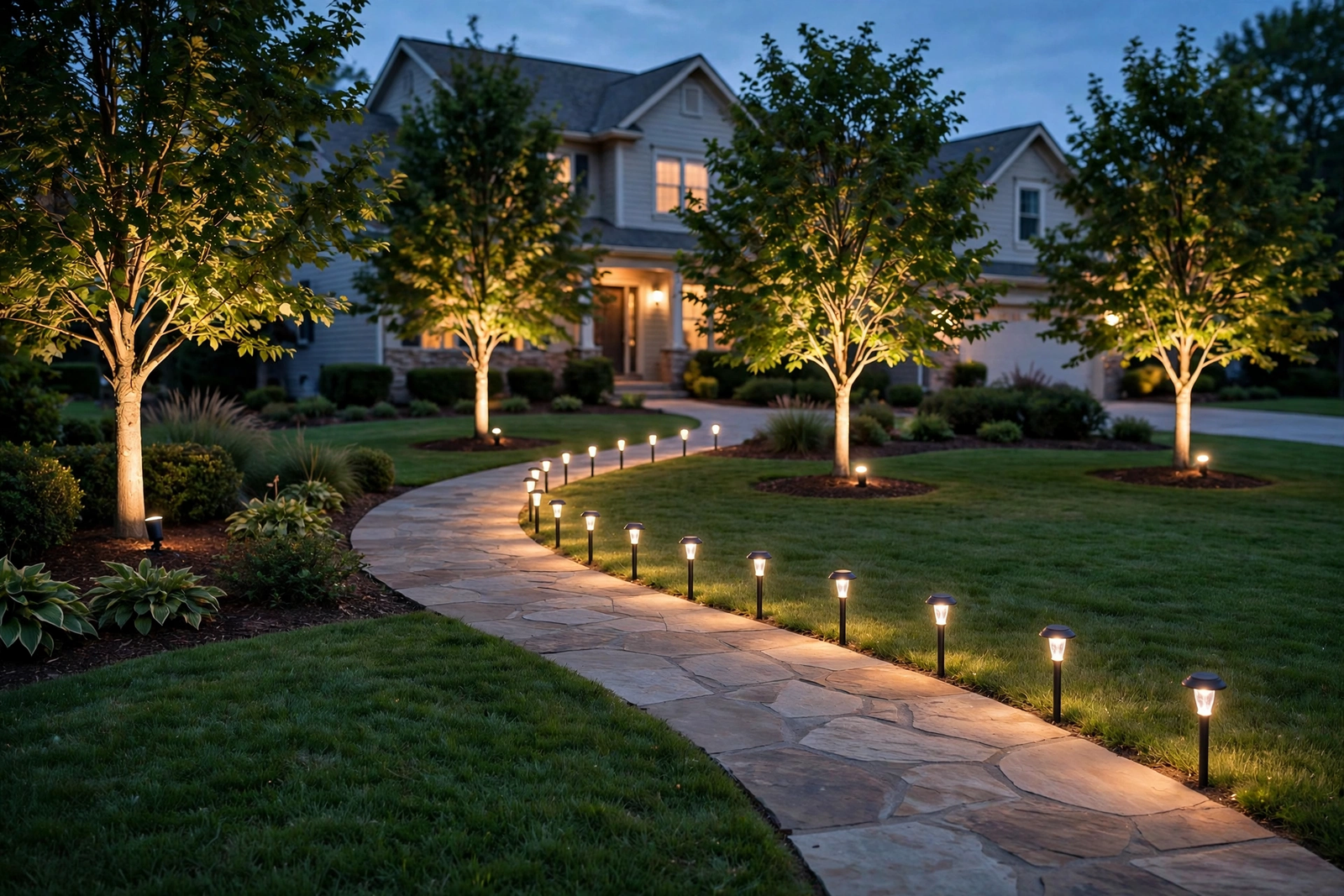
So a 100-watt transformer passes the math on paper. Buy the 150-watt unit anyway. The price gap is usually under thirty dollars, and the extra room covers the two fixtures you’ll inevitably add near the driveway next spring. In short, headroom is the cheapest insurance in the whole project.
Why the 0.8 step at all? A transformer loafing at eighty percent runs cooler and lasts longer than one straining at its limit. The reserve also absorbs the small start-up surge that LED drivers draw when they switch on. It covers the voltage wobble in household supply on hot evenings, too.
The table below turns the method around, letting you start from a transformer and see what it can honestly run.
Table: Common transformer sizes and their safe working loads
| Transformer rating | Safe load at 80% | Rough LED fixtures at 5 watts each |
|---|---|---|
| 75 watts | 60 watts | About 12 |
| 100 watts | 80 watts | About 16 |
| 150 watts | 120 watts | About 24 |
| 300 watts | 240 watts | About 48 |
| 600 watts | 480 watts | About 96 |
Watts vs VA: The LED Detail Most People Miss
Halogen fixtures made sizing easy, because a 20-watt halogen drew close to 20 watts. LED fixtures, in contrast, play by different rules. Their electronic drivers draw current in a way that makes the load look bigger to the transformer than the watt figure suggests.
That bigger figure is the VA rating, short for volt-amps. Many LED landscape fixtures, in fact, print both numbers on the spec sheet. When a VA rating is listed, size with VA instead of watts. A fixture rated 5 watts might show 8 or 9 VA, and twenty of them quietly add 70 phantom watts to your load.
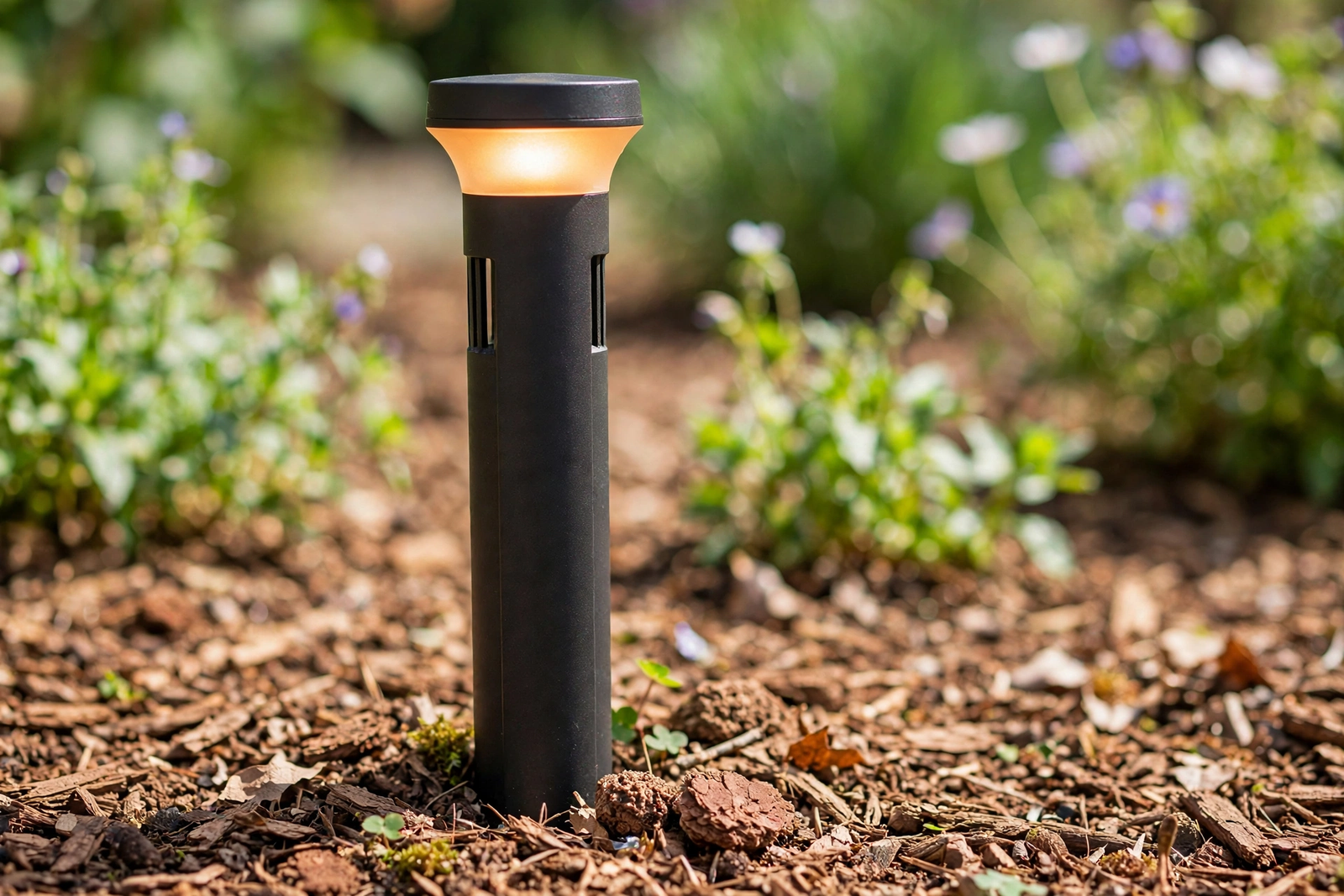
Ignore VA and the symptoms show up fast. The transformer runs hot, lights at the end of the run look weak, and the breaker may trip on warm nights. If your lights flicker instead, the cause is often a dimmer or driver mismatch. Our guide to fixing LED flicker with smart switches walks through that side of the problem.
Don’t panic if your fixtures list watts only. Plenty of quality LED fixtures, moreover, publish honest watt figures that already reflect the driver. The rule is simple: use VA when it’s printed, use watts when it isn’t, and never use the “equivalent to a 50-watt bulb” marketing line for either.
Voltage Drop: Why Size Is Only Half the Job
A perfectly sized transformer can still produce a disappointing yard. The culprit is voltage drop, the slow loss of voltage as current travels down a long wire. On the 120-volt side of your house, losing one volt means almost nothing. On a 12-volt run, in contrast, that same lost volt is more than eight percent of everything the fixture gets.
Picture a fixture sitting 100 feet from the transformer on 12-gauge wire. It might receive only about 10.5 volts while its twin near the house gets the full 12. The far light glows visibly dimmer and warmer, and guests notice the mismatch even if they can’t name it.
Multi-tap transformers exist specifically for this fight. Instead of one 12-volt output, they offer taps at 12, 13, 14, and sometimes 15 volts. You wire short runs to the 12-volt tap and long runs to a higher tap, so the drop along the cable lands the far fixture near a true 12 volts.
A rough field guide works for most yards. Runs under 50 feet sit on the 12-volt tap. Runs of 50 to 80 feet use 13 volts, 80 to 120 feet use 14, and the longest runs take 15 or a thicker cable. Verify with a cheap multimeter at the farthest fixture under load, aiming for a reading close to 12 volts.
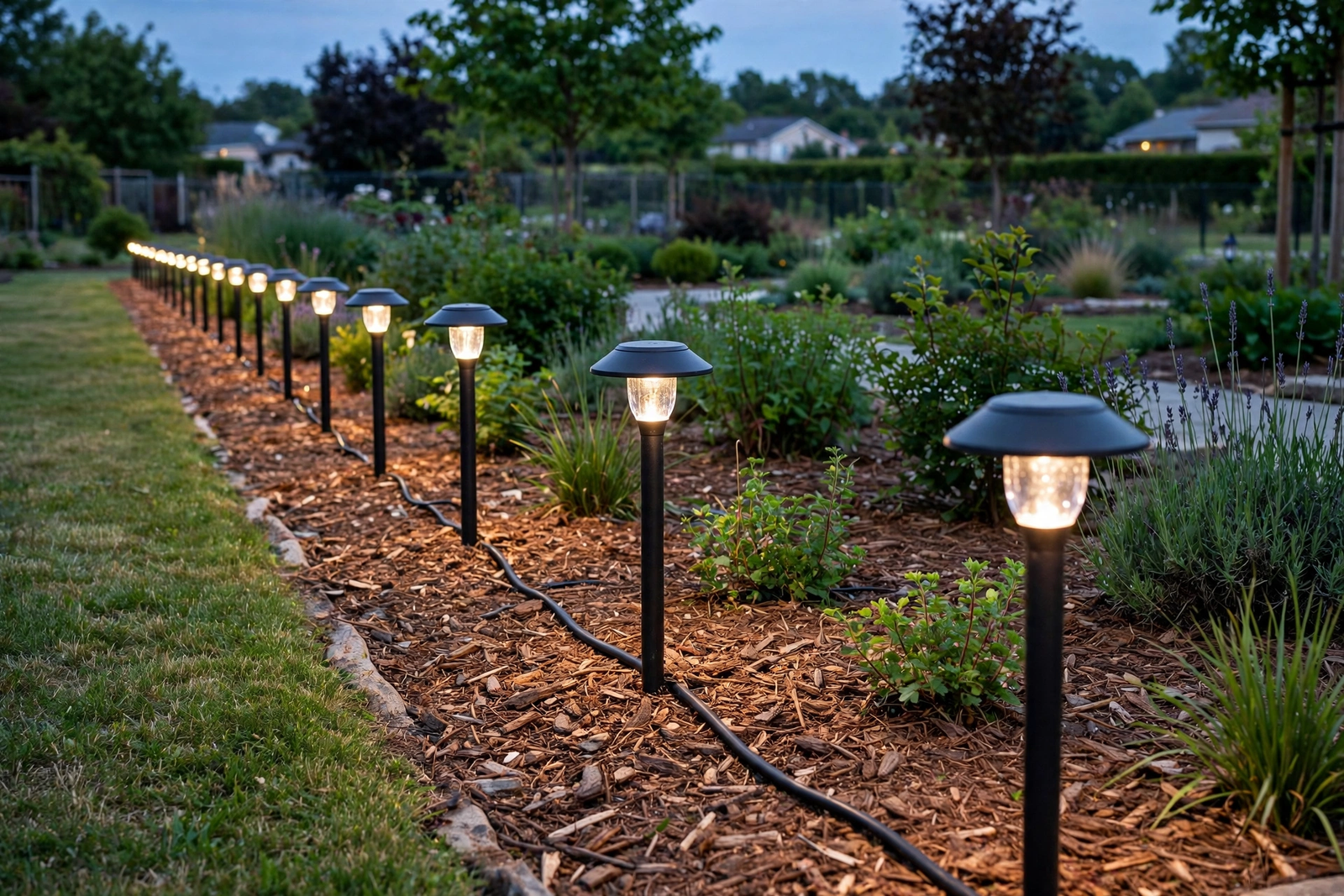
Layout, accordingly, helps as much as hardware. Split one long daisy chain into two shorter runs from the transformer, or loop the cable back, feeding the same fixtures from both ends. The USA Light voltage drop chart lists maximum run lengths for each wire gauge and tap, and it’s worth a look before you bury anything.
The same physics governs indoor low-voltage projects, too. Our LED strip power injection guide calculates drop along a strip run and shows where extra power feeds fix dim ends. Different fixture, identical math, and the same habit of measuring instead of guessing.
Wire Gauge in Plain English
Gauge numbers run backwards: the smaller the number, the thicker the wire. Thick wire resists the current less, so more voltage survives the trip to the far fixture. Choosing gauge is really choosing how much drop you’ll tolerate.
- 16-gauge suits short runs under about 100 feet with light loads, like a few path lights near the house.
- 12-gauge is the workhorse for most homes, handling runs past 100 feet and moderate fixture counts without drama.
- 10-gauge earns its price on very long runs or heavy loads, where every tenth of a volt shows.
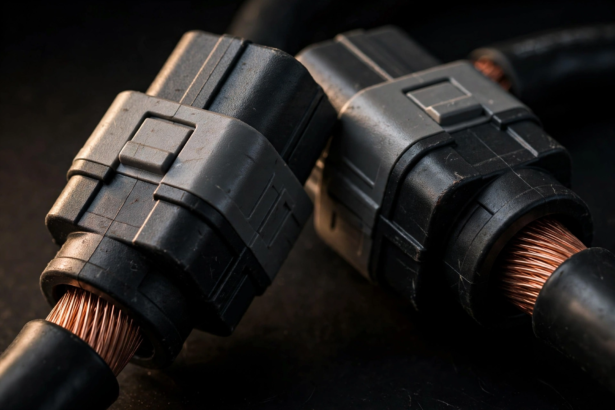
Connections, in particular, matter as much as the cable itself. A loose twist-and-tape splice adds resistance, steals voltage, and fails underground within a season or two. Our walkthrough on soldering LED strip corners teaches the same clean-joint habits that keep landscape splices alive for years.
Keep each individual run under about 150 feet on 12-gauge when you can. Past that distance, split the run, raise the gauge, or lean on a higher tap. Any one of the three fixes the gradient; combining two of them makes it disappear.
Timers, Photocells, and Smart Control
Sizing decides how much light you can run. Control decides when it runs. Most transformers include a timer dial or a photocell that switches the system on at dusk by itself, and fancier models layer a digital astronomic timer on top of that. A photocell is the set-and-forget favorite, because it follows the seasons without any reprogramming from you.
Smart transformers add app control, separate schedules per circuit, and sometimes voice assistants on top of that. They don’t change the sizing math at all, since the fixtures still draw the same watts and VA. Buy control features for convenience only. Size the box for the load first.
Five Sizing Mistakes That Dim Good Lights
Most disappointing yards trace back to one of these five errors. Read them before you order, because every one is cheaper to avoid than to fix after the cable is buried.
- Loading a transformer to its full printed rating, leaving nothing for surges, heat, or the fixtures you’ll add later.
- Sizing from bulb equivalence claims, so a “50-watt equivalent” LED that draws 6 watts gets counted five times too high.
- Forgetting the VA rating on LED fixtures, which quietly overloads a transformer that looked fine on watt math alone.
- Running one long daisy chain past every fixture. The last lights starve. The first ones glare.
- Ignoring per-circuit limits on big transformers, whose 600 watts may be split across circuits that each cap out lower.
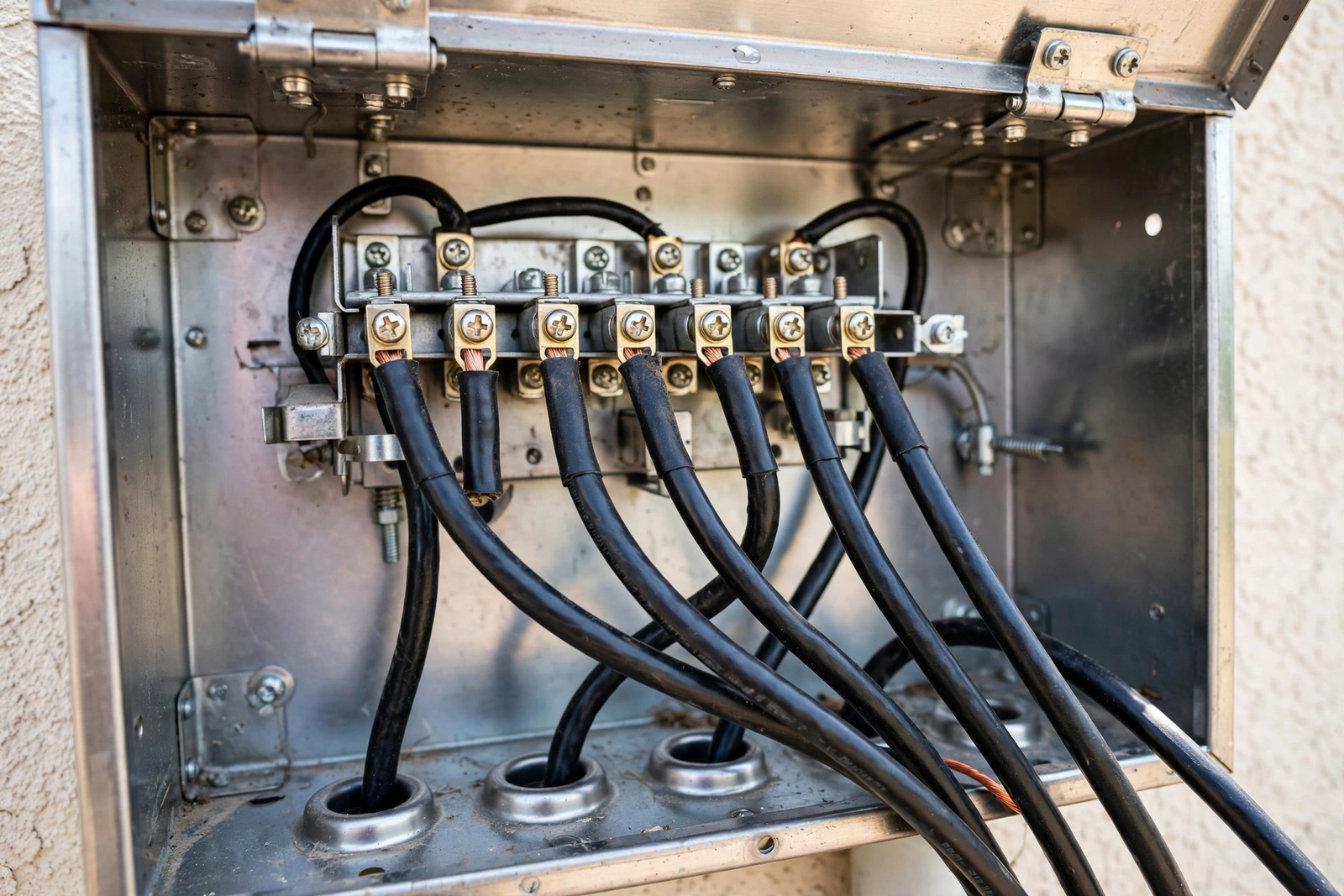
That last mistake, nevertheless, surprises people. Large multi-tap units often divide their capacity into separate circuits or tap groups. A single run still can’t pull the transformer’s whole rating, so check the manual for the per-terminal limit before you design around one heroic cable run.
FAQs
How many lights can a 300-watt transformer run?
At the safe eighty percent load, a 300-watt transformer runs about 240 watts of fixtures. That’s roughly 48 LED path lights at 5 watts each, or 24 spotlights at 10 watts each. Count your own fixtures by their VA rating when it’s printed, and remember that one long run may hit voltage limits before it ever hits the watt limit.
Is a bigger transformer always the safer choice?
Not always. Stepping one size up from your calculation is smart, because it buys headroom for surges and future fixtures. Jumping three sizes up mostly wastes money, and big units split their capacity across circuits anyway. An oversized transformer won’t harm your lights, though. The fixtures draw what they need, so the real cost of oversizing is price, not performance.
Can I run LED and halogen fixtures on one transformer?
Yes, as long as the combined load fits inside the eighty percent budget. Add the halogen watts and the LED VA figures together, then divide by 0.8 as usual. Magnetic transformers handle mixed loads without complaint. Just expect the halogens to look warmer and dimmer with age, which can make a mixed yard look uneven next to crisp LEDs.
What happens if I overload a transformer?
The breaker or thermal cutoff trips first, and the whole system blinks off, cools down, and may restart in a frustrating cycle. Before that point you’ll usually see dim lights, a hot transformer case, and shortened component life. True damage is rare thanks to the protection, but a system that trips weekly is telling you the sizing math was skipped.
How far can I run 12-gauge landscape wire?
Plan around 150 feet as the ceiling for a 12-gauge run at moderate loads. The true limit depends on the watts riding the cable, because heavier loads drop voltage faster. Multi-tap outputs stretch the distance by starting the run at 13 or 14 volts. When a run must go farther, split it in two or step up to 10-gauge cable.
Where should the transformer be mounted?
Mount it on an exterior wall near a GFCI-protected outlet, at least a foot above the ground, and out of standing water. A central spot on the house shortens every wire run, which fights voltage drop before it starts. Keep it reachable, too. You’ll visit it to set timers, test taps with a multimeter, and reset the breaker after storms.
Size It Once, Size It Right
The whole method fits on an index card: list the fixtures, total the watts or VA, divide by 0.8, and round up one size. Then give voltage drop the same respect, with sensible gauges, split runs, and the right tap on each cable.
Your next step takes ten minutes. Sketch the yard, mark every fixture you want, and write its rating beside it. That little map is the same starting point pros use, whether the project is a garden path or the low-voltage runs in our under-cabinet LED strip install. Do the math once, on paper, and the lights will reward you every night afterward.