

The best stereo receiver for most people in 2026 is the Denon AVR-X1800H. It gives you 7.2 channels, Dolby Atmos, HDMI 2.1 with 4K/120 and 8K pass-through, and Audyssey room correction in one box. Want pure two-channel music instead? Start with the Sony STR-DH190 or the Yamaha R-S202BL.
- The 8 Picks at a Glance
- How to Pick a Receiver Without Regret
- Best Stereo Receiver Picks: 8 Models for 2026
- 1. Sony STR-DH190: Best Budget Stereo Receiver
- 2. Yamaha R-S202BL: Best Simple Stereo Receiver
- 3. Yamaha RX-V385: Best First Surround Receiver
- 4. Denon AVR-X1800H: Best Overall Receiver
- 5. Yamaha RX-V6A: Best Receiver for Music and Movies
- 6. Onkyo TX-NR7100: Best Dirac Live Value
- 7. Denon AVR-X3800H: Best Serious Home Theater Receiver
- 8. Marantz Cinema 50: Best Receiver for Music Lovers Who Watch Movies
- Music vs Home Theater: Which Receiver Fits You?
- A Simple Decision Framework You Can Use in 5 Minutes
- Setup Mistakes That Waste Good Receivers
- FAQs
- What is the best stereo receiver for music?
- Do I need a stereo receiver or an AV receiver?
- How many watts per channel do I really need?
- Is HDMI 2.1 worth it on a receiver?
- What does room correction actually do?
- Can one receiver handle music and movies well?
- Should I buy a receiver with Dirac Live or Audyssey?
- Conclusion
That short answer hides a real choice, though. A stereo receiver and a home theater receiver do different jobs. One plays two speakers really well. The other runs a whole room of speakers, a TV, a console, and a streaming service at the same time. Buy the wrong type and you pay for channels you never use, or you miss the surround sound you wanted.
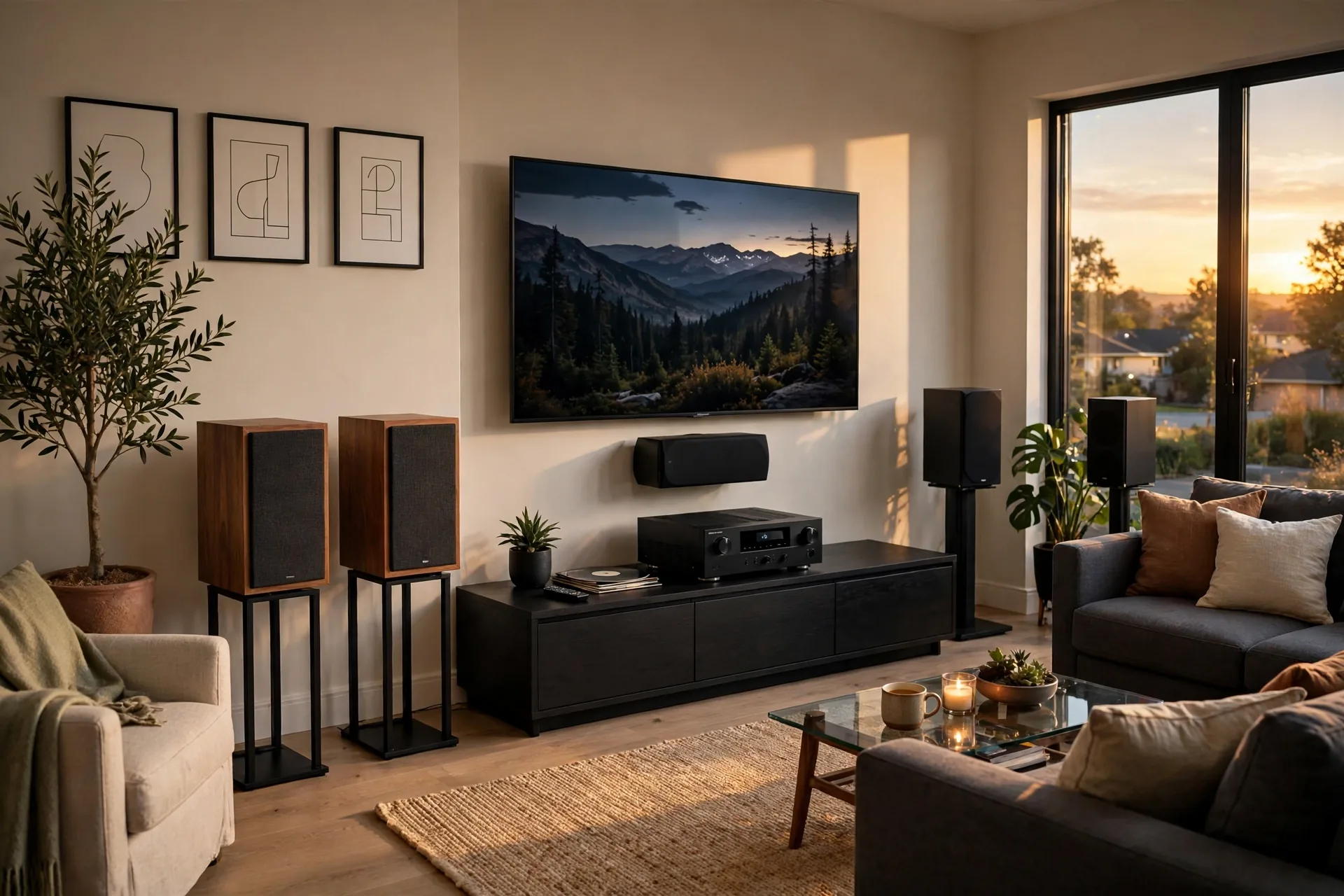
This guide keeps it simple. Next, you will see eight receivers, what each one does well, and who should skip it. No made-up prices here, so check the current price on the maker’s page before you buy.
The 8 Picks at a Glance
Short on time? However, this table sums up the roundup. Read the full pick below it before you buy, because the table can’t show how a receiver sounds in a real room.
Table: eight receivers at a glance
| Receiver | Channels | Power per Channel | Room Correction | Best For |
|---|---|---|---|---|
| Sony STR-DH190 | 2.0 | 100W | None | Budget music |
| Yamaha R-S202BL | 2.0 | 100W | None | Simple stereo |
| Yamaha RX-V385 | 5.1 | 70W | YPAO | First surround system |
| Denon AVR-X1800H | 7.2 | 80W | Audyssey MultEQ XT | Most living rooms |
| Yamaha RX-V6A | 7.2 | 100W | YPAO | Music and movies |
| Onkyo TX-NR7100 | 9.2 | 100W | Dirac Live | Dirac on a budget |
| Denon AVR-X3800H | 9.4 | 105W | Audyssey MultEQ XT32 | Serious home theater |
| Marantz Cinema 50 | 9.4 | 110W | Audyssey MultEQ XT32 | Music first, movies too |
Power figures above come from the makers and from published roundups. Treat the numbers as a guide, not a ranking.
How to Pick a Receiver Without Regret
Start with your room, not the spec sheet. Instead, two speakers need a stereo receiver. Five speakers and a sub need at least 5.1 channels. A 5.1.2 Atmos setup needs seven powered channels, and a 7.1.4 setup needs eleven. Buy channels for the system you’ll build in the next two years.
Next, look at watts per channel with doubt. The number tells you how much power one channel gets under test conditions. It doesn’t tell you what happens when five or seven channels play loud together. Does the maker quote two channels driven, or all channels? At 8 ohms or 6 ohms? An honest 80 watts at 8 ohms beats a flashy 150 watts quoted at 6 ohms with one channel driven.
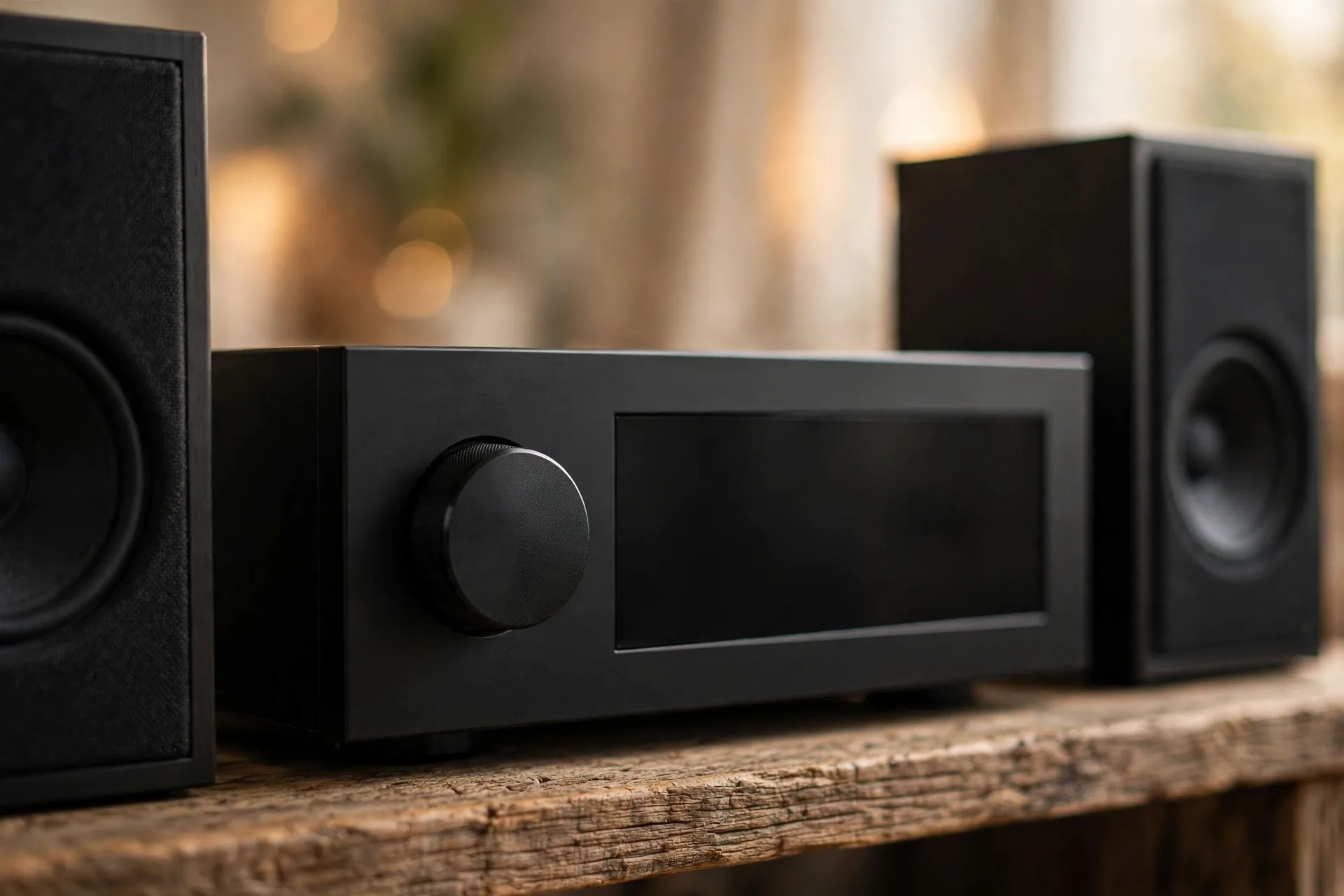
Still, room size matters more than watts. A small bedroom needs far less power than a big living room. A speaker rated at 90 dB needs less power to play loud than one rated at 85 dB.
HDMI 2.1 is the next thing to check. It carries 4K at 120 frames per second and 8K video, plus VRR and ALLM for gaming. However, that matters if you own a PS5, an Xbox Series X, a gaming PC, or an 8K TV. Count the HDMI 2.1 inputs, not just the total ports. Meanwhile, some receivers offer full 4K/120 on only three of seven inputs. The TV connects to the eARC port, and our guide on how to connect speakers to a TV covers that wiring in steps.
Still, room correction is the feature most buyers ignore, and it’s the one that changes sound the most. Audyssey, Dirac Live, and YPAO use a microphone to measure your room. They adjust speaker levels, delays, and EQ to fix what your walls and furniture do to the sound.
Finally, streaming is the last big split. Modern receivers include Wi-Fi, Bluetooth, AirPlay, and Chromecast. For example, Denon and Marantz use HEOS for multi-room music. Yamaha uses MusicCast. Pick the system that matches the app you use. If you want a DIY home theater, plan your sources before you buy the receiver, so every device has a port waiting for it.
Best Stereo Receiver Picks: 8 Models for 2026
Every pick below is a real model you can buy from a dealer or a major shop. Read the “skip it if” line as carefully as the praise.
1. Sony STR-DH190: Best Budget Stereo Receiver
The Sony STR-DH190 is a two-channel stereo receiver with 100 watts per channel, Bluetooth, and a phono input for a turntable. Instead, it does the basics well and skips everything else.
Plug in two speakers and a turntable, pair your phone over Bluetooth, and you are done. However, there is no room correction and no surround sound. Buy it for music. Skip it if you plan to add a center speaker or a surround setup.
2. Yamaha R-S202BL: Best Simple Stereo Receiver
The Yamaha R-S202BL is another two-channel receiver with 100 watts per channel and Bluetooth. It also adds 40 FM presets and a friendly front panel. Yamaha has sold this model for years because it works.
Still, what sets it apart from the Sony? Very little on paper. The Yamaha feels a touch more open in the treble, and its tuner is handy if you still listen to FM radio. Buy it for a bedroom or office. Instead, skip it if you need HDMI, Wi-Fi streaming, or room correction.
3. Yamaha RX-V385: Best First Surround Receiver
The Yamaha RX-V385 is a 5.1-channel receiver with 70 watts per channel, YPAO room correction, and 4K HDR pass-through. In fact, it is the cheapest sensible way into real surround sound.
YPAO does the work for you. Next, place the microphone at your seat, run the test tones, and the receiver sets speaker levels and distances in a few minutes. For help with where each speaker goes, read our guide to 5.1 speaker placement before you drill a single hole. Buy it for surround sound on a budget. Skip it if you want Dolby Atmos or HDMI 2.1 gaming features.
4. Denon AVR-X1800H: Best Overall Receiver
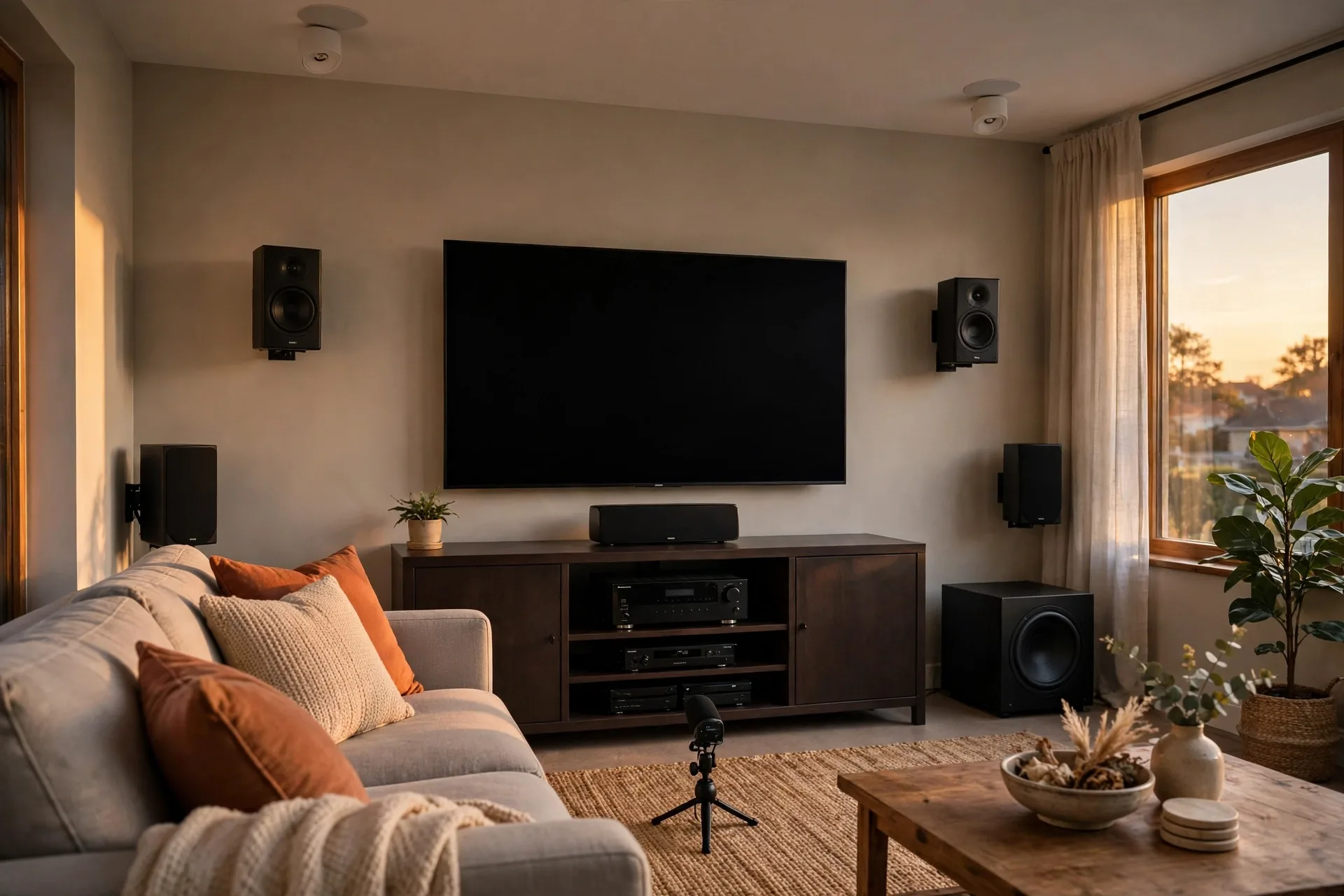
The Denon AVR-X1800H is the pick for most living rooms. It offers 7.2 channels, Dolby Atmos and DTS:X, HDMI 2.1 with 4K/120 and 8K pass-through, and Audyssey MultEQ XT room correction. HEOS streaming covers Spotify, AirPlay, and multi-room music.
The guided setup walks you through speaker wiring and Audyssey calibration. Atmos height effects work well in a 5.1.2 layout. Watch the subwoofer level after Audyssey runs, since testers have found it sets the sub a touch low. Buy it if you want one receiver for movies, music, and gaming. Skip it if you need nine channels or a phono input.
5. Yamaha RX-V6A: Best Receiver for Music and Movies
The Yamaha RX-V6A is a 7.2-channel receiver with 100 watts per channel, HDMI 2.1, and YPAO room correction. MusicCast streaming ties it into a Yamaha system. Yamaha receivers have a reputation for running cool and lasting a long time.
However, music is where this one earns its keep. Stereo playback sounds open and detailed, with a midrange that suits voices. Movies? Meanwhile, they get the same care. Dialogue stays clean, and the soundstage feels wide. Still, pick it if music matters as much as movies to you. Skip it if you want Dirac Live or Audyssey XT32.
6. Onkyo TX-NR7100: Best Dirac Live Value
The Onkyo TX-NR7100 is a 9.2-channel receiver with 100 watts per channel, THX certification, and Dirac Live room correction built in. Dirac Live used to live only in receivers that cost far more.
Why does Dirac matter? It corrects timing as well as frequency. You hear it as tighter bass and a clearer center image. THX certification means the amplifier passed strict tests for distortion and headroom. Buy it if your room is awkward and you want the best room correction at this price. Skip it if you hate fiddly setup, because full Dirac control works best from a laptop.
7. Denon AVR-X3800H: Best Serious Home Theater Receiver
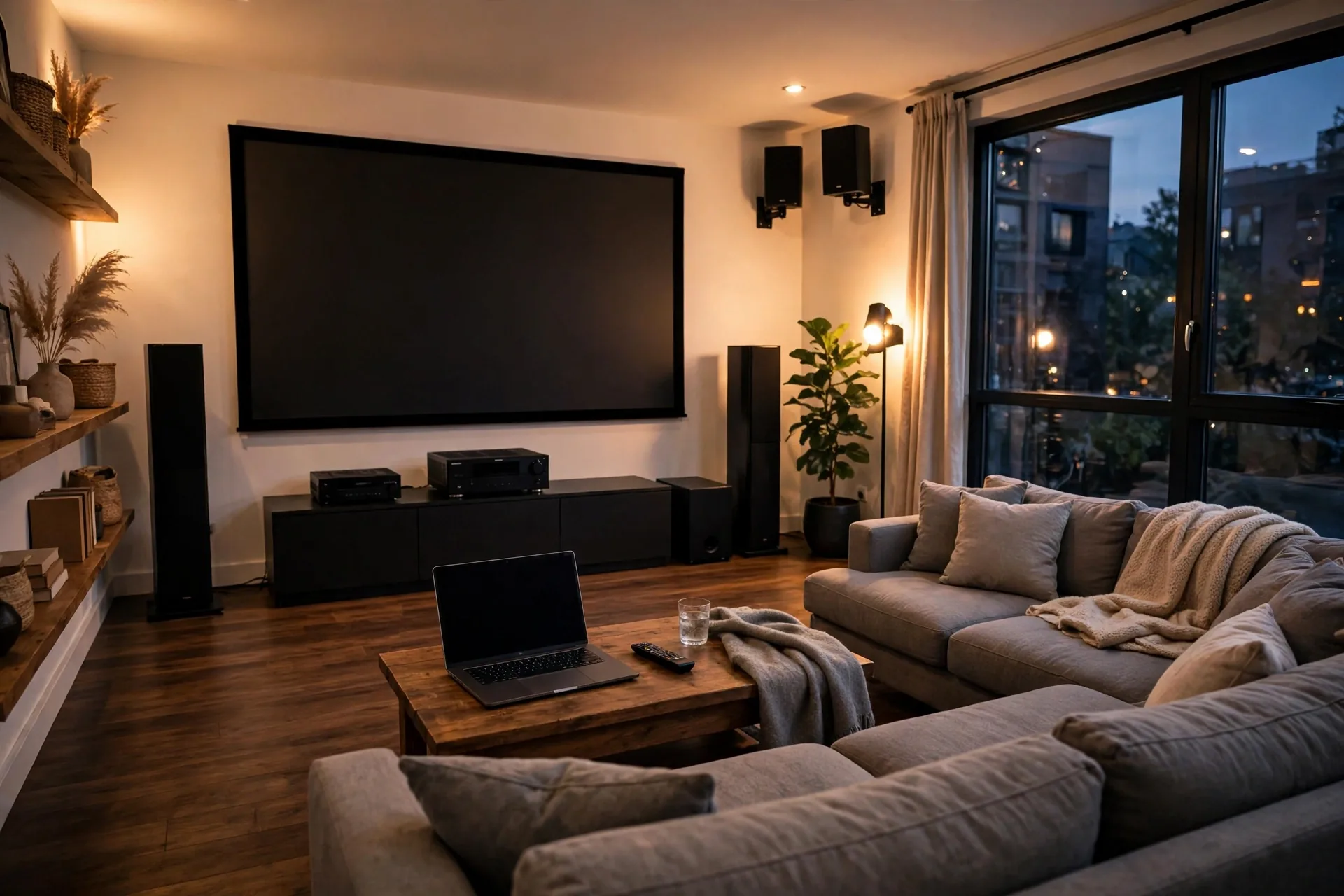
The Denon AVR-X3800H is a 9.4-channel receiver with 105 watts per channel, Audyssey MultEQ XT32, and full HDMI 2.1 on all six inputs. Four subwoofer outputs let you run up to four subs with correction.
However, XT32 is a clear step up from the basic Audyssey in cheaper Denons. It measures points and applies finer correction, especially in the bass. Pair it with Dolby Atmos speakers in a 5.1.4 or 7.1.2 layout. For example, buy it for a large living room with room to grow. Skip it if your room is small.
8. Marantz Cinema 50: Best Receiver for Music Lovers Who Watch Movies
The Marantz Cinema 50 is a 9.4-channel receiver with 110 watts per channel, six 8K-ready HDMI inputs, a phono stage, and Audyssey MultEQ XT32. Meanwhile, Marantz shares parts and setup software with Denon, but tunes its receivers for a warmer sound.
As a result, that warmer tuning is the reason to pick it over the Denon X3800H. Voices and strings sound fuller, and music sessions feel less tiring. Movies lose nothing. Buy it if music comes first but movies matter. Skip it if you want the lowest price per channel.
Music vs Home Theater: Which Receiver Fits You?
In short, here is the honest split. A stereo receiver gives you better sound per dollar for music. Its whole power supply serves two channels, so distortion stays low and stereo imaging stays sharp. However, an AV receiver splits its budget across five, seven, or nine channels, plus video processing. It gives you more features per dollar, and less stereo quality per dollar.
So ask yourself one question: what will you listen to most? If the answer is vinyl and two speakers for hours a day, buy a stereo receiver and spend the savings on speakers. If the answer is movies, TV, and gaming with music on the side, buy an AV receiver. Most homes fall in the second group.
There is a middle path. Buy an AV receiver with a good stereo mode and a phono input, like the Marantz Cinema 50, and you get both worlds. Check the spec page for your streaming service before buying, since a missing service means adding a streamer box.
A Simple Decision Framework You Can Use in 5 Minutes
Most receiver guides end with “it depends.” This one ends with a test you can run before you spend anything. It takes five minutes with a tape measure.
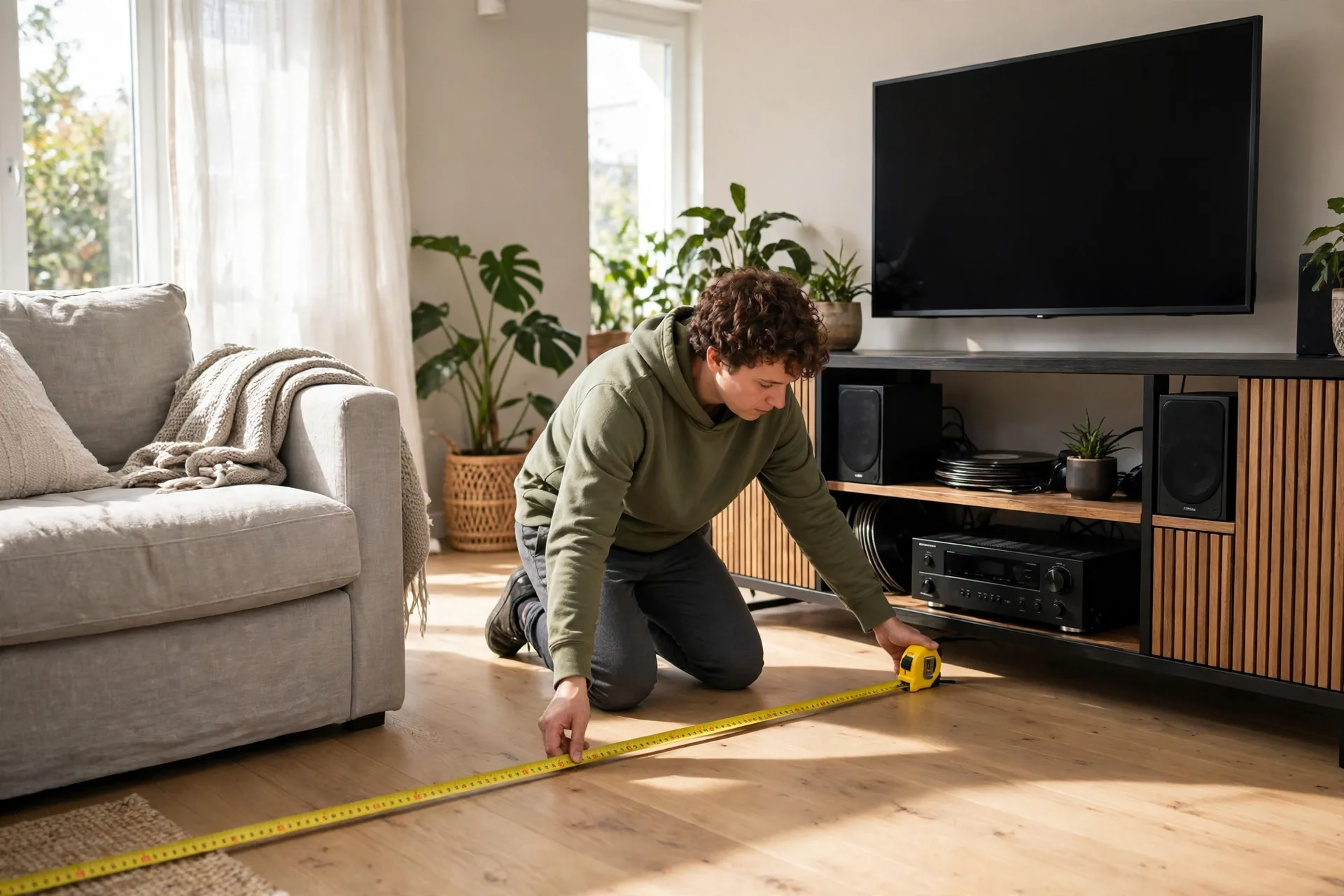
First, measure your room. For example, write down the distance from your seat to the TV. Under 12 feet means a 5.1 or 7.2 system is plenty. Over 14 feet with space behind the sofa means nine channels make sense. A room with no space behind the sofa can’t use surrounds.
Second, count your sources. TV, console, streaming stick, Blu-ray player, turntable, game PC, list them all. Count the HDMI ports you need, then add one spare. Got a device that needs 4K/120? Match it to an HDMI 2.1 input.
Third, play the dialogue test in your head. For instance, do you turn the volume up for quiet talking and down for loud action? That is a room and center channel problem, and room correction plus a speaker fix it.
Fourth, set a speaker budget before the receiver budget. Still, spend at least as much on speakers as on the receiver. Next, score each receiver on room fit, source count, dialogue fix, and speaker budget left over. The winner is obvious after step two.
Setup Mistakes That Waste Good Receivers
Buy the right receiver and set it up wrong, and you still get bad sound. For example, these are the mistakes I see most often, and each one takes minutes to avoid.
Skipping the calibration mic is the big one. Every receiver here that includes Audyssey, YPAO, or Dirac ships with a microphone for a reason. Run it. Put the mic at ear height at your seat, keep quiet, and let it finish.
FAQs
What is the best stereo receiver for music?
In fact, for pure music through two speakers, the Sony STR-DH190 and Yamaha R-S202BL are the best value picks. Both give you 100 watts per channel, Bluetooth, and controls. The Sony adds a phono input for vinyl. Pick a stereo receiver when music is your use and you don’t need surround sound.
Do I need a stereo receiver or an AV receiver?
First, buy a stereo receiver if you listen to music through two speakers and nothing else. Buy an AV receiver if you watch movies, play games, or want surround sound. An AV receiver runs five or more speakers, handles switching, and includes room correction. A stereo receiver sounds better per dollar for music, but it can’t do surround.
How many watts per channel do I really need?
Still, most living rooms do fine with 70 to 100 watts per channel at 8 ohms. Size and speaker sensitivity matter more than the watt number. A small room with sensitive speakers needs far less power than a large open room. Check whether the maker quotes two channels or all channels driven, because that changes what the number means.
Is HDMI 2.1 worth it on a receiver?
Yes, if you own a PS5, Xbox Series X, gaming PC, or 8K TV. HDMI 2.1 carries 4K at 120 frames per second, plus VRR and ALLM for smoother gaming. However, if you watch streaming TV and Blu-ray discs, HDMI 2.0 is enough. Count the HDMI 2.1 inputs first, since some receivers offer it on only a few ports.
What does room correction actually do?
Room correction uses a microphone to measure how your room changes the sound, then adjusts speaker levels, delays, and EQ to fix it. In particular, Dirac Live corrects timing as well as frequency, which gives bass. Audyssey XT32 is strong on bass smoothing. YPAO suits music and movie use.
Can one receiver handle music and movies well?
Yes. For instance, the Marantz Cinema 50 and Yamaha RX-V6A both handle music and movies well, with a warm stereo mode for music and full surround for films. You give up pure stereo quality against a dedicated two-channel amp at the same price. Most listeners find the trade fair, since one box runs the whole living room.
Should I buy a receiver with Dirac Live or Audyssey?
First, pick Dirac Live if your room is awkward, with hard floors or boomy bass. Its timing correction helps there. Instead, pick Audyssey XT32 if you want bass smoothing with a simpler setup, as on the Denon X3800H. Both beat no correction at all.
Conclusion
In short, the best stereo receiver is the one that fits your room, your sources, and your listening habits. For homes, that is the Denon AVR-X1800H. For music, it’s the Sony STR-DH190. Finally, for a tough room, it’s the Onkyo TX-NR7100 with Dirac Live.
Your next step is simple. Measure your room, count your sources, and pick the receiver that passes checks. Then run the calibration mic on day one and leave the settings alone for a week.