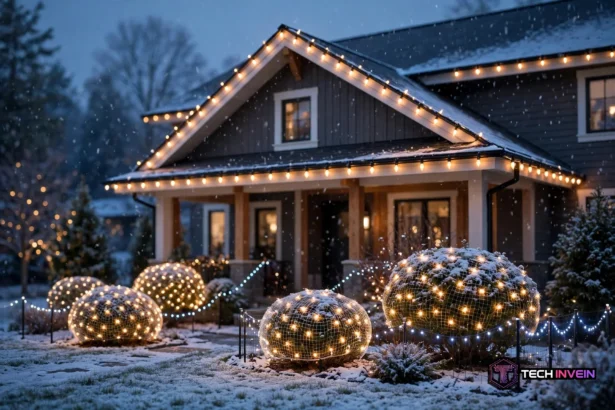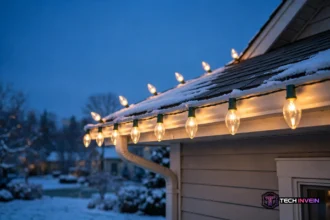

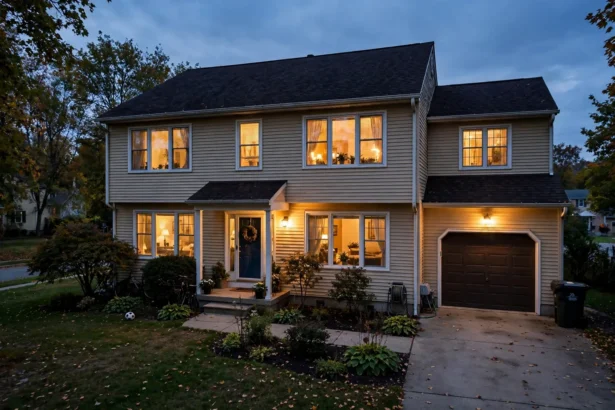


Permanent Christmas lights are LED lights fixed along your roofline once and left up all year. You control them from an app, switch them to warm white for daily use, and bring back red and green for December. No ladder, no tangled strings, no January takedown.
- What Are They?
- Types of Permanent Christmas Lights
- How They Work
- Permanent Christmas Lights vs Seasonal Lights
- Pros and Cons
- Installation: DIY or Hire a Pro?
- What to Look For When You Buy
- Year-Round Uses Beyond Christmas
- Common Mistakes to Avoid
- Maintenance and Lifespan
- FAQs
- How long do they last?
- Can you leave them up all year?
- Are they worth it?
- Do they work with Alexa and Google Home?
- Can I install them myself?
- Do I need HOA approval for them?
- Conclusion
What Are They?
Think of them as outdoor lighting that lives on your house. Small LED nodes sit in a slim track or on a string under your eaves. A controller and power supply feed them, and your phone sets the color, pattern, and schedule.
When the lights are off, a good install is hard to spot from the street. The track matches your trim color and tucks under the eave, so from the sidewalk it blends in.
Also, most systems use individually addressable LEDs. So each light can show its own color. You get solid warm white one night and a chasing red and green pattern the next, all from the same hardware.
Still, they are not the same as string lights draped over a roof for one season. Those come down in January. A permanent system stays put through rain, snow, and summer heat, and works for every holiday, not just Christmas.
Types of Permanent Christmas Lights
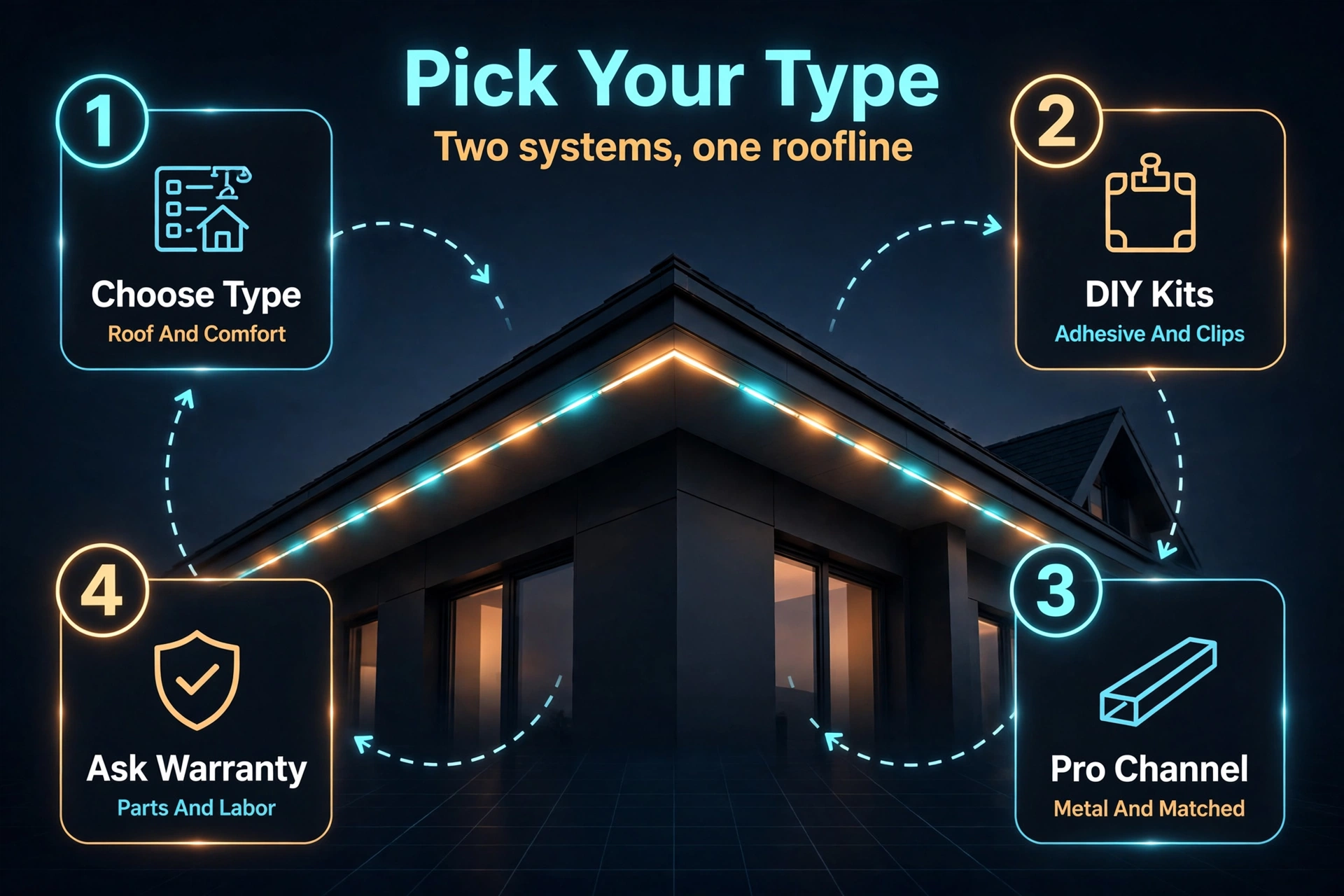
Two broad types cover most homes. DIY kits suit a handy owner with a single-story roofline. Pro-installed channel systems suit larger homes, two-story houses, and anyone who wants a clean finish without ladder work.
Also, both types use LED nodes and an app. The difference sits in the track, the install, and who fixes it when something goes wrong. First, pick the type that fits your roof and your comfort with heights.
DIY Adhesive and Clip Kits
First, DIY kits arrive as a string of LED nodes with adhesive backing and clips. You stick them under the eave, plug in the controller, and set them up in the app. Govee is the best-known name here, and its kits work with Alexa, Google Assistant, and Matter.
The Govee Permanent Outdoor Lights 2 Pro lists an IP68 rating for the lights, a 50,000-hour LED lifespan, and a working range from minus 4 to 140 degrees Fahrenheit. Those specs matter because the lights face weather all year, not just in December.
Mount the nodes 2 to 4 inches from the wall for the best glow on the house. Too close and the light pools in a harsh spot. Too far and the wash looks thin. So test one short run at night before you commit to the full roofline.
Then, DIY kits cost less up front and ship fast. The trade-off is your time on a ladder and a finish that depends on your patience. Take your time with spacing, because uneven gaps show up at night.
Pro-Installed Channel Systems
Next, pro systems use a metal channel, often aluminum, cut to your roofline and color-matched to your fascia. An installer mounts the channel, sets the LEDs inside it, and wires the controller in a garage or under a carport.
Also, brands in this group include Trimlight, Jellyfish Lighting, Gemstone, and EverLights. They sell through local dealers, and each home gets a custom quote based on roofline length and shape.
So the finish is the main win. The channel hides the wiring and gives a straight, even line. The dealer also handles service calls, which matters when a controller fails years later and you do not want to climb up there yourself.
Ask any dealer three things in writing before you sign. How long is the warranty on parts, and how long on labor? Does the warranty transfer if you sell the house? What does a service visit cost after the warranty ends?
How They Work
First, each LED node holds red, green, blue, and white diodes. The controller sends a signal down the string, and each node reads its own instruction. That is how one light glows warm white while the next one glows red.
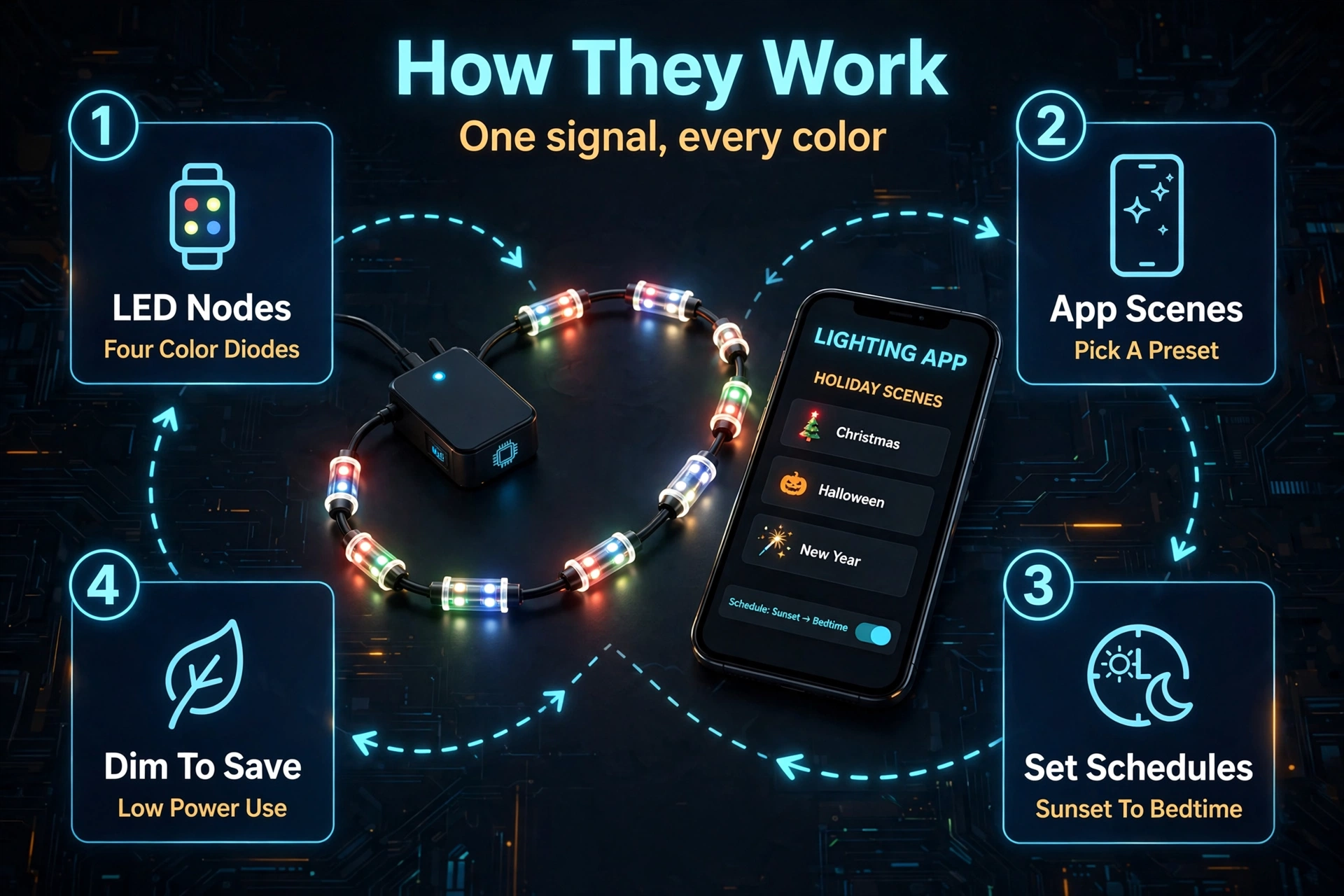
Next, your app holds the scenes. Pick a preset for Christmas, Halloween, or the Fourth of July, or build your own pattern. Most apps let you set brightness, speed, and color, then save the mix for next year.
Then, schedules do the daily work. Set the lights to turn on at sunset and off at bedtime. You can also link them to a smart home routine, so they come on with your porch light or switch off when everyone leaves.
Want them to switch on at sunset without thinking about it? Our guide to automating outdoor lights at sunset and sunrise shows the setup in Home Assistant, and the same idea works with most smart plugs and apps.
Also, power use stays low because LEDs sip energy, and most people run them at less than full brightness. A dim warm white glow uses far less power than a full-brightness chasing pattern, so brightness is the easiest way to trim running costs.
Still, controllers and power supplies age faster than the LEDs. The LEDs can last for years, while the controller may need a swap after six to ten years. That swap is a small job next to a full reinstall, so keep the controller in a spot you can reach.
Permanent Christmas Lights vs Seasonal Lights
First, the choice comes down to how you use lights across the year. Seasonal lights win if you only decorate in December and love changing the display each year. Permanent lights win if you want light on the house most nights with no setup at all.
Also, seasonal strings are cheap to buy and easy to change. They also take hours to hang, hours to take down, and a storage bin in the garage. A permanent system removes that yearly chore and gives you a steady look every season.
Table: How the two options compare
| Feature | Permanent Lights | Seasonal Lights |
|---|---|---|
| Install | Once, then left up all year | Every year, up and down |
| Year-round use | Yes, for every holiday | No, December only |
| Control | App, schedule, and voice | Timer or plug, by hand |
| Upfront cost | Higher, one-time | Lower, each season |
| Lifespan | LEDs rated up to 50,000 hours | One to three seasons per strand |
| Look when off | Slim track, blends with trim | Nothing on the house |
Count the nights you would switch them on. If the answer is thirty nights in December, seasonal lights make sense. If the answer is two hundred nights across the year, then a permanent system earns its keep.
Pros and Cons
First, no system fits every home. Weigh the wins against the trade-offs before you spend, and be honest about how long you will stay put. A permanent system pays off over years, not months.
Pros
- No ladder work each year, which cuts the risk of a fall while hanging lights.
- One system covers Christmas, Halloween, birthdays, game days, and plain warm white nights.
- Consistent look every year, with no tangled strings or dead strands to sort out.
- App control and schedules, so lights turn on and off without a second thought.
- Low power use, since LEDs run cool and dim well for nightly accent lighting.
Cons
- Higher upfront cost than a box of seasonal strings.
- The track is fixed to the house, so it is a long-term choice, not a trial.
- It lights the roofline only, so trees, wreaths, and yard decor still need seasonal lights.
- You depend on an app and a controller, and both need support years from now.
- Some HOAs limit colors, hours, or animation, so check the rules first.
Installation: DIY or Hire a Pro?
First, start by measuring your roofline. Walk the house with a tape measure and note every run, corner, and peak. Write the numbers down, then measure again. A short string leaves a dark gap, and an extra string you cannot return is money on a shelf.
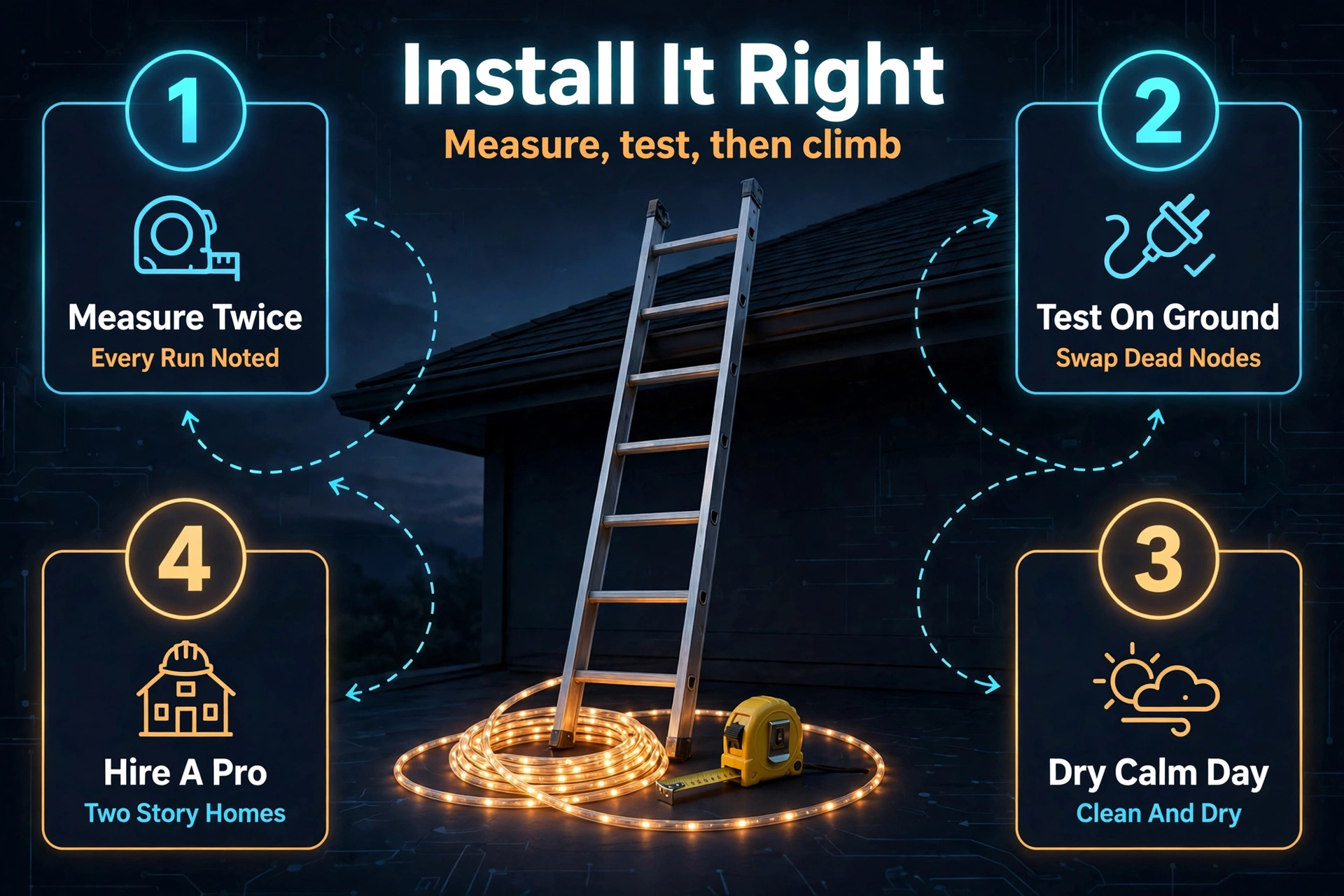
Next, test the full string on the ground before you climb a ladder. Plug it in, open the app, and run each color and scene. A dead node found on the ground takes a minute to swap, while the same node found on the roof takes an hour.
Then, work on a dry, calm day. Wet soffits kill adhesive, and wind makes ladder work unsafe. Clean the surface first, since dust and grime stop the adhesive from bonding, and let it dry fully before you stick anything down.
So for a two-story home, hire a pro. The ladder risk jumps with height, and a pro crew has the right ladders, lifts, and safety gear. The same goes for steep roofs, tricky peaks, and runs over a garage door.
For the ground-level lighting around the same house, our guide to the best smart outdoor pathway lights with no wiring pairs well with a roofline system and needs no trenching at all.
What to Look For When You Buy
First, start with the IP rating. IP67 means the lights handle rain and dust, and IP68 goes a step further. The control box often carries a lower rating, so check that number too and keep the box under cover where you can.
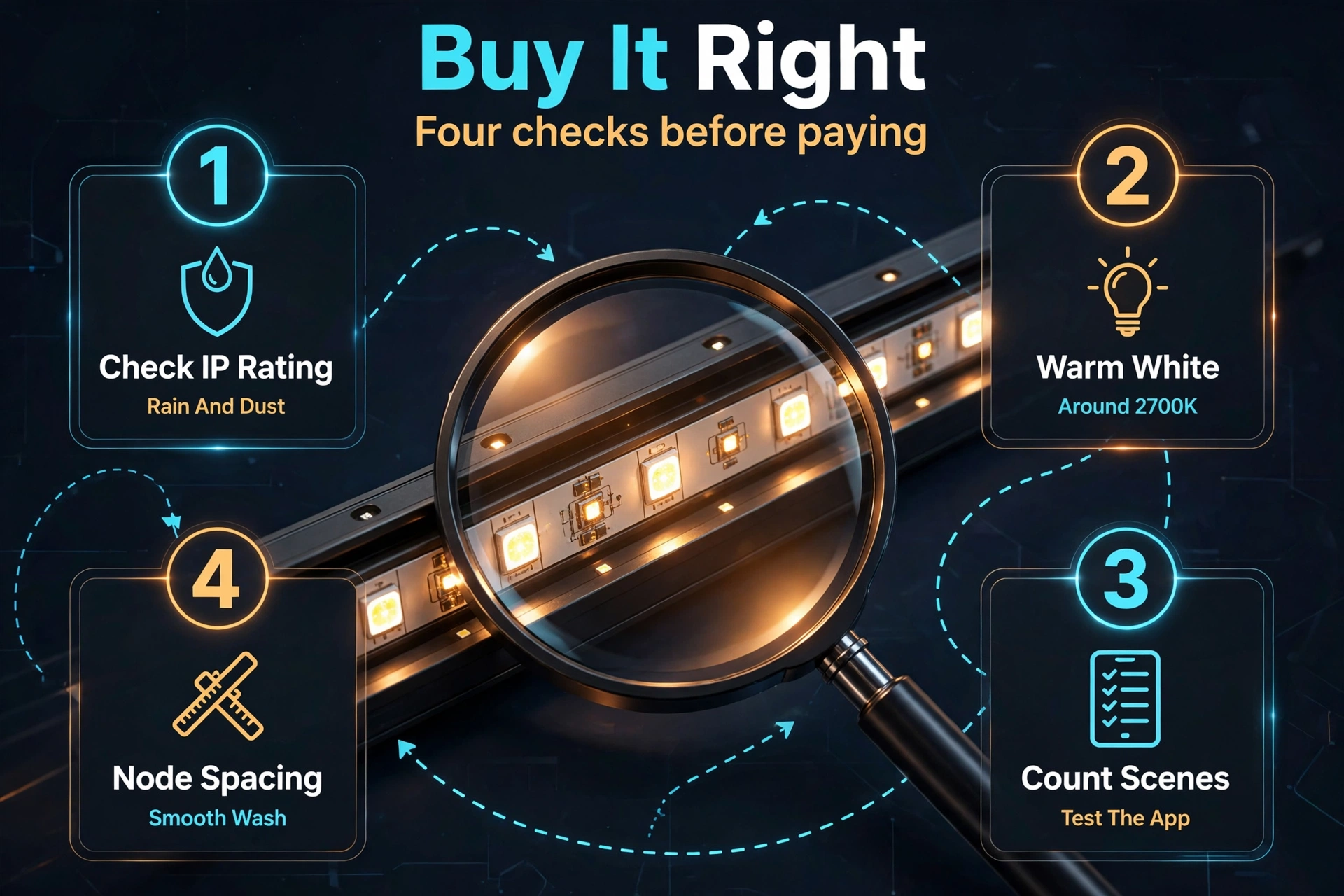
Next, check the white light range. Some systems only do colored light well and give a cold, blue-tinged white. Look for warm white around 2700K for nightly use, plus a cool white option for a crisp look when you want it.
Then, count the scenes and check the app before you buy. A good app offers presets for each holiday, lets you build custom patterns, and saves them for next year. Read recent app reviews, since a clunky app ruins a good set of lights.
Look at spacing between nodes. Nodes spaced 4 to 6 inches apart give a smooth wash on the wall, so wider spacing can look spotty. Also ask about spare parts, since a system with cheap spares costs less to own over ten years.
Year-Round Uses Beyond Christmas
First, Christmas gets the attention, yet the other eleven months decide whether the system was worth it. A permanent system shines when you use it most nights, not just in December.
Then, set warm white for everyday nights. The soft glow outlines the house and lights the front walk, which helps guests find the door and makes the home feel lived in after dark.
Pair the roofline with garden lighting for a fuller look. Our guide to solar smart lights with motion sensors for garden pathways covers a simple add-on that lights the walk without extra wiring.
Common Mistakes to Avoid
First, the most common mistake is measuring once and ordering once. Roofline runs hide corners, gables, and small returns that eat up length. Measure each run on its own, add the runs together, and then check the total against the kit length before you order.
Next, another mistake is mounting the lights flush against the wall. Nodes pressed tight to the soffit throw a hard spot of light and leave the rest dark. The 2 to 4 inch gap from the wall gives the wash room to spread, so follow it on every run.
Then, do not skip the night test. A run that looks neat in daylight can look uneven at night, with one bright node and one dim gap. Turn the lights on after dark, stand on the street, and look at the house the way a neighbor would.
Do not ignore the HOA. Some associations allow permanent lights with limits on colors and hours, while others need a written approval first. A quick email to the board before install beats a removal notice after it. Still weighing smart lights for inside the house? Our roundup of the best smart Christmas lights covers indoor options that pair with a permanent roofline system.
Maintenance and Lifespan
First, LEDs in a good system are rated up to 50,000 hours. At a few hours a night, that rating stretches across many years. The controller and power supply will likely need attention first, so plan for that swap rather than a full reinstall.
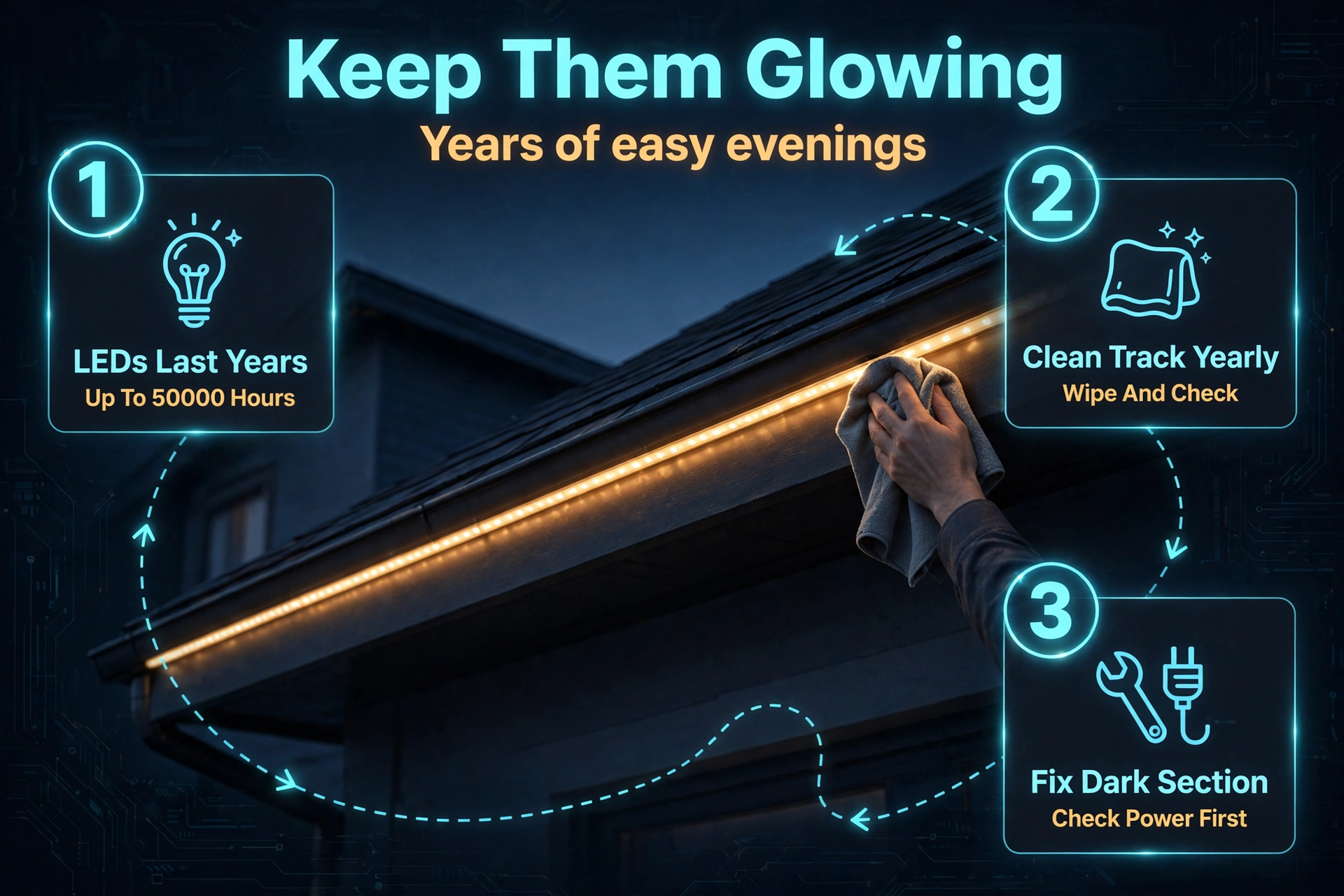
Then, clean the track once a year. Wipe away dust, leaves, and spider webs with a soft cloth, and check the clips while you are up there. Loose clips let a string sag, and a sagging string shows up as a dip in the light line.
Finally, if a section goes dark, check the power supply and the first node in the dead run before you blame the whole string. A loose connector at the start of a run is the most common cause, and it takes minutes to reseat. Low-voltage landscape lighting around the same home adds to the same evening look, so read our guide on how to install low-voltage landscape lighting before you dig the first trench.
FAQs
How long do they last?
Quality LEDs are rated up to 50,000 hours, which covers many years at a few hours per night. The controller and power supply usually age first, often after six to ten years. Both parts can be swapped without redoing the track, so a full reinstall is rarely needed.
Can you leave them up all year?
Yes, that is the whole point of the system. The lights and track are built for rain, snow, and summer heat, and they stay mounted through every season. When a holiday ends, switch the app to warm white or turn the lights off until the next event.
Are they worth it?
They are worth it if you use them most nights and plan to stay in the home for years. You save the yearly ladder work, storage, and setup time, and one system covers every holiday. If you only decorate in December, seasonal lights cost less and give you a fresh look each year.
Do they work with Alexa and Google Home?
Most DIY kits do, and many pro systems do too. Govee kits work with Alexa, Google Assistant, and Matter, so you can switch scenes or set schedules by voice. Check the exact model before you buy, since support varies by brand and by product line.
Can I install them myself?
Yes, if your home is single-story and you are comfortable on a ladder. Measure twice, test the string on the ground, and work on a dry, calm day. Hire a pro for a two-story home, a steep roof, or any run that needs hardwiring into your home electrics.
Do I need HOA approval for them?
Often yes, or at least a quick check of the rules. Many associations allow them with limits on colors, hours, or animation, while historic districts can be stricter. Email your board before you order, and keep the written approval with your install paperwork.
Conclusion
So permanent Christmas lights trade a one-time install for years of easy evenings. You get a tidy roofline, app control, and light for every holiday, without the ladder or storage bins.
Start with your roofline measurement and your HOA rules. Then pick a DIY kit or a pro system. Measure twice, test at night, and enjoy the first December when the lights turn on.