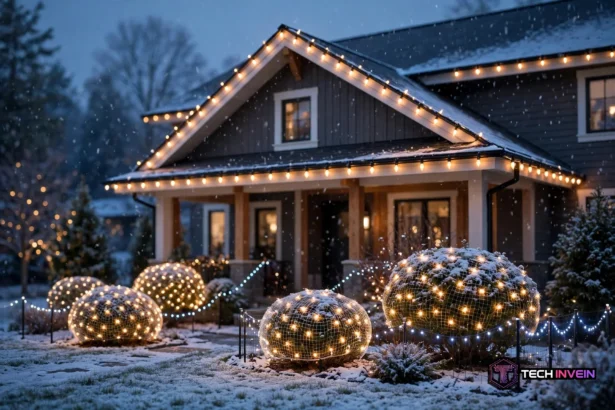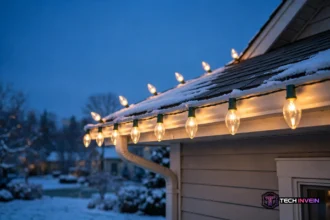


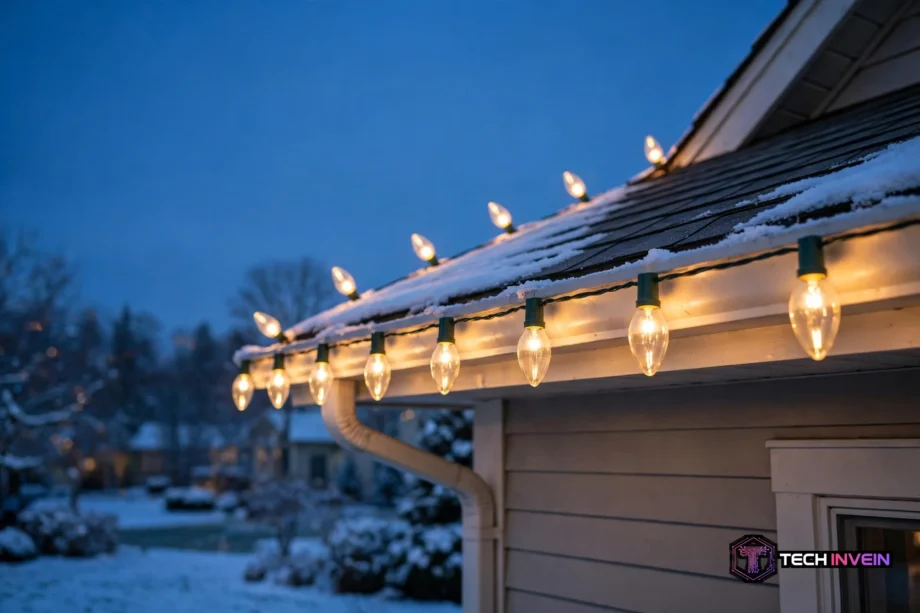
C9 Christmas lights are the big, cone-shaped bulbs you see on rooflines and large trees each December. They measure about 1.25 inches wide and 2.25 inches tall, so they stand out from the street. This guide explains their size, styles, and power needs, and then shows you how to hang them safely.
- What Are C9 Christmas Lights?
- C9 vs C7 Bulbs
- LED vs Incandescent C9 Bulbs
- Styles and Colors
- How Many C9 Lights Do You Need?
- How to Hang C9 Christmas Lights
- Power, Timers, and Smart Control
- Common Mistakes to Avoid
- Storing Your Lights
- FAQs
- How big is a C9 Christmas light bulb?
- How many C9 lights do I need for a roofline?
- Can you use C9 bulbs indoors?
- Do LED C9 lights look as warm as incandescent ones?
- How many C9 LED strands can you connect together?
- Can C9 bulbs stay up all winter?
- Conclusion
What Are C9 Christmas Lights?
C9 Christmas lights use a large conical bulb with an E17 intermediate base. The letter C stands for conical, and the number 9 means the bulb is 9/8 of an inch wide. That works out to about 1.125 inches, though most bulbs measure closer to 1.25 inches with the lens included.
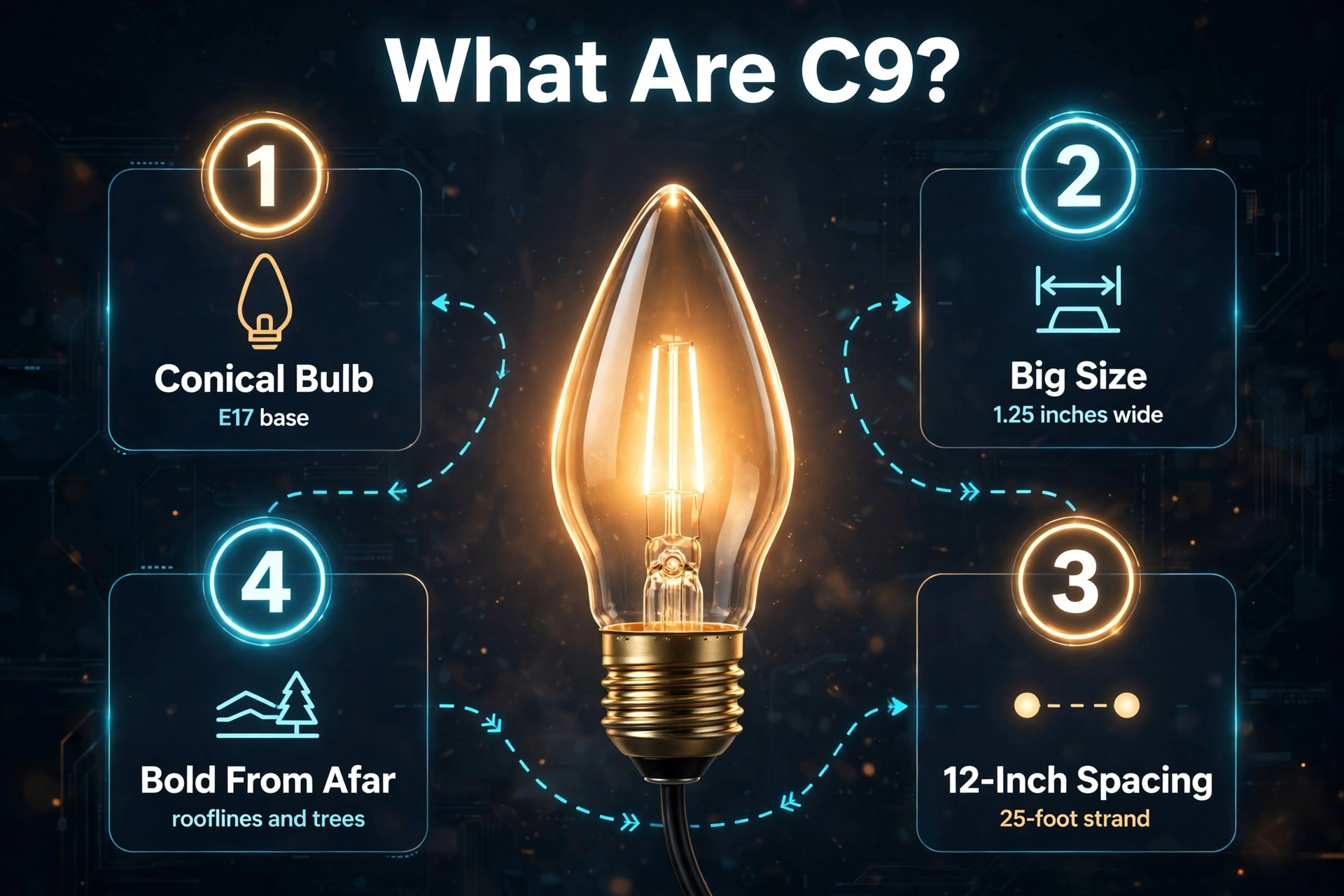
They sit on heavy-duty outdoor wire, and most strands space the bulbs 12 inches apart. So a 25-bulb strand runs about 25 feet long. You can also buy empty socket wire and screw in your own bulbs, and then you can pick the exact colors you want.
Because the bulbs are large, they read well from far away. That is why installers use them on rooflines, tall trees, fences, and signs. Smaller mini lights can vanish from the curb, but C9 bulbs still show up clearly.
C9 vs C7 Bulbs
C7 bulbs are the smaller cousin of C9 bulbs. They measure 7/8 of an inch wide and about 1.5 inches tall, and they use a smaller E12 candelabra base. So C7 and C9 bulbs do not fit in the same sockets, and you cannot swap them by mistake for long.
C7 bulbs suit windows, small porches, and indoor trees. They give a neat, classic look up close. C9 bulbs suit big jobs where you need bold light from a distance. If your house is set back from the road, C9 bulbs will show up better.
Table: C9 vs C7 Christmas lights at a glance
| Feature | C9 | C7 |
|---|---|---|
| Bulb width | About 1.25 inches | About 0.875 inches |
| Bulb height | About 2.25 inches | About 1.5 inches |
| Socket base | E17 intermediate | E12 candelabra |
| Typical spacing | 12 inches | 6 or 12 inches |
| Best use | Rooflines and large trees | Windows and small displays |
LED vs Incandescent C9 Bulbs
LED C9 bulbs use about 0.5 to 1 watt each, while an old incandescent C9 bulb uses about 7 watts. So a 100-bulb LED roofline draws around 50 to 100 watts, but the same line in incandescent bulbs draws about 700 watts. That gap matters when you add trees and bushes too.
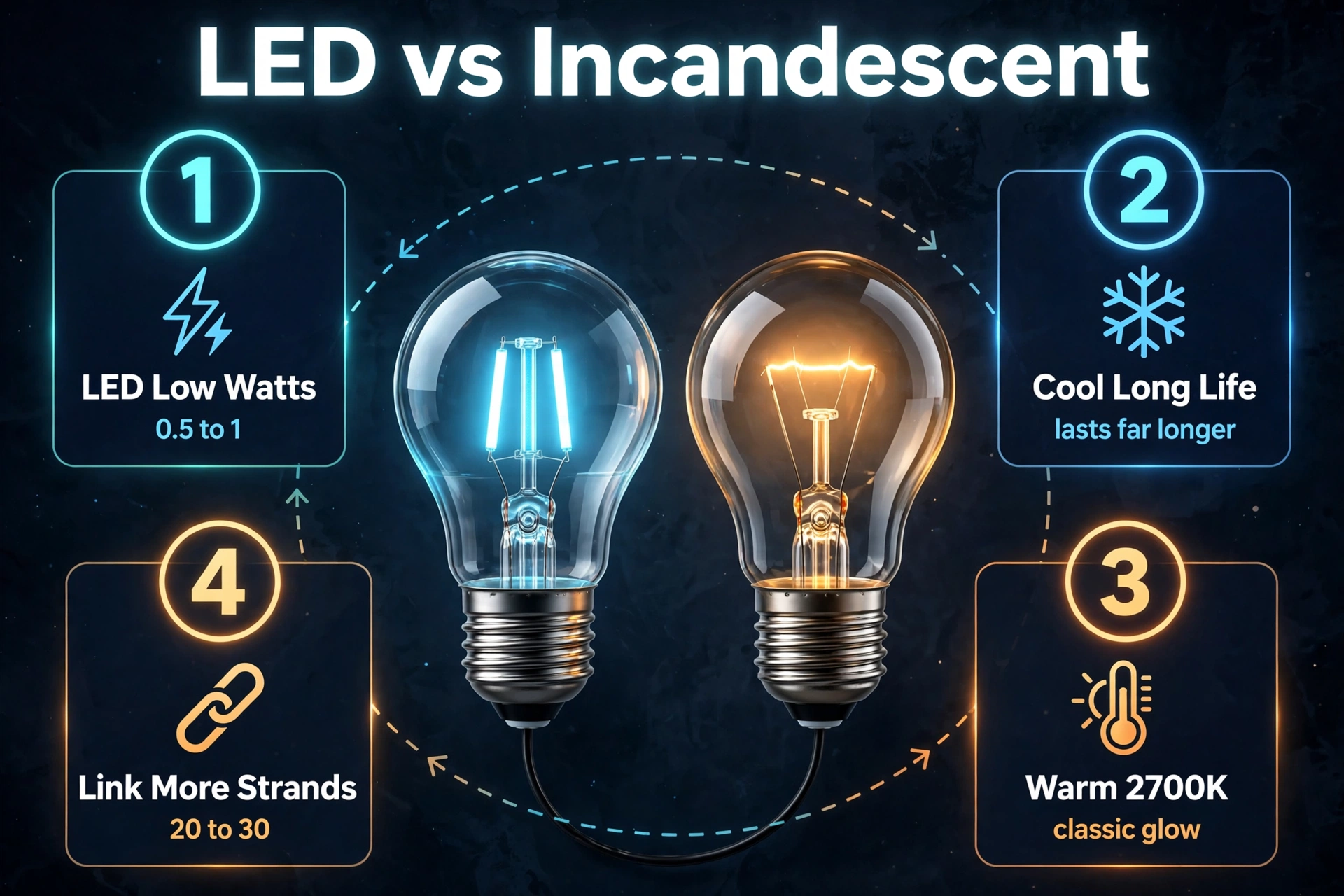
LED bulbs also run cool to the touch and last far longer. Many are rated for tens of thousands of hours, and the plastic lens does not shatter like glass. Incandescent bulbs give a warm, classic glow, but they burn out faster and they get hot.
Warm white LED bulbs now sit near 2700K, which matches the warm tone of an old incandescent bulb. Faceted LED lenses also sparkle in a similar way. So you can keep the classic look and still cut the power draw by about 90 percent.
One more difference is how many strands you can link. LED strands often allow 20 to 30 sets end to end, while incandescent strands may allow only 3 to 5. Always check the limit printed on the box, because it varies by brand and by wire gauge.
For a clear side-by-side look at power use and build, read this LED vs incandescent C9 comparison from a professional installer.
Styles and Colors
C9 bulbs come in warm white, cool white, red, green, blue, and multicolor sets. Warm white looks soft and classic, while cool white looks crisp and bright. Multicolor sets give a playful, old-school feel that suits a big family display.
You can also buy faceted, smooth, or frosted lenses. Faceted lenses throw sparkle in many directions, so they look bright from the street. Smooth lenses give a clean, even glow. Frosted lenses soften the light and suit a calm, simple outline.
Some LED C9 bulbs change color or dim with an app or remote. These smart versions cost more, and they need a controller or Wi-Fi link. They suit people who want to shift from warm white in early December to red and green near Christmas.
Wire color matters too. Green wire blends into trees and bushes, while white wire suits a white house or white trim. Brown wire hides well on brick or wood. Pick the wire that matches the surface, because it keeps the focus on the bulbs.
If you want color-changing control and schedules, compare the options in our guide to the best smart Christmas lights before you buy a full set.
How Many C9 Lights Do You Need?
Start by measuring each roofline run on the ground. Measure the eaves, the gable edges, and any dormers as separate runs. Write each number down, because a single total hides the spots where a strand will end short.
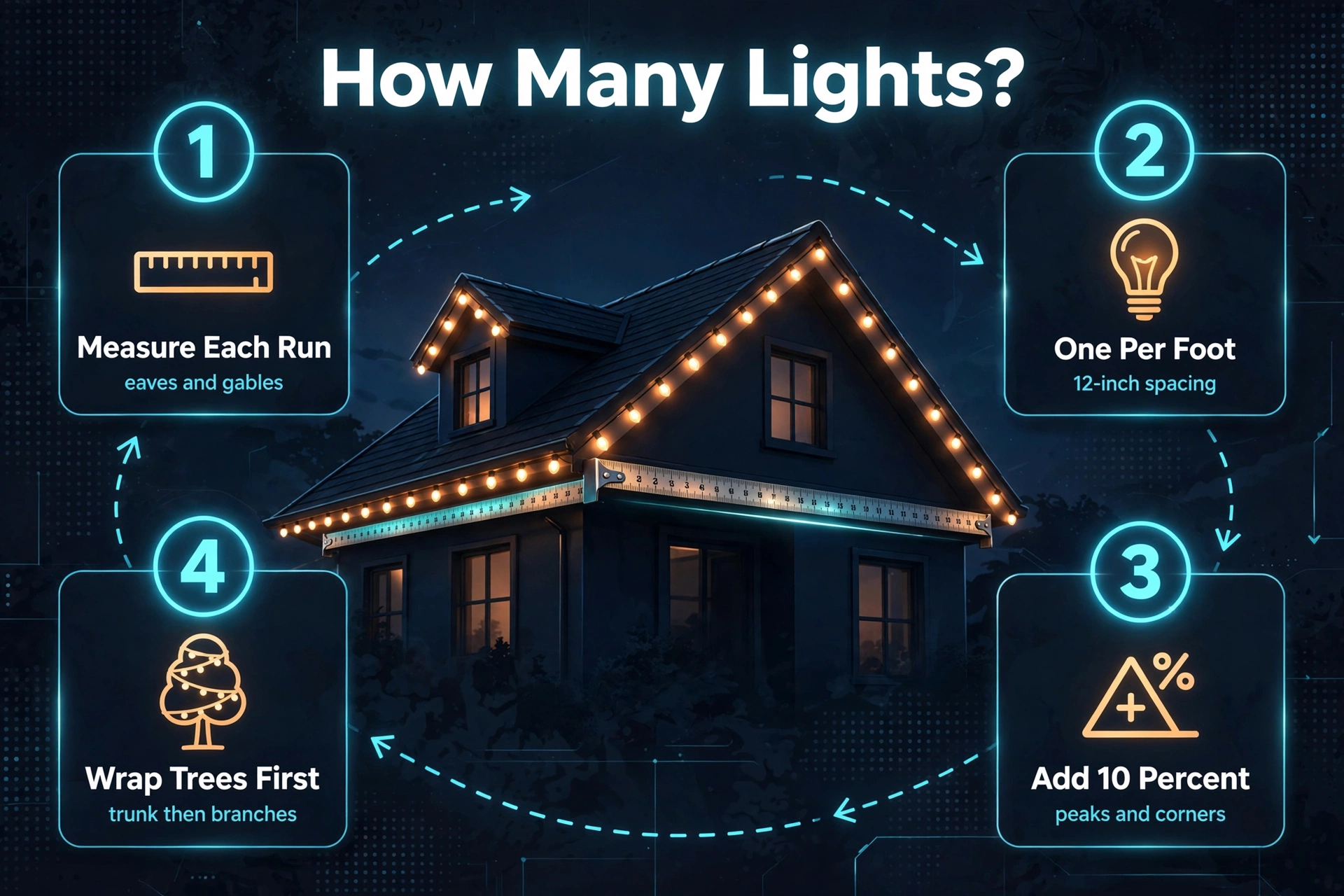
With 12-inch spacing, one bulb covers about one foot of roofline. So a 40-foot eave needs about 40 bulbs, which is two 25-bulb strands with a few bulbs to spare. Add 10 percent extra for peaks, corners, and the drop down to the outlet.
Here is a worked example from a typical one-story front. The front eave measured 38 feet, and each gable edge measured 14 feet. That gave 66 feet in total, so the plan called for 66 bulbs plus a spare strand for the porch. The final count was 75 bulbs, and no strand ended mid-peak.
For trees, wrap the trunk first and then spiral up the main branches. A 6-foot tree may need 50 bulbs, while a 12-foot tree can take 150 or more.
For paths and beds around the house, our guide to the best smart outdoor pathway lights with no wiring can help you light the ground level to match the roof.
How to Hang C9 Christmas Lights
Hang C9 lights in daylight on a dry day, and test every strand on the ground first. Plug each strand in, check that every bulb lights, and flex the wire gently while you watch for flicker. A loose socket will fail on the roof, so fix it now while the strand is easy to reach.
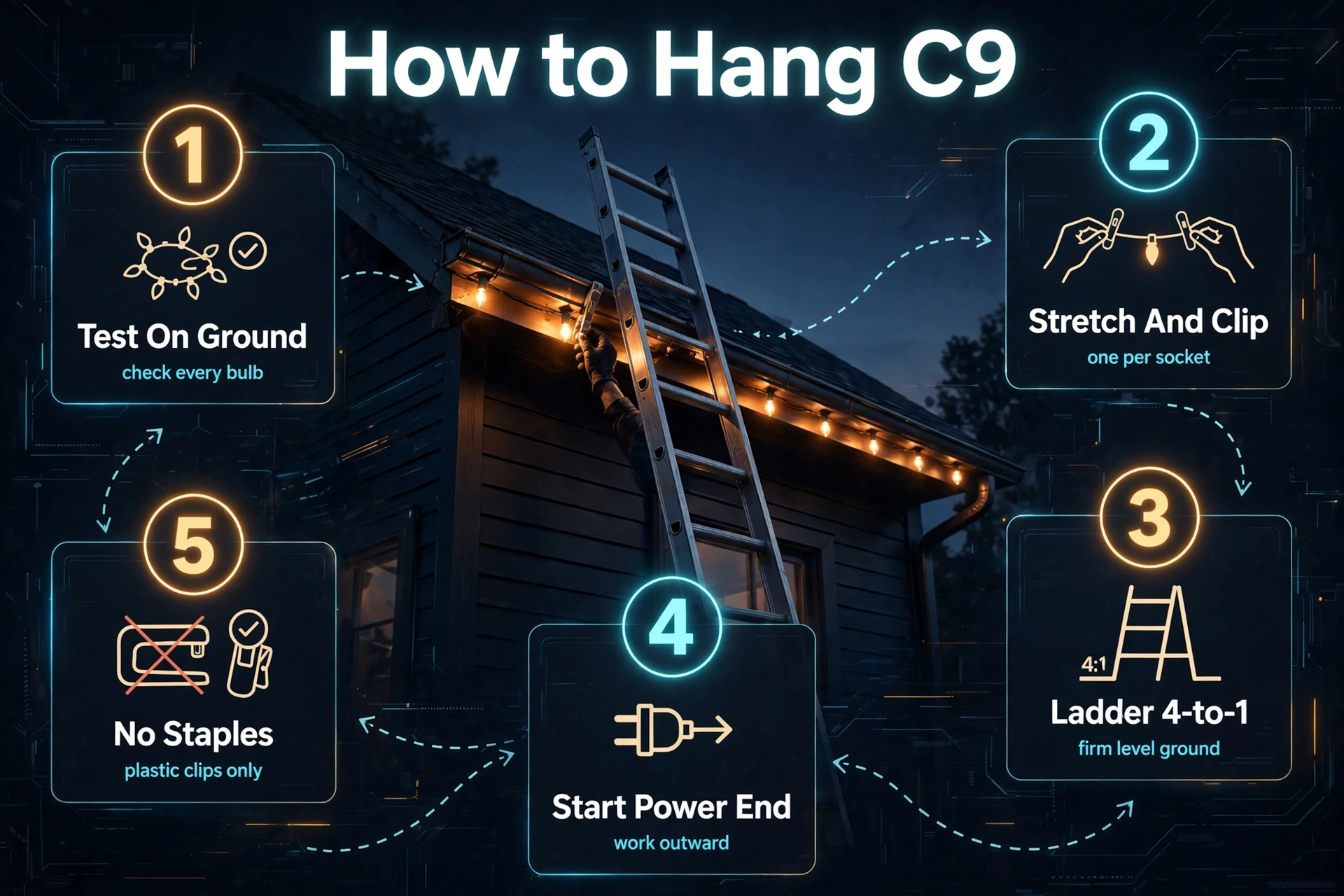
First, lay the strand flat and stretch it gently by hand. This step removes the coil memory from storage, so the wire hangs straight later. Then fit the clips on the ground, one clip per socket, so you do not fumble with them on the ladder.
Next, set your ladder on firm, level ground at a 4-to-1 angle. That means the base sits one foot out from the wall for every four feet of height. Keep three points of contact at all times, and have a second person hold the base.
Start at the power end and work outward. Hook each clip onto the gutter edge or slide it under the shingle tab, then move the ladder instead of reaching. Look back along the run every few feet, and square each bulb so they all point the same way.
At a peak, end one run exactly at the peak and start the next run there. This trick gives a clean meeting point on both sides. At a valley where two roof sections meet, bridge the gap with a jumper cord instead of bending socket wire through it.
Never use staples, nails, or screws to hang Christmas lights. A staple can pierce the wire insulation, cause a short, and start a fire. Plastic all-in-one clips grip the gutter or slide under a shingle, and they leave no holes behind.
For a step-by-step hanging order with ladder safety tips, see this guide to hanging C9 Christmas lights from an installer.
Which Clips Should You Use?
All-in-one clips suit most homes, because they clip to gutters and also slide under shingles. Gutter clips hook over the gutter edge, while shingle clips slide under the shingle tab. Pick the clip that matches your roof edge, and buy one clip per socket.
For brick or stone walls, use outdoor adhesive clips or screw-in hooks set in the mortar joint. Never drill into the brick itself, because that cracks the face and leaves a permanent hole. Test one adhesive clip first, because cold or dusty brick can weaken the bond.
Ladder Safety Basics
Use a fiberglass ladder if you can, because it does not conduct power like aluminum. Extend the ladder at least 3 feet above the roof edge if you plan to step onto the roof. Keep your belt buckle between the rails, and never lean out to reach one more clip.
Power, Timers, and Smart Control
Plug C9 lights into a GFCI-protected outdoor outlet. A GFCI outlet cuts power fast if water gets into a connection, and that matters in rain and snow. If your outdoor outlet lacks GFCI protection, use a portable GFCI adapter or ask an electrician to fit one.
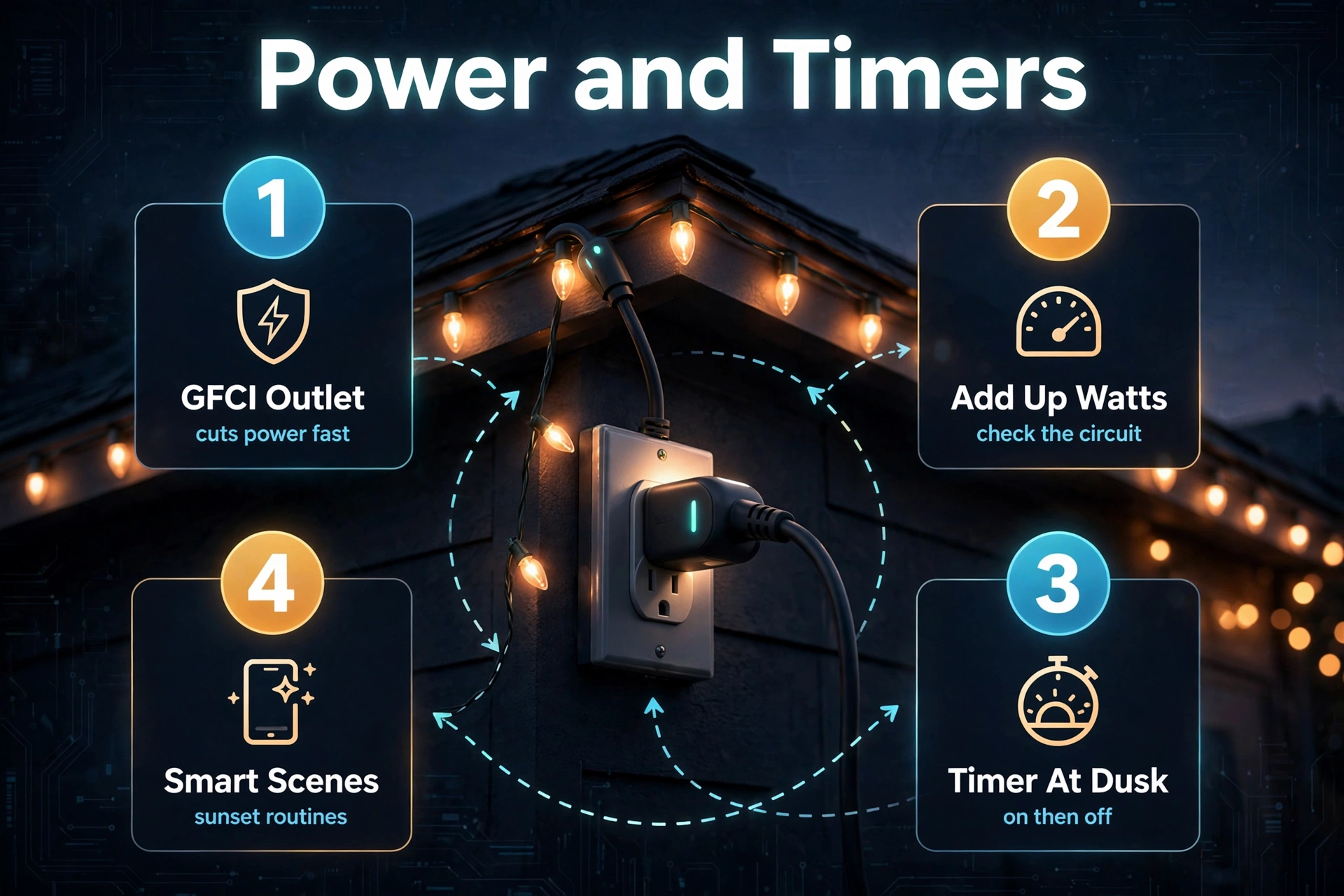
Add up the watts before you plug in. A 100-bulb LED line draws about 50 to 100 watts, so several lines can share one circuit. An incandescent line of the same size draws about 700 watts, so it can trip a breaker fast when you add more runs.
A timer saves power and saves you a daily trip outside. Set the lights to turn on at dusk and off near bedtime, and then forget about them. A simple plug-in timer works fine, and a smart plug adds phone control on top.
Smart plugs and smart switches also let you set scenes and sunset routines. You can link the roofline to your porch light, so the whole front of the house turns on together. It feels like one system, not a pile of separate timers.
Our guide to automating outdoor lights at sunset and sunrise with Home Assistant shows how to tie the display into a full home setup.
Common Mistakes to Avoid
The most common mistake is buying strands before measuring. A strand that ends two feet short of a peak looks unfinished, and a strand that runs long leaves a coil of wire at the end. Measure first, buy second, and keep one spare strand in the box.
Another mistake is pulling the wire taut between clips. Tight wire has no give, so wind and cold can snap a socket or pull a clip loose. Leave a slight sag between clips, and let the wire rest in the clips instead of hanging from them.
People also mix old and new bulbs on one strand without checking the base. LED and incandescent C9 bulbs share the E17 size in many cases, but some strands use a different socket or voltage. A wrong bulb can flicker, burn out, or damage the strand.
Skipping the ground test is a third mistake. A dead bulb is a small job on the ground and a big job on a ladder. Test each strand, swap the dead bulbs, and then hang it. Your future self will thank you at dusk.
For the porch and entry around the same display, read our guide on motion sensor porch light automation so the ground-level lights match the roofline.
Storing Your Lights
Take the lights down on a dry day, and wipe each strand with a dry cloth. Damp wire in a sealed box grows mold, and it can corrode the sockets over the summer. Let the strands dry fully before you pack them.
Coil each strand loosely around your elbow or a reel, and do not yank it off the clips. A tight coil kinks the wire, and a kink can crack the insulation. Loose coils keep the wire straight for next year.
FAQs
How big is a C9 Christmas light bulb?
A C9 bulb is about 1.25 inches wide and 2.25 inches tall, with a conical shape and an E17 intermediate base. It is much larger than a C7 bulb, which measures about 0.875 inches wide. That size makes C9 bulbs easy to see from the street, so they suit rooflines and large trees.
How many C9 lights do I need for a roofline?
With standard 12-inch spacing, plan one bulb per foot of roofline. Measure each eave and gable edge on the ground, add the runs together, and then add about 10 percent extra for peaks and corners. A 40-foot eave needs about 40 bulbs, which is two 25-bulb strands with spares left over.
Can you use C9 bulbs indoors?
Yes, you can use them indoors, but they suit large rooms and tall trees best. Their size and brightness can overwhelm a small tree or a short mantel. For indoor use, pick LED bulbs, keep them away from curtains and paper, and plug them into a timer so they do not run all night.
Do LED C9 lights look as warm as incandescent ones?
Yes, warm white LED C9 bulbs near 2700K match the warm tone of old incandescent bulbs closely. Faceted LED lenses also give a similar sparkle from the street. If the color looks too cool, swap the bulbs for warm white ones, because cool white can look harsh on a classic house.
How many C9 LED strands can you connect together?
Many LED C9 strands allow 20 to 30 sets end to end, but the exact limit varies by brand and wire gauge. Incandescent strands often allow only 3 to 5 sets, because they draw far more power. Always read the limit printed on the box, and never link more strands than the maker allows.
Can C9 bulbs stay up all winter?
Outdoor-rated C9 lights can stay up through winter, but they will last longer if you take them down after the season. Snow, ice, and wind wear out clips and sockets over time. Take them down on a dry day, dry them fully, and store them loosely coiled in labeled bags.
Conclusion
C9 Christmas lights are the bold, classic choice for rooflines and big trees. Pick LED bulbs in warm white for the classic glow, measure each run on the ground, and hang them with plastic clips on a dry day. Test every strand first, add a timer, and step back at dusk to check the line from the street. Start with one roofline run this weekend, and build the rest of the display from there.