

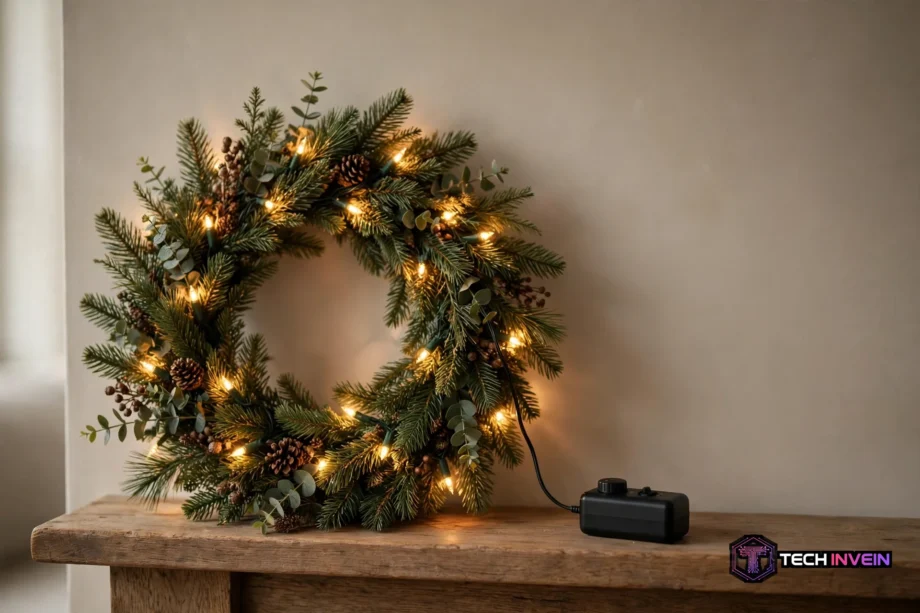
Battery operated Christmas lights run on batteries instead of a wall outlet, so you can hang them almost anywhere. They suit wreaths, mantels, jars, and spots far from power. This guide covers how long they last, which batteries to pick, and how to use them safely indoors and out.
- What Are Battery Christmas Lights?
- Where They Work Best
- Types of Battery Christmas Lights
- How Long Do Battery Operated Christmas Lights Last?
- Battery Types Compared
- Battery Operated Christmas Lights for Outdoor Use
- How to Choose the Right Set
- How to Hang Them Step by Step
- Step 1: Plan the Route
- Step 2: Fix the Battery Box First
- Step 3: Hang With Clips, Not Nails
- Step 4: Test the Modes and Timer
- Common Mistakes to Avoid
- Storage and After-Season Care
- Safety Tips
- FAQs
- How long do battery Christmas lights last on one set of batteries?
- Are battery Christmas lights safe to leave on overnight?
- Can I use battery Christmas lights outdoors in rain?
- Which batteries last longest in battery Christmas lights?
- Why do my battery Christmas lights dim after a few nights?
- Can I mix old and new batteries in Christmas lights?
- Conclusion
What Are Battery Christmas Lights?
These are LED string lights with a small battery box at one end. You switch them on, pick a mode, and the box powers the whole strand. Most sets use AA or AAA batteries, and some use a built-in rechargeable pack.
So why do so many people pick them? The answer is simple. No cord means no outlet hunt and no cable across the floor. You can wrap a banister, fill a glass jar, or light a wreath on a door with no socket nearby.
Where They Work Best
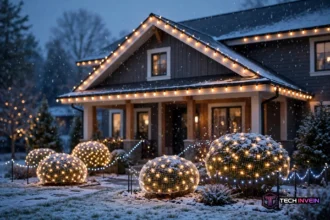
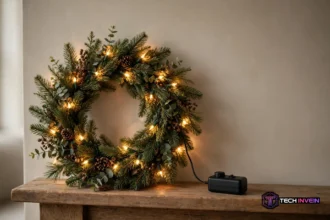
Think small and scattered. Battery lights shine on wreaths, garlands, table centerpieces, stair rails, and window frames. They also work well on a porch railing or a mailbox post where no outlet sits close by.
They are a poor fit for a full roofline or a large tree. A big display would eat through batteries fast, and you would spend the season swapping cells. For those jobs, a plug-in set on a timer is the better tool.
Types of Battery Christmas Lights
Not every set looks or behaves the same. The wire, the bulb style, and the battery box all change how the lights feel in your home. So pick the type that fits the spot, not just the prettiest box.
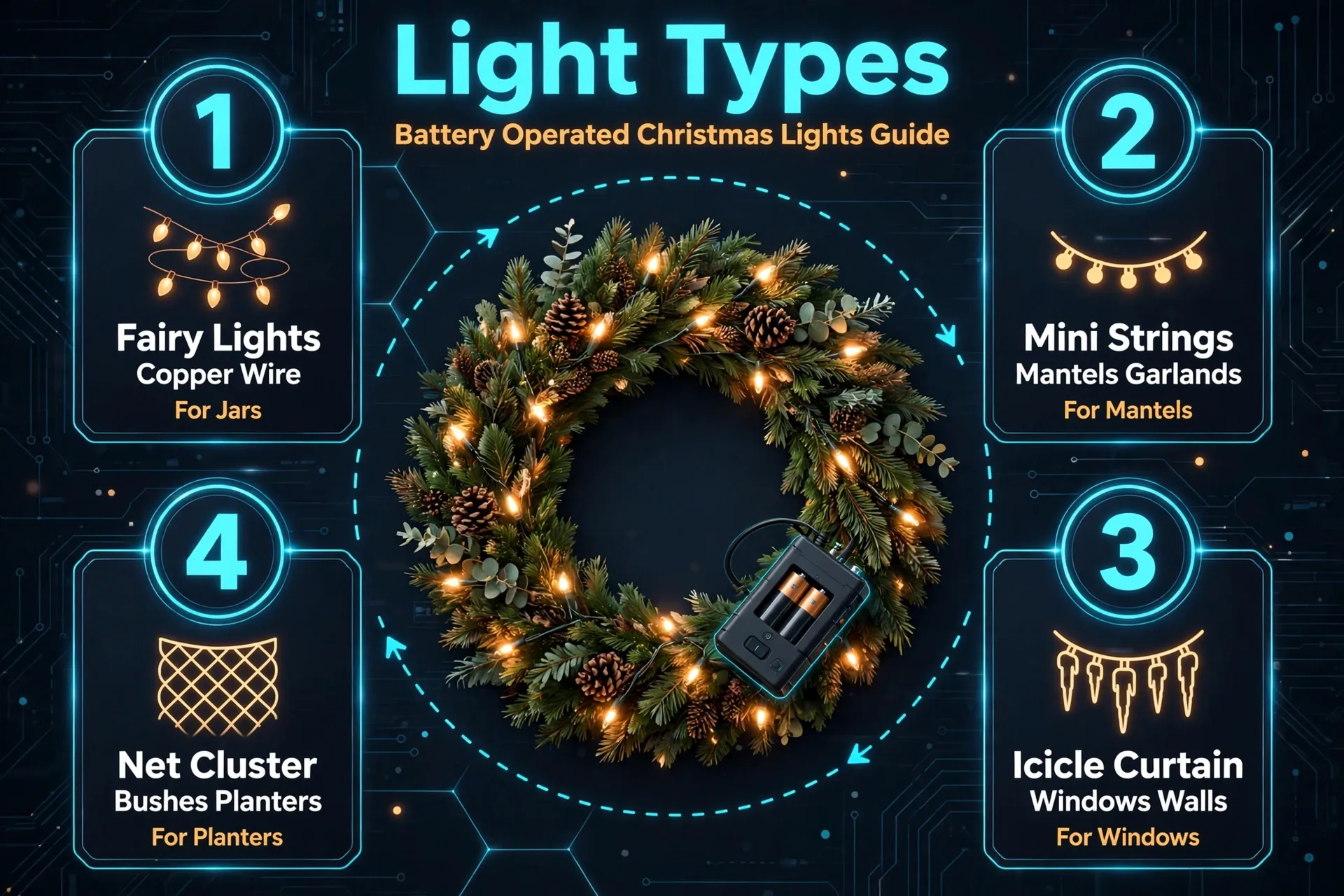
Fairy Lights on Copper Wire
These use tiny LEDs on thin, bendable copper wire. They suit jars, vases, and small trees because you can shape the wire around almost anything. The glow is soft, so they work best as an accent.
Mini String Lights
Mini strings look like classic Christmas lights, with small bulbs spaced along a green or clear wire. They fit mantels, garlands, and small trees. They give a fuller look than fairy lights, so they read as proper holiday decor from across the room.
Icicle and Curtain Lights
Icicle strands hang in drops of different lengths, and curtain strands fall in even rows. Both suit windows and walls. They need a hook or rod at the top, so plan the hanging point first.
Net and Cluster Lights
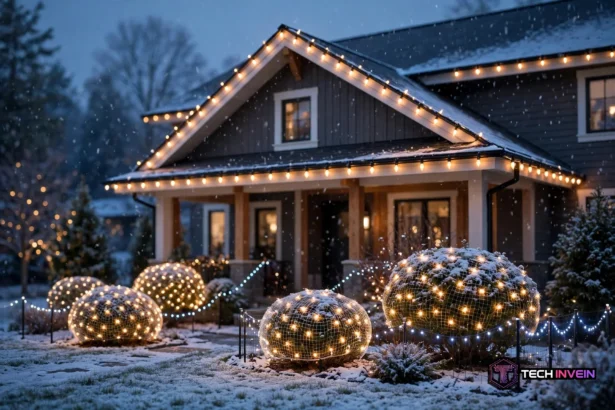
Net lights drape over bushes in one piece, while cluster lights pack many LEDs into a short strand for a dense glow. Both give a lot of light for their length. They suit a porch planter or a small shrub near the door.
How Long Do Battery Operated Christmas Lights Last?
That depends on the batteries, the LED count, and how many hours they run each night. A small LED strand can run 40 to 60 hours on a fresh set of AA alkaline batteries. Larger strands with more LEDs run for less time, because they draw more current.
A timer changes the math in your favor. Most built-in timers run 6 hours on and 18 hours off. At 6 hours a night, a 40-hour set lasts about 6 nights, while a 60-hour set lasts about 10 nights. So a timer can stretch one set of batteries across more than a week of evenings.
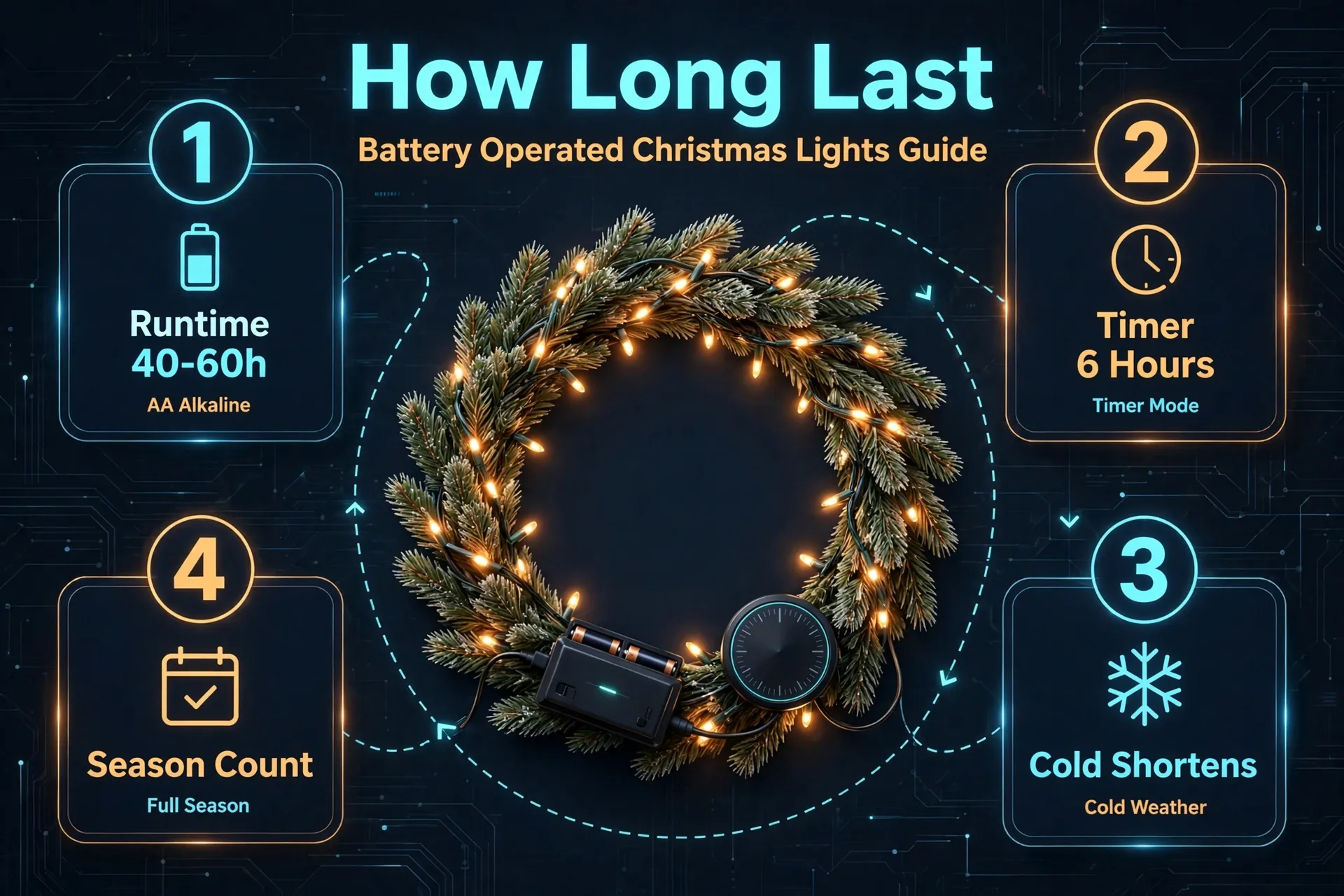
Cold weather shortens that time. Alkaline batteries can lose a large share of their capacity below freezing, so an outdoor strand may dim sooner than the same strand indoors. Lithium AA cells hold up far better in the cold, and Energizer Ultimate Lithium AA batteries are rated to work from minus 40 degrees Fahrenheit to 140 degrees Fahrenheit.
Here is a worked example you can copy. Take a small wreath strand that draws about 50 milliamps. A fresh alkaline AA holds about 2,500 milliamp-hours, so the set runs for about 50 hours. At 6 hours a night, that is about 8 nights per set of batteries.
Now stretch that across a season. If you light the wreath for 37 nights, from late November to New Year, you will need about 5 sets of batteries. That is 15 AA cells for one wreath. Three decorations at the same rate would need 45 cells, so count your strands before you stock up.
Battery Types Compared
All AA batteries are not equal. The chemistry inside the cell decides how long your lights stay bright and how they cope with cold. So match the battery to the spot, not just to the shelf price.
Alkaline cells are the default choice. They are cheap, easy to find, and fine for indoor use at room temperature. Their voltage sags as they drain, so the lights dim slowly before they go out.
Rechargeable NiMH cells cost more up front, but you can reuse them for many seasons. They run at a slightly lower voltage, so some strands may look a touch dimmer at first. Still, they are the best pick if you decorate every year and want less waste.
Lithium cells cost the most per cell, yet they last longest and handle cold best. They hold their voltage steady, so lights stay bright until near the end. For outdoor use in freezing weather, they are worth the extra cost.
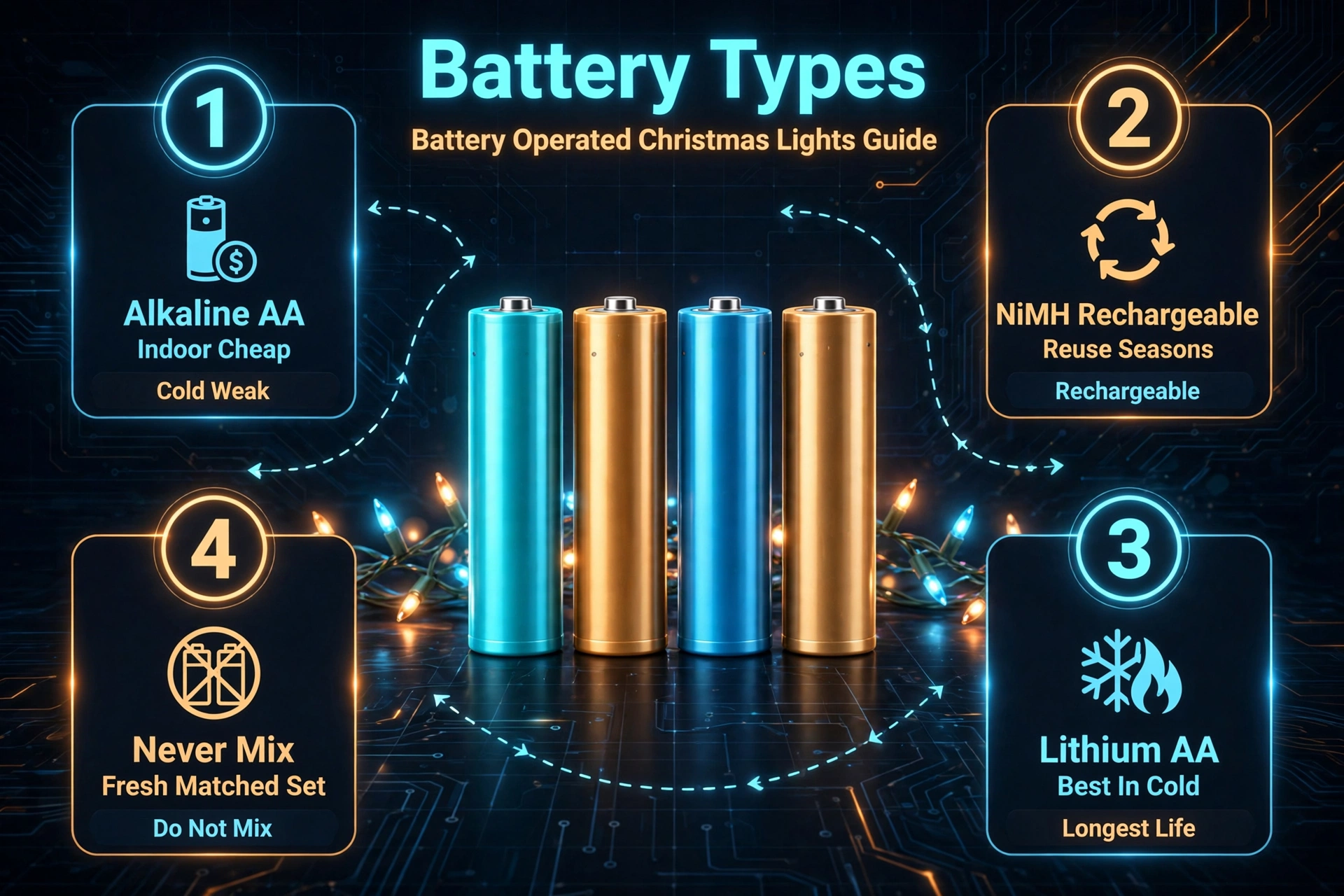
Table: Battery types for Christmas lights
| Battery Type | Best For | Cold Weather | Reuse |
|---|---|---|---|
| Alkaline AA | Indoor displays | Weak below freezing | No |
| NiMH rechargeable | Yearly decorating | Fair | Yes |
| Lithium AA | Outdoor and cold spots | Strong to minus 40 F | No |
| Zinc-carbon AA | Very short use only | Poor | No |
One rule matters more than the rest. Never mix old and new batteries, and never mix types in the same box. Mixed cells drain unevenly, and the weak one can leak. So start each strand with a fresh matched set.
Battery Operated Christmas Lights for Outdoor Use
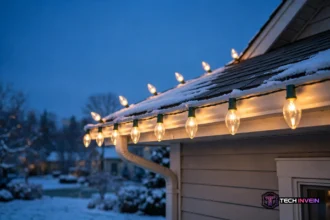
Yes, you can use them outside, but only if the set is rated for outdoor use. Battery power does not make an indoor set weatherproof. Rain and snow can get into the battery box and the connections, so check the box and the tag before you hang anything outside.
Look for three things on the packaging. First, a clear statement that the set is for outdoor use. Second, an IP rating, where a higher second digit means better water protection. Third, a sealed or covered battery box, because the box is often the first part to fail in wet weather.
Place the battery box where water cannot pool. Tuck it under an eave, inside a planter, or behind a post, with the cover facing down. If the box sits in a puddle, even a good seal may fail over time.
For larger outdoor displays, plug-in lights may still win. Our guide to outdoor pathway lights that need no wiring covers options for paths and yards where running a cable is hard. Battery strands suit the small spots around those bigger displays, not the whole yard.
How to Choose the Right Set
Start by measuring the spot. Lay a piece of rope along the route, then measure the rope. A strand that is too short leaves a gap, and a strand that is too long bunches up in an ugly lump.
Next, count the LEDs. More LEDs mean a brighter look, but they also drain the batteries faster. For a mantel or a jar, 20 to 30 LEDs are often enough. For a garland, look at 50 or more.
Then check the timer. A 6-hour timer is the most useful feature on a battery set, because it stops the lights from burning all night. If the set has no timer, you will need to switch it off by hand each night.
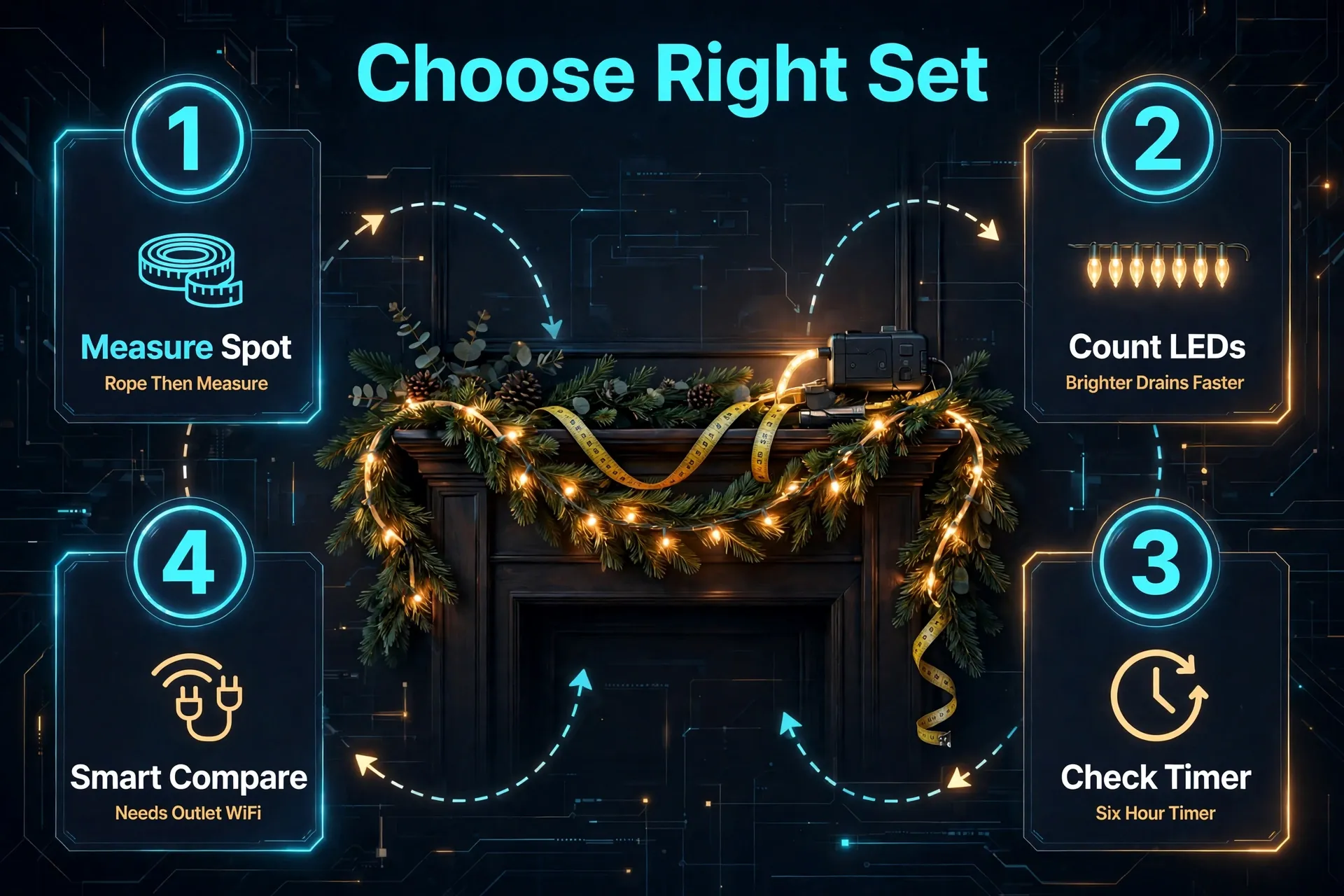
If you want lights you can control from your phone, compare them with our picks for the best smart Christmas lights. Smart sets need power and Wi-Fi, so they suit a tree near an outlet, while battery sets suit the spots smart lights cannot reach.
How to Hang Them Step by Step
Good hanging starts before you touch a hook. Test the strand first, on a table, with fresh batteries. If a bulb is dead or a mode does not work, you want to find out now, not after the strand is wrapped around a banister.
Step 1: Plan the Route
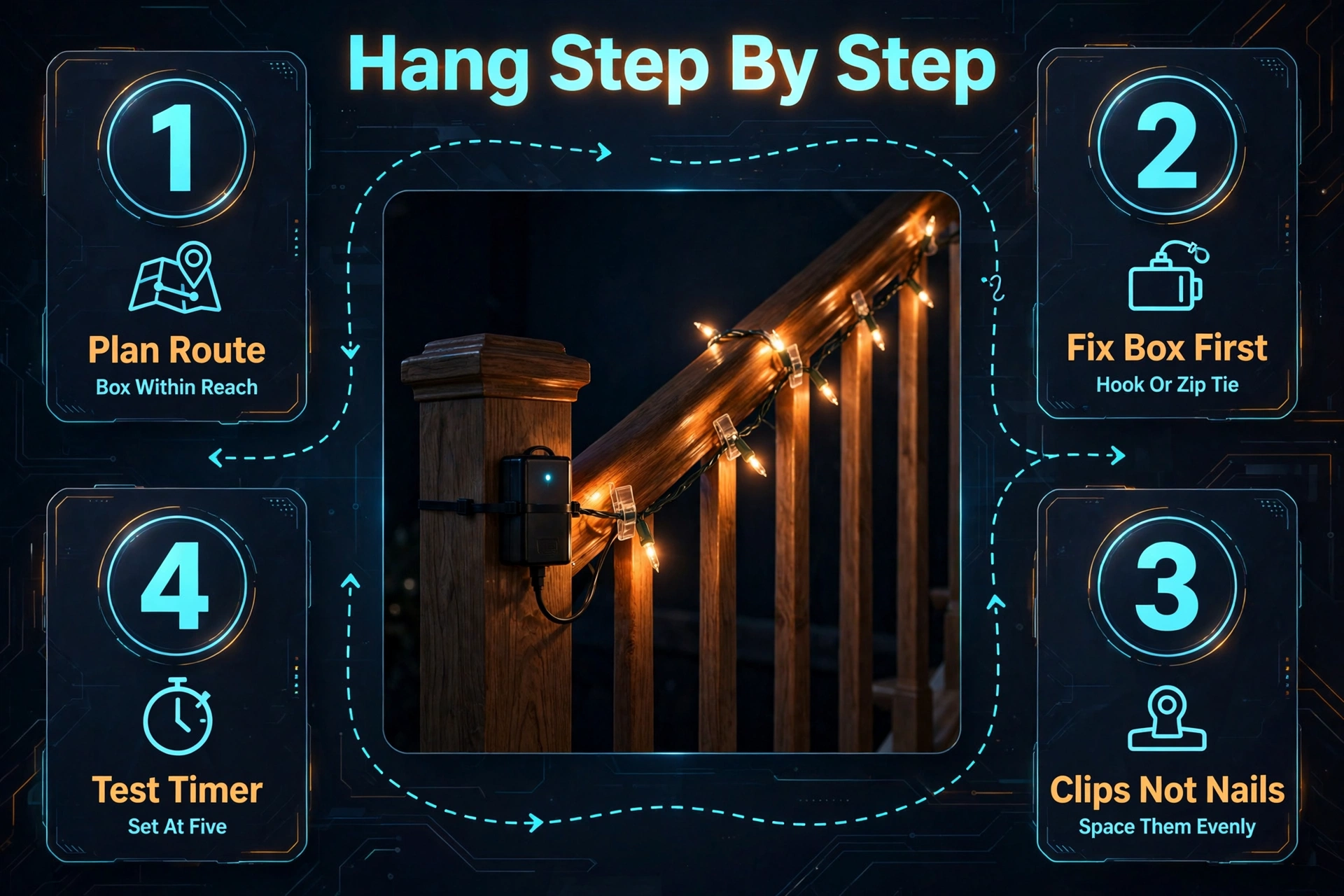
Walk the route with the strand still in its box. Note where the battery box will sit, and make sure you can reach it to change batteries. A box buried behind a heavy garland is a chore every time the cells run low.
Step 2: Fix the Battery Box First
Mount the box before you hang the strand. Use a small hook or a zip tie, and keep the box upright with the cover facing down outdoors. Then run the strand from the box outward, so you never run out of wire halfway.
Step 3: Hang With Clips, Not Nails
Use plastic light clips or small adhesive hooks. Space them every 30 to 45 centimeters so the strand does not sag. Never use nails, staples, or tape that pulls on the wire, because a nick in the insulation can kill the strand.
Step 4: Test the Modes and Timer
Switch through each mode and watch the strand for a minute. Then set the timer. A 6-hour timer set at 5 p.m. switches off at 11 p.m., so set it when you want the show to start.
Common Mistakes to Avoid
The most common mistake is leaving the batteries in after the season ends. Old cells can leak, and leaked acid can ruin the contacts in the box. Take the batteries out when you pack the lights away, and store the strands in a dry box.
The second mistake is buying an indoor set for an outdoor spot. The strand may work for a week, then fail after the first rain. Check the outdoor rating on the box, and if it is not there, keep the set inside.
A third mistake is hiding the battery box where you cannot reach it. You will need to change the cells every week or two, so the box must stay easy to open. Plan for that before you hang the strand, not after.
Another mistake is mixing battery types in one box. An old cell next to a new one drains fast and can leak. Always replace the full set at once, with cells from the same pack.
Storage and After-Season Care
Good storage starts with clean hands and a dry strand. Wipe off any dirt, then coil the strand loosely around your hand or a piece of cardboard. Tight coils kink copper wire, and kinks break strands.
Store each strand in its own bag or box, with the battery box kept separate. Label the bag with the length and LED count, so you know what you have next December without unwrapping it.
If you use rechargeable cells, charge them before storage and top them up once mid-year. NiMH cells lose charge slowly on the shelf, so a mid-year top-up keeps them ready. For more on rechargeable-powered strands, see our guide to battery LED strip lights.
Safety Tips
Battery lights run at low voltage, so they are safer than plug-in sets around kids and pets. Still, a few rules keep them safe. Check the strand for damage before each use, and throw away any set with frayed wire or cracked sockets.
Never try to recharge a non-rechargeable battery. It can leak or burst, and it will not hold a useful charge. Use only the battery type the box asks for, and fit the cells the right way round.
For garden spots with no outlet at all, solar sets are another option worth a look. Our guide to solar smart lights with a motion sensor for garden pathways covers lights that charge by day and glow at night. They suit paths and beds, while battery sets suit the spots you decorate by hand.
FAQs
How long do battery Christmas lights last on one set of batteries?
A small LED strand usually runs 40 to 60 hours on fresh AA alkaline batteries. With a 6-hour timer, that means about 6 to 10 nights per set. Larger strands with more LEDs run for less time, and cold weather can shorten the run further. Lithium cells last longer, mainly outdoors in freezing weather.
Are battery Christmas lights safe to leave on overnight?
LED battery lights run at low voltage and stay cool, so they are safer than old plug-in sets. Still, it is best not to leave any lights on overnight. Use the built-in timer to switch them off after 6 hours. That saves batteries and removes any risk while you sleep.
Can I use battery Christmas lights outdoors in rain?
Yes, but only if the set is rated for outdoor use. Check the box for outdoor wording and an IP rating, and make sure the battery box has a sealed cover. Place the box where water cannot pool, with the cover facing down. Indoor-only sets will fail after rain, so keep them inside.
Which batteries last longest in battery Christmas lights?
Lithium AA cells last longest, mainly in cold weather, because they hold voltage steady and work down to minus 40 degrees Fahrenheit. Alkaline cells are fine indoors and cost less. Rechargeable NiMH cells are the best value over many seasons, since you can reuse them year after year.
Why do my battery Christmas lights dim after a few nights?
Dimming usually means the batteries are running low, since alkaline voltage sags as cells drain. Cold weather can also cut capacity, so an outdoor strand dims sooner. Try fresh lithium cells outdoors, or move the strand inside. Also check the contacts, because a dirty contact can dim the whole strand.
Can I mix old and new batteries in Christmas lights?
No, you should never mix old and new batteries, or mix types such as alkaline and lithium in one box. Mixed cells drain at different rates, and the weak cell can leak and damage the contacts. Always replace the full set at once, with cells from the same pack.
Conclusion
Battery operated Christmas lights are the easy way to light the spots where no outlet reaches. Pick an outdoor-rated set for the porch, use a timer every night, and choose lithium cells when the cold bites. Measure your spot, test the strand before you hang it, and take the batteries out when the season ends. Start with one wreath or mantel, see how the batteries hold up, and then add more strands next year.