

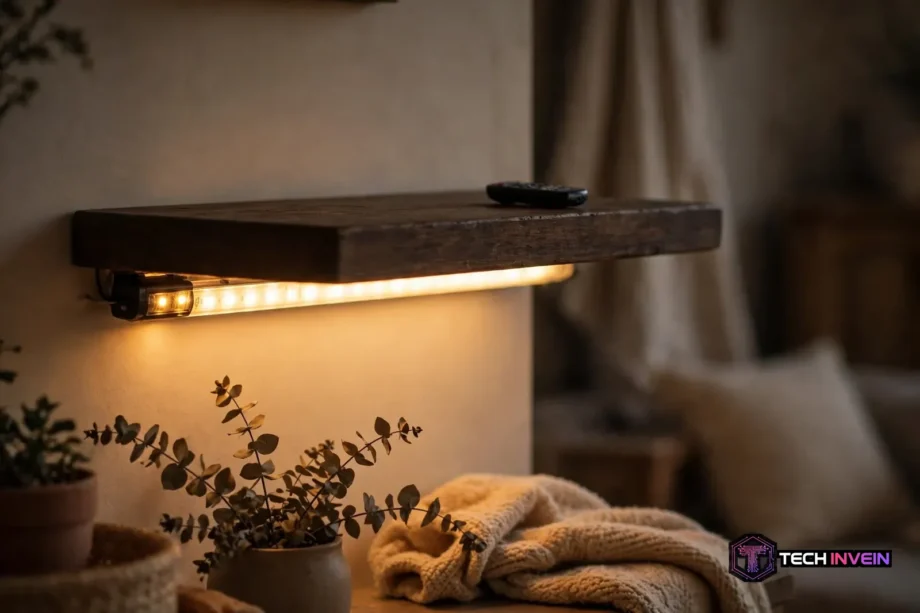
Battery led strip lights are flexible light strips that run on batteries instead of a wall outlet, so you can stick them almost anywhere without drilling or wiring. They suit short, low-brightness jobs like inside a closet or under a shelf. They are not a good stand-in for bright, all-day room lighting, because small batteries drain fast at full brightness.
- What Battery LED Strip Lights Are
- How Long Batteries Actually Last
- Best Uses Around the Home
- Where Battery Strips Disappoint
- Buying Checklist
- Install and Care in Ten Minutes
- FAQs
- How long does one set of batteries last?
- Can I leave a battery strip on all night?
- Are rechargeable batteries worth it here?
- Can I cut a battery strip to fit?
- Why does my strip look dim at the far end?
- Do battery strips work outdoors?
- Final Thoughts
What Battery LED Strip Lights Are
For example, a battery strip is a thin, bendable strip with small LEDs spaced along it. One end connects to a battery box instead of a wall socket. That box holds the cells or a rechargeable pack, so swapping power takes seconds. Most kits also include a small remote. With it, you can switch the strip on, dim it, or change its color without touching the box.

Because there is no plug, you can place these strips in spots where a mains-powered strip would be a hassle. For instance, think of a rented flat. Think of a wardrobe with no socket nearby. Or think of a tent on a camping trip. The trade-off is simple. You gain freedom, yet you lose runtime. Small batteries hold far less energy than a wall socket supplies.
Most battery strips run at 5 volts or 12 volts. The box must match the strip, otherwise the strip may fail. A 5-volt strip won’t run well on a 12-volt pack. A 12-volt strip fed the wrong voltage can fail. So always check the voltage printed on the strip and the battery box before you buy spares.
How Long Batteries Actually Last
This is the question that matters most. Still, the honest answer is that it depends. Runtime depends on three things. First, how much power the strip draws. Second, how much energy the batteries hold. Third, how bright you run the strip. As a result, changing one of those changes the runtime a lot.
Here is a simple way to think about it. A strip that draws 2 watts from a pack holding 10 watt-hours will run for about five hours at full brightness. That is just 10 divided by 2. Dim the same strip to half brightness, and the draw drops. Then the same pack can last closer to ten hours. These are worked examples, not promises for any one product, because real strips and batteries vary.
Short strips last longer than long ones, because fewer LEDs draw less power. Bright white light drains batteries faster than a dim warm glow. In particular, color-changing modes draw more than a single steady color. So if a listing promises a runtime, check what it assumes. Specifically, look at the brightness and the length behind that number. A claim measured at 30 percent brightness won’t match your evenings at full brightness.
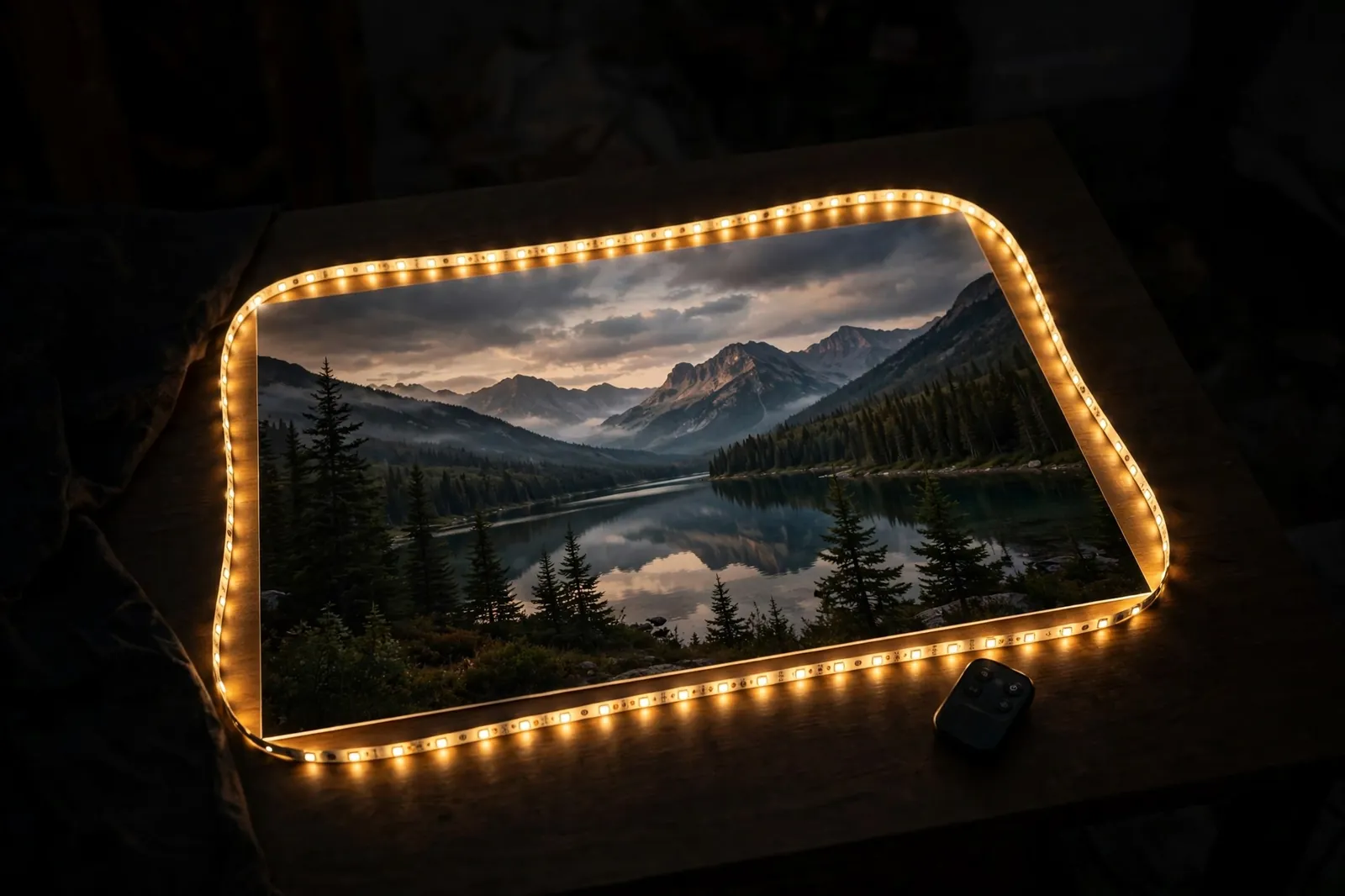
Timers stretch battery life more than any other feature. A strip that switches off after two or three hours cannot drain a pack overnight if you forget it. If your kit has no timer, set a phone reminder instead. Forgetting a strip on all night is the most common reason people think their batteries are faulty. Most of the time, the cells are just empty, so a swap fixes it.
Table: Battery options at a glance
| Option | Best for | Watch out for |
|---|---|---|
| AA or AAA alkaline | Short, occasional use | Short runtime at full brightness |
| Rechargeable NiMH cells | Regular nightly use | Need a charger and spares |
| USB rechargeable pack | Camping and rentals | Recharge time between uses |
| USB power bank | Longer runs and events | Bulkier box to hide |
Alkaline cells suit a strip you use now and then. For example, a cupboard you open twice a day is a good use. Rechargeable cells pay off fast if the strip runs every night, because you stop buying packs of disposables. In addition, a USB power bank is a smart middle ground for a party or a weekend trip. You can recharge it from any phone charger, so it suits travel.
Because cold weather shortens runtime, a strip in an unheated garage or on a balcony will fade sooner in winter. Heat is no friend either, since a battery box left in direct sun or near a radiator ages faster. Keep the box somewhere with airflow. Never cover it with fabric, and don’t bury it behind insulation.
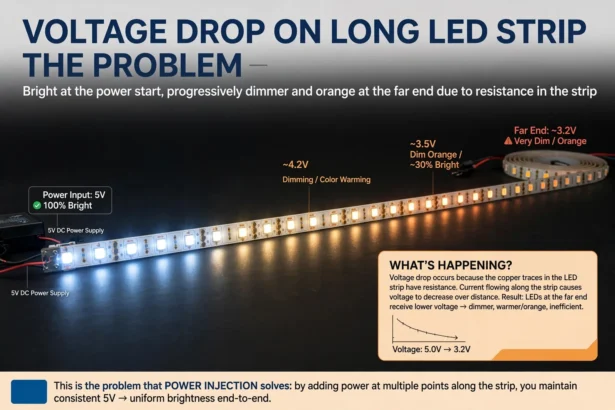
Long mains-powered strips suffer from a related problem called voltage drop. The far end looks dimmer than the near end, because power fades along the strip. The same idea applies here on a smaller scale. As a result, a very long battery strip will dim toward its end and drain the pack faster. If you need a long run, our guide to LED strip power injection and voltage drop explains the math in plain terms.
Best Uses Around the Home
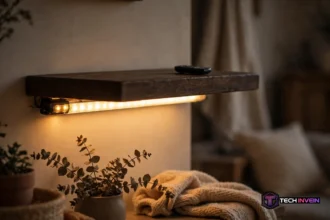
First, closets and wardrobes are the classic win. A short strip under a shelf lights up dark corners. You only need it for a few minutes at a time, so one set of batteries can last weeks in this role.

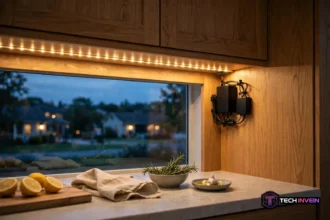
Next, under-cabinet lighting in a kitchen nook or a craft corner works well too. Treat it as task lighting for short jobs. Stick the strip under a shelf above a desk. Then you get a soft pool of light for reading labels or finding tools. It won’t replace your main kitchen lights. It doesn’t need to.
Stairs and hallways are another good fit, especially for night-time safety. A low strip along a skirting board or under a handrail gives just enough light to see steps. It does this without waking the whole house. Warm white suits this job best, because it feels calm at night and keeps glare low.
Then there are the fun, short-term jobs. Battery strips shine at parties, in tents, and behind a TV for a movie night. They also work inside a display cabinet for a dinner. They suit rentals too, since most strips peel off cleanly if you remove them with care and you cannot drill or wire anything.
For a bedroom, pick a warm color temperature for restful evening light. Our guide to the best color temperature for sleep at night explains why warm light suits the last hour before bed better than cool white.
Where Battery Strips Disappoint
A battery strip is a poor choice for a main room light, because it can’t light a whole living room evenly. Running it at full brightness for hours will eat batteries every few days, so expect frequent swaps. Instead, choose a plug-in strip or a wired light for all-evening brightness.
Outdoor use needs care as well. Rain, dust, and damp will kill an indoor-rated strip, so check the rating first. A battery box left outside can corrode. Only use a strip outdoors if it carries a proper outdoor rating, otherwise damp will find a way in. Keep the battery box sheltered and dry. A strip that claims to be waterproof but leaves its battery box exposed is only half protected.

Dimming can also cause trouble. Some cheap strips flicker at low brightness, which is tiring on the eyes, so test before you commit. If yours flickers, first check the batteries. Weak cells cause flicker too, because voltage sags as cells drain. If fresh batteries don’t fix it, the dimmer or the strip itself is the problem. Our guide to LED lights flickering when dimmed walks through the likely causes.
Adhesive failure is the last common letdown. Strips peel off dusty, greasy, or textured walls, so prep matters. They fall fastest in warm rooms, since heat softens tape. Clean the surface with a dry cloth first. Press the strip firmly along its full length, then leave it for a few hours before you hang anything near it. On rough walls, small clips beat tape every time, so skip the tape there.
Buying Checklist
First, start with length. Measure the exact spot first. Then buy a strip that matches it, rather than a long one you plan to coil up. Extra length bunched in a corner wastes power and looks messy, so buy the right size. A strip that is too short leaves a dark gap.
Next, check the battery type and how you will recharge or replace it. A kit that takes standard AA cells is easy to feed, because spares are everywhere. But it costs more over time than a rechargeable pack, so nightly users should go rechargeable. A built-in USB pack is neat, yet you must wait while it charges. Pick the option that fits how often you’ll use the strip.
- Remote or app control, so you can dim without reaching the battery box
- A built-in timer, ideally with 2-hour and 6-hour settings
- Warm white as well as color modes, for evening use
- Cut marks on the strip, so you can trim it to fit
- A battery box small enough to hide where you plan to put it
Brightness claims deserve a second look too. Listings rarely state lumens per meter for cheap kits, so compare LED density instead. So compare LED density instead. In other words, more LEDs per meter usually means a brighter, more even line of light. And if a deal looks far cheaper than every similar kit, expect a trade-off, because corners were cut somewhere. For instance, it may be weaker adhesive, a flimsy remote, or cells that drain fast.
Think about how the strip will fit your wider lighting setup. A battery strip will not join smart home routines, since it has no Wi-Fi or smart home radio. Therefore, for that kind of automation, a circadian lighting setup in Home Assistant is the better route. Instead, keep battery strips for the no-socket spots it cannot reach.
Install and Care in Ten Minutes
First, clean the surface and let it dry fully. Dust and grease are the main reasons strips fall down, so a quick wipe now saves a re-stick later. Then lay the strip along the spot without peeling the backing. This way you can see where the battery box will sit and whether the cable reaches it.
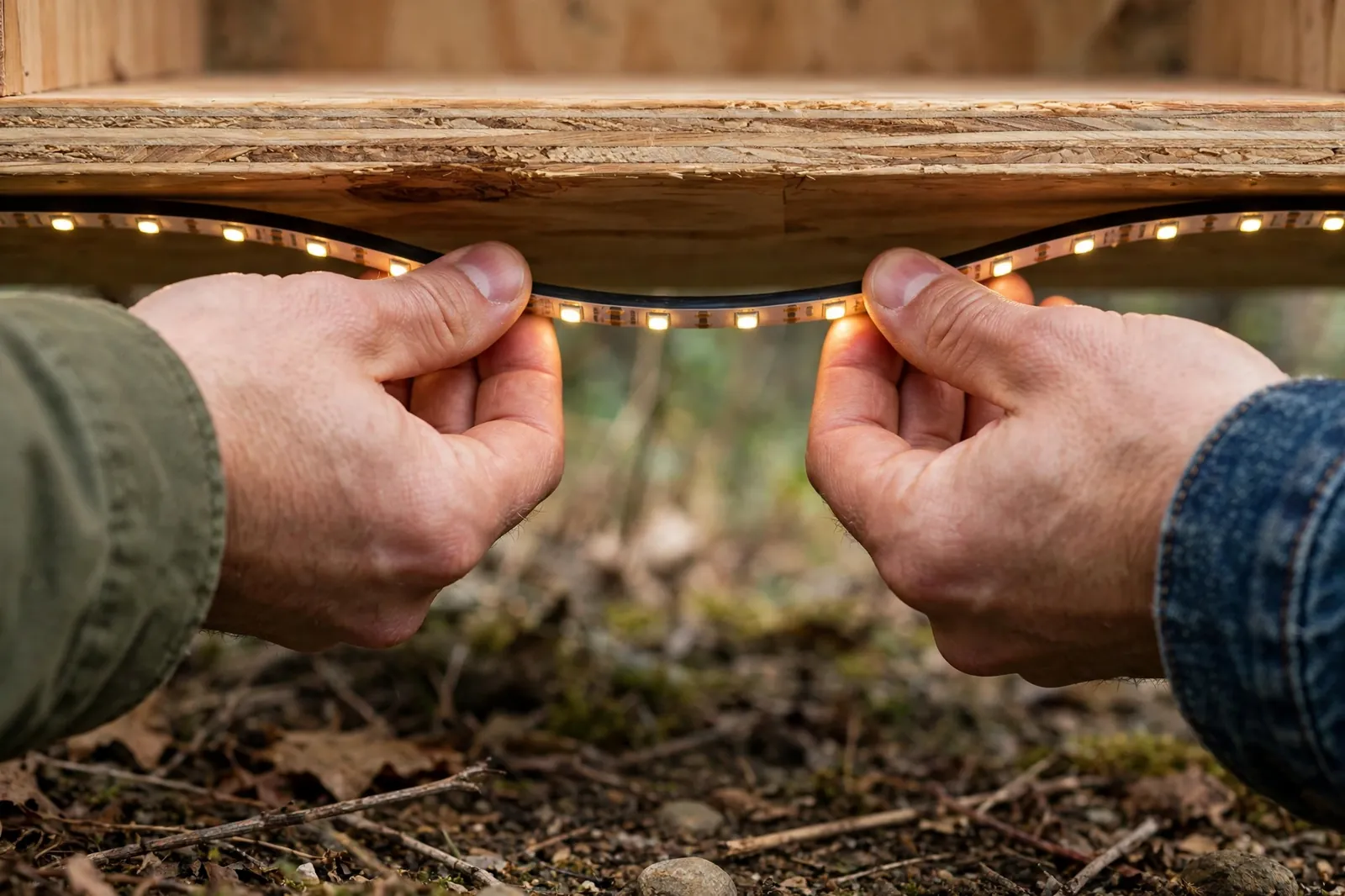
Next, peel a short section of backing and press the strip down a little at a time. Work from one end to the other, so the strip stays straight. This beats peeling the whole backing at once, which tangles the strip and sticks it to itself, so go slowly. Place the battery box where you can reach it for swaps, not buried behind furniture.
- Test the strip at full brightness before you fix it in place
- Set the timer, if your kit has one, to your usual use
- Note the date you fitted fresh batteries on a small label
- Check the strip after a week for peeling corners or dim ends
For care, swap all the cells at once rather than mixing old and new ones, because mixed cells drain unevenly and can leak. Take batteries out if you won’t use the strip for a month or more. A leaking cell can ruin the box. Keep a spare set of charged cells near the strip, so a dead pack never leaves a dark staircase overnight.
One habit pays off more than any other: run the strip at the lowest brightness that still does the job. In my own hallway, dropping from full brightness to half made a set of rechargeable cells last twice as long. The stairs were still easy to see, so nothing was lost. That single change also keeps the light comfortable at night, which is the whole point of a low strip.
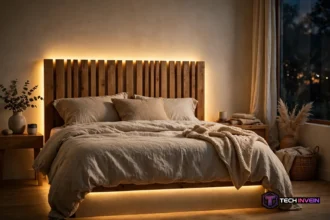
Bedroom strips deserve the same low-and-warm approach. If you already use smart bulbs in the bedroom, our guide to the best circadian rhythm smart bulbs for bedroom use shows how warm evening light supports better sleep. A dim battery strip can play the same supporting role in a wardrobe or along a bed frame.
FAQs
How long does one set of batteries last?
It depends on strip length, brightness, and battery type, so check all three. A short strip at low brightness can run for days of short uses. A long strip at full brightness may drain a set in a single evening. Timers and dimming stretch runtime more than any other setting, so use both.
Can I leave a battery strip on all night?
You can, but most small packs won’t last until morning at full brightness. A dim setting with a timer is a better plan for overnight use, because it sips power. It also keeps the light gentle on your eyes. Therefore, for true all-night lighting, a plug-in strip or mains light is the safer choice.
Are rechargeable batteries worth it here?
Yes, if the strip runs often, because nightly use adds up fast. Rechargeable cells cost more at first, yet they pay for themselves after a handful of swaps when a strip runs nightly. For a strip you use once a month, cheap alkaline cells make more sense. Then you avoid keeping a charger routine for little use.
Can I cut a battery strip to fit?
Most strips can be cut, but only at the marked cut points, so look for them first. Cutting anywhere else can break the circuit and kill the section past the cut, so don’t guess. Measure twice, cut once, and keep the cut end sealed from dust and damp with an end cap, otherwise damp gets in.
Why does my strip look dim at the far end?
Voltage drop is the usual cause, because power fades along a long strip, so LEDs far from the battery box get less energy. First, shorten the run, use fresh cells, or split the job across two shorter strips. Check that the battery box voltage matches the strip before you blame the strip itself, otherwise you’ll chase the wrong fault.
Do battery strips work outdoors?
Only if the strip and its battery box both carry an outdoor rating, otherwise rain will win. Rain and damp will damage an indoor kit, and cold weather will shorten its runtime. Keep the battery box sheltered. Bring the strip inside in harsh weather. Never leave a damaged box out in the rain, because water damage is permanent.
Final Thoughts
Battery strips are at their best when the job is small, short, and far from a socket. Measure your spot, pick rechargeable cells for nightly use, set a timer, and run the strip dimmer than you think you need, so the setup lasts. In short, that setup gives you handy light where you want it, without wires, drilling, or a dead battery surprise. LEDs are efficient by nature, and the U.S. Department of Energy’s consumer guide to energy-efficient lighting explains why they beat older bulb types on energy use.