
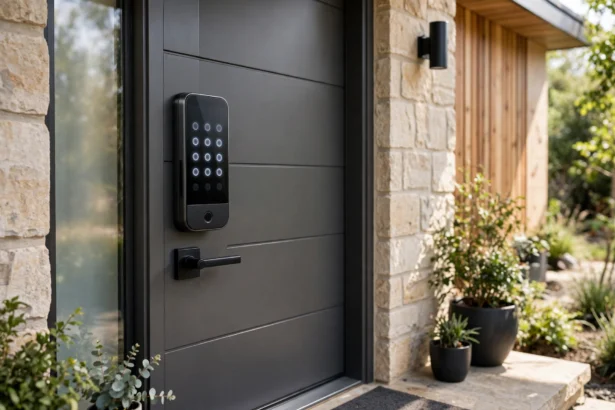


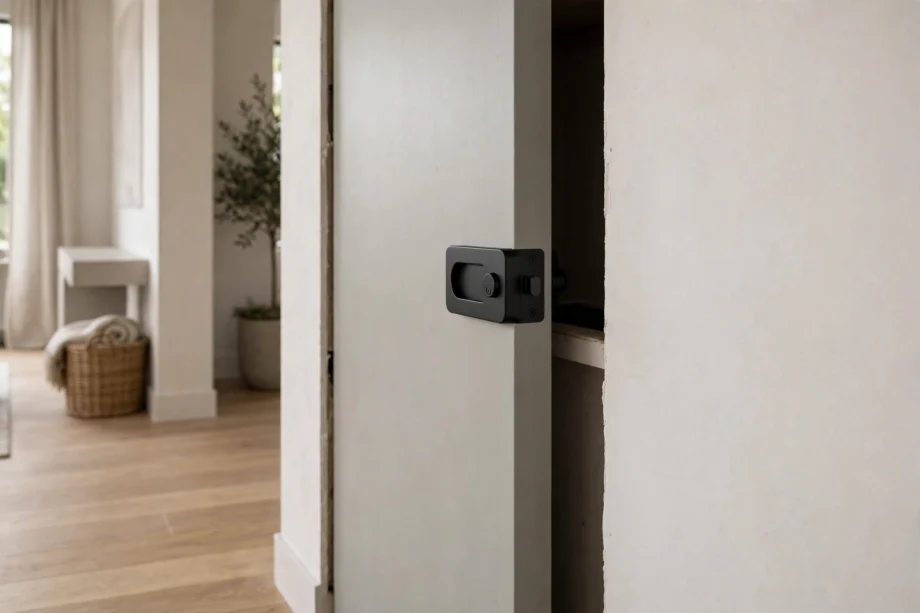
A pocket door lock is a low-profile lock designed for doors that slide into the wall. Unlike a regular door lock, it sits flush with the door edge, letting the panel disappear into the pocket. It comes in four functions: passage, privacy, keyed, and dummy. Which one you need depends entirely on the room.
Our Mission
Our mission at techinvein.com is to make home hardware make sense. Pocket door locks confuse people because they look nothing like normal locks and the terminology is opaque. This guide clears it up: the four types, how to pick, how to install, and how to fix the common problems.
Why Pocket Door Locks Are Different
A pocket door slides into a cavity inside the wall. That single fact dictates everything about its lock. Standard door knobs and deadbolts protrude from the door face, which would jam against the pocket opening or scrape the wall. A pocket door lock must sit flush or nearly flush with the door’s surface and edge.
This is also why pocket doors need an edge pull: a recessed handle on the door’s leading edge that lets you drag the door out of the wall. Many pocket door lock sets include the edge pull; some sell it separately. If your door currently has no way to pull it out of the pocket, add the edge pull to your shopping list.
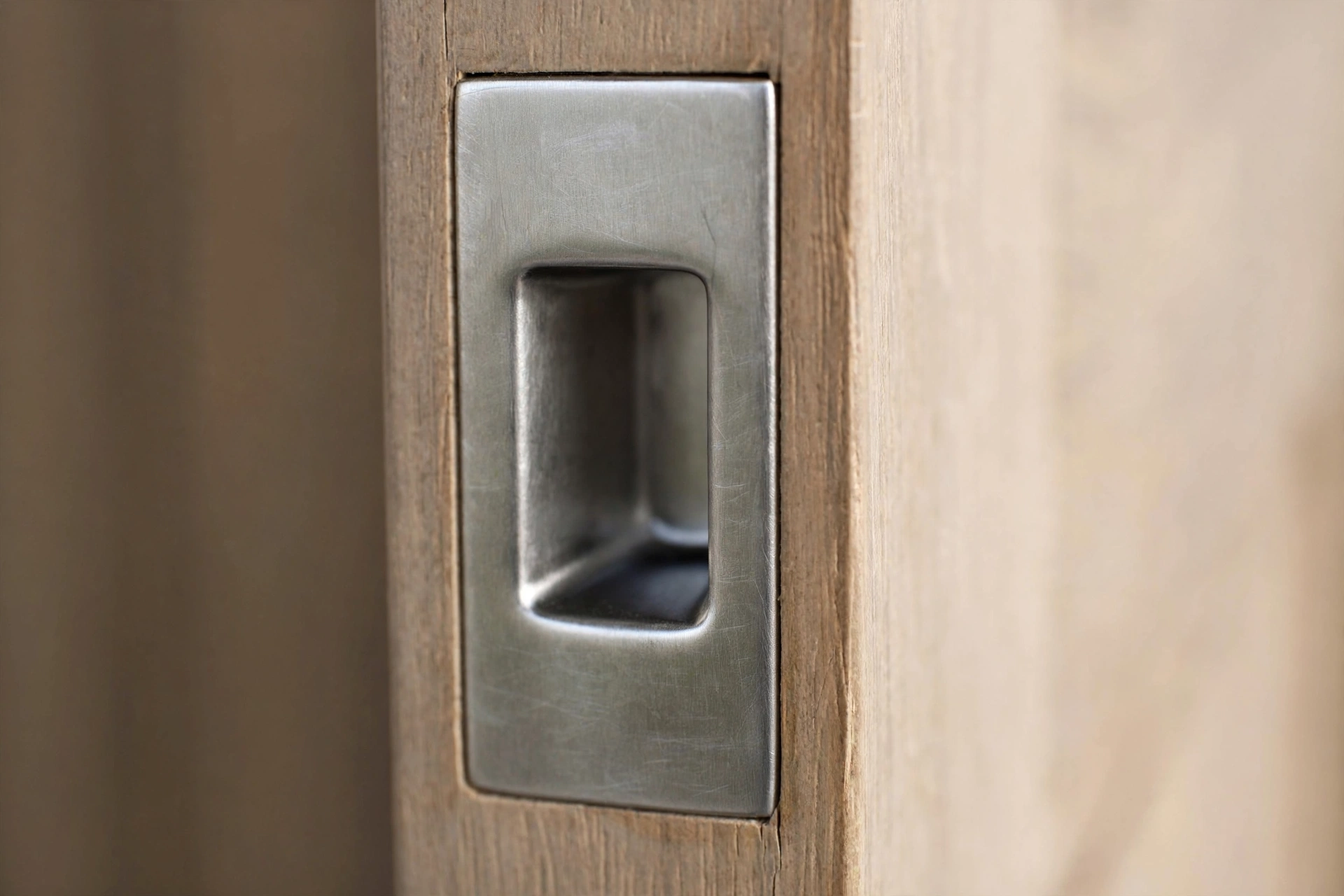
One more difference: most pocket doors are hollow-core interior doors. Cutting the mortise for the lock removes material from an already light door, which can weaken the leading edge. Quality installation matters more here than on a solid exterior door.
The 4 Functions: Passage, Privacy, Keyed, Dummy
These locks are sold by function. Ordering the wrong function is the most common buying mistake. Get this right.
Passage. Latches but does not lock. No key, no thumbturn. For closets, pantries, and laundry rooms where you want the door to stay closed but never locked. The simplest and cheapest option.
Privacy. Locks with a thumbturn on the inside and an emergency release on the outside (usually a small slot you open with a coin or screwdriver). For bathrooms and bedrooms. This is the function most people mean when they say “pocket door lock.”
Keyed (entry). Key cylinder on the outside, thumbturn on the inside. For home offices, storage rooms, or anywhere you need to actually keep people out. Unlike a keypad deadbolt, where a keypad deadbolt needs code changes through its menu, a keyed pocket door lock uses a physical key. Nothing to reprogram.
Dummy. No latch, no lock, just a flush pull to slide the door. For doors that never need to latch, like a pantry in an open kitchen or a decorative divider. Do not order this by accident when you wanted privacy.
A quick rule: closet gets passage, bathroom gets privacy, office gets keyed, decorative gets dummy. When in doubt between passage and privacy, choose privacy. You will never regret having a lock you rarely use, but you will regret needing one you do not have.
How to Choose the Right One
Match the function to the room. See above. This decision comes before everything else because it narrows the field.
Check your door thickness. Most fit standard 1-3/8 inch interior doors. Thicker doors need models rated for them. Measure before ordering.
Check the backset. Like any mortise lock, the distance from the door edge to the lock center matters. Common pocket door backsets are 2-3/8 inch, but verify against your door’s existing prep if you are replacing.
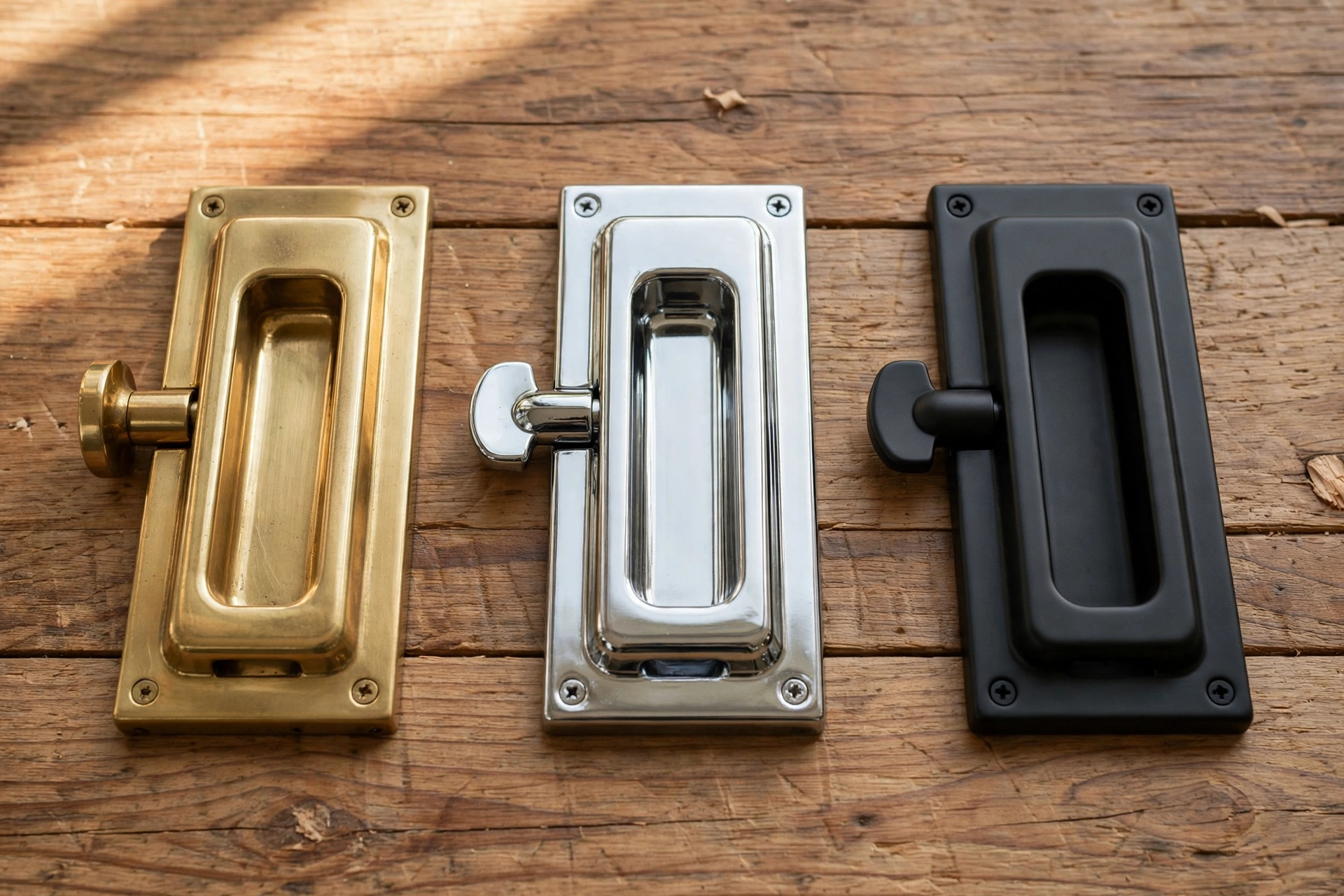
Pick the trim style. Round, square, or rectangular flush pulls. This is cosmetic, but the plate size matters on a retrofit: a new lock with a smaller plate than the old one leaves the old mortise outline visible. Match or go bigger.
Do not confuse it with a patio slider. People search “pocket door lock” when they actually have a sliding glass patio door. If your door slides along the wall rather than into it, you need a sliding door smart lock or patio mortise lock, not pocket door hardware.
Installing a Pocket Door Lock
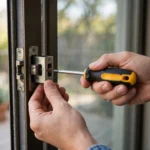
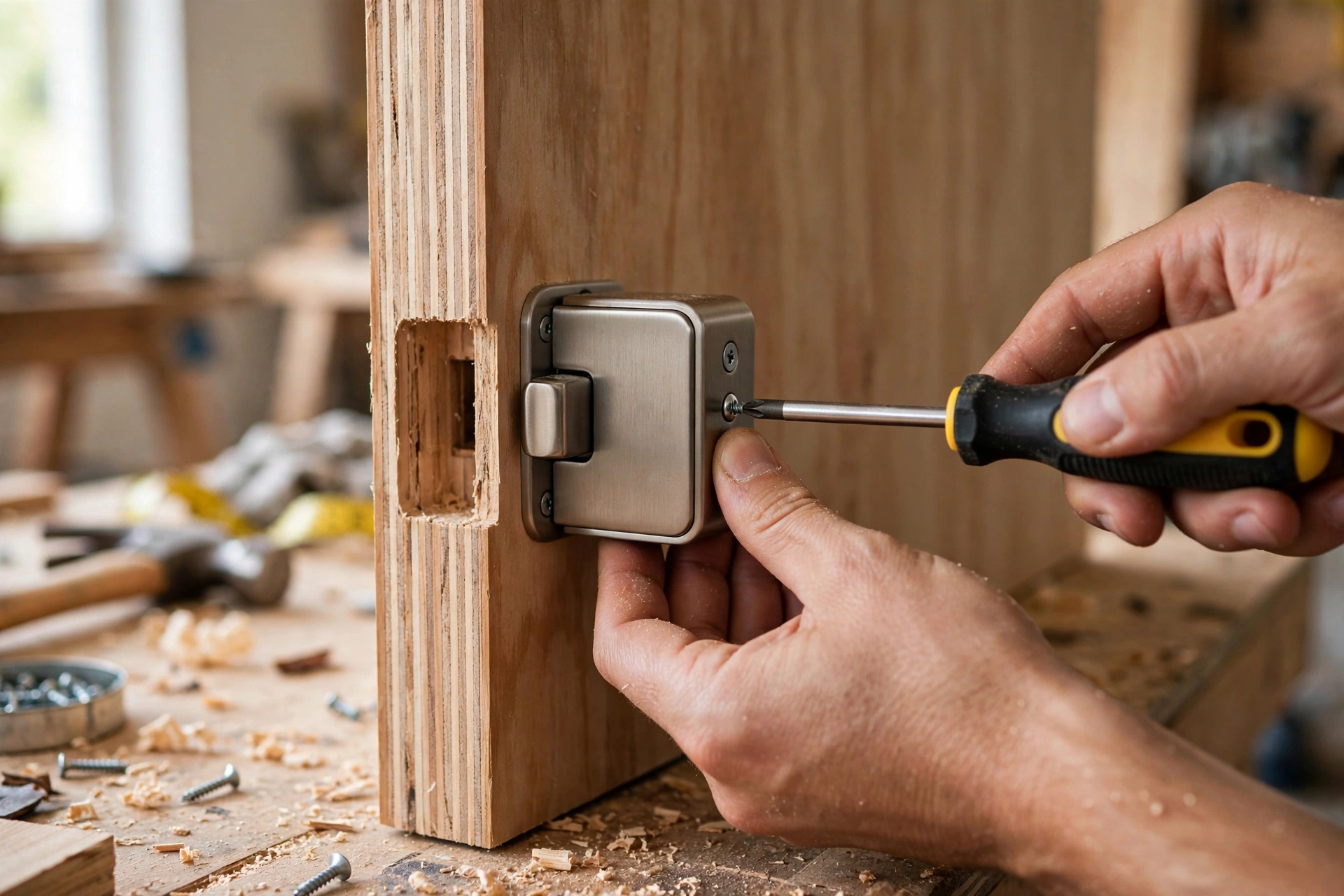
Installation is a moderate DIY job, about an hour if it is your first install. The process resembles any mortise lock replacement, and if you have done a sliding door lock replacement before, the skills transfer directly.1. Mark the lock location on the door edge, usually 36 inches from the floor, matching the strike on the jamb.
2. Rout or chisel the mortise pocket in the door edge for the lock body. Go slowly on hollow-core doors: remove only what the template calls for, and support the door to keep the edge from flexing while you cut.
3. Drill the cross bore for the lock body at the marked backset, following the manufacturer’s template.
4. Seat the lock body in the mortise, install the flush cups on both faces, and secure everything with the provided screws. Do not overtighten; hollow-core doors crush easily.
5. Install the edge pull on the leading edge if your set includes one.
6. Mortise the strike plate into the jamb, close the door, and test. The latch should engage with light pressure. Adjust the strike position until it does.
Troubleshooting Common Problems
Misalignment. The most common issue. The latch does not line up with the strike plate, so the door will not lock. Fix the strike plate position before anything else; if the whole door sits crooked, adjust the overhead track rollers to raise or lower the panel.
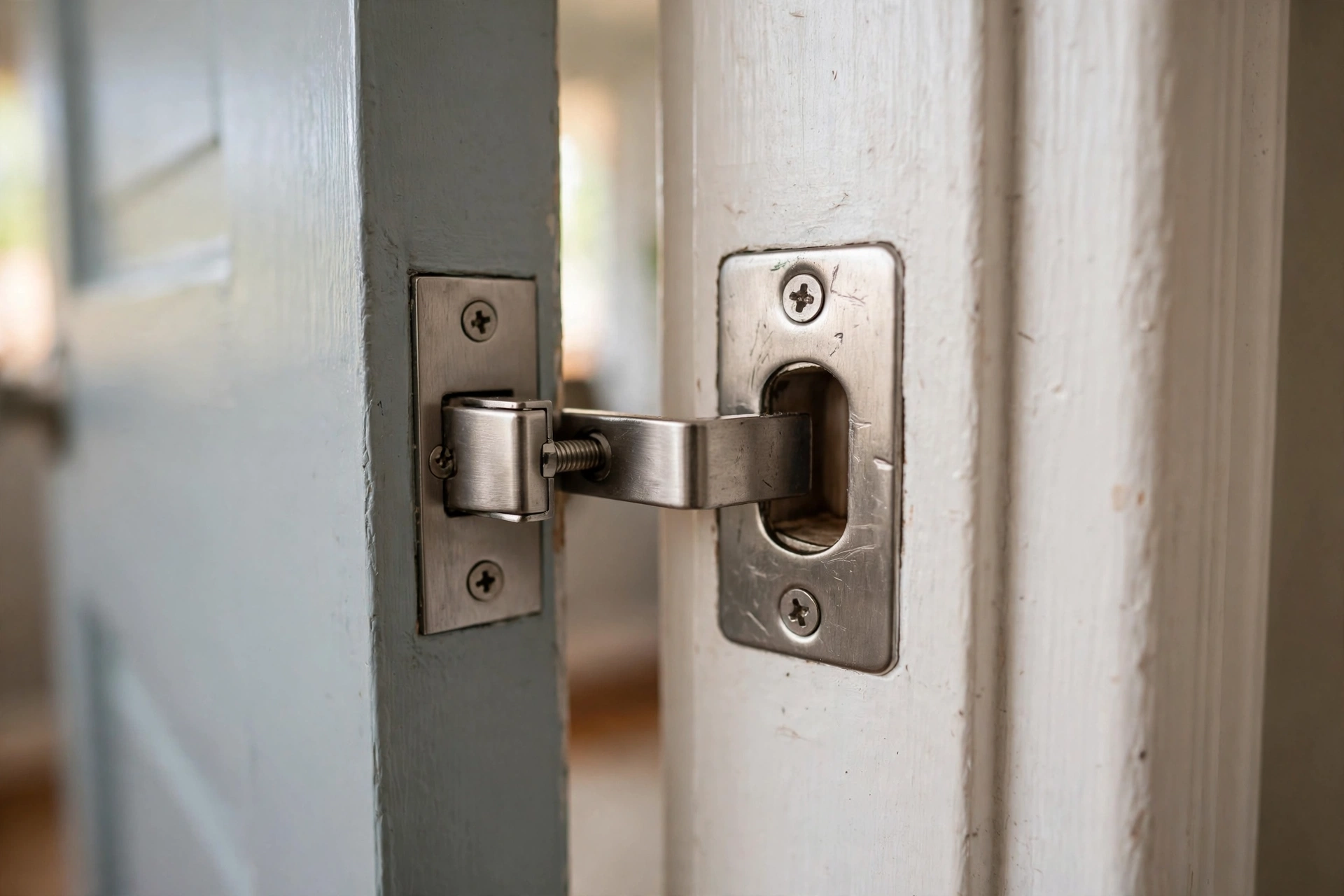
Loose or wobbly handle. Tighten the mounting screws. If they will not stay tight, the screw holes are stripped, which happens easily in hollow-core doors. Fill with toothpicks and wood glue, let cure, and re-drive.
Latch not retracting. Check for obstructions in the pocket and verify the latch aligns with the strike. Lubricate with silicone spray. If the mechanism itself is worn, replacement is usually easier than repair.
Door edge warping. Cutting the mortise can weaken a hollow-core door’s leading edge, causing it to bow. Prevent this by removing minimal material and avoiding overtightened screws. A warped edge is hard to fix after the fact. Care during installation is the real solution.
Door drifts open or closed. The track is not level and gravity pulls the door. Adjust the track if accessible; otherwise a floor guide can hold the door at center so the lock engages.
Maintenance
They need little attention. Once a year, wipe the mechanism with a soft cloth, apply silicone-based lubricant to moving parts, and check every screw. Avoid harsh chemicals that damage the finish. That is the entire maintenance program, and it prevents most of the problems above.
A Note on Security
Be clear about what a pocket door lock is: a privacy device, not a security device. A privacy thumbturn keeps honest people honest. It will not stop a determined intruder, and it was never designed to. For actual entry security, you need a proper deadbolt on a solid door, which is a different project entirely. Our smart door lock with camera guide covers the serious end of home entry.
FAQs
Can you put a lock on a pocket door?
Yes. Pocket door locks are made for exactly this, in passage, privacy, keyed, and dummy functions. Choose privacy for bathrooms and bedrooms, keyed for offices, passage for closets. Because the lock sits flush, the door still slides into the wall.
How do you unlock a pocket door from the outside?
Privacy models have an emergency release on the exterior side, usually a small slot you turn with a coin, screwdriver, or the included pin tool. Keyed models unlock with the key. If a privacy lock has no visible release, check the manufacturer’s instructions before forcing anything.
Why won’t my pocket door lock latch?
Misalignment between the latch and strike plate causes most failures. Start with the strike plate position. If the door itself hangs crooked, adjust the overhead track rollers. Persistent failure after adjustment usually means a worn latch mechanism that needs replacing.
Are pocket door locks standard size?
No. Backsets, plate sizes, and mortise dimensions vary between brands. When replacing, match the new lock’s footprint to the old cutout or be prepared to patch and re-cut. Measure the existing prep before ordering.
Can a pocket door lock be smart?
Keypad and electronic pocket door locks exist but are far less common than mechanical ones, and the flush-mount constraint limits options. For most interior pocket doors, a quality mechanical privacy or keyed lock is the practical choice.
Quick Takeaways
- A pocket door lock sits flush with the door, letting the panel slide into the wall. Standard knobs and deadbolts will not work.
- Four functions: passage (closets), privacy (bathrooms/bedrooms), keyed (offices), dummy (decorative). Match the function to the room.
- Measure door thickness and backset before ordering, and match the new plate size to any existing cutout on retrofits.
- Installation takes about an hour. Go easy on hollow-core doors: minimal cutting, no overtightened screws.
- Misalignment causes most problems. Adjust the strike plate before the track rollers.
- A pocket door lock is a privacy device, not a security device.
Disclaimer
This guide is for general information only. Pocket door and lock dimensions vary by manufacturer. Verify your door’s measurements and the lock’s specifications before buying or cutting. If the door is damaged or you are unsure about the installation, consult a qualified carpenter or locksmith.