

Good home theater design starts with how you want the room to feel, not with a shopping list. Do you want a dark, dedicated cinema, or a living room that turns into a theater at night? Answer that first, and every later choice gets easier. This guide covers layout, seating, light, sound, and style.
- Start With the Room You Have
- Layout: Screen Wall, Seats, and Sightlines
- Home Theater Seating Ideas That Actually Work
- Style: From Luxury Cinema to Cozy Den
- Lighting Design for Mood and Picture Quality
- Sound and Acoustics in the Design
- Color, Walls, and Finishing Touches
- Designing for Small Rooms and Townhouses
- Frequently Asked Questions
- What is the first step in home theater design?
- How can I design a home theater on a budget?
- What colors work best for a home theater room?
- How far should seats be from the screen?
- Do I need acoustic panels in a home theater?
- Can a townhouse have a good home theater?
- Your Next Step
Start With the Room You Have
Walk into your room and look at it with fresh eyes. Where does daylight fall in the evening, when you will watch most films? Which wall gives the clearest view from the sofa? Where do doors and walkways force people to cross in front of the screen? These answers shape your layout more than any catalog photo.
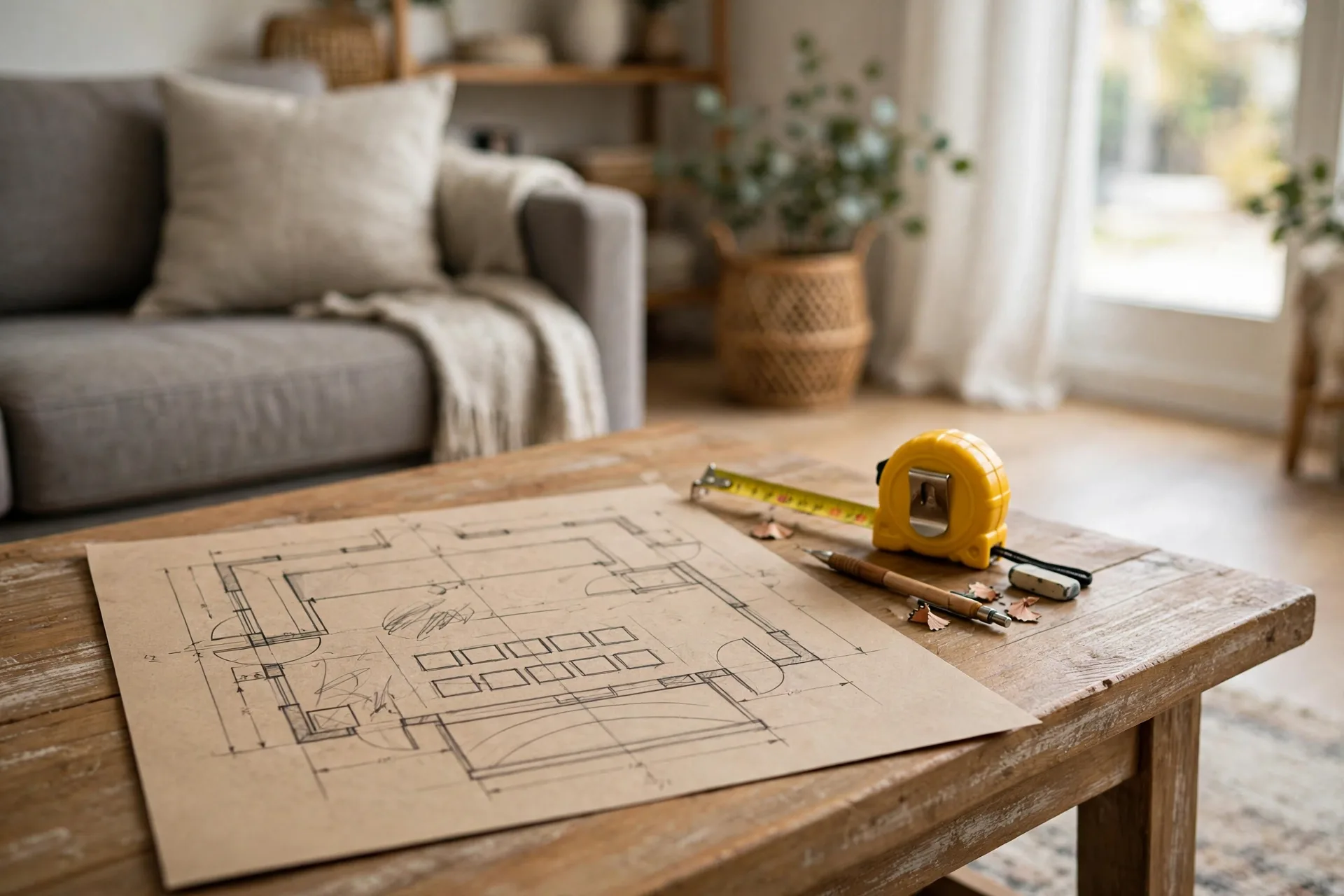
Measure everything before you plan. Note the length, width, and ceiling height, plus door swings, radiators, and built in cupboards. A rectangular room usually gives the most even sound, but a square or open plan room can still work with the right seating and soft furnishings. Draw a simple floor plan on paper, even a rough one, and try two or three layouts before you commit.
Think about who uses the room. A couple watching films needs two great seats. A family needs room for kids, friends, and snack bowls. A townhouse home theater may share walls with neighbours, so sound control matters as much as style. Design for your real household, not for a showroom.
Layout: Screen Wall, Seats, and Sightlines
Pick the screen wall first. It should be the wall with the least glare and the most space for speakers on either side. Keep the center of the screen near seated eye level, so no one cranes their neck. If the room is long, a projector and a large screen make sense. If it is short, a big TV may give a sharper picture.
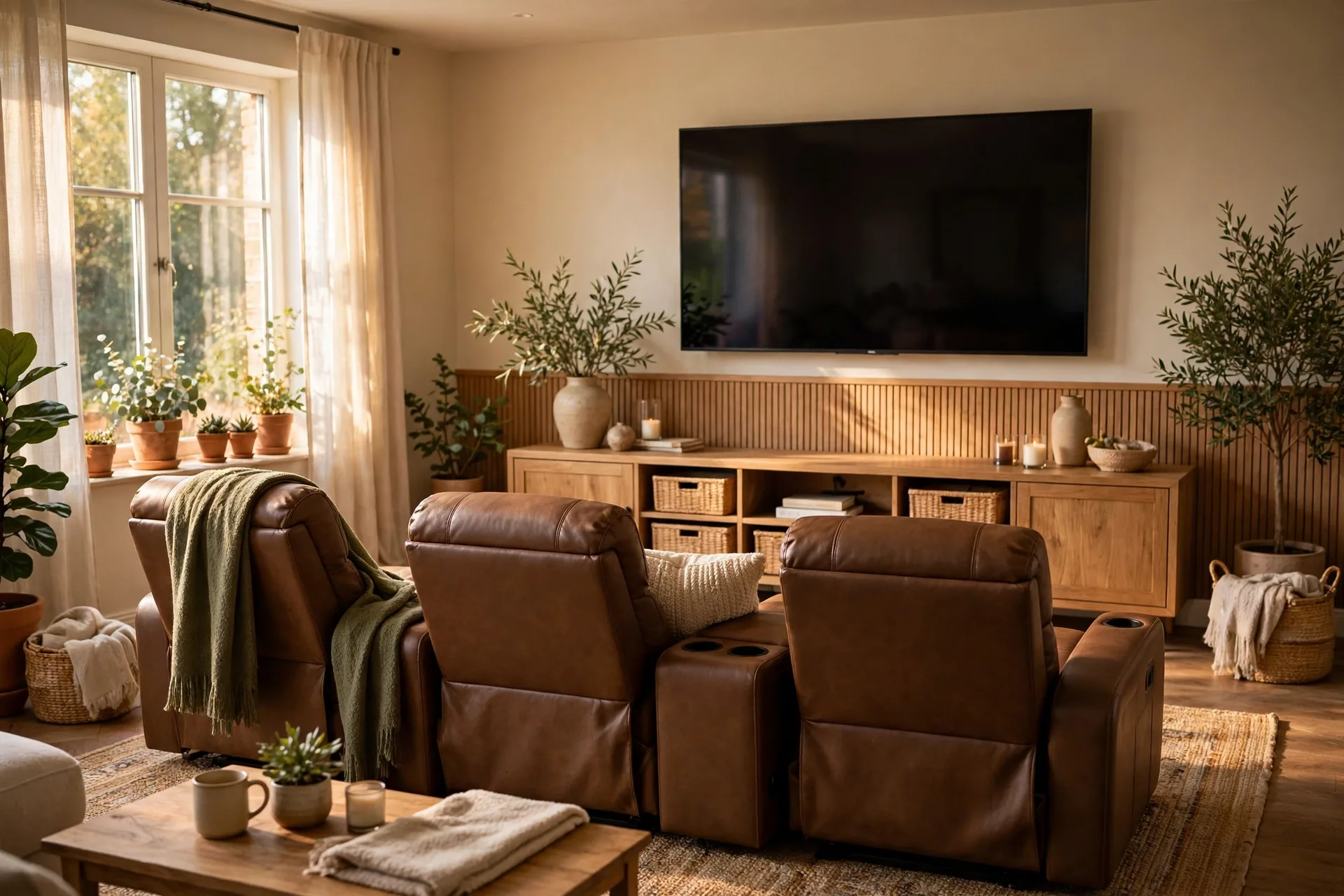
Seating distance sets screen size. Sit roughly one and a half to two times the screen width away. That rule keeps the picture big without forcing your eyes to dart across it. Leave a clear walkway behind or beside the seats, so no one climbs over others for a drink. Good home theater room design ideas always protect the walkways, not just the view.
For two rows, raise the back row on a platform about seven inches high. That small lift keeps heads out of the picture and makes the room feel like a real cinema. Check the view from the back corners too, since the worst seat often reveals a blocked corner or a glaring lamp you missed from the middle.
Home Theater Seating Ideas That Actually Work
Comfort beats looks over a two hour film. Recliners with lumbar support and wide arms suit long evenings far better than stiff designer chairs. Wall hugger recliners need less space behind them, which helps in small rooms. If you host often, a curved row of three or four seats feels social, while two rows suit a dedicated cinema room.
What about a budget home theater room? Use what you already own first. A deep sofa with extra cushions, a couple of bean bags for kids, and a low coffee table can carry many movie nights. Add a row of proper theater seats later, once you know how the room gets used. Spending on seating before you understand the room often means buying twice.
Material matters in a closed room. Leather wipes clean and lasts well, but it can feel cool at first and sticky in a warm room. Fabric feels warmer and costs less, and it also absorbs a little sound. Choose washable covers if kids or pets share the room. Your seats should invite people in, not demand careful handling.
Style: From Luxury Cinema to Cozy Den
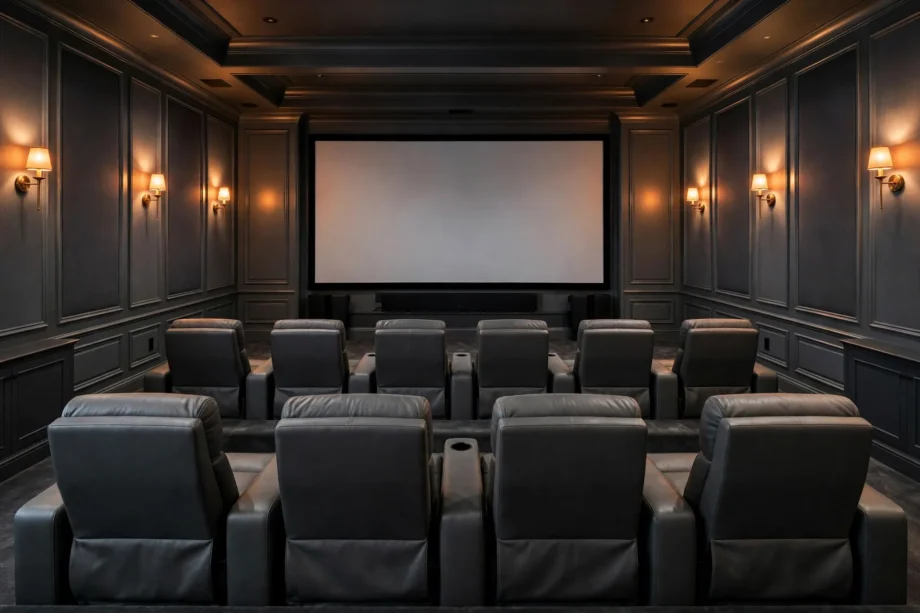
A luxury home movie theater leans on dark walls, concealed lighting, star ceilings, and rows of matching recliners. It looks stunning, and it costs accordingly. You can borrow the look at lower cost with dark matte paint, LED strips, and framed posters. The feeling comes from darkness and focus, not from the price tag on each chair.
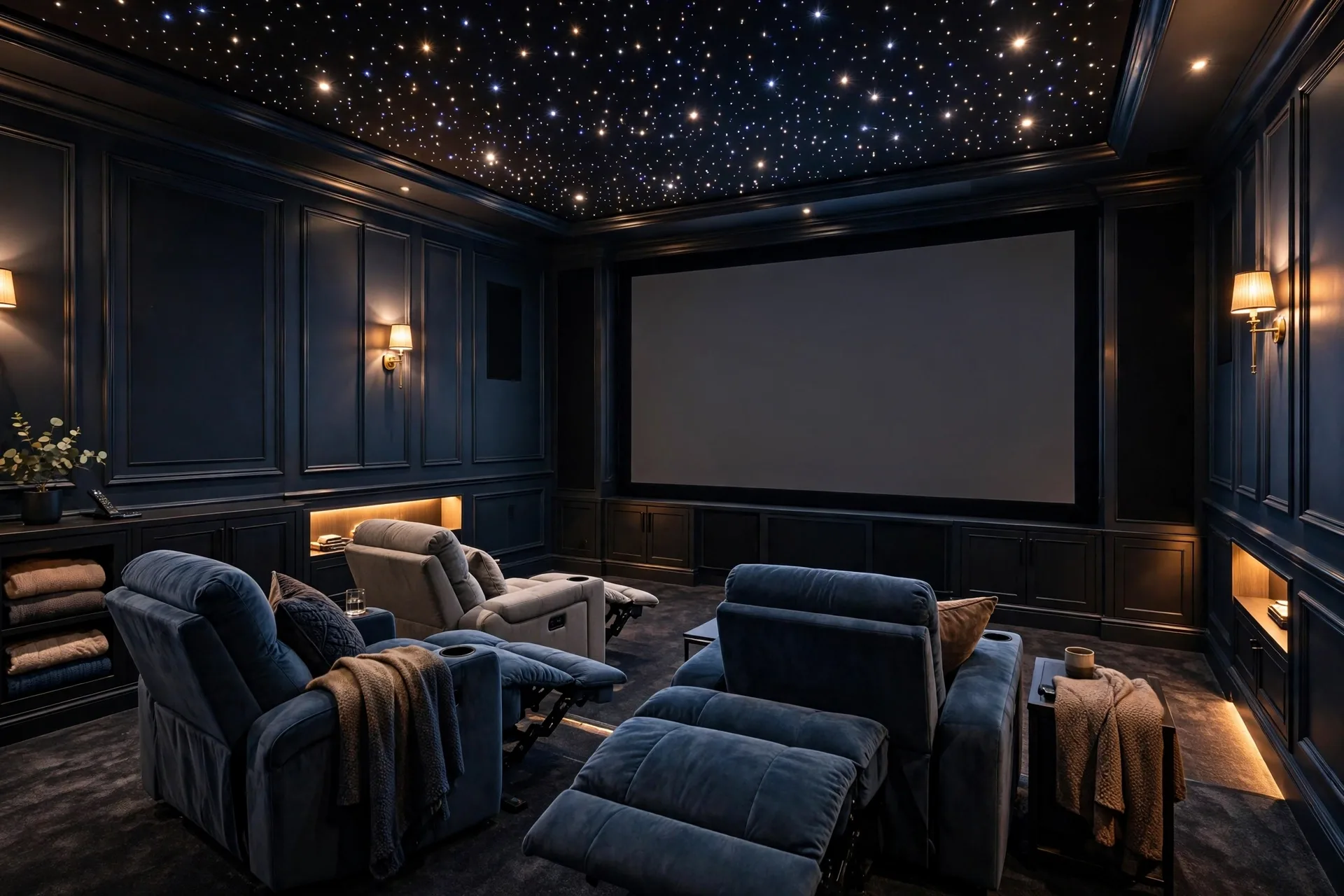
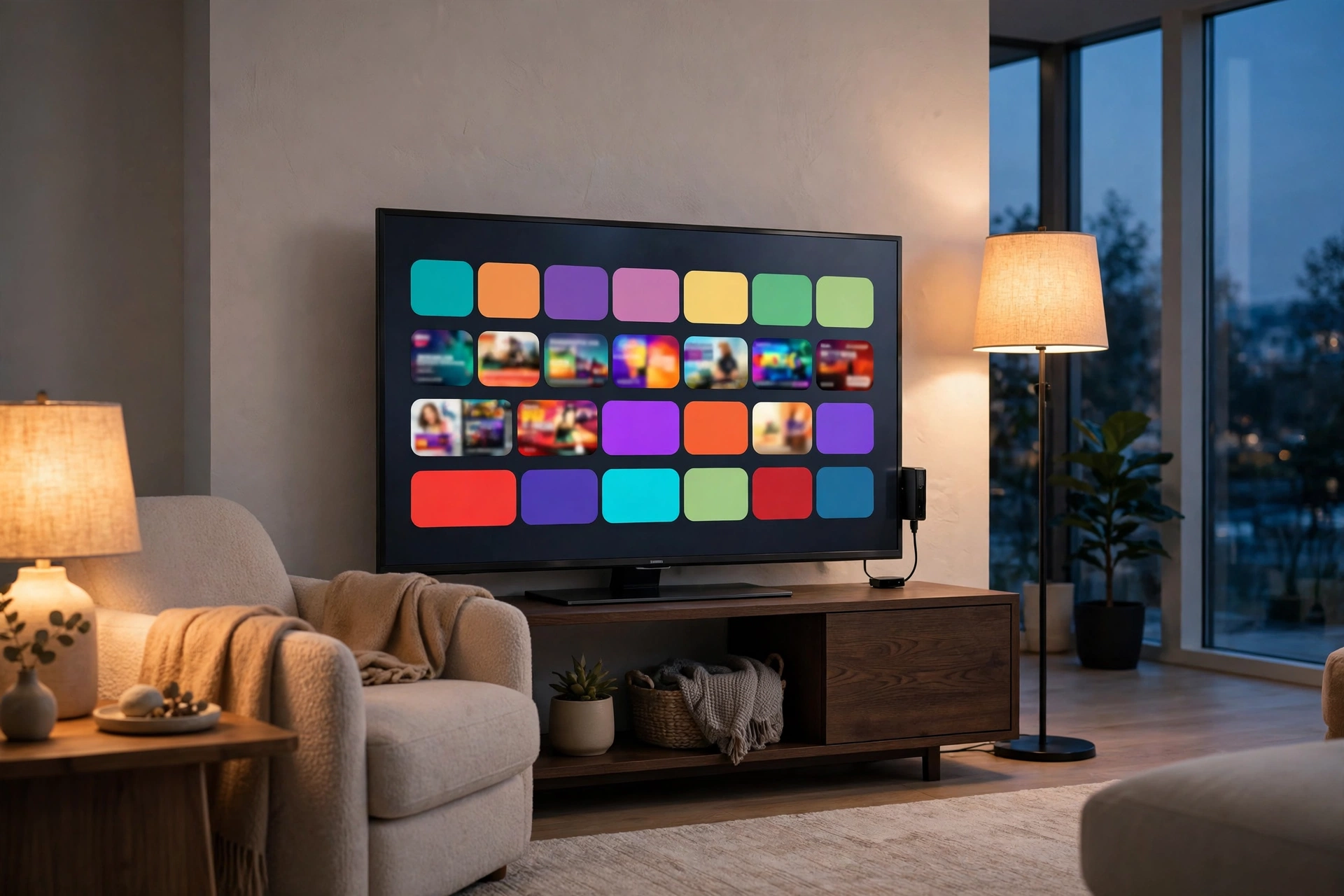
Home media rooms suit families better when the space must do more than films. A media wall with a TV, shelves for games and books, and a sofa bed keeps the room useful all day. Hide gear behind doors or in a low cabinet, and keep one remote or app in charge. When the room looks tidy by day, movie night feels like an event, not a chore.
Movie theater rooms in homes often borrow small cinema details: a ticket style sign, a popcorn cart, or a red accent wall. Pick one or two touches, not ten. A room full of props feels like a theme park. A room with one strong detail and clean lines feels like a place adults enjoy and kids love.
Lighting Design for Mood and Picture Quality
Have you noticed how a bright ceiling light flattens a film? Light bouncing off the screen kills contrast. Layered lighting fixes it. Dimmable ceiling lights give general light for tidying up. Wall sconces add a soft glow. LED strips behind the screen or under seats create a cinema halo without shining into eyes.
Smart scenes make lighting effortless. One tap can dim the room, switch on the screen glow, and turn off the hall light. You can create lighting scenes in the Google Home app and call them up by voice when the film starts, which saves the usual hunt for switches in the dark.
Daytime viewing needs blackout control. Curtains or blinds that fully block light let you watch in the afternoon without grey, washed out blacks. Choose dark, matte paint for the screen wall and ceiling, and add a thick rug. The rug also softens echo, so one purchase helps both picture and sound.
Sound and Acoustics in the Design
Sound design starts with speaker placement, not with buying more speakers. Front speakers sit at seated ear height, angled toward the main seat. The center speaker sits close to the screen, since it carries dialogue. Surrounds go to the sides or slightly behind, a little above ear level. Get these positions right before you judge any speaker. Dolby speaker setup guides show the standard angles for each layout.
Soft surfaces tame echo. Thick curtains, a large rug, bookshelves, and fabric seats all absorb reflections. If dialogue still sounds harsh, add fabric acoustic panels on the side walls where sound first reflects. A simple mirror test finds those spots: slide a mirror along the wall from your seat, and mark where you see the speaker.
For a home cinema room on a budget, skip expensive treatment at first. Hang the curtains you already planned, lay the rug, and fill a bookshelf. Live with the room for a few films, then add panels only where echo remains. That order keeps money on the parts you can hear, not on wall dressing you may not need.
Color, Walls, and Finishing Touches
Dark, warm colors suit cinema rooms: deep grey, navy, charcoal, or warm brown. They recede in low light and keep attention on the screen. If a fully dark room feels too heavy, paint only the screen wall dark and keep side walls a mid tone. That balance works well in living rooms that must look welcoming by day.
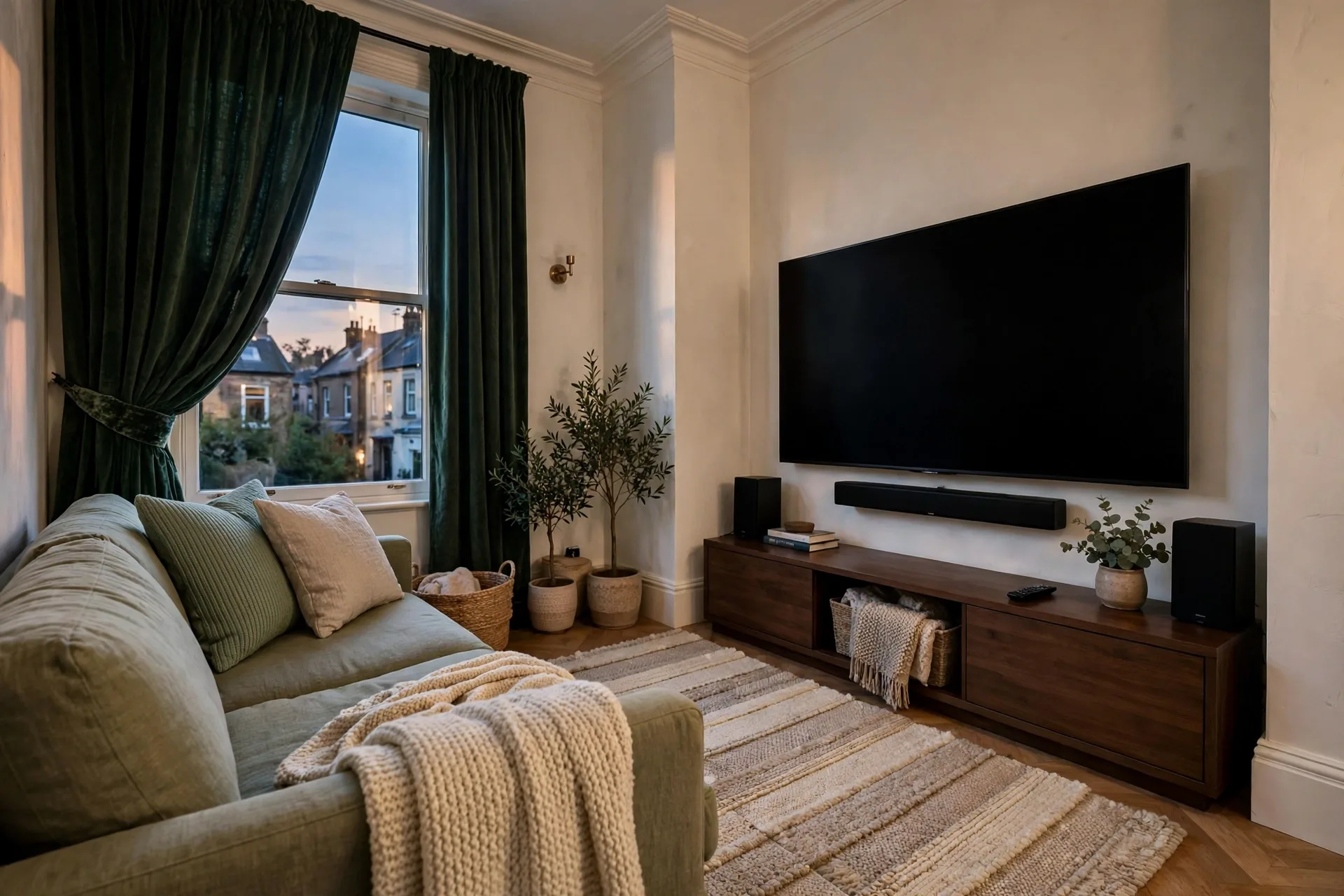
Keep the screen wall clean. A busy gallery wall beside the screen pulls the eye away during quiet scenes. Put posters and shelves on side or back walls instead. Cable covers painted to match the wall beat exposed wires every time, and they cost little. Tidy details make a room feel designed rather than assembled.
Storage deserves a plan too. Remotes, controllers, discs, and chargers pile up fast. A low cabinet near the seats, a basket for throws, and a small shelf for snacks keep the room calm. If every item has a home, the room stays ready for guests without a pre film tidy up.
A small snack station changes how the room feels on film night. A side table for popcorn bowls, a mini fridge or a simple tray for drinks, and a bin tucked beside the seats keep everyone in the room instead of wandering to the kitchen at the best scene. Keep snacks away from speakers and vents, and wipe up spills the same night, since sticky remotes and stained fabric age a room fast.
Designing for Small Rooms and Townhouses
Small home theater ideas start with scale. A 65 inch TV often beats a projector in a short room, since the projector may not have room to throw a large image. Wall mounted speakers save floor space. A sofa with storage underneath holds throws and remotes. Every piece should earn its floor space twice over.
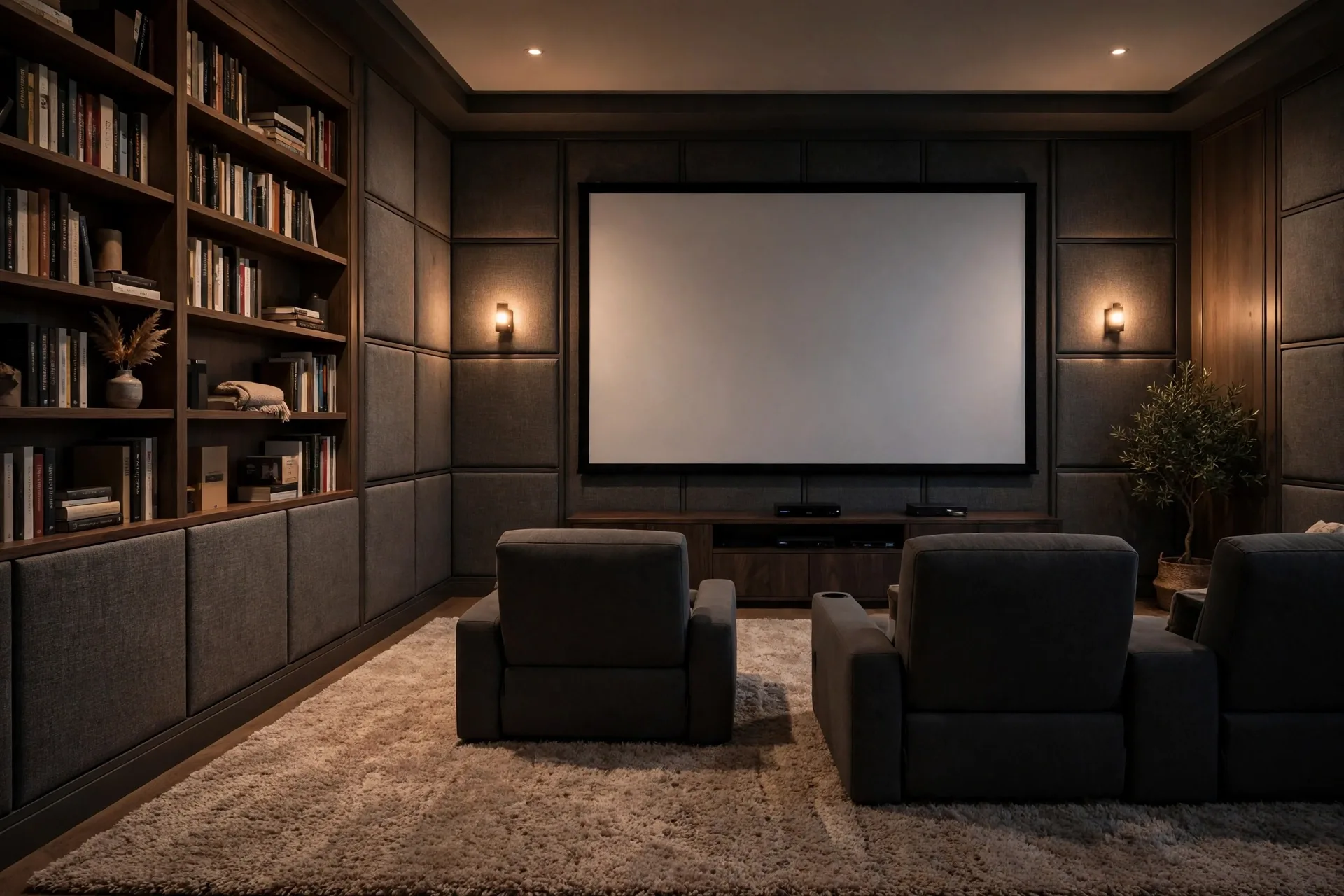
In a townhouse, shared walls call for care. Keep subwoofers off shared walls where you can, and add a thick rug plus heavy curtains to cut sound travel. Agree on late night volume with neighbours before the first big action film. Good design includes good relations, and a little courtesy protects many future movie nights.
Table: Home theater design choices by room type
| Room type | Best display | Seating tip | First upgrade |
|---|---|---|---|
| Dedicated cinema room | Projector and fixed screen | Two rows with a riser | Acoustic panels |
| Living room theater | Large TV | Deep sofa, flexible seats | Blackout curtains |
| Small spare room | TV or short throw projector | Wall hugger recliners | Smart lighting scenes |
| Townhouse room | TV | Fabric seats for absorption | Rug and heavy curtains |
Home theater design ideas for 2026 keep returning to the same basics: darkness, comfort, and clear sound. Trends in paint and tech change, but a well placed seat, a glare free screen, and speakers at the right height never go out of style. Build around those, and new gear will slot in for years.
Frequently Asked Questions
What is the first step in home theater design?
Measure the room and pick the screen wall first. Note daylight, doors, and seating distance before you buy anything. That simple plan prevents the most common error, which is gear that does not fit the room or the view from the seats.
How can I design a home theater on a budget?
Start with the room, not the gear. Use dark paint, blackout curtains, and seating you already own. Add a good TV or projector and a soundbar first, then upgrade to surround speakers later. Phased buying spreads cost and shows you what the room truly needs.
What colors work best for a home theater room?
Dark, matte colors work best, such as charcoal, navy, or deep grey. They cut reflections and keep focus on the screen. If a full dark room feels heavy, paint only the screen wall dark and keep the other walls a softer mid tone.
How far should seats be from the screen?
As a starting rule, sit about one and a half to two times the screen width away. For a 100 inch screen, that is roughly 10 to 13 feet. Test the distance with your actual seats, since personal taste varies and some viewers prefer a closer view.
Do I need acoustic panels in a home theater?
Not always. Soft furnishings like rugs, curtains, and fabric seats often tame echo enough for a living room theater. Add panels only if dialogue still sounds harsh after those basics are in place, and place them at side wall reflection points.
Can a townhouse have a good home theater?
Yes, with care for shared walls. Keep the subwoofer away from party walls, add thick rugs and curtains, and use fabric seating to absorb sound. A TV based setup with a soundbar or compact surround system often suits a townhouse better than a huge projector rig.
Your Next Step
Sketch your room this week, with the screen wall, seats, and speaker spots marked. That sketch is your design brief, and it stops impulse buys that do not fit. Then tackle light control first, since it costs little and improves every film you watch. Good home theater design is mostly good decisions in the right order.