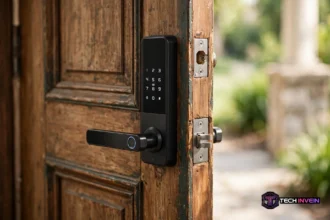


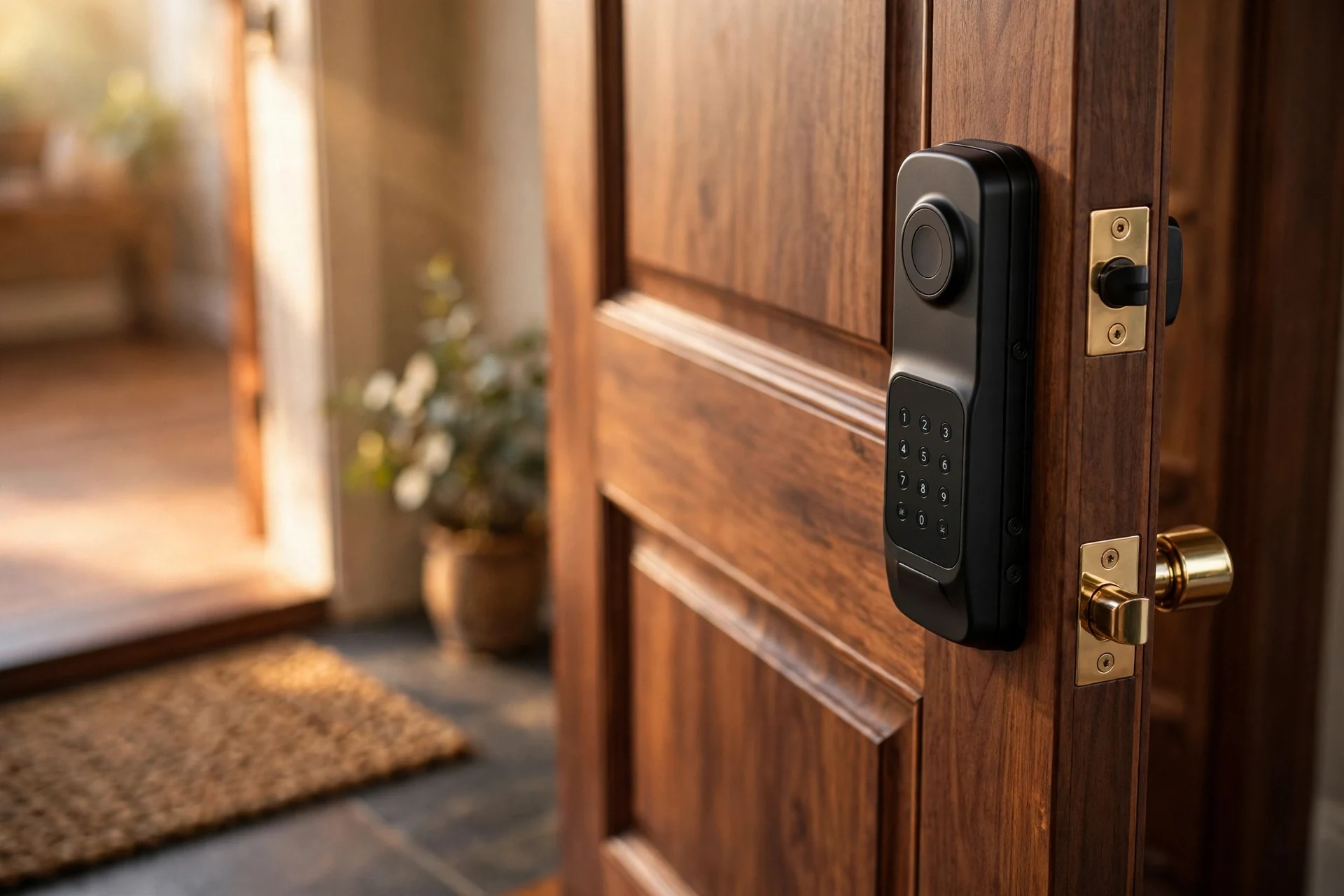
A mortise smart lock is a smart lock built around a mortise lock body, so the latch and the bolt sit together inside a pocket cut into the edge of your door. It adds PIN codes, fingerprints, or app control to that older lock style. If your door already has a mortise lock, this type often fits without new holes.
- What Is a Mortise Lock?
- How a Mortise Smart Lock Works
- Mortise Lock vs Deadbolt vs Cylindrical Lock
- Which Doors Have Mortise Locks?
- When a Mortise Smart Lock Is the Right Choice
- When It Is Not the Right Choice
- How to Check If Your Door Fits in Two Minutes
- FAQs
- What is a mortise lock in simple terms?
- Can a smart lock fit a mortise door?
- Are mortise locks more secure than deadbolts?
- Do I need a locksmith to install one?
- What measurements matter most before I buy?
- Will it still work if the battery dies?
- Conclusion
What Is a Mortise Lock?
A mortise lock is a lock case that sits inside the door. A worker cuts a rectangular pocket, called a mortise, into the door edge. The metal case slides into that pocket, and a faceplate covers the edge. You see only the handles, the keyhole, and the thin plate on the edge.
Inside that one case, you get two parts. The latch bolt is the spring-loaded tongue that holds the door shut when you pull it closed. The deadbolt is the solid bolt that moves out only when you turn a key or a thumb turn. So one case does the job of two separate parts.
Can you spot one from the hallway? Look at the edge of your door. If you see a long metal plate with two openings, one for the latch and one for the bolt, you likely have a mortise lock. A retrofit smart lock will not fit that door, because it is made to turn a separate deadbolt instead.
How a Mortise Smart Lock Works
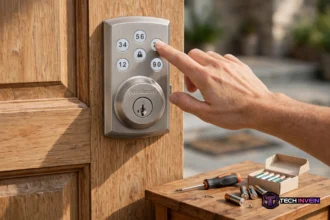
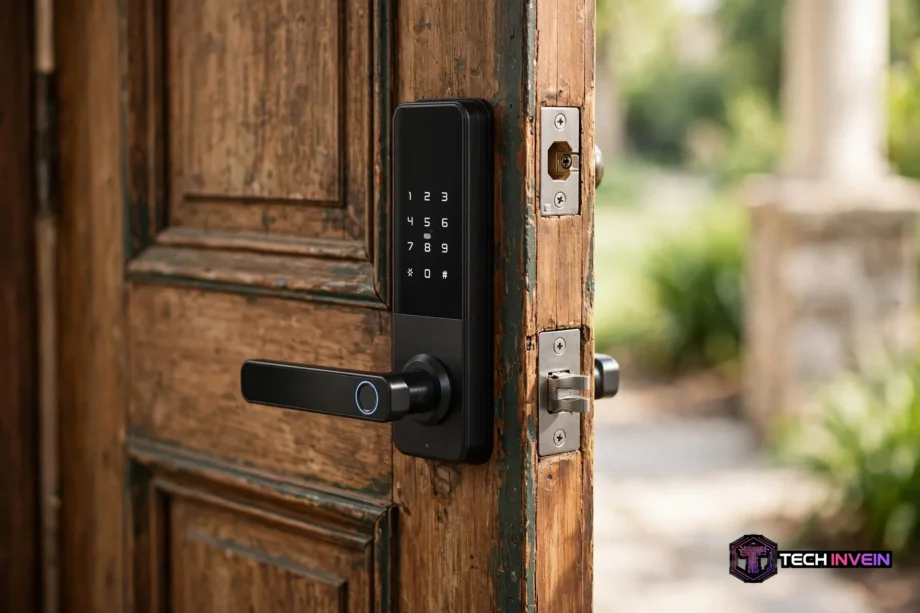
A mortise smart lock keeps the same case inside the door and adds electronics on top. The motor, the keypad, and the fingerprint reader sit in the handles or in a panel on the door face. When you enter a code or touch the sensor, a small motor moves the bolt for you.
Most models still let you use a key. The key works through a cylinder in the case, just like a normal mortise lock. That matters when the battery dies. You can still get in with the key, so keep one somewhere safe outside the house.
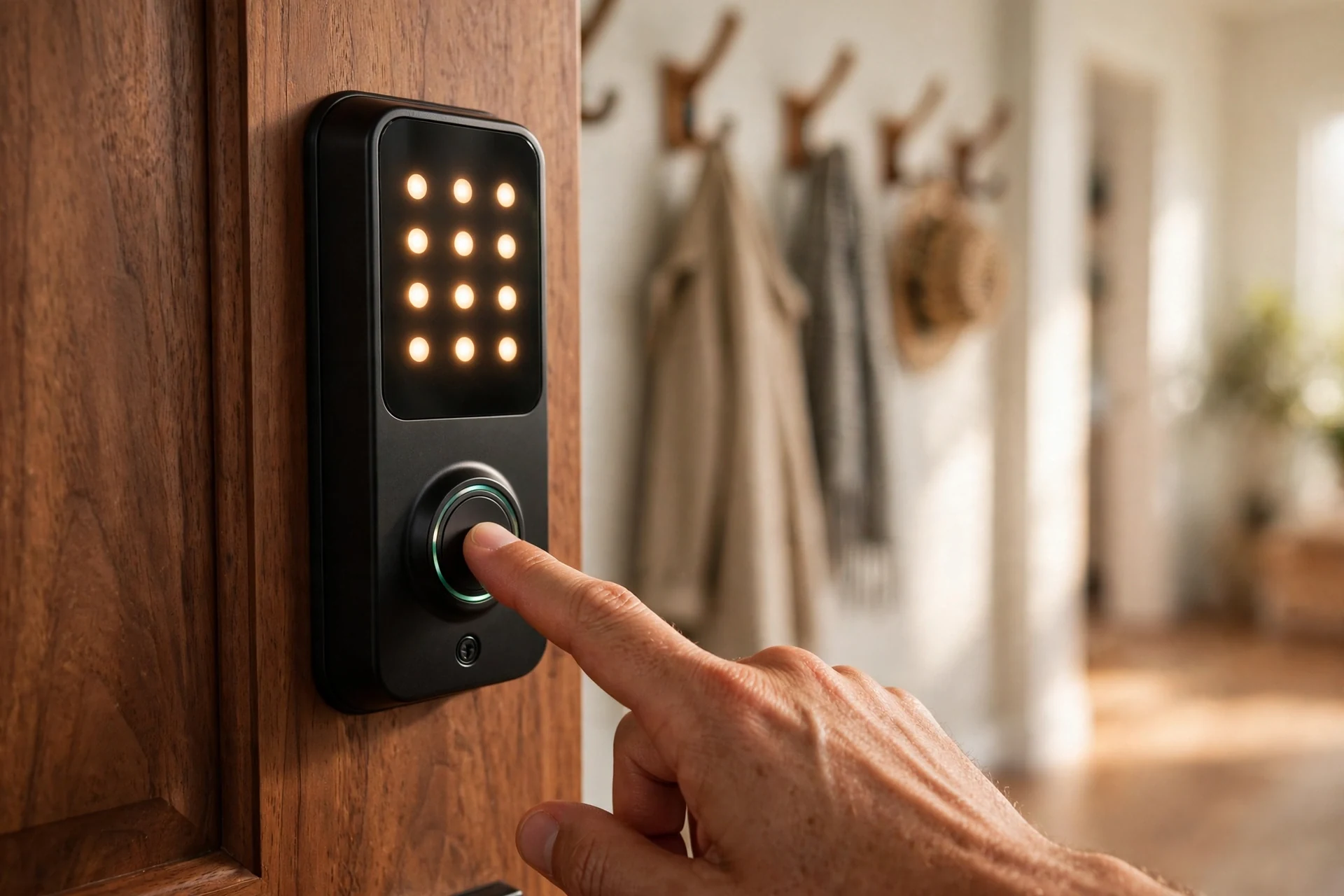
What can you open it with? Most offer a PIN code, a fingerprint, a key card, a phone app, and a physical key. Some add a fingerprint reader on the handle itself, so one touch both reads your finger and opens the door. You can also set a one-time code for a guest, and that is a handy way to let a cleaner or a friend in without handing over a key. If you want that setup in more detail, read our guide on how to add a guest code to a smart lock before you set your first code.
Does it need Wi-Fi? Not always. Bluetooth models work from your phone when you stand near the door. Wi-Fi models, or models with a small hub, let you lock the door from work and get alerts when someone opens it. First check what your home network can reach at the front door, because a weak signal there is a common cause of slow remote locking.
Mortise Lock vs Deadbolt vs Cylindrical Lock
These three locks look alike from the hallway, but they fit different doors. The door preparation decides which one you can use. You cannot swap them without cutting new holes, and that is the mistake to avoid first.
A deadbolt is a separate bolt in its own round hole above the handle. It throws a solid bolt into the frame when you lock it. Daily entry runs through the latch below it, and the deadbolt only moves when you lock the door. Most United States homes use this setup, with a backset of 2-3/8 inch or 2-3/4 inch.
A cylindrical lock, also called a tubular lock, fits into two round holes bored through the door face. One hole holds the latch, and the other holds the handle or knob. It is quick to fit, and it is common on interior doors and on many newer United States entry doors. It is lighter than a mortise case, and it has fewer parts inside the door.
A mortise lock is different because the whole case sits in a pocket in the door edge. The latch and the bolt share that case, and a Euro-profile cylinder works the bolt. In Europe, the centre distance between the handle spindle and the cylinder is often 72 mm or 85 mm, and that number must match your handle set.
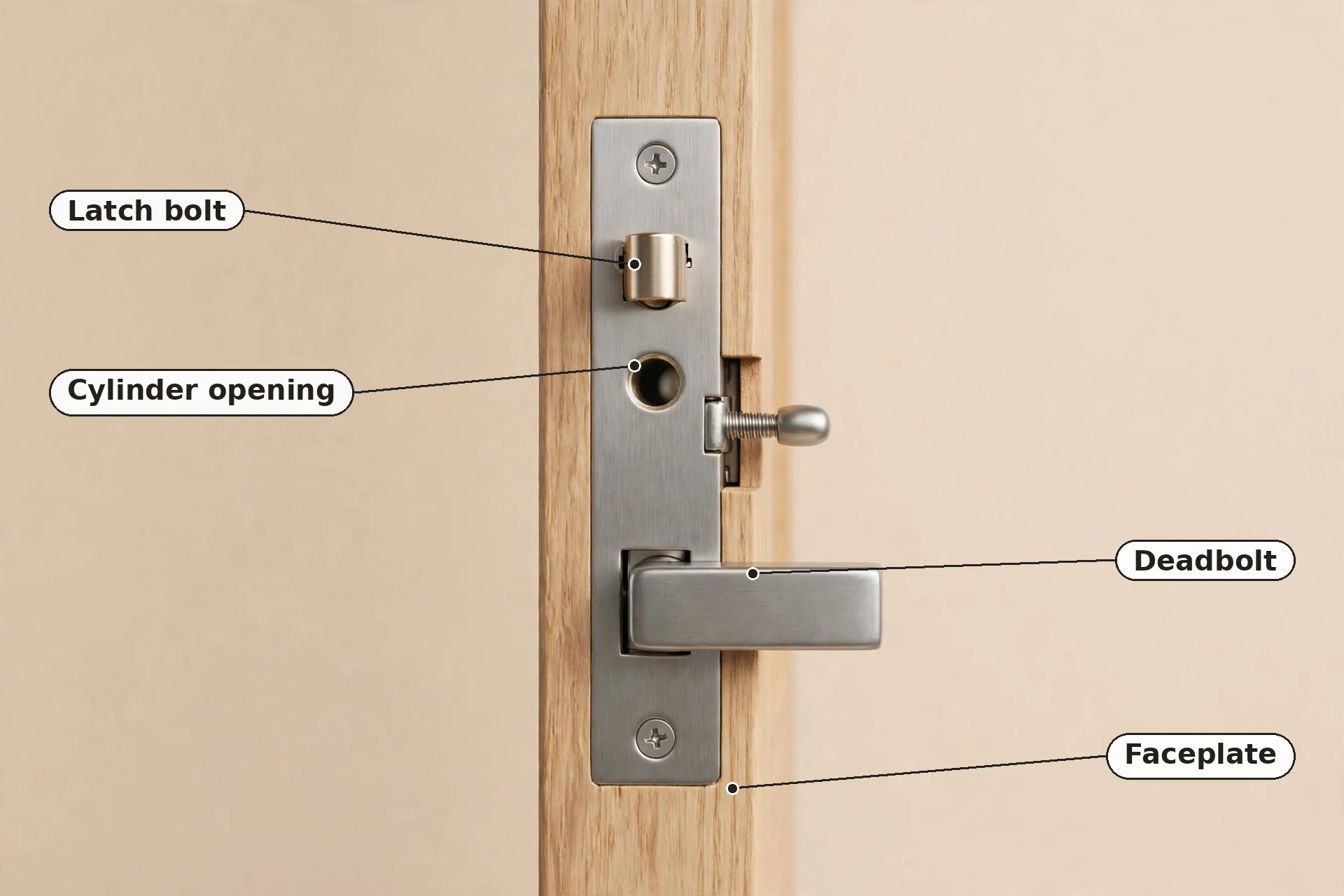
Table: Mortise lock vs deadbolt vs cylindrical lock at a glance
| Feature | Mortise lock | Deadbolt | Cylindrical lock |
|---|---|---|---|
| Where it sits | Pocket in the door edge | Round bore through the door face | Two round bores through the door face |
| Latch and bolt | Both in one case | Bolt only, latch is separate | Latch in the handle set |
| Common doors | Older homes, European doors | United States entry doors | Interior doors, newer United States doors |
| Key measurements | Case size, backset, centre distance | Backset, bore size, door thickness | Backset, bore size, door thickness |
| Install effort | High, pocket must be cut exact | Low to medium | Low |
If you want a side-by-side view of the two main smart types, this deadbolt vs mortise smart lock comparison shows how the door preparation decides the choice. Read it before you shop, because it may save you from buying the wrong type.
Which Doors Have Mortise Locks?
Older homes are the first place to look. Many houses built before the 1950s in the United States and the United Kingdom have mortise locks on the front and back doors. The doors are often solid wood, and the lock case has been in place for decades. If your door has a long faceplate on the edge, start there.
European doors are the second group. In much of Europe, the mortise lock is still the normal front-door lock. The door is prepared with a pocket, and the lock works with a Euro-profile cylinder. That cylinder is the teardrop-shaped part you see on the door face, and its length must match the door thickness plus the handle roses.
How can you be sure before you buy? Open the door and look at the edge. A mortise lock shows a rectangular faceplate, often 150 mm to 200 mm tall, with screws at the top and bottom. A deadbolt setup shows two round plates on the door face instead. When in doubt, take a photo of the edge and the face, and send it to the lock maker for a fit check. Our guide to how a smart front door lock works also shows the parts to look for on an entry door.
When a Mortise Smart Lock Is the Right Choice
It is the right choice when your door already has a mortise pocket. Then the smart lock drops into the space your old lock used. You keep the door, you keep the frame, and you avoid cutting new holes. That is the main reason to buy one.
It is also a good choice when you want one unit for latch, bolt, and handle. A mortise smart lock joins those parts into one system, so the handle, the latch, and the bolt move together. The result feels solid, and the door closes with a clean click instead of a rattle.
Do you rent out a room or a flat? Then a mortise smart lock can help, because you can give each guest a code and delete it when they leave. You do not need to cut new keys or change the cylinder between guests. Still, check your lease and your building rules first, because some blocks limit changes to the front door.
If you are still weighing the wider smart lock market, our best smart lock picks for 2026 show how mortise models sit next to deadbolt models. Use that list to compare features, then come back to the fit check below before you buy.
When It Is Not the Right Choice
It is not the right choice for a bored United States door. If your door has round holes for a deadbolt and a latch, a mortise smart lock will not fit. You would need to cut a pocket into the door edge and fill the old holes, and that is a carpenter job, not a quick swap.
It is also a poor pick for a thin or hollow door. The case needs depth, and most mortise models need a door thickness of about 38 mm to 55 mm. A hollow-core door cannot hold the case, and the screws will pull out over time. Measure first, because a tape measure now saves a return later.
Do not buy one for a door you plan to replace soon. If a new door is coming in a few months, wait and buy the lock for the new door. The pocket size, the backset, and the centre distance may all change with the new door, so a lock bought now may not fit then.
Finally, do not buy a mortise smart lock just because it looks strong. If your door frame is weak, the lock will not fix it. A solid frame, a long strike plate, and long screws matter more. Fix the frame first, then pick the lock.
How to Check If Your Door Fits in Two Minutes
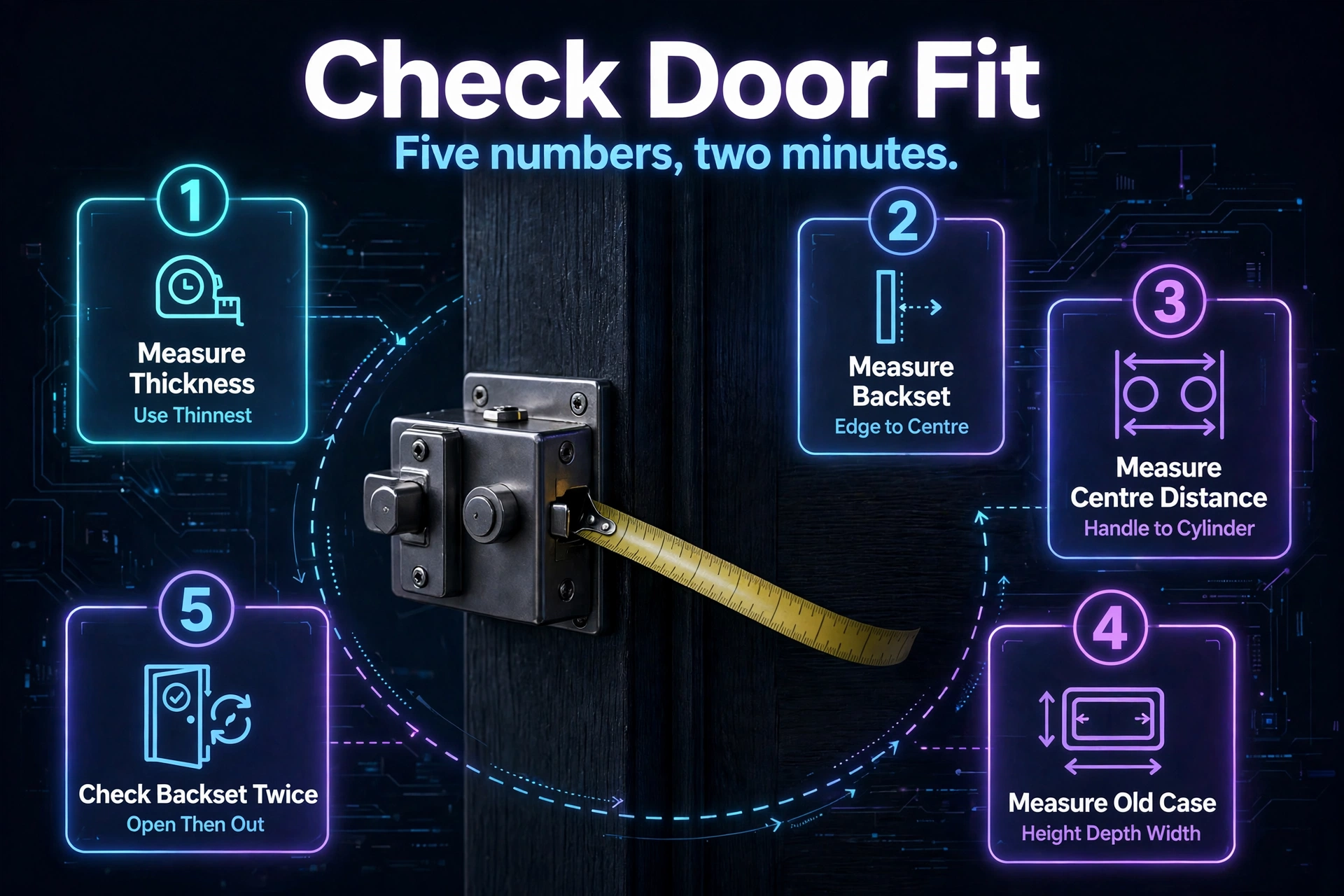
Grab a tape measure and a screwdriver. You need five numbers, and you can get them all without taking the door off its hinges. Write each one down as you go, because one wrong number can mean a lock that does not fit.
First, measure the door thickness at the top, the middle, and the bottom. Use the thinnest reading, because the lock must fit the tightest spot. Most mortise models fit doors from about 38 mm to 55 mm thick, but always check the exact range on the model page.
Next, measure the backset. That is the distance from the door edge to the centre of the cylinder hole. Common backsets are 60 mm and 70 mm, which match 2-3/8 inch and 2-3/4 inch. If your backset is 20 mm or 30 mm, you have a narrow door, and you need a narrow-profile lock.
Then measure the centre distance. That is the gap between the centre of the handle spindle hole and the centre of the cylinder hole. In Europe, 72 mm and 85 mm are common, but other sizes exist. If this number is wrong, the handles will not line up, so do not guess it.
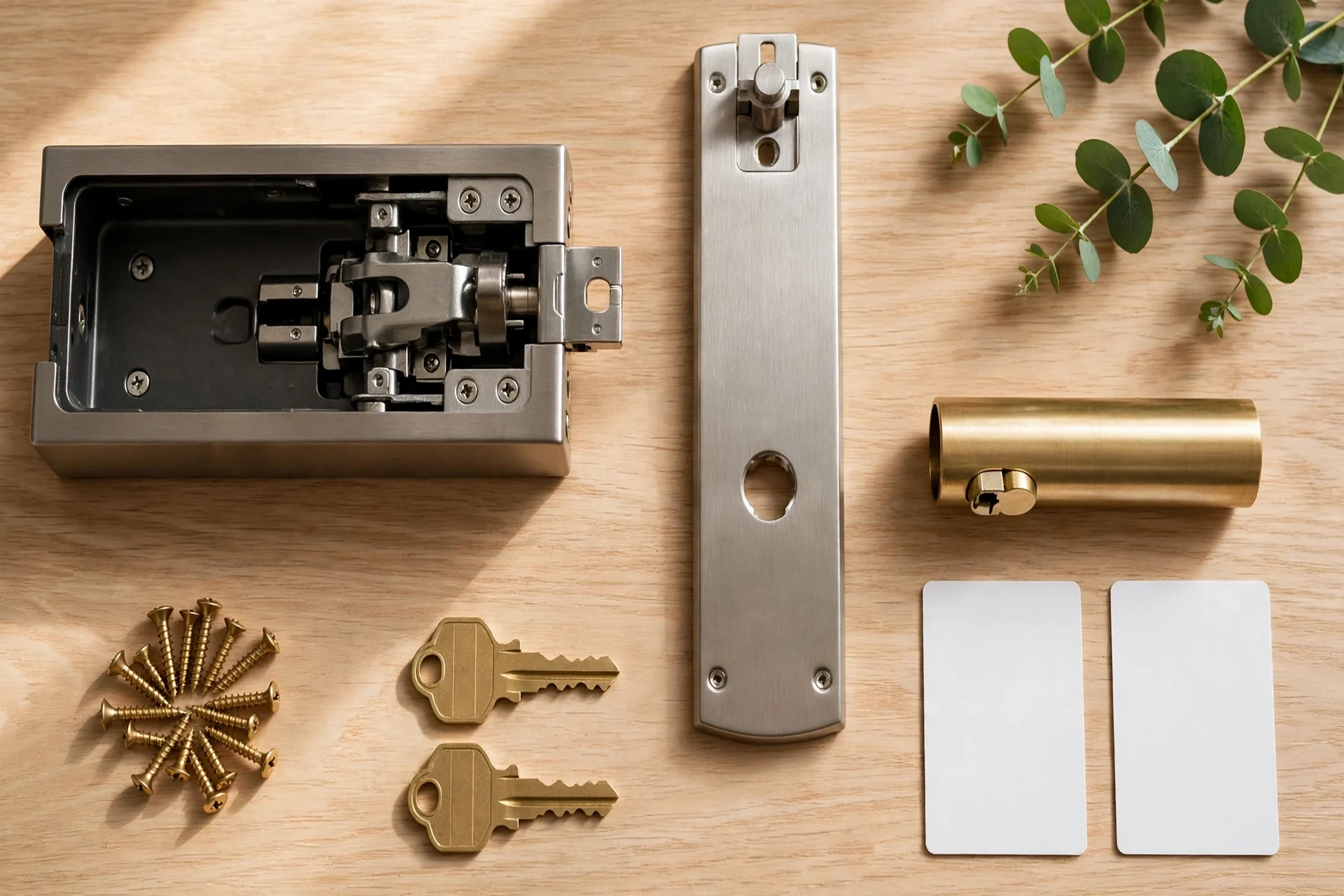
After that, take out the old lock case and measure its height, depth, and faceplate width. The faceplate is often 20 mm to 24 mm wide, with narrow versions at 15 mm to 16 mm. The new case must fit the old pocket, or you must cut the pocket larger, so compare the numbers side by side. This smart lock size guide lists the same three dimensions and shows how to measure each one with a tape measure.
Here is the check that catches most bad buys. Measure the backset twice, once with the door open and once with the lock case out. If the two readings differ by more than 2 mm, your first reading was off, so measure again. That small step has saved many buyers from ordering a lock with the wrong backset.
FAQs
What is a mortise lock in simple terms?
A mortise lock is a lock case that sits inside a pocket cut into the edge of a door. The latch and the bolt share that one case, and a key or a thumb turn moves the bolt. You see only the handles, the keyhole, and a thin metal plate on the door edge.
Can a smart lock fit a mortise door?
Yes, but only a smart lock made for a mortise pocket will fit. A deadbolt smart lock fits a round bored hole, not a rectangular pocket, so it cannot swap in. Measure the case size, backset, and centre distance first, then match those numbers to the smart model you plan to buy.
Are mortise locks more secure than deadbolts?
They can be, because the case is large and the bolt is often thick, so the lock resists force well. But security also depends on the door, the frame, and the strike plate. A strong case in a weak frame still fails, so fix the frame and use long screws too.
Do I need a locksmith to install one?
Many owners can fit one if the new case matches the old pocket, but a locksmith is the safer pick when the pocket needs cutting or the handles do not line up. A bad cut can split the door, so pay for a pro if the fit is tight or the door is old.
What measurements matter most before I buy?
Door thickness, backset, centre distance, case height and depth, and faceplate width matter most. Backset is the distance from the door edge to the centre of the cylinder hole. If any one number is wrong, the lock may not fit, so write all five down and check them twice.
Will it still work if the battery dies?
Yes, if you have the physical key, because the key works the cylinder even with dead batteries. Many models also have a USB port for a short power boost from a power bank. Change the batteries as soon as the lock warns you, and keep a spare key outside the house.
Conclusion
A mortise smart lock is the smart version of an older lock style, and it fits doors that a deadbolt smart lock cannot. If your door already has a mortise pocket, measure the five numbers, match them to the model, and test the lock with the door open before you trust it. Then set your codes, keep a spare key safe, and enjoy keyless entry on a door that finally fits.