

An irrigation meter measures only the water your yard uses. It sits on the irrigation line, counts gallons as they pass, then shows you flow in real time. With that one number, you can spot a leak, check a zone, then stop guessing about your water bill.
- What a Flow Meter Actually Measures
- How an Irrigation Meter Works
- How It Differs From Your Main Water Meter
- How It Spots Leaks
- A Hands-On Check You Can Copy
- Irrigation Monitoring and Control
- Where Smart Controllers Fit In
- What an Irrigation Meter Can and Cannot Do
- Systems Like Irrigreen and Other Smart Options
- Choosing the Right Meter for Your Yard
- Install Tips That Keep Readings Honest
- Costs, Savings, and Honest Limits
- FAQs
- Do I need a meter if I already have a smart controller?
- Can one meter cover every zone in my yard?
- Will a meter work with drip lines and sprinklers?
- How do I know if my reading means a leak?
- Can I install a meter myself?
- Does a meter replace a soil moisture probe?
- Your Next Step
What a Flow Meter Actually Measures
Think of it as a fitness tracker for your sprinklers. It does not water anything by itself. It watches water move through the pipe, then turns that movement into numbers you can read.
In fact, most models report two things. First, they report total gallons used since the last reset. Second, they report current flow, usually in gallons per minute. Also, that second number is the one that tells you the most.
For example, a zone that normally runs at 8 gallons per minute should stay near that rate. If it jumps to 14, something changed. A head may have broken off. A pipe may have cracked. Or a valve may be stuck open.
On the other hand, a drop in flow can also warn you. A clogged nozzle will cut flow. A partly closed valve will do the same. In both cases, the meter gives you an early clue before plants show stress.
How an Irrigation Meter Works
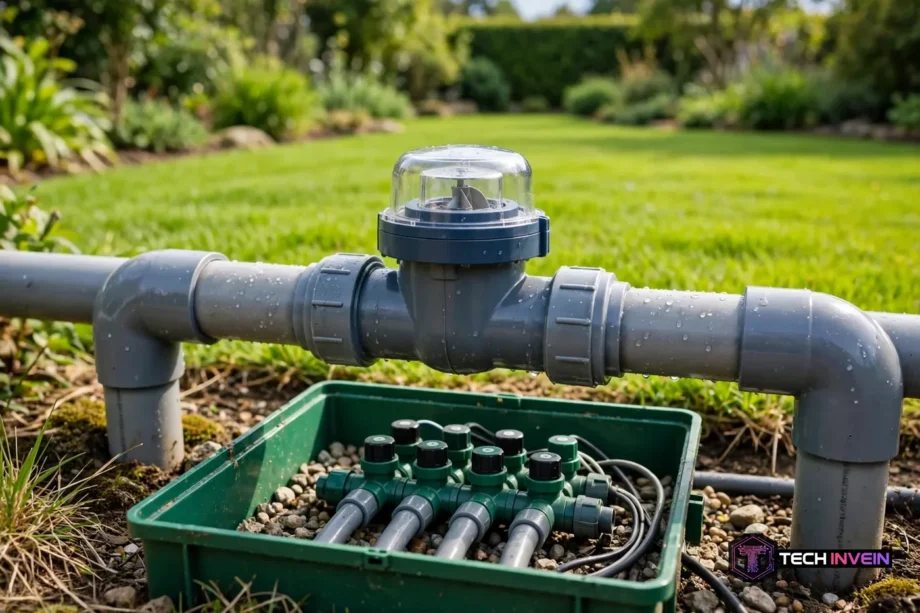
First, water pushes through the meter body. Inside, a sensor tracks that movement, then sends a signal to a display or a controller. The display then converts the signal into gallons and flow rate.
For example, mechanical meters use a small spinning part. Water turns it as it passes. The spins are counted, and the count becomes a volume. These meters are simple, and they have been used for years.
In contrast, ultrasonic meters work in a different way. They send sound pulses across the pipe and time how long each pulse takes. Flow changes that timing in a small but steady way. The meter reads that change, then works out the flow rate.
Some meters send a pulse for each gallon that passes. A controller counts those pulses. That pulse link is what lets a smart system react fast when flow looks wrong.
Still, no meter is magic. Dirt, air, and poor placement can skew a reading. A clean install, with straight pipe runs where the maker asks for them, keeps the numbers honest.
Sensor, Controller, and Action
A flow meter is a sensor first. It measures. It does not decide. The controller or app does the deciding, based on rules you set.
Many home systems use this same pattern. A sensor reads a condition, a hub or controller acts on it, and you get a notice on your phone. Our guide to robot sensors explains that sensor to controller loop in plain terms, and the idea transfers well to water.
How It Differs From Your Main Water Meter
By comparison, your main water meter measures everything. Showers, laundry, kitchen taps, and the yard all pass through it. That total is what your utility bills you for.
An irrigation water meter measures one branch only. It sits after the point where the irrigation line splits off. So it can tell you how much of that total went to the lawn.
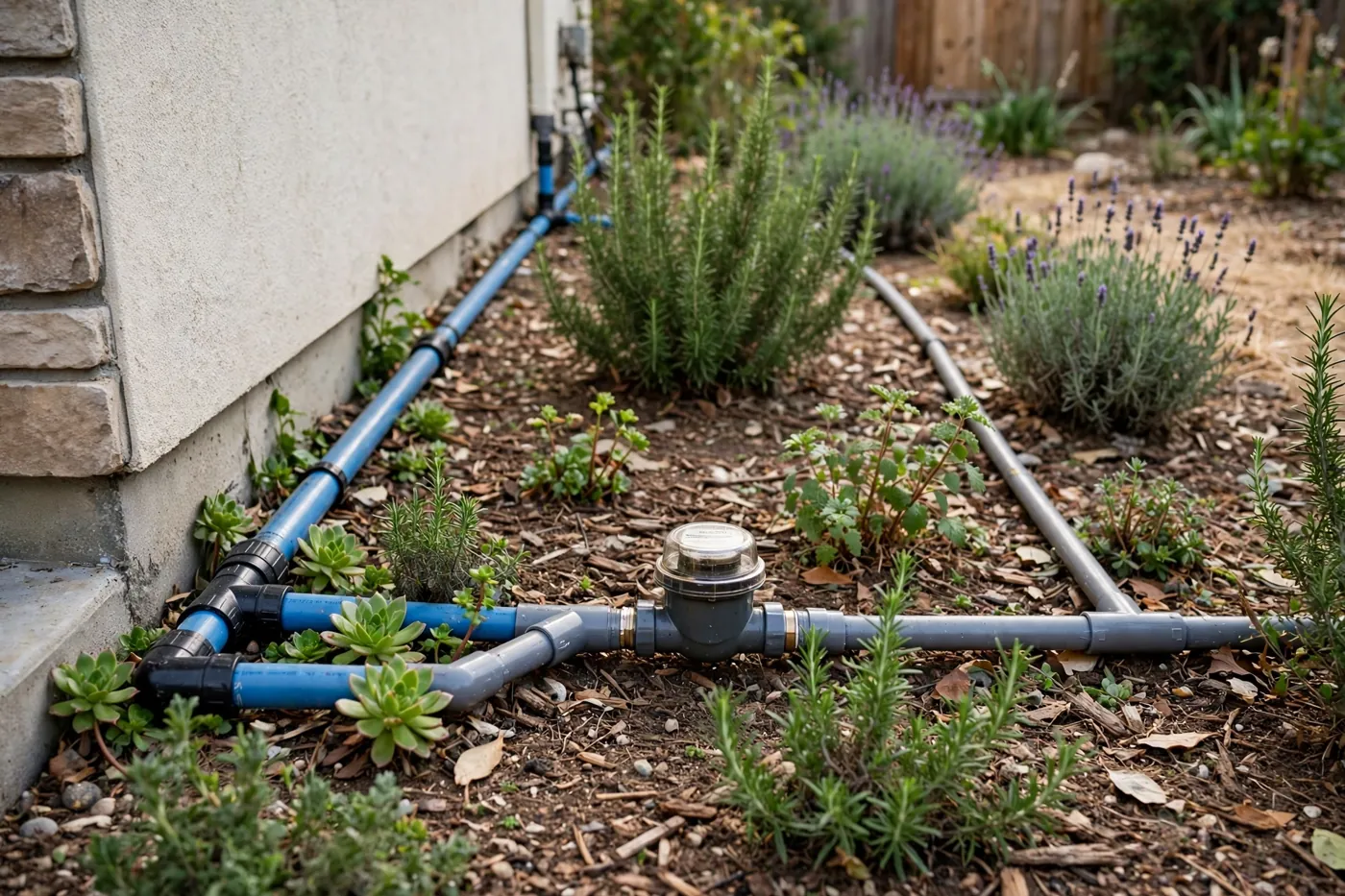
In fact, that split is the whole point. Without it, a yard leak hides inside your household total. With it, you can compare yard use week by week and zone by zone.
Also, a main meter is owned by your utility in most homes. You can read it,, however,you cannot rewire it into your smart home. An irrigation meter is yours. You can pair it with your own controller and your own alerts.
Table: Main water meter compared with a yard irrigation meter
| Feature | Main water meter | Yard irrigation meter |
|---|---|---|
| What it measures | Whole home use | Yard and garden use only |
| Who owns it | Usually the utility | Usually the homeowner |
| Leak detail | Total use only | Flow by run and by zone |
| Smart link | Often limited | Often pairs with a controller |
How It Spots Leaks
For leak spotting, start with a baseline. Run each zone once when the system is healthy. Write down the flow for each zone. Those numbers become your normal range.
Afterward, the checks get simple. If flow jumps well above the baseline, look for a break. If flow falls well below it, look for a blockage. If flow never drops to zero between runs, look for a valve that will not close.
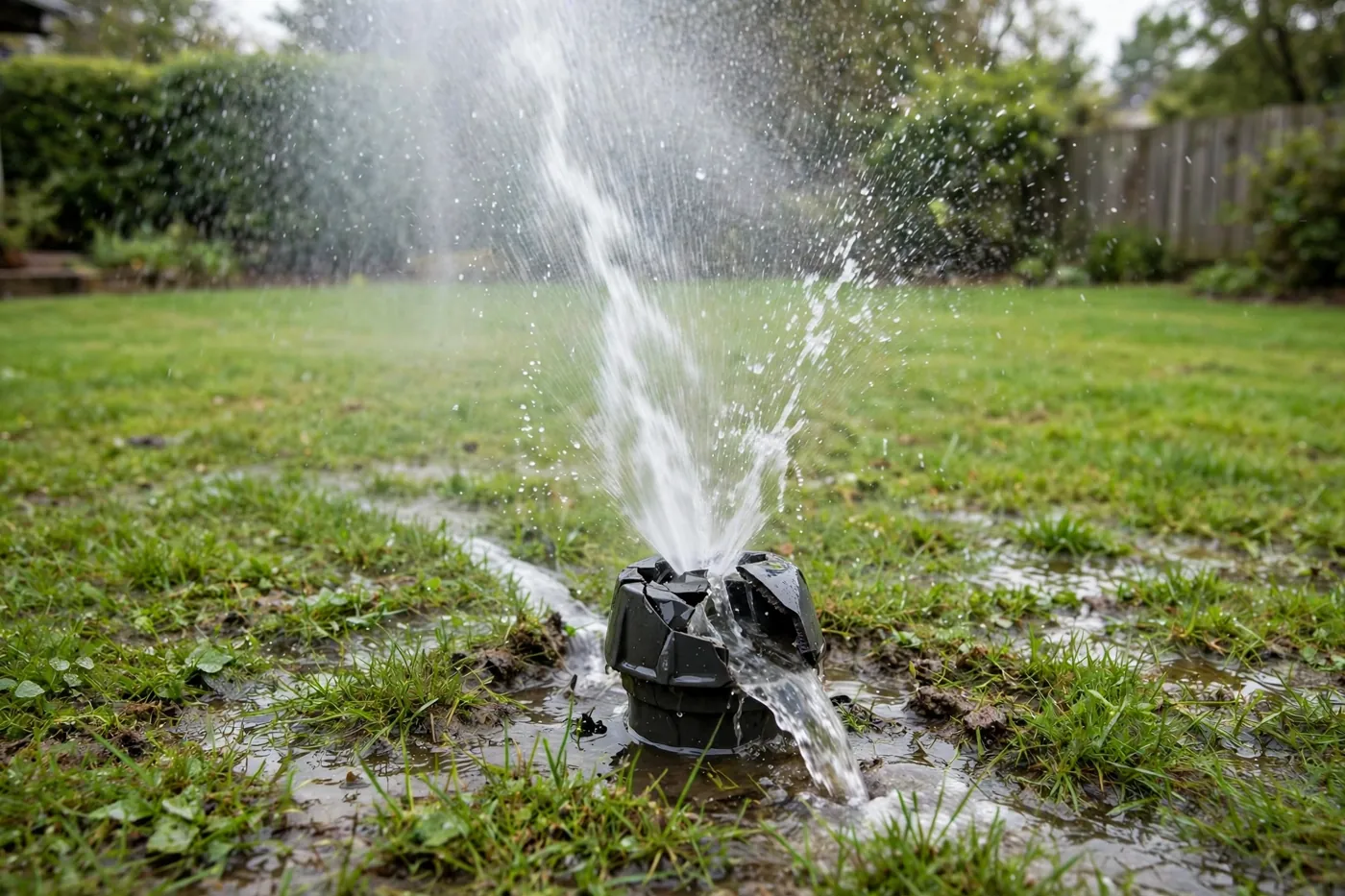
Next, some controllers add automatic checks. They learn the normal flow for a zone, then watch each run. When a run breaks the limit, they can stop that zone, then alert you.
A Hands-On Check You Can Copy
Still, I wanted a real number, not just a theory. So I ran a bucket test on a small drip line with a pulse meter fitted. First, I placed a 5-gallon bucket under an open hose bib on that line and timed the fill.
The bucket filled in 62 seconds. That works out to about 4.8 gallons per minute. The meter app showed 4.9 gallons per minute during the same fill. That gap is small, and it told me the meter was reading in the right range.
Afterward, I ran one drip zone for 10 minutes. The meter logged 31 gallons. I divided 31 by 10 and got 3.1 gallons per minute for that zone. I wrote that figure on a card and stuck it inside the controller box.
Now, that card is my baseline. If that zone ever reads near 6 gallons per minute, I will know to check it first. If it reads near 1, I will check for clogs. The test took under half an hour, and it gave me a reference I can trust.
Irrigation Monitoring and Control
Irrigation monitoring means watching water use over time. Irrigation monitoring and control adds action to that watch. The system does not just report. It can pause, skip, or shut down a zone when a rule is met.
For instance, a basic irrigation monitoring system may show daily totals in an app. That alone helps you compare weeks and spot a slow creep in use. You might notice that July used far more water than June, even though rain was similar.
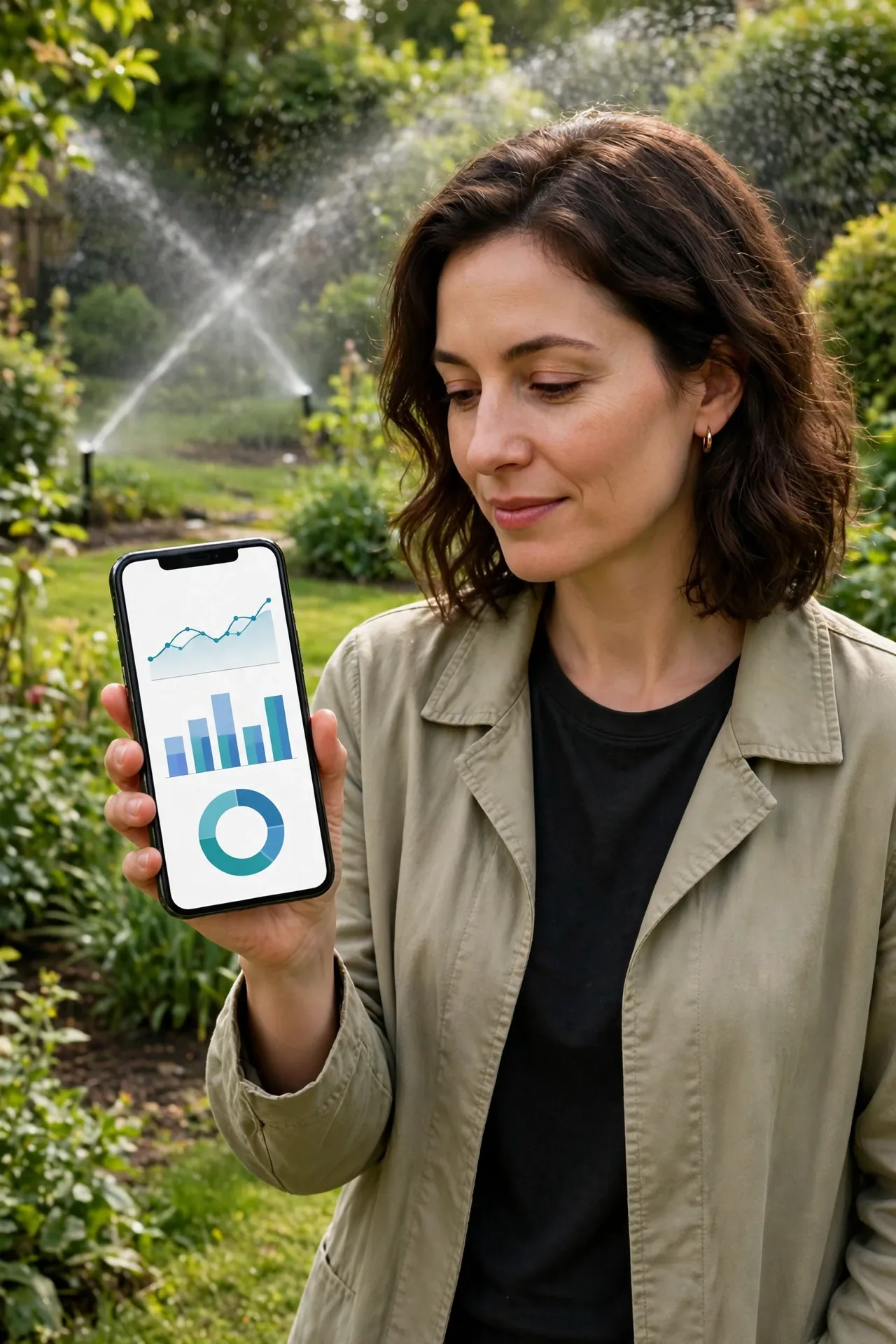
In addition, a fuller system adds flow limits per zone. Set a high limit and a low limit for each zone. The controller then checks every run against those limits. When a run breaks a limit, you get an alert while the fault is still fresh.
Next, weather data adds another layer. Rain, heat, and wind change how much water plants need. A controller that reads a forecast can skip a run after rain. A meter then confirms how much water was actually saved by that skip.
On cool, damp mornings, the air can hold moisture even when the soil looks dry. Our dew point guide explains why dew point tells you more than a simple humidity percentage, and that distinction helps you judge whether a morning run is really needed.
That morning check is worth a minute of your time. If dew is heavy and the forecast shows rain, a skip costs nothing. If the air is dry and the soil is dry, the run earns its water.
Also, indoor humidity targets do not apply outdoors, but the habit of watching a number still helps. Our humidity level guide shows how a clear target range makes a reading useful, and the same idea works for a flow range per zone.
Where Smart Controllers Fit In
Meanwhile, a smart controller decides when each zone runs. A meter tells it how much water each run used. Together, they form a closed loop. The plan meets the proof.
Without a meter, however, a controller only knows time. It knows a zone ran for 20 minutes. It does not know if a head broke during those 20 minutes. With a meter, it knows both time and volume.
That pairing also helps with schedules. You can water at dawn, when wind is low and evaporation is lower. Our sunset and sunrise automation guide shows how sun timing can drive outdoor devices, and the same dawn logic suits watering runs.
Next, check compatibility before you buy. Some meters use a wired pulse output. Some use a wireless link. Some work only with one brand of controller. Ask the seller which controllers the meter pairs with, and get that answer in writing.
What an Irrigation Meter Can and Cannot Do
In short, it can measure flow and total use. It can flag high flow, low flow, and flow at odd hours. It can give you a baseline for each zone. It can feed alerts to a controller or an app.
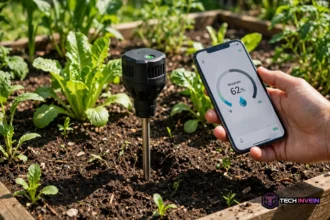
In contrast, it cannot tell you if soil is wet. That job belongs to a soil probe. It cannot tell you if a plant needs water. That call still needs soil data, weather data, and a look at the plants.
Still, it cannot fix a leak by itself, unless your controller can shut a zone down. Even then, you still need to repair the pipe or head. The meter buys you speed, not a repair.
Systems Like Irrigreen and Other Smart Options
When you shop, you may see the term irrigreen sprinkler system. Irrigreen is a brand that uses smart heads that aim water with digital control, rather than fixed spray patterns. It is one way to cut waste,, however,it is not the same thing as a meter.
In short, think of it this way. Smart heads change where water goes. A meter measures how much water went. You can use one without the other,, however,they answer different questions.
Finally, when you compare systems, ask four plain questions. Does it measure flow per zone? Does it alert you fast? Does it shut a zone down on a fault? Can you export the data? If the answers are vague, keep shopping.
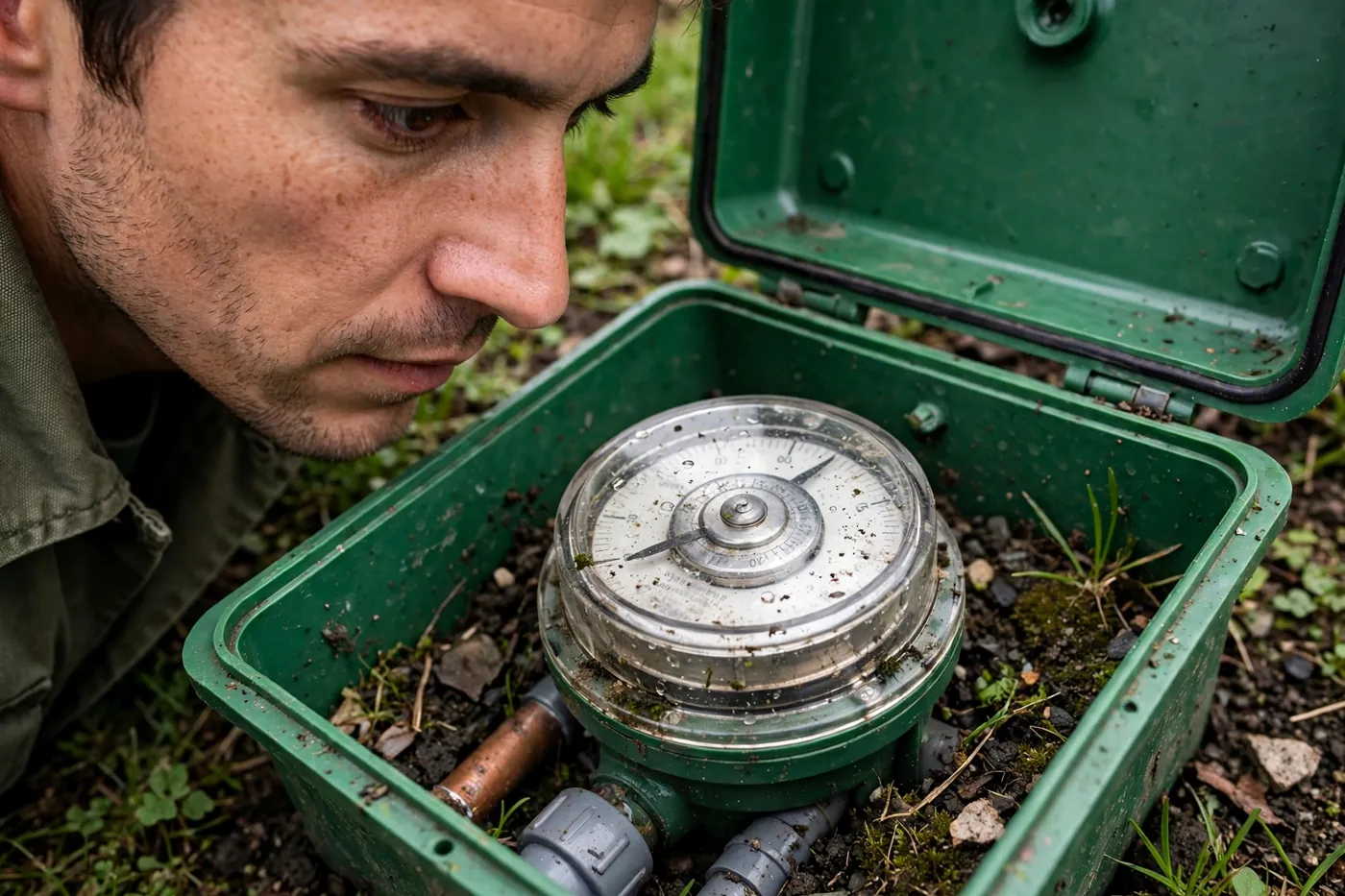
Finally, irrigation monitors come in many forms. Some are simple dial displays in a valve box. Some are app dashboards with charts. Some are full irrigation monitors tied to a central controller. Pick the form you will actually check each week.
For help on the wider water picture, the EPA WaterSense program lists labeled irrigation controllers and offers plain tips for watering wisely outdoors.
Choosing the Right Meter for Your Yard
First, start with pipe size. Measure the main irrigation line where the meter will sit. A meter made for a larger pipe will read poorly on a small line, and the reverse is also true.
Then check flow range. Add up the flow of your largest zone. The meter should cover that rate with room to spare. It should also read low flows well, so a slow leak does not slip past it.
Next, look at the output type. A wired pulse output suits a controller with a sensor input nearby. A wireless meter suits a valve box far from the house. Do not assume one will work with the other.
For a second view on reading a meter by hand, a university guide to water meters walks through dial types and leak checks in clear steps.
Finally, check local rules. Some areas require a backflow device on irrigation lines. Some require a permit for changes to the main line. A quick call to your water provider can save a costly redo.
Install Tips That Keep Readings Honest
For best results, place the meter on the main irrigation line, after the backflow device where one is fitted. That spot sees all yard flow and no house flow. It gives you a clean yard total.
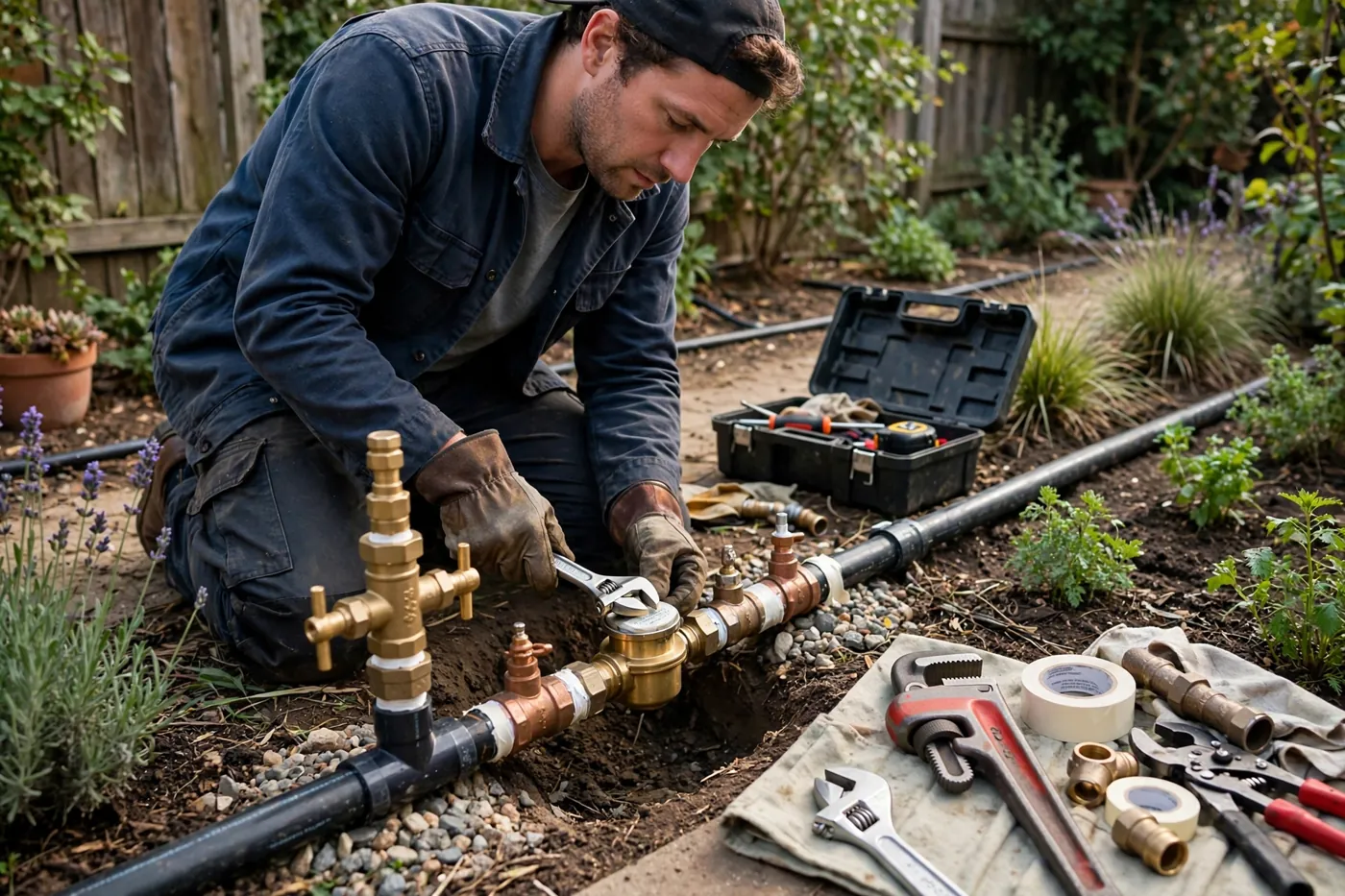
Flush the line before you fit the meter. Sand and grit can jam a spinning part or scratch a sensor. A short flush takes minutes and protects the device for years.
Costs, Savings, and Honest Limits
However, do not buy a meter on a savings promise alone. Savings depend on your yard, your rates, and whether you actually have a leak. A tight system with no faults will show little change at first.
Where a meter pays off is in fault years. One broken head left running for a month can waste a large volume. Catching it in a day instead of a month is where the value sits.
Still, be honest about upkeep. Baselines need updates after you change heads or add a zone. Alerts need review, or you will start to ignore them. A meter rewards a small weekly habit, not a fit and forget mindset.
FAQs
Do I need a meter if I already have a smart controller?
A smart controller knows run times, but it cannot prove how much water left the pipe. A meter adds that proof. It turns a timed guess into a measured result, and it flags breaks that a timer alone would miss.
Can one meter cover every zone in my yard?
Yes, one meter on the main irrigation line can cover all zones. It reads total flow during each run. You then learn each zone flow by running zones one at a time and noting the rate for that zone, which keeps the baseline simple to use later.
Will a meter work with drip lines and sprinklers?
Yes, if the meter range fits the flow. Drip zones run at low flow, so the meter must read low rates well. Sprinkler zones run higher, so check the top end too. A meter with a wide range suits a mixed yard best.
How do I know if my reading means a leak?
Compare the reading with your baseline for that zone. A clear jump above the baseline points to a break or a stuck valve. A clear drop points to a clog. Flow when nothing should run points to a valve that will not close.
Can I install a meter myself?
Some owners can, if they are comfortable cutting pipe and sealing joints. Others should hire a pro, mainly where backflow rules apply. Either way, flush the line first, keep the meter accessible, set baselines after install, and ask about permits before you cut any main line.
Does a meter replace a soil moisture probe?
No, the two tools answer different questions. A meter tells you how much water flowed. A probe tells you how wet the soil stayed. Used together, they show both supply and result, which is far more useful than either alone.
Your Next Step
Start small. Pick a meter that fits your pipe size, then pairs with your controller. Fit it, flush the line, and set a baseline for each zone. Then watch one full week of runs before you change any schedule.
After that week, you will know your normal numbers. From there, leaks get louder, waste gets clearer, and watering stops being a guess. That is the real payoff: a yard watered on facts, not on habit.